Quick Answer
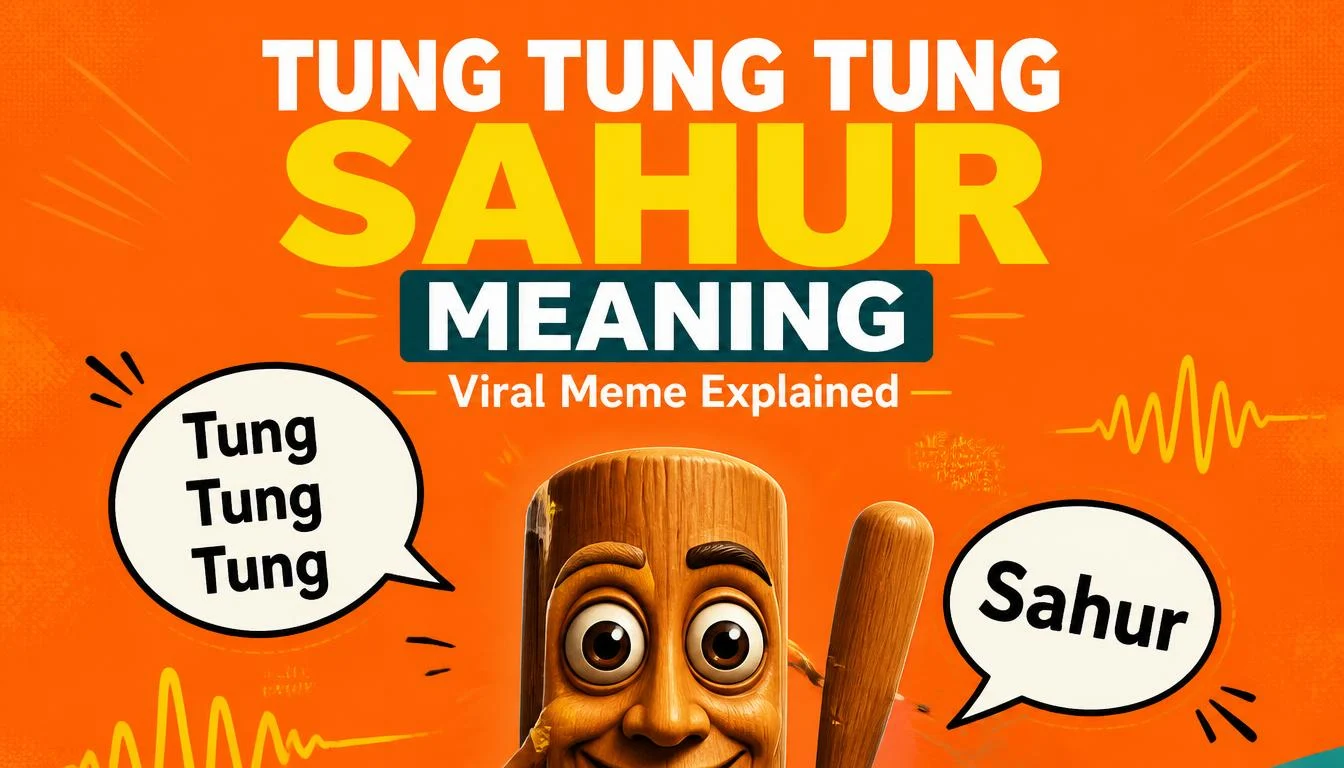
Tung Tung Tung Sahur Meaning refers to a viral meme character and phrase linked to the Indonesian tradition of waking people for sahur before dawn during Ramadan. It became popular through the “Italian brainrot” meme trend.
When people come across Tung Tung Tung Sahur Meaning, they often wonder what does tung tung sahur mean and where this unusual phrase came from. Understanding the tung tung tung sahur origin helps explain why the phrase became popular online. Some variations also include tung tung tung tung tung meaning, especially in memes and playful comments.
If you are still asking what does tung tung tung sahur mean, the phrase is generally connected with the viral Italian brainrot meme trend. Searches for tung tung sahur meaning and simply tung tung often appear in humorous conversations. You may also see phrases like here bro have a tung tung meaning in meme content. So, what is tung tung tung sahur really about? The tung tung tung sahur meaning is best understood through its meme context and the exaggerated character associated with tung tung tung sahur.
Tung Tung Tung Sahur Meaning
Tung Tung Tung Sahur is a viral internet meme and AI-generated character from Indonesia, first posted on TikTok in February 2025. The name imitates the sound of a kentongan a traditional wooden slit drum that’s beaten during Ramadan to wake people up for sahur, the pre-dawn meal eaten before the day’s fast begins. In the meme, “Tung Tung Tung Sahur” is a spooky, bat-wielding wooden figure who supposedly shows up at your house if you ignore three wake-up calls for sahur. It has since become one of the biggest “brainrot” memes online, used mostly for comedic, chaotic, or nonsensical effect rather than any literal meaning.
In short: it’s part sound effect, part folklore-style ghost story, part internet joke and almost zero percent something you need to take seriously.
Where Did “Tung Tung Tung Sahur” Come From?
To really get the meme, it helps to separate it into two layers: the cultural root and the internet phenomenon built on top of it.
The Cultural Root: Sahur and the Kentongan
In many parts of Indonesia and Malaysia, communities have a long tradition of waking each other up before dawn during Ramadan for sahur, the meal eaten right before the daily fast starts. Traditionally, this wake-up call wasn’t a phone alarm it was a person (or group of people) walking through the neighborhood banging a kentongan, a hollow wooden drum, while calling out to households. The rhythmic “tung, tung, tung” sound is literally the noise that drum makes.
So before it was a meme, “tung tung tung” was simply the real, everyday sound of a Ramadan wake-up ritual. That’s the part search engines and news outlets confirm consistently it’s rooted in an actual regional tradition, not something invented purely for laughs.
The Meme Origin: An AI-Generated Character
The version that broke the internet is a different beast entirely. On February 28, 2025, just a day before Ramadan began that year, an Indonesian TikTok creator posted an AI-generated video featuring an anthropomorphic wooden kentongan holding what looks like a baseball bat. The video came with an eerie, robotic Indonesian voiceover chanting “tung tung tung tung sahur” over and over.
The accompanying “lore” (in the way only internet memes have lore) described the figure as a frightening anomaly that only appears during sahur time. According to the joke mythology, if someone calls you for sahur three times and you don’t respond, this creature shows up at your front door. It’s silly, a little creepy, and endlessly quotable a perfect combination for meme culture.
This character is sometimes nicknamed “Triple T” by fans, referencing the three “Tung”s in the name.
How It Went Viral
The meme spread fast for a few reasons:
- It fit an existing trend. Around the same time, “Italian Brainrot” memes absurd AI-generated characters with nonsense names and looping audio were already dominating short-form video. Tung Tung Tung Sahur got lumped into that wider brainrot wave even though its roots are Indonesian, not Italian.
- It’s endlessly remixable. Creators added their own storylines: Tung Tung Tung fighting other brainrot characters, “returning home” once Ramadan ended, exploding, dancing, or teaming up with equally absurd creatures.
- The sound is sticky. Repetitive, rhythmic, slightly unsettling audio tends to lodge itself in people’s heads which is exactly what algorithms reward.
- It crossed into gaming and merch. The character reportedly showed up in popular Roblox games and even got referenced in Fortnite, which pushed it well beyond TikTok’s original audience into gaming communities, meme pages, and eventually mainstream news coverage.
By spring 2025, “tung tung tung sahur” had gone from a niche Ramadan-season joke to a globally recognized meme phrase, sitting alongside other absurd brainrot names in the same internet universe.
Real-World Usage: How People Actually Say It
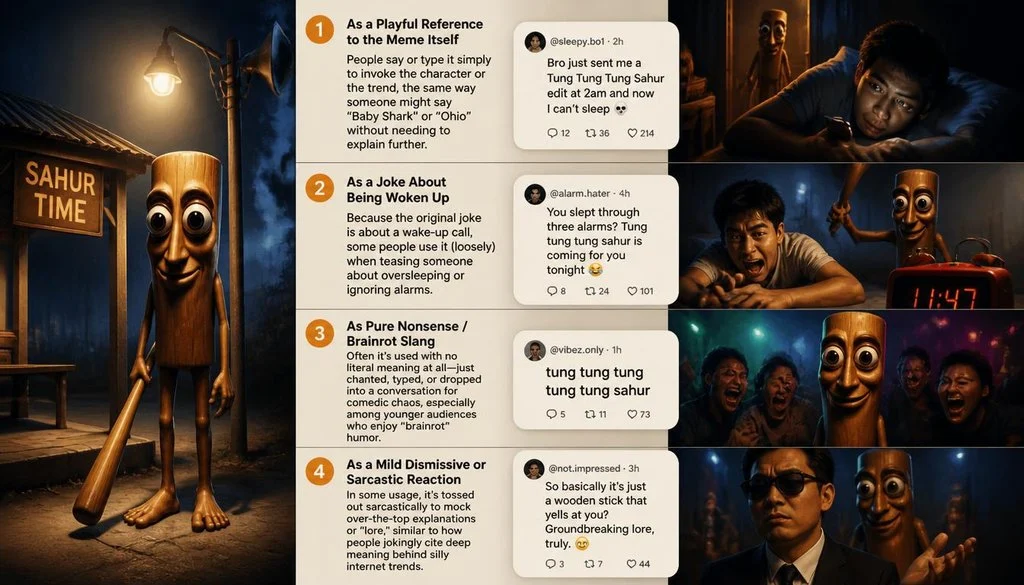
Unlike a slang term with one fixed meaning, “tung tung tung sahur” functions more like a meme catchphrase its “meaning” often depends on context and delivery. Here’s how it typically shows up in the wild:
1. As a Playful Reference to the Meme Itself
People say or type it simply to invoke the character or the trend, the same way someone might say “Baby Shark” or “Ohio” without needing to explain further.
“Bro just sent me a Tung Tung Tung Sahur edit at 2am and now I can’t sleep 💀”
2. As a Joke About Being Woken Up
Because the original joke is about a wake-up call, some people use it (loosely) when teasing someone about oversleeping or ignoring alarms.
“You slept through three alarms? Tung tung tung sahur is coming for you tonight 😂”
3. As Pure Nonsense / Brainrot Slang
Often it’s used with no literal meaning at all just chanted, typed, or dropped into a conversation for comedic chaos, especially among younger audiences who enjoy “brainrot” humor.
“tung tung tung tung tung sahur” (as a comment under an unrelated video, just for the vibe)
4. As a Mild Dismissive or Sarcastic Reaction
In some usage, it’s tossed out sarcastically to mock over-the-top explanations or “lore,” similar to how people jokingly cite deep meaning behind silly internet trends.
“So basically it’s just a wooden stick that yells at you? Groundbreaking lore, truly.” 🙄
Tone Guide: How the Phrase Lands Depending on Context
| Tone | Typical Use Case | Example Line |
|---|---|---|
| Friendly / Playful | Joking with friends, memes, group chats | “Tung tung tung sahur vibes today lol” |
| Neutral / Explanatory | Explaining the trend to someone unfamiliar | “It’s this viral meme about a wooden creature that wakes people up” |
| Sarcastic / Dismissive | Mocking over-explained internet trends | “Oh sure, because ‘tung tung tung sahur’ is such deep lore 🙄” |
| Chaotic / Brainrot | Comment spam, reaction audio, video edits | “TUNG TUNG TUNG TUNG SAHUR‼️‼️” |
Tung Tung Tung Sahur vs. Similar Meme Terms
Because it belongs to a whole family of AI-generated “brainrot” characters, it’s easy to mix it up with related terms. Here’s a quick comparison to keep things straight.
| Term | What It Is | Key Difference from Tung Tung Tung Sahur |
|---|---|---|
| Tung Tung Tung Sahur | AI wooden drum character; Indonesian origin | Rooted in a real Ramadan tradition (the kentongan wake-up drum) |
| Italian Brainrot (general trend) | Umbrella term for absurd AI-generated animal/object characters | Tung Tung Tung Sahur is often grouped with this trend, but it isn’t actually Italian in origin |
| Skibidi Toilet | Earlier viral brainrot series featuring toilets with human heads | Different franchise, different creator, predates the Tung Tung wave |
| Sahur (the word alone) | A real Islamic term for the pre-dawn meal before fasting | Sahur itself has zero meme meaning it’s a serious, everyday religious/cultural term |
| Brainrot (general slang) | Slang for low-effort, absurd, addictive internet content | Tung Tung Tung Sahur is one specific example of brainrot content, not a synonym for it |
The key distinction worth remembering: “sahur” is a legitimate, respectful term tied to Ramadan practice, while “Tung Tung Tung Sahur” (the meme) is a separate, comedic internet character loosely inspired by that tradition. Mixing the two up in a serious or religious context could come across as disrespectful, so a little context-awareness goes a long way.
Does “Tung Tung Tung Sahur” Have Other Meanings?
Not really but it’s worth noting the layered meaning:
- Literal/cultural meaning: The onomatopoeia for a kentongan drum beat used to call people for sahur.
- Meme meaning: The AI-generated bat-wielding character and its associated joke lore.
- Slang/internet meaning: A general-purpose brainrot phrase used for comedic emphasis, with little to no literal content similar to saying “skibidi” or “gyatt” purely for effect rather than definition.
There’s no widely recognized alternate or unrelated meaning outside of these internet and cultural contexts, so you don’t need to worry about accidentally stumbling into a totally different definition somewhere else.
When (and When Not) to Use It
Like most viral slang, “tung tung tung sahur” is great in casual settings and a poor fit for formal ones. Here’s a simple usage cheat sheet:
Good contexts:
- Group chats and texting with friends
- Social media captions, comments, and memes
- Casual conversations about internet culture or trends
- Content aimed at Gen Z or Gen Alpha audiences
Contexts to avoid:
- Professional emails or workplace communication
- Formal writing, reports, or academic work
- Conversations about Ramadan or Islamic practices where respect and clarity matter
- Any content where the audience may be unfamiliar with meme culture (it’ll just confuse people)
Polite or Professional Alternatives
If you want to reference the same idea a wake-up call, a persistent reminder, or a “if you ignore this enough times, something happens” scenario without leaning on meme slang, try:
- “A gentle (but persistent) reminder”
- “A wake-up call” (used figuratively)
- “If this goes unanswered, escalation may follow”
- “A recurring alert” or “a nudge that won’t quit”
These convey a similar underlying idea repetition, urgency, a consequence for ignoring something without requiring your audience to be plugged into TikTok meme culture.
FAQs
1. What Does “Tung Tung Tung Sahur” Actually Mean?
“Tung Tung Tung Sahur” is a viral meme phrase associated with an AI-generated wooden creature that supposedly wakes people up for sahur, the pre-dawn meal during Ramadan. The repeated “tung” sounds imitate the beat of a traditional wooden drum used to wake people.
2. Is “Sahur” a Real Word?
Yes. Sahur is a genuine term used in Islamic tradition for the meal eaten before dawn during Ramadan, before the daily fast begins.
3. Where Did the Tung Tung Tung Sahur Meme Start?
The meme first appeared on TikTok in late February 2025, reportedly posted by an Indonesian creator as part of the growing trend of absurd, AI-generated characters and stories.
4. Is Tung Tung Tung Sahur Italian or Indonesian?
Tung Tung Tung Sahur is Indonesian in origin. However, it is often associated with the broader “Italian Brainrot” meme trend because it shares the same surreal, exaggerated AI-generated style.
5. Is the Meme Meant to Be Scary?
Not really. Although the character is presented through a spooky, urban-legend-style backstory, the meme is primarily humorous and absurd rather than genuinely frightening.
6. Why Do People Say “Tung” Different Numbers of Times?
There is no fixed rule for how many times “tung” should be repeated. Creators often change the number for comedic effect, dramatic emphasis, or simply to make their videos and captions more entertaining.
7. Is It Okay to Use This Term Casually?
Yes. “Tung Tung Tung Sahur” can be used casually in social media posts, memes, and conversations with friends. However, it is better to avoid using it in professional or formal writing or when discussing Ramadan in a serious context.
8. Is Tung Tung Tung Sahur Still Popular?
Its biggest wave of popularity came around 2025, particularly during Ramadan and the rise of brainrot-style memes. However, it remains a recognizable internet meme and continues to appear in remixes, games, videos, and other pop-culture references.
Conclusion:
“Tung tung tung sahur” is a great example of how internet culture can take something rooted in real tradition the sound of a wooden drum calling people to a pre-dawn meal during Ramadan and turn it into an entirely new, absurd, globally recognized meme. Here’s the short version to keep in your back pocket:
- Definition: A viral meme featuring an AI-generated wooden creature that “wakes” people for sahur; also the literal sound of a traditional Ramadan wake-up drum.
- Origin: Indonesian TikTok, February 2025, tied loosely to the broader “brainrot” meme trend.
- Usage: Mostly playful, chaotic, or nonsensical; occasionally used to joke about being woken up or ignoring reminders.
- Tone flexibility: Works as friendly, sarcastic, or purely absurd depending on context.
- Best practice: Keep it casual save formal alternatives like “a persistent reminder” for professional settings, and be mindful of context when it overlaps with the real cultural meaning of sahur.
Whether you’re using it to caption a meme, explain it to a confused relative, or just trying to understand why your feed is full of a wooden stick with a bat, you’re now fully equipped to get the joke and maybe even join in.









37 thoughts on “Tung Tung Tung Sahur Meaning | Strange Internet Trend Explained In 2026”