Quick Answer
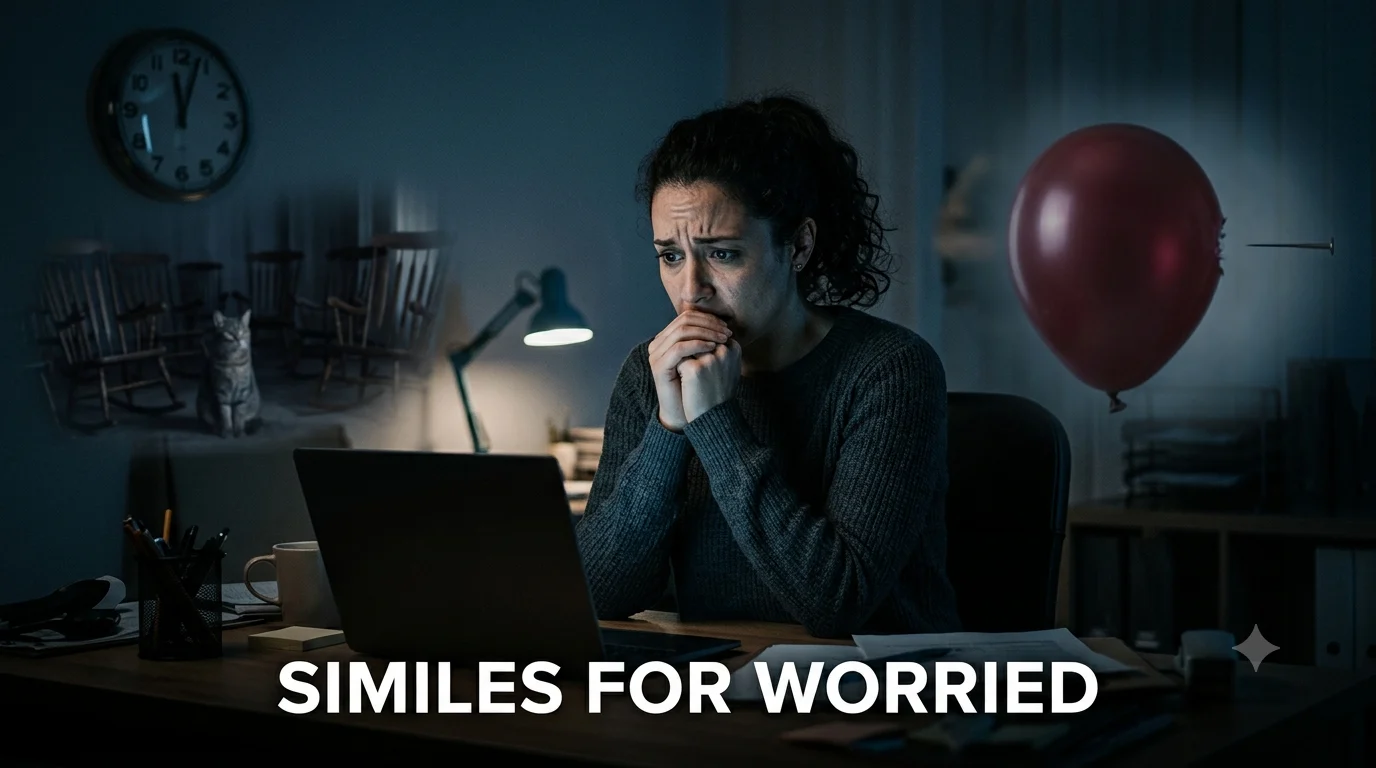
Similes for worried compare feelings of nervousness and unease to familiar experiences using “like” or “as.” They help writers transform abstract anxiety into vivid, relatable imagery that readers instantly understand from “as nervous as a cat in a room full of rocking chairs” to “like a balloon about to pop.”
Worry is one of the most universal human emotions, yet it can feel surprisingly difficult to describe in a way that truly captures its weight, restlessness, and discomfort.
Simply saying someone is “worried” often falls flat. It doesn’t convey the racing heart, the churning stomach, the sleepless nights, or the constant what if thoughts that consume a worried mind. That’s where similes become invaluable. By comparing worry to familiar experiences, objects, and situations, writers can create descriptions that readers instantly understand and feel.
A worried person might be “as jumpy as popcorn in a hot pan” or “like a balloon about to pop.” These comparisons transform an abstract emotion into vivid imagery that resonates on a deeply human level.
Whether you’re writing stories, essays, poems, speeches, blog posts, or simply trying to express your own feelings more clearly, similes for worry help bring anxious moments to life. This comprehensive guide explores powerful similes for worry, complete with meanings, explanations, examples, and practical writing tips to strengthen your descriptive writing.
Quick List of Similes for Worried
| Simile | Meaning |
| As nervous as a cat in a room full of rocking chairs | Extremely jumpy and on edge |
| Like a fish out of water | Feeling out of place and uneasy |
| As worried as a mouse near a trap | Afraid something bad will happen |
| Like a balloon about to pop | Full of stress, ready to burst |
| As shaky as a leaf in the wind | Trembling from nervousness |
| Like a deer in headlights | Frozen with fear, unable to move |
| As jumpy as popcorn on a hot stove | Very fidgety from worry |
| Like a storm cloud ready to burst | Heavy with worry or sadness |
| As tight as a drum | Feeling tight with stress |
| Like walking on eggshells | Being very careful because of worry |
| As pale as a ghost | Looking very worried or scared |
| Like a string pulled too tight | Feeling too much pressure |
| As lost as a sock in the laundry | Feeling unsure or confused |
| Like a bird trapped in a cage | Wanting to escape from worry |
| As heavy as a backpack full of bricks | Carrying a lot of worry |
Understanding Similes for Worry
A simile is a figure of speech that compares two unlike things using the words “like” or “as.” When describing worry, similes help bridge the gap between an internal feeling and something external that readers can visualize.
Why Similes Make Worry Come Alive
Worry is an invisible emotion. You can’t see it, touch it, or measure it directly. But you can compare it to things people already understand:
- Physical sensations that everyone has experienced
- Familiar situations that trigger nervousness
- Objects and animals that embody nervous behavior
- Natural phenomena that create tension or unease
When you say someone “was as worried as a cat in a room full of rocking chairs,” readers immediately understand the constant alertness, the fear of being hurt, and the inability to relax all without a lengthy explanation. The comparison does the work for you.
The Difference Between Worry, Anxiety, and Fear
Before diving into similes, it helps to understand what worry truly is:
- Worry is a chain of thoughts about potential negative outcomes. It’s cognitive and future oriented.
- Anxiety is worry plus physical symptoms racing heart, sweating, shortness of breath.
- Fear is a response to an immediate, present threat.
Many similes work across all three categories, but some are better suited for specific contexts. This guide focuses primarily on similes for worry while including overlapping expressions for anxiety and fear where relevant.
Similes for Nervous Energy and Restlessness
Worry often manifests as physical restlessness inability to sit still, fidgeting, pacing, or jumping at small sounds. These similes capture that nervous energy.
As Nervous as a Cat in a Room Full of Rocking Chairs
Meaning: Extremely jumpy, scared, and on edge, constantly alert to potential danger.
Why It Works: Cats are naturally alert animals. Add rocking chairs objects that move unpredictably and could hurt a cat’s tail and you create an image of someone who can’t relax because danger seems to be everywhere .
Alternative Expressions:
- As jumpy as a long tailed cat in a room full of rocking chairs
- As nervous as a cat near barking dogs
Formal Example:
The witness was as nervous as a cat in a room full of rocking chairs, her eyes darting around the courtroom as she waited to testify.
Casual Example:
My brother gets as nervous as a cat in a rocking chair factory before every job interview.
Creative Example:
The tension in his shoulders betrayed him; he sat as nervous as a cat surrounded by creaking rockers, every small sound making him flinch.
As Jumpy as Popcorn in a Hot Pan
Meaning: Unable to stay still due to worry, full of nervous energy that keeps erupting.
Why It Works: Popcorn kernels bounce and pop unpredictably when heated. This captures the sudden, uncontrolled movements of someone who is extremely nervous .
Alternative Expressions:
- As jumpy as a kernel in a hot skillet
- Like popcorn on a hot stove
Examples in Writing:
Formal Example:
The candidates sat as jumpy as popcorn in a hot pan, waiting for the election results to come in.
Casual Example:
She was as jumpy as popcorn before her driving test.
Creative Example:
Every creak of the floorboards sent him popping up like kernels in a hot skillet, his nerves stretched to the breaking point.
Like a Squirrel in Traffic
Meaning: Unsure what to do, darting from one decision to another, unable to commit to a course of action.
Why It Works: A squirrel trying to cross a busy road runs back and forth frantically, frozen by indecision and fear. This mirrors how worry makes people second guess themselves .
Alternative Expressions:
- Like a squirrel on a highway
- As panicked as a rabbit in headlights
Examples in Writing:
Formal Example:
He paced the office like a squirrel in traffic, unable to decide whether to accept the offer or walk away.
Casual Example:
I was running around like a squirrel in traffic trying to get everything ready.
Creative Example:
Her thoughts darted back and forth like a squirrel stuck between lanes, afraid to move in any direction.
As Fidgety as a Squirrel
Meaning: Unable to sit still, constantly moving or adjusting.
Why It Works: Squirrels are known for constant, quick movements. Comparing someone’s fidgeting to a squirrel captures that restless, nervous energy .
Alternative Expressions:
- Like ants in your pants
- As restless as a caged animal
Examples in Writing:
Formal Example:
The students grew as fidgety as squirrels as the exam time ticked down.
Casual Example:
My little sister is always as fidgety as a squirrel at the dinner table.
Creative Example:
His fingers drummed against the table, his legs bouncing he was as fidgety as a squirrel trapped indoors.
Similes for Frozen Fear and Paralysis
Sometimes worry doesn’t make people move it freezes them completely. These similes capture that moment of being unable to act.
Like a Deer in Headlights
Meaning: Frozen with fear, unable to move or react, completely overwhelmed by sudden worry.
Why It Works: Deer are known to freeze when caught in bright headlights, unable to process the danger quickly enough. This captures the paralysis that worry can create .
Alternative Expressions:
- As frozen as a statue
- Like a rabbit caught in a trap
Examples in Writing:
Formal Example:
When called upon to speak, she stood like a deer in headlights, her mind going completely blank.
Casual Example:
I was like a deer in headlights when the teacher asked me a question I didn’t know.
Creative Example:
The unexpected news hit him like headlights in the dark he stood frozen, a deer trapped in the glare of disaster.
As Still as a Statue
Meaning: Too worried to move, completely frozen in place.
Why It Works: Statues are perfectly still. This simile emphasizes the complete physical paralysis that severe worry can cause .
Alternative Expressions:
- As stiff as a board
- As frozen as ice
Examples in Writing:
Formal Example:
He remained as still as a statue while the doctor delivered the test results.
Casual Example:
I stood as still as a statue when I heard the strange noise in the basement.
Creative Example:
Worry transformed her into stone; she stood as still as a statue while the chaos swirled around her.
As Stiff as a Board
Meaning: Tense and unable to move easily because of worry.
Why It Works: A board is rigid and unbending. This simile captures how worry tightens muscles and makes movement feel difficult .
Alternative Expressions:
- As rigid as a plank
- As tense as a coiled spring
Examples in Writing:
Formal Example:
His shoulders were as stiff as a board as he waited for the interview to begin.
Casual Example:
I got as stiff as a board when I heard footsteps behind me in the dark.
Creative Example:
Every muscle locked into place; he sat as stiff as a board, barely breathing, waiting for the verdict.
Like a Rabbit Caught in a Trap
Meaning: Feeling stuck and terrified, unable to escape the situation causing worry.
Why It Works: A trapped rabbit is completely helpless, knowing danger is near but unable to flee. This captures the helplessness of worry .
Alternative Expressions:
- Like a bird in a cage
- As helpless as a fish in a net
Examples in Writing:
Formal Example:
She felt like a rabbit caught in a trap, knowing she had made a terrible mistake but unable to undo it.
Casual Example:
I was like a rabbit in a trap when I realized I’d forgotten the presentation slides.
Creative Example:
The guilt held him fast a rabbit caught in a trap, struggling against steel jaws of his own making.
Similes for Stress and Pressure
Worry often comes with a feeling of being stretched too thin or carrying too heavy a load. These similes capture that pressure.
Like a Balloon About to Pop
Meaning: Filled with so much worry that one might break down at any moment.
Why It Works: A balloon stretched to its limit is about to burst. This captures the sensation of being overwhelmed by stress and worry .
Alternative Expressions:
- As tight as a stretched rubber band
- Like a soda bottle about to fizz over
Examples in Writing:
Formal Example:
The pressure of the deadline left him feeling like a balloon about to pop.
Casual Example:
I feel like a balloon about to pop with all this stress at work.
Creative Example:
Her worry swelled inside her, inflating with every what if, until she was a balloon about to pop one more breath away from shattering.
As Tight as a Stretched Rubber Band
Meaning: Feeling immense pressure, ready to snap at any moment.
Why It Works: A stretched rubber band stores tension. When released, it snaps back violently. This captures the volatile quality of worry .
Alternative Expressions:
- As tense as a bowstring
- As wound up as a spring
Examples in Writing:
Formal Example:
After weeks of uncertainty, she was as tight as a stretched rubber band, ready to snap at the smallest provocation.
Casual Example:
I’m as tight as a rubber band with all these deadlines.
Creative Example:
His patience stretched thinner with each passing hour, a rubber band about to snap, the worry coiling like tension in his chest.
As Heavy as a Backpack Full of Bricks
Meaning: Carrying a lot of worry that feels physically heavy.
Why It Works: Bricks are dense and heavy. This simile makes emotional weight tangible and relatable .
Alternative Expressions:
- As burdensome as a sack of stones
- As weighty as a mountain on your shoulders
Examples in Writing:
Formal Example:
The guilt sat on her conscience as heavy as a backpack full of bricks.
Casual Example:
All these problems feel as heavy as a backpack full of bricks.
Creative Example:
He walked hunched, as if his worry were a backpack full of bricks each step a small victory against the weight.
Like a String Pulled Too Tight
Meaning: Under too much pressure, close to breaking point.
Why It Works: Strings have a breaking point. This simile captures the fragility of someone stretched beyond their limits by worry .
Alternative Expressions:
- Like a wire under too much tension
- As taut as a tightrope
Examples in Writing:
Formal Example:
Her nerves were like a string pulled too tight, ready to snap at any moment.
Casual Example:
I felt like a string pulled too tight after weeks of worrying about the test.
Creative Example:
Every day tightened the string a little more. By Friday, he was a violin string pulled too tight, vibrating with worry, afraid one more turn would break him.
As Tense as a Coiled Spring
Meaning: Full of contained nervous energy, ready to react suddenly.
Why It Works: A coiled spring stores energy and releases it suddenly. This captures the explosive potential of worry .
Alternative Expressions:
- As wound up as a clock
- Like a snake ready to strike
Examples in Writing:
Formal Example:
She sat as tense as a coiled spring, waiting for the phone to ring with the news.
Casual Example:
He was as tense as a coiled spring before his presentation.
Creative Example:
The worry coiled in his stomach like a spring under tension one wrong move and it would all come undone.
Like Water About to Boil
Meaning: On the verge of breaking down from worry.
Why It Works: Water simmers and bubbles before boiling over. This captures the slow buildup and eventual overflow of worry .
Alternative Expressions:
- Like a pot about to bubble over
- As hot as a furnace
Examples in Writing:
Formal Example:
The frustration built until she was like water about to boil, trembling with the effort of keeping calm.
Casual Example:
I’m like water about to boil with all this waiting.
Creative Example:
His worry simmered beneath the surface, bubbles rising as he replayed every worst case scenario water about to boil, about to spill over.
Similes for Situational Worry
Some similes describe worry in specific contexts school, work, performance, or relationships. These comparisons anchor the feeling to familiar experiences.
As Worried as a Student Before an Exam
Meaning: Nervous and anxious about a test or evaluation.
Why It Works: Almost everyone has experienced pre exam anxiety the sweaty palms, racing heart, and fear of forgetting everything .
Alternative Expressions:
- As nervous as someone who forgot to study
- Like waiting for test results
Examples in Writing:
Formal Example:
The young lawyer was as worried as a student before an exam as she prepared for her first trial.
Casual Example:
I get as worried as a student before finals whenever my boss calls a meeting.
Creative Example:
His palms sweated, his thoughts scattered he was a student before an exam, the answers just out of reach, the clock ticking mercilessly.
Like a Child Lost in a Crowd
Meaning: Overwhelmed, confused, and scared about being alone or helpless.
Why It Works: The image of a lost child is universally understood the panic of being separated from safety, the desperate search for a familiar face .
Alternative Expressions:
- Like a lost puppy
- Like a kid in the principal’s office
Examples in Writing:
Formal Example:
In the unfamiliar city, he felt like a child lost in a crowd, surrounded by people but completely alone.
Casual Example:
I was like a child lost in a crowd on my first day at the new job.
Creative Example:
The conference room swam with strange faces. She was a child lost in a crowd, clutching her notes like a mother’s hand, afraid to let go.
As Worried as a Parent Waiting for News
Meaning: Anxious and hopeful at the same time, dreading the worst while hoping for the best.
Why It Works: This simile taps into the deep, primal worry of caring for someone else. It’s worry plus love plus helplessness .
Alternative Expressions:
- Like waiting for a phone call at 3 AM
- Like a parent in a hospital waiting room
Examples in Writing:
Formal Example:
The families sat as worried as parents waiting for news, each moment stretching into an eternity.
Casual Example:
I was as worried as a parent waiting for news while my friend was in surgery.
Creative Example:
She couldn’t eat, couldn’t sleep just sat by the phone, a parent waiting for news, each second a year, each silence a scream.
Like Someone Walking on Eggshells
Meaning: Being very careful because of worry about upsetting someone or causing trouble.
Why It Works: Eggshells are fragile. Walking on them requires extreme care. This captures the caution of navigating a tense situation .
Alternative Expressions:
- Like tiptoeing through a minefield
- As careful as a cat on a hot tin roof
Examples in Writing:
Formal Example:
She felt like she was walking on eggshells around her boss after the disagreement.
Casual Example:
I’ve been like someone walking on eggshells since my roommate got upset.
Creative Example:
Every word was a step on eggshells, carefully placed to avoid the crack that would bring everything crashing down.
As Nervous as a First Time Flyer
Meaning: Scared and anxious about an unfamiliar experience.
Why It Works: First time flyers often experience a mix of excitement and dread the unknown of takeoff, the loss of control, the fear of heights .
Alternative Expressions:
- Like a kid on the first day of school
- As worried as a traveler in a foreign land
Examples in Writing:
Formal Example:
The young executive was as nervous as a first time flyer before his first international business trip.
Casual Example:
I was as nervous as a first time flyer before my driving test.
Creative Example:
His heart thumped as the meeting approached a first time flyer gripping the armrest, terrified of takeoff yet desperate to reach the destination.
Like Waiting for the Dentist
Meaning: Dreading something you know is coming but can’t avoid.
Why It Works: Almost everyone has experienced the anxiety of sitting in a dentist’s waiting room anticipating pain but knowing you need to go through with it .
Alternative Expressions:
- Like waiting in a haunted house line
- Like waiting for a verdict
Examples in Writing:
Formal Example:
The days before the performance stretched out like waiting for the dentist, each one longer than the last.
Casual Example:
I felt like I was waiting for the dentist before my job interview.
Creative Example:
He sat in the waiting room of his own life, a patient waiting for the dentist, knowing the drilling was coming but powerless to stop it.
Similes for Helplessness and Vulnerability
Worry often comes with a sense of powerlessness. These similes capture that feeling of being at the mercy of circumstances.
As Worried as a Mouse Near a Trap
Meaning: Very afraid that something bad is about to happen .
Why It Works: A mouse near a trap knows danger is close. It wants to avoid the trap but may be drawn to it by circumstance.
Alternative Expressions:
- Like a mouse in a snake’s cage
- As worried as a spider near a vacuum
Examples in Writing:
Formal Example:
He was as worried as a mouse near a trap, knowing one wrong move could ruin everything.
Casual Example:
I felt as worried as a mouse near a trap when I saw my boss’s face.
Creative Example:
She circled the problem like a mouse near a trap drawn by necessity, terrified by consequence, knowing the snap was coming.
Like a Bird Trapped in a Cage
Meaning: Feeling confined and wanting to escape from a situation causing worry.
Why It Works: Birds are meant to fly. A caged bird represents the loss of freedom and the desperate desire to escape .
Alternative Expressions:
- Like a fish out of water
- Like a bird with clipped wings
Examples in Writing:
Formal Example:
The corporate environment made him feel like a bird trapped in a cage, his creativity stifled by bureaucracy.
Casual Example:
I’m like a bird in a cage in this tiny apartment.
Creative Example:
His spirit beat against the walls of his worry, a bird trapped in a cage, longing for skies it could no longer reach.
As Helpless as a Fish Out of Water
Meaning: Feeling out of place and unable to cope with an unfamiliar situation.
Why It Works: Fish are adapted for water. Out of water, they can’t breathe or function. This captures the sense of being in the wrong environment .
Alternative Expressions:
- Like a traveler without a map
- As lost as a mitten in a snowstorm
Examples in Writing:
Formal Example:
In the high stakes world of corporate finance, she felt as helpless as a fish out of water.
Casual Example:
I was as helpless as a fish out of water at the fancy dinner party.
Creative Example:
Surrounded by jargon and ambition, he gasped for clarity a fish out of water, flopping in unfamiliar depths.
Like a Leaf in the Wind
Meaning: Feeling powerless, unable to control circumstances or direction.
Why It Works: A leaf blown by the wind has no control over where it goes. This captures the helplessness of being pushed around by worry .
Alternative Expressions:
- Like a feather in a storm
- As lost as a kite without a string
Examples in Writing:
Formal Example:
His career felt like a leaf in the wind, at the mercy of market forces and corporate decisions.
Casual Example:
I’ve felt like a leaf in the wind since I lost my job.
Creative Example:
Her worry swept her along, a leaf in the wind no control, no direction, just tumbling from one fear to the next.
Like Someone Caught in the Rain Without a Coat
Meaning: Unprepared and vulnerable to circumstances beyond control.
Why It Works: Being caught in rain without protection is uncomfortable and helpless. You can’t stop the rain, and you’re exposed to it .
Alternative Expressions:
- Like a sailor in a storm
- Like a camper without a flashlight
Examples in Writing:
Formal Example:
The sudden announcement left the team like people caught in the rain without a coat.
Casual Example:
I felt like someone caught in the rain without a coat when the project deadline changed.
Creative Example:
He stood exposed as the bad news poured down caught in the rain without a coat, shivering in the cold of his worry.
Similes for Uncertainty and Confusion
Worry often comes with confusion not knowing what to do, where to go, or what will happen next.
As Lost as a Sock in the Laundry
Meaning: Feeling confused and out of place, not knowing where to turn .
Why It Works: The image of a missing sock is relatable and slightly humorous, making it good for milder worry.
Alternative Expressions:
- As confused as a puzzle with missing pieces
- Like a page with no answers
Examples in Writing:
Formal Example:
In the complicated legal proceedings, he felt as lost as a sock in the laundry.
Casual Example:
I was as lost as a sock in the laundry on my first day at the new school.
Creative Example:
The instructions swam before his eyes he was a sock lost in the laundry, spinning without purpose.
Like a Traveler Without a Map
Meaning: Feeling lost and unsure of the next step .
Why It Works: Traveling without a map is disorienting. You don’t know where you are or where you’re going.
Alternative Expressions:
- Like walking blindfolded
- As lost as a tourist in a big city
Examples in Writing:
Formal Example:
She approached the negotiation like a traveler without a map, uncertain of the landscape.
Casual Example:
I’m like a traveler without a map trying to figure out my career.
Creative Example:
His plans had crumbled, leaving him a traveler without a map, staring at crossroads with no signposts.
Like a Storm Cloud Over Your Head
Meaning: Feeling like something bad is coming .
Why It Works: Storm clouds threaten rain and lightning. This simile captures the ominous quality of worry.
Alternative Expressions:
- Like a cloud full of rain
- Like waiting for lightning to strike
Examples in Writing:
Formal Example:
The ominous news hung over him like a storm cloud, heavy with unspoken threats.
Casual Example:
I’ve had a storm cloud over my head since I heard the rumors.
Creative Example:
Her worry loomed above her a storm cloud darkening every thought, ready to unleash its rain.
Like a Puzzle with Missing Pieces
Meaning: Feeling incomplete or like something important is wrong or missing .
Why It Works: A puzzle without all its pieces is frustrating and incomplete. This captures the dissatisfaction of worry.
Alternative Expressions:
- As confused as a maze
- Like a story with missing chapters
Examples in Writing:
Formal Example:
Without all the facts, the investigation felt like a puzzle with missing pieces.
Casual Example:
My life feels like a puzzle with missing pieces right now.
Creative Example:
He tried to make sense of it a puzzle with missing pieces, the picture never quite forming, the worry growing with each empty space.
Like a Phone Waiting for a Call
Meaning: Waiting nervously for news or information .
Why It Works: Phones symbolize connection and communication. A phone waiting for a call represents anticipation and hope mixed with dread.
Alternative Expressions:
- Like waiting for the mail
- Like someone checking for messages
Examples in Writing:
Formal Example:
She sat by her desk like a phone waiting for a call, unable to focus on anything else.
Casual Example:
I’ve been like a phone waiting for a call all week.
Creative Example:
His attention was elsewhere, a phone waiting for a call that might never come, the silence more agonizing than any news.
Similes for Emotional and Physical Effects of Worry
Worry isn’t just mental it manifests physically. These similes capture those effects.
As Pale as a Ghost
Meaning: Losing color in the face from worry or fear .
Why It Works: Ghosts are traditionally pale. This simile uses supernatural imagery to emphasize the shock of worry.
Alternative Expressions:
- White as a sheet
- As pale as fresh snow
Examples in Writing:
Formal Example:
She turned as pale as a ghost when she heard the accident report.
Casual Example:
He was as pale as a ghost after reading the email.
Creative Example:
The color drained from his face, leaving him as pale as a ghost haunting his own worries.
As Shaky as a Leaf in the Wind
Meaning: Trembling from nervousness .
Why It Works: Leaves shake and tremble when the wind blows. This captures visible physical trembling.
Alternative Expressions:
- As shaky as Jell O on a plate
- As wobbly as a new born deer
Examples in Writing:
Formal Example:
His hands were as shaky as a leaf in the wind as he signed the contract.
Casual Example:
My knees were as shaky as leaves in the wind before my speech.
Creative Example:
Her voice trembled, a leaf in the wind, each word a fragile flutter of breath.
As Silent as a Statue
Meaning: Too worried to speak .
Why It Works: Statues are completely silent and still. This captures the speechlessness of worry.
Alternative Expressions:
- As quiet as a mouse
- As tight lipped as a secret keeper
Examples in Writing:
Formal Example:
He remained as silent as a statue during the interrogation.
Casual Example:
I was as silent as a statue when the teacher called on me.
Creative Example:
Words failed her she was a statue, silent, unmoving, worry stealing her voice.
Like a Knot in Your Stomach
Meaning: Feeling sick or tight in the stomach from worry.
Why It Works: The physical sensation of a knotted stomach is universally recognized as a symptom of anxiety.
Alternative Expressions:
- As tight as a drum
- Like a ball of yarn in your chest
Examples in Writing:
Formal Example:
The speech left a knot in his stomach that wouldn’t loosen.
Casual Example:
I’ve had a knot in my stomach all day about the test.
Creative Example:
Worry had taken up residence in his gut a knot that tightened with each passing hour.
Like Ants in Your Pants
Meaning: Feeling restless and unable to sit still due to worry .
Why It Works: The image of ants crawling in someone’s pants is uncomfortable and makes them move around. This captures the inability to relax.
Alternative Expressions:
- Like sitting on pins and needles
- As restless as a cat on a hot tin roof
Examples in Writing:
Formal Example:
The children had ants in their pants as they waited for the field trip to begin.
Casual Example:
I’ve got ants in my pants waiting for this meeting to start.
Creative Example:
He couldn’t sit still ants in his pants, an itch in his feet, a jitter in his soul.
Similes for Impending Doom
Some worry is about the future a sense that something bad is coming. These similes capture that dread.
Like a Turkey Before Thanksgiving
Meaning: Knowing that something bad is likely to happen .
Why It Works: Turkeys before Thanksgiving are literally facing their doom. This simile captures the hopeless knowledge of impending trouble.
Alternative Expressions:
- Like a sheep to the slaughter
- Like a lamb in a lion’s den
Examples in Writing:
Formal Example:
The employees looked like turkeys before Thanksgiving when they heard about the upcoming layoffs.
Casual Example:
I feel like a turkey before Thanksgiving waiting for my review.
Creative Example:
He walked into the meeting like a turkey before Thanksgiving knowing the axe was coming, hoping it wouldn’t be him.
Like a Snowman in Spring
Meaning: Knowing time is running out, slowly melting under pressure .
Why It Works: Snowmen are temporary creatures. They melt when temperatures rise. This captures the feeling of deteriorating under pressure.
Alternative Expressions:
- Like ice on a sunny day
- Like a snow cone in July
Examples in Writing:
Formal Example:
His confidence melted like a snowman in spring as the deadline approached.
Casual Example:
I’m like a snowman in spring trying to finish this project.
Creative Example:
Her resolve was a snowman in spring melting under the pressure, losing form, threatening to disappear completely.
Like a Candle in the Wind
Meaning: Vulnerable and likely to be extinguished by circumstances .
Why It Works: A candle’s flame is fragile. A strong wind can extinguish it. This captures vulnerability.
Alternative Expressions:
- Like a flame near paper
- As fragile as glass
Examples in Writing:
Formal Example:
Her peace of mind was a candle in the wind, fragile and easily extinguished.
Casual Example:
I feel like a candle in the wind with all this uncertainty.
Creative Example:
His hope flickered a candle in the wind, bending but not breaking, refusing to go out despite the gusts of worry.
Like Ice About to Crack
Meaning: Just about to break down from pressure .
Why It Works: Ice cracks under pressure. This simile emphasizes how close someone is to breaking.
Alternative Expressions:
- Like a mirror before it breaks
- Like glass under pressure
Examples in Writing:
Formal Example:
Her composure was like ice about to crack, thin and fragile under the strain.
Casual Example:
I’m like ice about to crack with all this stress.
Creative Example:
He held himself together ice about to crack, the fracture lines already visible, one more weight away from shattering.
Like a Ticking Time Bomb
Meaning: Feeling like something bad is going to happen at any second .
Why It Works: Time bombs are inevitably going to explode. The ticking creates tension and anticipation.
Alternative Expressions:
- Like waiting for a bomb to go off
- Like a clock running out of time
Examples in Writing:
Formal Example:
The tension in the room was like a ticking time bomb, everyone waiting for the inevitable explosion.
Casual Example:
I’ve been like a ticking time bomb since I got the news.
Creative Example:
His worry ticked away a time bomb counting down, each second bringing closer the moment of impact.
Creative Similes for Unique Worry Descriptions
Sometimes you need fresh comparisons that haven’t been overused. These creative similes offer unique angles on worry.
Like a Phone at 1% Battery
Meaning: Running out of energy or hope .
Why It Works: Modern audiences immediately understand the anxiety of a dying phone battery. It’s relatable and current.
Alternative Expressions:
- Like a robot running low on power
- Like a candle running out of wax
Examples in Writing:
Formal Example:
After the long journey, his energy was like a phone at 1% battery.
Casual Example:
I’ve been like a phone at 1% battery all week.
Creative Example:
Her hope was a dying phone, the battery at 1%, the screen flickering, a charge needed before the darkness took over.
Like Walking Through a Haunted House
Meaning: Anticipating scares around every corner, unable to relax.
Why It Works: Haunted houses are designed to keep you on edge. Every corner might hide a surprise.
Alternative Expressions:
- Like expecting jump scares
- Like walking through a graveyard at dusk
Examples in Writing:
Formal Example:
The investigation felt like walking through a haunted house every room held a potential shock.
Casual Example:
My first week at the new job was like walking through a haunted house.
Creative Example:
He moved through his worries like a haunted house visitor, flinching at shadows, dreading the next turn.
Like Looking at a Puzzle Box
Meaning: Seeing a problem but not knowing how to solve it.
Why It Works: Puzzle boxes are designed to be difficult. This captures the frustration of worry.
Alternative Expressions:
- Like staring at a Rubik’s cube
- Like a riddle without an answer
Examples in Writing:
Formal Example:
The financial problem was like looking at a puzzle box, each possible solution creating new complications.
Casual Example:
This situation is like looking at a puzzle box I have no idea where to start.
Creative Example:
He studied the problem from every angle, a puzzle box in his hands, each twist revealing more layers, the solution always just out of reach.
Like a Shadow on a Sunny Day
Meaning: Feeling worried when others are happy .
Why It Works: This captures the isolation of worry. You’re surrounded by brightness but can’t feel it.
Alternative Expressions:
- Like a cloud over the sun
- Like a gray sky in a crowd of blue
Examples in Writing:
Formal Example:
Despite the celebration, she felt like a shadow on a sunny day, unable to share the joy.
Casual Example:
I feel like a shadow on a sunny day at parties.
Creative Example:
He stood in the sunshine of their laughter, a shadow among them present but not participating, his worry a blanket over his joy.
Like a Tight Lid on a Hot Pot
Meaning: Trying hard to contain worry and not let it show .
Why It Works: A tight lid holds in steam that wants to escape. This captures the effort of concealing worry.
Alternative Expressions:
- Like holding in a scream
- Like swallowing fire
Examples in Writing:
Formal Example:
Her calm demeanor was a tight lid on a hot pot, containing the anxiety that threatened to boil over.
Casual Example:
I’m like a tight lid on a hot pot, trying to stay calm.
Creative Example:
He appeared composed a tight lid on a hot pot, the steam of his worry pressing against the seal, desperate for release.
Why Similes for Worry Matter in Writing
Worry is a deeply personal experience that varies from person to person. Strong similes help bridge the gap between internal feeling and external understanding.
The Power of Relatable Comparisons
When readers encounter a simile like “as nervous as a cat in a room full of rocking chairs,” they don’t need to have experienced that exact situation. They understand the underlying feeling the alertness, the fear, the inability to relax. The comparison does the work of making an abstract emotion concrete .
Emotional Connection Through Imagery
Consider these two descriptions:
Without simile:
“She was very worried about the test results.”
With simile:
“She sat by the phone like a student waiting for exam results, each passing hour another unanswered question.”
The second version creates a connection. Readers can picture the student waiting, the anticipation, the dread. They understand the feeling because they’ve experienced something similar.
Making Characters More Real
In fiction, similes for worry help readers connect with characters. When a character is “as jumpy as popcorn on a hot stove” before a big event, readers instantly recognize the nervous energy. The character feels more real, more human.
How to Use Worry Similes Naturally
Match the Intensity
Not all worry is equally intense. Match your simile to the situation:
- Mild worry: “As lost as a sock in the laundry”
- Moderate worry: “Like waiting for the dentist”
- Severe worry: “Like a balloon about to pop”
- Extreme worry: “Like a ticking time bomb”
Consider Your Audience and Tone
A children’s story might use playful similes like “ants in your pants,” while literary fiction might employ more poetic comparisons like “a leaf in the wind.
Reflect the Character’s World
- A sailor might compare worry to stormy seas
- A farmer might compare it to drought
- A musician might compare it to sour notes
- A student might compare it to a difficult exam
The best similes grow organically from the character’s perspective and experiences.
Keep Comparisons Simple
The strongest similes are often the easiest to visualize. “Like a deer in headlights” works because everyone instantly understands the image. Overly complex similes can confuse readers and weaken the emotional impact.
Common Mistakes When Writing Worry Similes
Overusing Similes
Too many similes in quick succession can feel cluttered. Use them for emphasis, not every sentence.
Using Clichés Repeatedly
Some similes have been used so often they’ve lost their power: “scared to death,” “worried sick.” Unless you’re using them deliberately, try fresher comparisons.
Ignoring Tone
A humorous simile can feel out of place in a serious emotional scene. Consider whether the comparison fits the moment.
Making Comparisons Too Complex
Similes work when readers can immediately understand them. If they have to think too hard, the simile has failed.
Similes vs Metaphors for Worry
Simile (uses “like” or “as”)
“His worry was like a storm cloud over his head.”
Metaphor (makes a direct comparison)
“His worry was a storm cloud over his head.”
Similes tend to feel more descriptive and gentle, while metaphors create stronger, more immediate emotional impact. Both have their place in good writing.
Writing Exercise: Create Better Worry Similes
Start with a simple sentence:
“He was worried.”
Now rewrite it using different types of imagery:
Nature:
“He was like a tree bending in a storm.”
Animals:
“He was as skittish as a rabbit sensing a hawk.”
Objects:
“His worry sat on his shoulders like a heavy backpack.”
Situations:
“He felt like someone standing on the edge of a cliff.”
Physical Sensations:
“His heart raced like a drum at a parade.”
Practice this exercise regularly to build your ability to create vivid, original comparisons.
FAQs
1. What are similes for worried?
Similes for worried compare feelings of nervousness, anxiety, and unease to familiar experiences using “like” or “as.” Examples include “as nervous as a cat in a room full of rocking chairs” and “like a balloon about to pop” .
2. Why should writers use similes for worry?
Similes transform abstract worry into vivid, relatable imagery that readers can instantly understand and feel. They make characters more real and descriptions more engaging.
3. What makes a strong worry simile?
A strong worry simile is easy to visualize, emotionally accurate, appropriate to the intensity of the situation, and matches the character’s perspective or the story’s tone.
4. Can similes for worry improve storytelling?
Yes. They strengthen characterization, deepen emotional connection, enhance descriptive writing, and help readers understand what characters are experiencing.
5. How can I create original worry similes?
Pay attention to how worry actually feels in your own body and mind. Connect those sensations to things people already understand nature, animals, objects, familiar situations, and physical experiences.
6. What’s the difference between similes for worry and similes for fear?
Worry is generally about future concerns and is more cognitive, while fear is a response to immediate threats. However, many similes work for both, especially those describing physical symptoms like trembling or freezing.
Conclusion
Worry is a universal human experience, yet it can feel deeply isolating. We all know what it’s like to lie awake at night, to pace the floor, to feel our hearts race with anticipation, to freeze in the face of uncertainty. But describing that experience to someone else? That’s where similes become essential.
Simple descriptions like “he was worried” or “she felt anxious” barely scratch the surface of what worry truly feels like. Similes bridge that gap. They transform invisible emotions into images readers can see, feel, and understand.
A worried person might be “as jumpy as popcorn on a hot stove” or “like a deer in headlights.” They might feel “as heavy as a backpack full of bricks” or “like a balloon about to pop.” Each comparison reveals a different facet of worry the restlessness, the paralysis, the weight, the pressure.
The best similes do more than decorate writing. They help readers connect with characters, understand situations, and feel what writers want them to feel. They make abstract worry concrete and relatable.
As you write, pay attention to the many forms worry takes. Notice how it feels in your own body. Observe how others express their nervousness. The next time you need to describe someone who’s worried, choose a comparison that makes readers stop, nod, and think, “Yes I know exactly what that feels like.”
Read More Related Articles :
- Similes for Books | Comparisons to Bring Stories to Life In 2026
- Similes for Stars | Comparisons That Capture Brilliance and Wonder In 2026
- Similes for Dark | Comparisons That Capture Mystery & Fear Unknown In 2026