Quick Answer
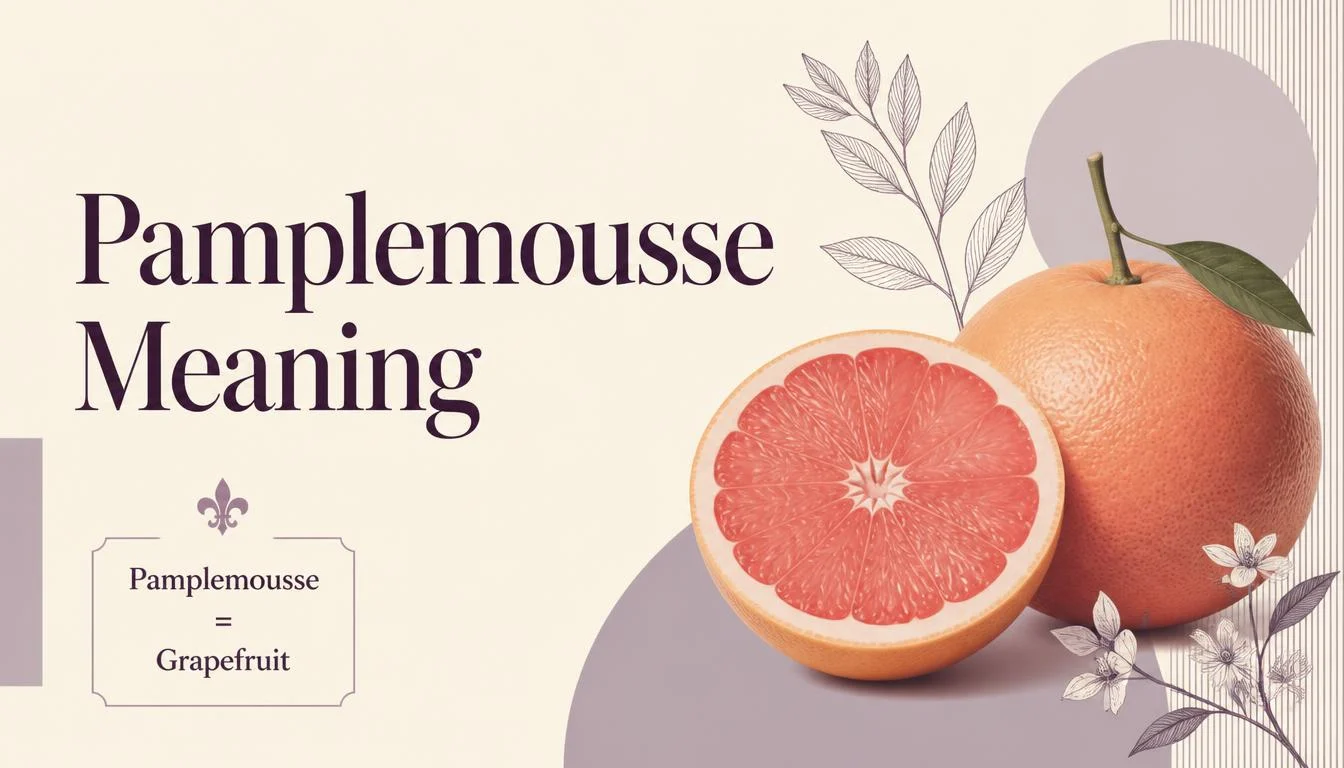
Pamplemousse Meaning refers to grapefruit in French. It is a French word used for the large citrus fruit known for its juicy flesh and slightly bitter taste.In simple terms pamplemousse is the French word for grapefruit. You may see it on French menus, food labels, drinks and fruit descriptions.
Pamplemousse Meaning refers to the French word for grapefruit, a popular citrus fruit known for its refreshing taste. The word may appear on French menus, food labels or travel related content.
Understanding Pamplemousse Meaning can make French words easier to recognize in everyday situations. It is especially useful when reading recipes, shopping for fruit or visiting a French speaking place.
What Does Pamplemousse Mean?
If you have come across the word pamplemousse you may wonder what it means. It is a French word for grapefruit. The term is commonly used when talking about the fruit itself.
The pamplemousse definition is quite simple. It describes a citrus fruit that is usually round and has a yellow or pink interior. Its flavor can range from sweet to pleasantly bitter.
So when someone asks what does pamplemousse mean the short answer is grapefruit. It is not normally used as a slang expression or hidden phrase.
The word belongs to everyday French vocabulary. You may encounter it while reading a French recipe or looking at a fruit selection in France.
Pamplemousse in English
The pamplemousse in English translation is grapefruit. This is the standard English word used for the same fruit.
For example a French speaker might say that they enjoy eating pamplemousse in the morning. In English the same idea would be expressed by saying that they enjoy eating grapefruit in the morning.
The pamplemousse meaning in English therefore has a direct translation. There is no complicated interpretation required when the word is used in a food related context.
You can think of it as one of many French food words that have a clear English equivalent.
Pamplemousse Meaning in French
The pamplemousse meaning in French is grapefruit. French speakers use the word to identify the citrus fruit.
You might find it in supermarkets or on restaurant menus. It can also appear in recipes that include grapefruit juice or grapefruit pieces.
The French word pamplemousse is especially useful when discussing fruits. It fits naturally into everyday conversations about food and drinks.
For example someone could talk about buying a pamplemousse at a market. Another person might use the word while describing a fresh fruit salad.
Is Pamplemousse a French Word?
Yes. Pamplemousse is a French word. It is the normal French term for grapefruit.
If you are learning French vocabulary you may come across the word alongside other fruit names. Learning these words can make everyday conversations much easier.
The pamplemousse French word is also interesting because its spelling looks quite different from the English word grapefruit.
That difference is one reason people often search for pamplemousse translation when they first encounter it.
What Is Pamplemousse?
So what is pamplemousse exactly?
Pamplemousse is grapefruit. Grapefruit is a citrus fruit with juicy sections inside a thick peel. Depending on the variety the flesh may be white pink or red.
The fruit has a distinctive taste. Some varieties are sweet while others have a stronger bitter flavor.
You can eat grapefruit fresh or use it in juices. It is also used in salads desserts cocktails and other food preparations.
When a French recipe calls for pamplemousse it generally means that grapefruit should be used.
Pamplemousse and Grapefruit
The relationship between pamplemousse grapefruit is straightforward. They refer to the same general fruit in French and English.
Pamplemousse is the French term. Grapefruit is the English term.
This makes pamplemousse vs grapefruit less of a comparison and more of a translation question.
However there is one detail that can sometimes cause confusion. French also has the word pomelo which refers to pomelo. Grapefruit and pomelo are related citrus fruits but they are not exactly the same.
In ordinary French usage pamplemousse commonly refers to grapefruit. The exact fruit intended can depend on the context.
French Word for Grapefruit
The French word for grapefruit is pamplemousse.
This is useful to remember if you are traveling in France or reading French food content. You may see the word in grocery stores or on menus.
For example a juice labeled with pamplemousse may contain grapefruit. A dessert described with pamplemousse may include grapefruit as a main ingredient.
Knowing the grapefruit in French translation can also help when shopping for fresh fruit.
It is a small vocabulary detail but it can make French food descriptions much easier to understand.
Pamplemousse Pronunciation
The pamplemousse pronunciation can seem difficult when you first see the word. French pronunciation does not always follow English spelling patterns.
A useful approximation for English speakers is something like pahm pluh moos.
The final part sounds similar to the English word “moose”. The French pronunciation is smoother and should not be spoken with strong English stress.
If you are wondering how to pronounce pamplemousse naturally the best approach is to listen to native French speakers. Hearing the word in a sentence can make its rhythm easier to copy.
Do not worry about getting it perfect immediately. French pronunciation takes practice.
Pamplemousse Definition and Everyday Usage
The pamplemousse definition becomes clearer when you see how the word is used.
It can describe the whole fruit. It can also appear in phrases related to grapefruit juice or grapefruit based foods.
Here are a few simple examples:
Example 1:
J’aime le pamplemousse.
This means “I like grapefruit.”
Example 2:
Le pamplemousse est frais.
This means “The grapefruit is fresh.”
Example 3:
Je bois du jus de pamplemousse.
This means “I drink grapefruit juice.”
These examples show that pamplemousse works naturally as a food related noun.
Pamplemousse Used in a Sentence
Understanding pamplemousse used in a sentence can make the word easier to remember.
Consider this example:
French:
“Elle mange un pamplemousse au petit déjeuner.”
English:
“She eats a grapefruit for breakfast.”
Here pamplemousse refers directly to the fruit.
Another example is:
French:
“Le jus de pamplemousse est très frais.”
English:
“The grapefruit juice is very refreshing.”
The meaning stays clear because the surrounding words provide context.
Pamplemousse Literal Meaning
People sometimes search for the pamplemousse literal meaning because the word does not look anything like grapefruit.
In modern French the practical meaning is simply grapefruit. You do not need to translate every part of the word separately to understand it.
This is common with vocabulary in many languages. Words can develop over time and their modern meaning may not be obvious from their spelling.
For everyday use the important point is simple. When you see pamplemousse in French food related content think of grapefruit.
Pamplemousse Etymology
The pamplemousse etymology is more interesting than its modern meaning suggests.
The word has a long history and is connected to terms used for citrus fruits in different languages. Its development is often associated with the Dutch word pompelmoes which referred to the pomelo.
The word eventually became part of French vocabulary as pamplemousse.
This history helps explain why the French word looks so different from the English word grapefruit.
Language often carries traces of trade travel and cultural contact. Fruit names are especially interesting because fruits moved between regions through exploration and commerce.
The origin of pamplemousse therefore reflects more than a simple translation. It shows how words can travel between languages as foods travel between countries.
Origin of Pamplemousse
The origin of pamplemousse is connected with older names for citrus fruits.
The word is related to Dutch forms such as pompelmoes. These older terms were associated with the pomelo and related citrus varieties.
Over time the word entered French as pamplemousse.
This is why the modern French term does not resemble the English word grapefruit.
It also shows how the history of food and the history of language can overlap. As citrus fruits became known in different parts of the world their names changed across languages.
Pamplemousse and French Food Culture
The word pamplemousse is easy to encounter when exploring French food culture.
You may see it in recipes for fruit salads. It can also appear in drinks desserts and breakfast dishes.
French cuisine often uses fresh ingredients in simple combinations. Grapefruit can provide a sharp citrus flavor that works well with sweeter ingredients.
Pamplemousse can also appear in juice descriptions. If you are reading a French menu the word can help you identify the flavor of a drink.
This is one reason learning basic food vocabulary can be useful when traveling.
Why Does Grapefruit Have Different Names?
You may wonder why grapefruit is called grapefruit in English but pamplemousse in French.
Languages develop independently. Different communities can create or adopt different names for the same object.
English and French have many examples of this difference.
For instance “apple” is pomme in French. “Strawberry” is fraise. “Lemon” is citron. Grapefruit follows the same pattern with pamplemousse.
There is no need for the words to look similar. They simply developed through different linguistic histories.
Pamplemousse vs Pomelo
One point worth knowing is the difference between pamplemousse and pomelo.
The terms can sometimes create confusion because grapefruit and pomelo are closely related citrus fruits.
A pomelo is generally larger than a grapefruit. It also tends to have thicker skin and a milder flavor.
In French the word pamplemousse is commonly associated with grapefruit. The word pomelo can be used for pomelo.
The exact usage can vary depending on the source and context. When translating a French food label it is helpful to consider the full description.
Is Pamplemousse a Slang Word?
No. Pamplemousse is not normally a slang word.
It is a standard French noun for grapefruit. If you see the word in a normal French conversation about food it is most likely referring to the fruit.
Online searches can sometimes make ordinary words seem mysterious. This happens when people discover unfamiliar vocabulary through social media or product names.
In this case there is no hidden slang meaning that you need to know.
Common Places You May See Pamplemousse
You can encounter pamplemousse in several everyday situations.
On French Menus
Restaurants may use pamplemousse when describing salads desserts or drinks.
In Supermarkets
Fresh fruit sections can use the word when labeling grapefruit.
On Juice Bottles
Grapefruit juice can be described as jus de pamplemousse.
In Recipes
French recipes may include pamplemousse as an ingredient.
In Language Learning
French vocabulary resources often include pamplemousse when teaching fruit names.
These examples make the word easier to recognize in real life.
Simple Way to Remember Pamplemousse
A simple memory trick can make the word easier to remember.
Think of pamplemousse as the French name connected with grapefruit. The ending “mousse” may remind you of the sound “moose” but this is only a memory aid.
Do not try to force an English meaning into every part of the word.
Instead remember the direct connection:
Pamplemousse = Grapefruit
Once you make that connection the word becomes much easier to recognize.
FAQs
1. What does pamplemousse mean?
Pamplemousse means grapefruit in French. It is a standard French word used for the citrus fruit.
2. What is pamplemousse in English?
Pamplemousse in English means grapefruit. The two words refer to the same fruit in their respective languages.
3. Is pamplemousse a French word?
Yes. Pamplemousse is a French word for grapefruit. It is commonly used in food related conversations and descriptions.
4. How do you pronounce pamplemousse?
Pamplemousse can be approximated as “pahm pluh moos” for English speakers. Native French pronunciation has a smoother rhythm.
5. What is the French word for grapefruit?
The French word for grapefruit is pamplemousse. You may see it on menus recipes and French food labels.
6. Is pamplemousse the same as grapefruit?
Yes. In common French usage pamplemousse refers to grapefruit. Grapefruit is the standard English translation.
7. What is the difference between pamplemousse and pomelo?
Pamplemousse commonly refers to grapefruit while pomelo refers to the pomelo fruit. They are related citrus fruits but are not identical.
8. What does pamplemousse mean in French?
Pamplemousse means grapefruit in French. It is a regular noun rather than a slang expression.
9. Where does the word pamplemousse come from?
The word is connected with older citrus fruit names including the Dutch term pompelmoes. It eventually became part of French vocabulary.
10. What is pamplemousse used for?
Pamplemousse can refer to grapefruit used as fresh fruit or as an ingredient in juice salads desserts and other foods.
Conclusion
The pamplemousse meaning in English is grapefruit. It is a standard French word used when referring to this citrus fruit. If you were searching for the meaning of pamplemousse because you saw it on a menu or product label the answer is quite simple. It means grapefruit.
The pamplemousse French meaning is therefore useful for travelers language learners and anyone interested in French food vocabulary. You can also remember its basic pronunciation as “pahm pluh moos” while keeping in mind that native French pronunciation is smoother. The next time you see pamplemousse in French content you will know exactly what it means. It is simply the French word for grapefruit.










12 thoughts on “Pamplemousse Meaning | French Word for Grapefruit Explained In 2026”