Quick Answer
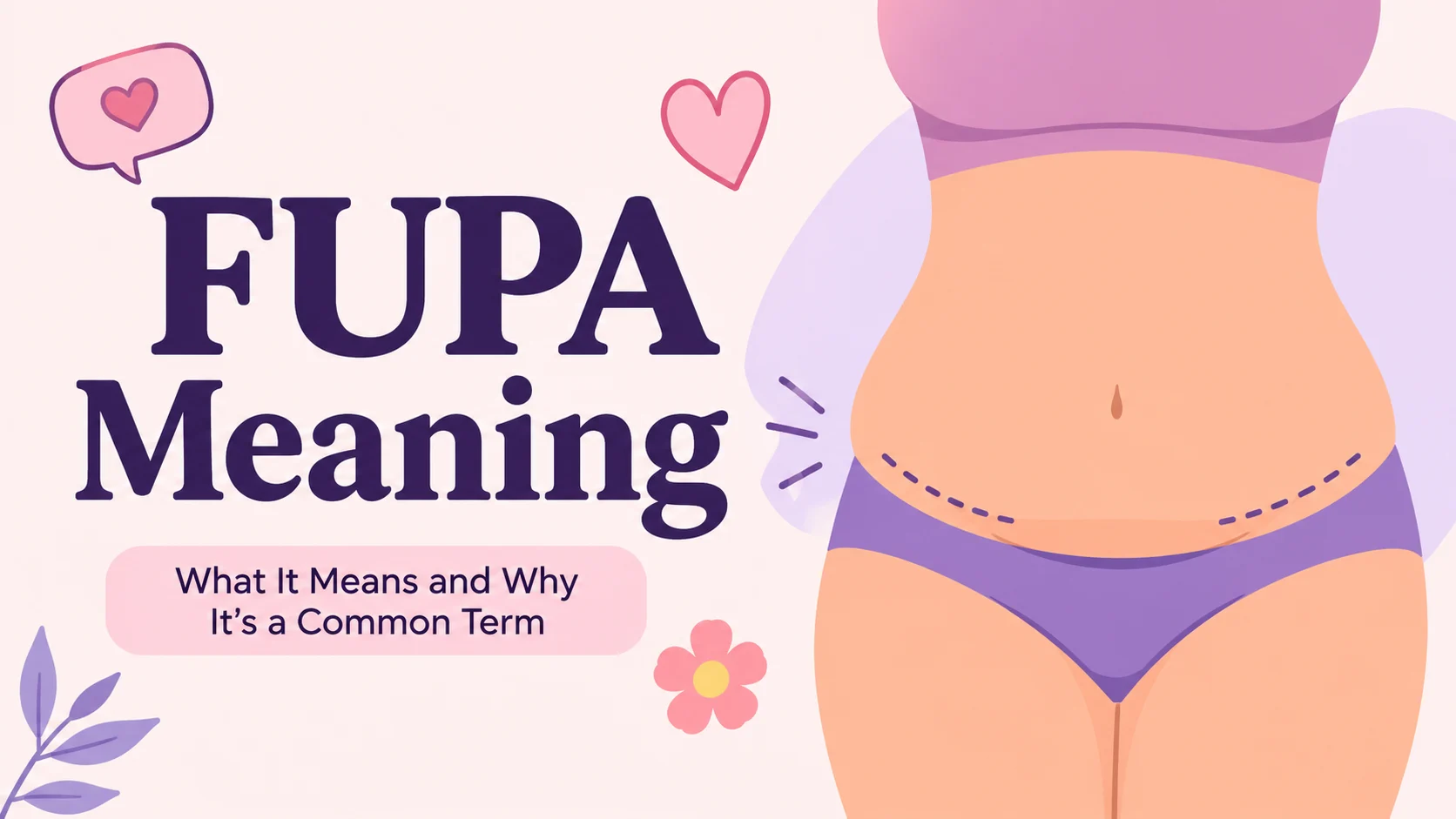
FUPA Meaning refers to the slang term for the soft area of fat or skin that can hang over the pubic region or upper thighs. It is an informal, body-related term often used humorously or casually.
FUPA Meaning is commonly searched by people who come across the term online, in memes, or during casual conversations. The word is an informal slang term related to body shape and appearance. It is usually used to describe an area around the lower abdomen and pubic region. While often humorous, the term can also be sensitive depending on the context.
Understanding FUPA Meaning can help you recognize what someone means when they use this slang online. FUPA is not a medical term and is generally found in informal conversations. Its tone can range from playful and self-deprecating to insulting, depending on how it is used. Knowing the context is important before using the term yourself.
FUPA Meaning at a Glance
FUPA is short for “Fat Upper Pubic Area.” It refers to a soft or protruding area of lower belly fat located just above the pubic bone. People use it in casual conversation, social media captions, and body-image discussions, and the tone can range from lighthearted to hurtful depending on context.
| Detail | Explanation |
|---|---|
| Most Common Meaning | Fat Upper Pubic Area (lower belly fat area) |
| Full Form | Fat Upper Pubic Area |
| Tone | Varies casual, self-deprecating, or insulting |
| Common Platforms | TikTok, Instagram, text messages, group chats |
| Formal or Informal | Informal slang, not medical terminology |
Main Meaning of FUPA
What FUPA Stands For
FUPA is an acronym for “Fat Upper Pubic Area.” It’s an informal term, not a clinical or medical one, even though people sometimes bring it up in conversations about weight, body shape, or postpartum bodies. It simply names a specific area of the body where fat can accumulate or where skin can appear looser, often after weight gain, pregnancy, or as a natural part of someone’s body shape.
How People Normally Use It
People use FUPA in a few different ways. Sometimes it’s used self-deprecatingly, where someone jokes about their own body in a light, non-serious way. Other times it shows up in fitness or body-transformation content, where someone talks about changes to that area of their body over time. It can also be used unkindly, as a way to mock someone’s appearance, which is where the term gets its more negative reputation.
Typical Tone
The tone of FUPA is not fixed. It can sound casual and joking between friends, clinical and neutral in a body-positivity or fitness context, or blunt and hurtful when used to criticize someone. Because the word itself describes a body part rather than an action, the emotional weight comes almost entirely from the context and the relationship between the people talking.
Realistic Example
Text message: “Ugh, I need new jeans, my FUPA is not having it today 😭”
Explanation: Here, the speaker is using the term about their own body in a joking, self-aware way. There’s no insult directed at anyone else, and the tone is casual rather than serious.
How Context Changes the Meaning
The word itself stays the same, but the way it lands depends heavily on the situation around it. Here’s how context shifts the interpretation.
- Example 1 Between close friends: “Lol my FUPA is out here doing its own thing in this dress” This reads as self-deprecating humor, not a real complaint.
- Example 2 In a fitness caption: “3 months of consistency and my FUPA has visibly changed” This is a neutral, descriptive use tied to a body-progress update.
- Example 3 Directed at someone else without warning: “Ew, look at her FUPA” This is clearly insulting and disrespectful, regardless of platform.
- Example 4 In a body-positivity post: “Normalizing FUPAs, stretch marks, and all the things bodies naturally do” This use is supportive and reframes the term in a positive light.
The key factors that shift meaning are who is speaking, who the comment is directed at, whether it’s self-referential, and whether the surrounding words are affectionate, neutral, or mocking.
Meaning Across Platforms
FUPA doesn’t really change definition from platform to platform, but the way it’s typically framed does shift slightly depending on where you see it.
On TikTok
On TikTok, FUPA commonly appears in body-transformation videos, “get ready with me” content, or postpartum body content. It’s often used descriptively rather than as an insult, since creators are usually talking about their own bodies.
On Instagram
On Instagram, the term shows up in similar contexts fitness journeys, body-positivity captions, or comment sections. Comment-section use is where tone can shift negative, since anonymous or distant commenters sometimes use it to criticize someone’s appearance.
In Text Messages and Group Chats
In private texts, FUPA is almost always self-referential and casual, used the way someone might joke about “bloat” or “a bad angle in a photo.” It’s rarely aimed at the other person unless the relationship allows for that kind of teasing.
Real Conversation Examples
Example 1 Friends Person A: “I finally tried on that dress from last year” Person B: “And??” Person A: “My FUPA said absolutely not 😂” Meaning: Self-deprecating humor about how a piece of clothing fits.
Example 2 Fitness Group Chat Person A: “Any tips for that lower belly area? My FUPA has been stubborn” Person B: “Girl same, it’s the last thing to budge for me too” Meaning: A neutral, shared conversation about body areas people commonly discuss in fitness spaces.
Example 3 Social Media Comment (negative use) Person A: “New swimsuit pic 🌴” Person B: “Nice FUPA lol” Meaning: An unsolicited, unkind comment aimed at criticizing someone’s body rather than joking with them.
Tone and Emotional Meaning
Is FUPA Rude?
FUPA can be rude, but it isn’t rude by default. Said about your own body in a joking way, it’s rarely offensive. Said about someone else’s body, especially without an established close relationship, it can come across as disrespectful or hurtful.
Is FUPA Offensive?
It can be offensive when used to mock someone’s appearance, particularly in public comments or without any prior context suggesting the person would be okay with that kind of joke. Because it targets a physical trait, it carries more weight than typical slang.
Is FUPA Ever Used Positively?
Yes. In body-positivity spaces, the term is sometimes reclaimed and used matter-of-factly, the same way people talk openly about stretch marks or cellulite, aiming to normalize natural body variation rather than shame it.
How to Reply
Friendly Replies
- “Lol same, mine has main character energy today”
- “We stan a FUPA, it’s just part of the body”
- “Honestly it’s giving comfort over everything right now”
- “Jeans are the real villain here, not your body”
Polite Replies (When Discussed Neutrally)
- “That’s a really common area for a lot of people, you’re not alone in that”
- “It happens to pretty much everyone at some point”
- “Bodies change, that’s completely normal”
Replies When Someone Uses It Unkindly
- “That’s not really necessary”
- “Let’s keep comments about looks out of this”
- “Not sure why that needed to be said”
When to Use the Term
FUPA fits casual settings such as texts with close friends, body-positive social media captions, fitness progress posts among people who’ve opted into that kind of content, and light self-deprecating humor. It works best when the tone is already established as casual and the audience is familiar with that kind of language.
When to Avoid the Term
Avoid FUPA in professional emails, medical consultations, academic writing, or formal communication of any kind, since it’s slang rather than clinical terminology. It’s also worth avoiding when commenting on someone else’s appearance publicly, since even a joking tone can come across as body-shaming to someone you don’t know well. In healthcare settings, the accurate way to reference this body area is through proper anatomical terms rather than slang.
Common Mistakes People Make
| Common Mistake | Correct Understanding |
|---|---|
| Assuming FUPA is always an insult | It’s often used self-referentially and casually, not always as criticism |
| Treating it as a medical term | It’s slang, not an official anatomical or clinical term |
| Using it to comment on someone else’s body uninvited | It can be hurtful when directed at others without context or consent |
Similar Slang and Related Terms
| Term | Meaning | Main Difference |
|---|---|---|
| Muffin top | Fat that spills over the waistband of pants | Refers to the waist area, not the lower pubic region |
| Love handles | Fat around the sides of the waist | Location is the sides of the torso, not the lower belly |
| Bloat | Temporary belly swelling, often from food or water retention | Usually temporary, not tied to a specific fixed body area |
| Dad bod | A casual, softer male body shape overall | Refers to an entire body type, not one specific area |
Origin of the Term
The exact first use and creator of FUPA aren’t clearly documented, and it’s the kind of slang that spread gradually through informal conversation rather than through one identifiable origin point. It has been used in casual and body-positivity conversations online for years, but no verified date or original source can be confirmed.
Quick Recap
- FUPA stands for “Fat Upper Pubic Area,” referring to lower belly fat above the pubic region.
- It’s informal slang, not a medical term, and the tone depends entirely on context.
- The same word can be joking, neutral, or hurtful depending on who says it and why.
- It’s fine in casual, familiar settings but should be avoided in professional or formal communication.
- When someone uses it unkindly toward another person, a calm, direct response works best.
FAQs
What does FUPA mean in text?
FUPA is slang for “Fat Upper Pubic Area,” referring to fat located just above the pubic region.
Is FUPA rude?
It can be rude when directed at someone else, but it’s usually harmless when used self-deprecatingly.
What does FUPA mean on TikTok?
On TikTok it typically appears in body-transformation or postpartum content, describing that specific area of the body.
How should you reply to FUPA?
Respond with light humor if the tone is casual, or address it calmly if the comment feels disrespectful.
Can FUPA have different meanings?
No, its meaning stays consistent, but the tone shifts from playful to insulting depending on the situation.
Conclusion
FUPA is slang for “Fat Upper Pubic Area,” a term people use to describe lower belly fat rather than an official medical phrase. The meaning itself doesn’t change, but the tone absolutely does, shifting from playful and self-referential to genuinely hurtful depending on who says it and why. In casual settings among friends, it’s often used lightly, while in professional or unfamiliar situations, clearer and more respectful language works better. Paying attention to context, relationship, and intent is the simplest way to understand what someone actually means when they use it.
Read More Related Articles:
- Habibi Meaning | Why This Arabic Word Feels So Personal In 2026
- Parens Meaning In Text | From Confusing Shortcut to Clear Meaning In 2026
- Finlet Meaning | Surprising Definition You Should Know In 2026

Liam Bennett is a creative mind behind SimileVibe.com, focused on building clean digital experiences and real connections through design, content, and modern web culture. He’s passionate about turning simple ideas into engaging online experiences that feel authentic and human.