Quick Answer
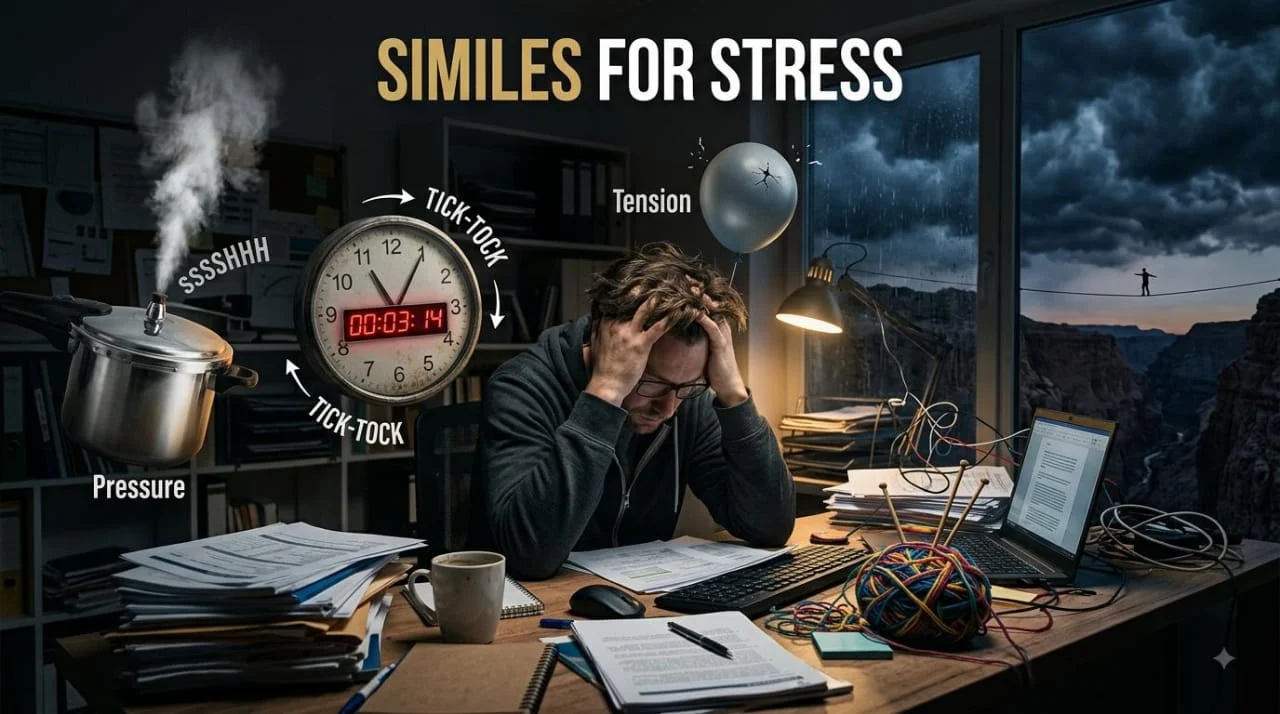
Similes for stress compare feelings of pressure, anxiety, and overwhelm to familiar experiences using words like “as” or “like.” These comparisons transform abstract emotional states into vivid imagery that readers instantly recognize. From “like a pressure cooker ready to blow” to “as tight as a knotted rope,” these figurative expressions help writers convey the intensity and complexity of stress with precision and emotional impact.
Stress is one of the most universal human experiences, yet it remains one of the most challenging emotions to describe effectively.
Everyone has felt it that crushing weight of deadlines, the racing heart before an important presentation, the sleepless nights spent worrying about the future. But when you try to put these feelings into words, simple statements like “I feel stressed” or “I am overwhelmed” often fall painfully short. They lack the emotional weight, the physical sensation, the all-consuming nature that makes stress such a powerful and sometimes debilitating force in our lives.
This is where similes become invaluable tools for writers, speakers, and anyone trying to communicate the experience of stress. By comparing stress to familiar objects, situations, and natural phenomena, we can create descriptions that resonate deeply with readers and listeners. A person isn’t just stressed they are “like a pressure cooker ready to blow.” Their mind doesn’t just feel busy it’s “like a tangled ball of yarn.” These comparisons transform abstract feelings into tangible, relatable images .
Whether you’re writing a novel, crafting a blog post, preparing a speech, or simply trying to express your own feelings, similes for stress can help you communicate more effectively. This comprehensive guide explores the most powerful and creative similes for stress, organized by the type of experience they describe. Each entry includes the simile itself, its meaning, why it works, and practical examples to inspire your own writing.
Quick List of Similes for Stress
| Simile | Meaning |
| Like a pressure cooker ready to blow | Extreme tension ready to erupt |
| As tight as a knotted rope | Mental and physical tension |
| Like a storm brewing inside | Turbulent emotions building |
| As stressed as a ticking time bomb | Pressure about to explode |
| Like a hamster on a wheel | Stuck in repetitive stress |
| Like a heavy backpack | Weight of responsibilities |
| My mind buzzed like a trapped bee | Overthinking and anxiety |
| Like a balloon about to pop | Reaching breaking point |
| Like walking on a tightrope | Careful balance under pressure |
| Like a dark cloud hanging over | Constant, unavoidable worry |
| Like a tangled ball of yarn | Confused, complicated thoughts |
| Like a tidal wave | Sudden, overwhelming pressure |
| Like a shadow that never leaves | Persistent, inescapable stress |
| Like a computer with too many tabs open | Mental overload and distraction |
Understanding Similes for Stress
What Makes a Stress Simile Effective?
Before diving into the examples, it’s worth understanding what makes a stress simile resonate with readers. The most effective similes share several key characteristics:
Relatability: The comparison should draw on experiences most readers understand. Everyone knows what it feels like to carry something heavy, to be in a crowded space, or to wait for a ticking timer to go off.
Sensory Imagery: Strong similes engage the senses. They help readers not just understand stress intellectually but feel it viscerally. Physical sensations tightness, heat, pressure are particularly effective because stress manifests physically.
Emotional Accuracy: A good simile captures the specific flavor of stress being described. The stress of waiting for important news feels different from the stress of juggling multiple deadlines, and similes should reflect these nuances.
Originality with Familiarity: The most powerful similes balance familiar concepts with fresh phrasing. They take something readers recognize and present it in a slightly unexpected way.
How Similes Differ from Metaphors for Stress
While similes and metaphors both make comparisons, they do so differently:
Simile: Uses “like” or “as” to make a comparison.
Example: “I felt like a pressure cooker ready to blow.”
Metaphor: States that one thing is another.
Example: “I was a pressure cooker ready to blow.”
Similes tend to feel gentler and more descriptive, while metaphors create stronger, more direct identification between the subject and the comparison image. Both have their place in effective writing about stress.
Similes for Building Pressure and Tension
Like a Pressure Cooker Ready to Blow
Meaning: Feeling extreme tension and stress that could erupt at any moment .
Why It Works: A pressure cooker builds steam internally until the pressure becomes too great. This perfectly mirrors how stress accumulates seemingly manageable at first, then slowly building until it threatens to explode. The image is universally understood and viscerally felt.
Examples in Writing:
Formal Example:
After months of managing three major projects simultaneously without additional support, Jonathan felt like a pressure cooker ready to blow, his patience thinning with each new request.
Casual Example:
I’ve been juggling work, school, and family stuff all week honestly, I’m like a pressure cooker ready to blow right now.
Creative Example:
Every email that pinged into her inbox added another degree of heat, another pound of pressure, until Sarah sat at her desk like a pressure cooker ready to blow, the whistle of her frustration nearly audible.
Like a Pot Left on High Heat
Meaning: Feeling overwhelmed and emotionally volatile, ready to boil over .
Why It Works: Similar to the pressure cooker image but slightly different a pot on high heat suggests something that’s been ignored or left unattended until it reaches a crisis point. It implies a lack of control and a sense that the situation has been allowed to escalate.
Examples:
Formal Example:
The constant demands from upper management left the entire department like a pot left on high heat, arguments breaking out over minor disagreements.
Casual Example:
I’ve been like a pot left on high heat all day I could snap at anyone right now.
Creative Example:
His patience, once so deep and calm, now simmered dangerously, a pot left on high heat that no one had thought to stir.
Like a Balloon About to Pop
Meaning: Being extremely tense and near a breaking point .
Why It Works: Balloons can only stretch so far before they burst. This simile captures the specific feeling of being stretched to one’s limits, of having taken on just one more stressor than can be accommodated.
Examples:
Formal Example:
After three weeks of twelve-hour days, Maria felt like a balloon about to pop, every minor inconvenience threatening to set her off.
Casual Example:
I can’t take any more bad news today I’m like a balloon about to pop.
Creative Example:
Her calm exterior masked an interior stretched thin, a balloon about to pop under the weight of things unsaid and tasks undone.
Like a Ticking Time Bomb
Meaning: Feeling that stress could lead to an emotional explosion at any moment .
Why It Works: A ticking time bomb creates suspense and inevitability. This simile is particularly effective for describing stress that has been building over time, where the person knows they’re reaching their limit but feels powerless to stop it.
Examples:
Formal Example:
He’d been ignoring his mounting anxiety for months, but everyone around him could see he was like a ticking time bomb waiting to detonate.
Casual Example:
I’ve been so stressed about this deadline that I feel like a ticking time bomb.
Creative Example:
She counted down the hours until her presentation the way a bomb squad counts down seconds, knowing that when zero arrived, everything would change.
As Tight as a Knotted Rope
Meaning: Experiencing extreme mental and physical tension .
Why It Works: A knotted rope is something that should be straight and functional but has become twisted and unusable. It suggests tension that affects the entire body and mind, making relaxation impossible.
Examples:
Formal Example:
His shoulders were as tight as a knotted rope after hours of tense negotiations.
Casual Example:
I’ve been as tight as a knotted rope all week I can’t even sleep properly.
Creative Example:
Every muscle in her body was as tight as a knotted rope, her jaw clenched so hard that her teeth ached.
Similes for Mental Chaos and Overwhelm
Like a Storm Brewing Inside
Meaning: Experiencing a turbulent mix of emotions and stress building internally .
Why It Works: Storms gather strength before they strike, just as stress accumulates before it manifests. This simile captures both the intensity and the anticipation of stress the feeling that something is coming, even if it hasn’t fully arrived yet.
Examples:
Formal Example:
Nervous energy swirled through him like a storm brewing inside before the championship match.
Casual Example:
I could feel a storm brewing inside as the meeting approached.
Creative Example:
Behind her composed expression, a storm was brewing inside, dark clouds of anxiety gathering where only moments before there had been clear skies.
Like a Tangled Ball of Yarn
Meaning: Feeling confused, mentally overwhelmed, and unable to sort out thoughts .
Why It Works: Anyone who has tried to untangle a knot of yarn knows the frustration of complicated, intertwined problems. This simile captures the sense that stress makes simple things complicated and that every attempt to fix one issue seems to make everything worse.
Examples:
Formal Example:
Her mind felt like a tangled ball of yarn after the chaotic board meeting left her with conflicting instructions.
Casual Example:
After reading all those instructions at once, my brain was like a tangled ball of yarn.
Creative Example:
The more she tried to think clearly, the more her thoughts twisted into a tangled ball of yarn, each strand connected to another in ways she couldn’t unravel.
My Mind Buzzed Like a Trapped Bee
Meaning: Experiencing overthinking and anxiety, with thoughts that won’t settle .
Why It Works: A trapped bee frantically searches for escape, buzzing incessantly. This simile captures the restless, agitated quality of stress-induced overthinking the sense that thoughts are bouncing around without finding release.
Examples:
Formal Example:
My mind buzzed like a trapped bee before the interview, every possible question and answer competing for attention.
Casual Example:
I couldn’t sleep because my mind buzzed like a trapped bee all night.
Creative Example:
His thoughts spiraled and collided, buzzing like a trapped bee against the glass of his skull, each one louder than the last.
My Thoughts Raced Like Wild Horses
Meaning: Experiencing uncontrolled, fast-moving worry and anxiety .
Why It Works: Wild horses are powerful, untamed, and difficult to control. This simile captures the sense that stress makes thoughts accelerate and become unmanageable.
Examples:
Formal Example:
My thoughts raced like wild horses as the deadline approached, each new worry overtaking the last.
Casual Example:
I lay awake all night, my thoughts racing like wild horses.
Creative Example:
Sleep was impossible; her thoughts raced like wild horses across a dark plain, galloping from one anxiety to another without rest.
My Brain Felt Tangled Like Headphones in a Pocket
Meaning: Experiencing confused, messy thinking caused by stress .
Why It Works: This modern simile is instantly relatable. Headphones placed in a pocket inevitably become a hopeless tangle and so do thoughts under stress.
Examples:
Formal Example:
The complexity of the project left her brain feeling tangled like headphones in a pocket, every thread connected to every other.
Casual Example:
I can’t think straight my brain feels tangled like headphones in a pocket.
Creative Example:
He tried to organize his presentation notes, but his brain was tangled like headphones in a pocket, ideas looped around each other in ways that made no sense.
Similes for Physical Sensations of Stress
Like a Heavy Backpack
Meaning: Feeling weighed down by responsibilities and worries .
Why It Works: We all know the physical sensation of carrying a heavy backpack the strain on shoulders, the fatigue, the desire to set it down. This simile translates the abstract burden of stress into something everyone has experienced.
Examples:
Formal Example:
The weight of his family’s expectations was like a heavy backpack he couldn’t set down, each day adding another stone.
Casual Example:
I’ve been carrying a heavy backpack of worries about exams and assignments.
Creative Example:
She walked through her day bent under the weight of invisible responsibilities, like a heavy backpack that only she could feel.
Like a Weight on My Chest/Stress Sat on My Chest Like a Stone
Meaning: Experiencing the physical heaviness and suffocating quality of stress .
Why It Works: This simile captures the literal physical sensations of severe stress tightness in the chest, difficulty breathing, the feeling of being crushed. It translates emotional pressure into physical experience.
Examples:
Formal Example:
The anxiety of the upcoming surgery sat on his chest like a stone, making every breath feel like an effort.
Casual Example:
I couldn’t breathe properly stress sat on my chest like a stone.
Creative Example:
The weight of the diagnosis pressed down on her, stress sitting on her chest like a stone that she couldn’t push away.
Like a Tight Knot in the Stomach
Meaning: Experiencing the physical anxiety that accompanies stress, often in the digestive system.
Why It Works: Stress commonly manifests as stomach discomfort butterflies, nausea, or a feeling of tightness. This simile captures that specific physical symptom.
Examples:
Formal Example:
Before the hearing, a tight knot in his stomach tightened with every passing minute.
Casual Example:
I’ve had a knot in my stomach all day worrying about the results.
Creative Example:
Fear coiled in her stomach like a tight knot, growing harder and more painful with each moment.
My Nerves Shook Like Leaves in the Wind
Meaning: Feeling anxious, fragile, and emotionally vulnerable due to stress .
Why It Works: Leaves are delicate and at the mercy of the wind. This simile captures the sense of being out of control, of being buffeted by forces beyond one’s power.
Examples:
Formal Example:
Her nerves shook like leaves in the wind as she stepped onto the stage.
Casual Example:
I was so nervous that my hands were shaking like leaves in the wind.
Creative Example:
His confidence crumbled, his nerves shaking like leaves in the wind of his doubt.
My Heart Pounded Like a Drum
Meaning: Experiencing a rapid, noticeable heartbeat due to stress or anxiety .
Why It Works: A drumbeat is loud, rhythmic, and impossible to ignore just like a racing heart during moments of acute stress.
Examples:
Formal Example:
His heart pounded like a drum as he waited for the verdict.
Casual Example:
My heart was pounding like a drum before I gave my speech.
Creative Example:
The anticipation built, his heart pounding like a drum that heralded something terrible or wonderful he couldn’t tell which.
Similes for Persistent and Inescapable Stress
Like a Shadow That Never Leaves
Meaning: Stress that is constant, inescapable, and always present .
Why It Works: Shadows follow us wherever we go, impossible to shake off. This simile captures the relentless quality of chronic stress the sense that no matter what you do, it’s still there.
Examples:
Formal Example:
Financial worries clung to him like a shadow that never left, darkening every decision and every moment of peace.
Casual Example:
This stress follows me like a shadow I can’t get rid of it.
Creative Example:
Even in her happiest moments, stress lurked nearby like a shadow that never leaves, always ready to darken her joy.
Like a Dark Cloud Hanging Over
Meaning: Constant, unavoidable worry that overshadows everything .
Why It Works: A dark cloud blocks the sun and threatens rain. It changes the atmosphere and affects everything below it. This simile captures the way persistent stress colors every experience.
Examples:
Formal Example:
The threat of layoffs hung over the office like a dark cloud, affecting morale and productivity.
Casual Example:
My worries have been hanging over me like a dark cloud all week.
Creative Example:
Happiness felt impossible with that dark cloud hanging over, its shadow stretching into every corner of her life.
Like a Crowded Highway
Meaning: A mind overwhelmed with too many thoughts, stress, and distractions .
Why It Works: A crowded highway is chaotic, noisy, and difficult to navigate. All the cars are competing for space and moving at different speeds. This simile captures the sense of having too much mental traffic too many thoughts, too many worries, too many demands.
Examples:
Formal Example:
The demands of running a business and raising a family left her mind like a crowded highway at rush hour.
Casual Example:
I can’t focus my mind is like a crowded highway right now.
Creative Example:
His thoughts were bumper to bumper, a crowded highway where every idea honked for attention and none could pass.
Like Sand Slipping Through Fingers
Meaning: Feeling anxious about losing control or letting opportunities slip away.
Why It Works: This simile captures the frustrating sense that stress makes it impossible to hold onto what matters time, control, opportunities, peace of mind. The harder you try to grip, the more seems to escape.
Examples:
Formal Example:
The project deadlines slipped away like sand through his fingers, each missed milestone another grain gone.
Casual Example:
I feel like everything is slipping through my fingers lately.
Creative Example:
Time was sand through her fingers, each grain a moment of calm she couldn’t hold onto.
Similes for Modern and Relatable Stress
Like a Computer with Too Many Tabs Open
Meaning: Mental overload, distraction, and the sense that the mind is slowing down under too many demands .
Why It Works: This modern simile perfectly captures a contemporary experience. Anyone who has opened too many browser tabs knows the feeling of a computer slowing down, freezing, or struggling to function. The mind under stress works the same way.
Examples:
Formal Example:
Between client meetings, emails, and project updates, his brain felt like a computer with too many tabs open sluggish and close to crashing.
Casual Example:
I feel like a computer with too many tabs open. I need to close something!
Creative Example:
She could feel her processing power slowing, her thoughts lagging like a computer with too many tabs open, each one a worry she couldn’t bear to close.
Like a Hamster on a Wheel
Meaning: Feeling stuck in repetitive, stressful routines that lead nowhere .
Why It Works: A hamster running on a wheel is working very hard but going absolutely nowhere. This simile captures the frustration of stress that comes from repetitive tasks and the sense that effort isn’t leading to progress.
Examples:
Formal Example:
The endless cycle of meetings and emails made him feel like a hamster on a wheel, always running but never advancing.
Casual Example:
I feel like a hamster on a wheel with all these daily chores.
Creative Example:
Every morning, the same routine, the same stress, the same exhaustion she was a hamster on a wheel, and she couldn’t figure out how to get off.
Like a Rabbit in Headlights
Meaning: Feeling frozen or paralyzed by stress, unable to act or think clearly .
Why It Works: The image of a rabbit frozen in the glare of headlights is universally understood. It captures the paralyzing quality of sudden, overwhelming stress the sense that you can’t move, can’t think, can’t respond.
Examples:
Formal Example:
When asked to present the quarterly results without warning, she stood like a rabbit in headlights.
Casual Example:
I froze like a rabbit in headlights when they asked me to speak.
Creative Example:
The unexpected question caught him like a rabbit in headlights, every prepared thought scattering into the darkness.
Like Walking on a Tightrope
Meaning: Feeling the need to be extremely careful and balanced under pressure .
Why It Works: A tightrope walker must maintain perfect balance, knowing that any small error could be disastrous. This simile captures the sense that stress makes every decision consequential and mistakes feel catastrophic.
Examples:
Formal Example:
Balancing her career ambitions with her family responsibilities felt like walking on a tightrope without a net.
Casual Example:
Managing my boss’s demands and my team’s needs is like walking on a tightrope.
Creative Example:
Every word he spoke was like walking on a tightrope, one misstep and everything would come crashing down.
Like Stress Crept In Like a Silent Thief
Meaning: Stress that accumulates gradually and unnoticed until it becomes overwhelming .
Why It Works: A thief enters quietly, takes things slowly, and the victim doesn’t notice until something important is gone. This simile captures how stress can build incrementally, stealing peace, energy, and health over time.
Examples:
Formal Example:
He didn’t notice at first, but stress had crept into his life like a silent thief, stealing his sleep, his appetite, his joy.
Casual Example:
I didn’t realize how stressed I was until I couldn’t sleep it crept in like a silent thief.
Creative Example:
Anxiety arrived not with a bang but with a whisper, creeping in like a silent thief who took her peace when she wasn’t looking.
Similes for Sudden and Overwhelming Stress
Like a Tidal Wave
Meaning: Sudden, powerful, and overwhelming stress that comes without warning .
Why It Works: A tidal wave is massive, sudden, and devastating. It hits with force that cannot be resisted. This simile captures the experience of being blindsided by stress the sense that it came out of nowhere and is completely overwhelming.
Examples:
Formal Example:
The news of the merger hit the team like a tidal wave, sweeping away months of careful planning.
Casual Example:
All these problems hit me like a tidal wave out of nowhere.
Creative Example:
Grief and stress crashed over her like a tidal wave, pulling her under before she could even catch her breath.
Like a Storm-Tossed Ship
Meaning: Feeling unstable, helpless, and at the mercy of circumstances .
Why It Works: A ship in a storm has no control over its direction. It’s buffeted by waves and wind, able only to survive. This simile captures the feeling of being carried along by events beyond one’s control.
Examples:
Formal Example:
The restructuring left employees feeling like storm-tossed ships, unsure if they would survive the changes.
Casual Example:
Between job problems and family issues, I feel like a storm-tossed ship.
Creative Example:
She navigated her days like a storm-tossed ship, clinging to hope as waves of stress battered her from every direction.
Like a Swarm of Locusts
Meaning: Being overwhelmed by multiple stressors attacking from all sides .
Why It Works: A swarm of locusts descends en masse, leaving destruction in its path. This simile captures the sense of being attacked by multiple problems simultaneously, each one demanding attention and energy.
Examples:
Formal Example:
Deadlines, complaints, and technical problems descended like a swarm of locusts on his project.
Casual Example:
All these issues came at me like a swarm of locusts.
Creative Example:
Problems arrived not one by one but all together, a swarm of locusts that picked clean any hope of peace.
Similes for Stress-Induced Physical and Emotional Exhaustion
My Energy Drained Like a Leaking Battery
Meaning: Experiencing slow, ongoing exhaustion from chronic stress .
Why It Works: A leaking battery loses power gradually, not all at once. This simile captures the cumulative effect of stress that wears a person down over time.
Examples:
Formal Example:
After months of high-pressure work, his energy drained like a leaking battery, leaving him exhausted even after a full night’s sleep.
Casual Example:
I’ve been so drained lately my energy is leaking like a bad battery.
Creative Example:
She started each day fully charged but by noon her energy drained like a leaking battery, each task drawing more power than it should.
Like a Candle Burning at Both Ends
Meaning: Exhaustion from working too hard and sleeping too little.
Why It Works: A candle burning at both ends will burn out quickly and brightly. This simile captures the self-destructive nature of stress-driven overwork.
Examples:
Formal Example:
After weeks of late nights and early mornings, he was like a candle burning at both ends, brilliant but almost extinguished.
Casual Example:
I’ve been burning the candle at both ends, and I’m completely exhausted.
Creative Example:
Her brilliance was a candle burning at both ends, lighting everyone else’s way while consuming herself.
Similes for Feeling Trapped and Stuck
Like a Bird in a Cage
Meaning: Feeling trapped, restricted, and unable to escape stressful circumstances .
Why It Works: A bird in a cage can see freedom but cannot reach it. This simile captures the frustration of knowing what you need but being unable to achieve it.
Examples:
Formal Example:
The corporate environment left him feeling like a bird in a cage, his creativity stifled by endless regulations.
Casual Example:
I feel like a bird in a cage in this job.
Creative Example:
Her ambitions beat against the bars of her circumstances, a bird in a cage that could see the sky but not touch it.
Like a Mouse in a Trap
Meaning: Feeling trapped and anxious, with no clear way out .
Why It Works: A mouse in a trap is helpless, afraid, and waiting for something bad to happen. This simile captures the paralyzing quality of stress that makes us feel powerless.
Examples:
Formal Example:
With no savings and no job prospects, he felt like a mouse in a trap, waiting for disaster.
Casual Example:
I felt like a mouse in a trap at that meeting.
Creative Example:
She was a mouse in a trap, every escape attempt leading to more pain.
Creative Similes for Specific Stressful Situations
Like a Student Before Finals
Meaning: Experiencing academic pressure and exam stress .
Why It Works: This is a universally relatable comparison, particularly for younger audiences. Finals week is a perfect example of intense, time-limited stress.
Examples:
Formal Example:
The entire team was stressed as a student before finals, everyone cramming to meet the quarterly targets.
Casual Example:
I’ve been studying so much I feel like a student before finals.
Creative Example:
He approached the board meeting like a student before finals, full of facts but certain he’d forget them all.
Like Standing on Thin Ice
Meaning: Feeling risky, unstable, and afraid that a mistake will be disastrous .
Why It Works: Standing on thin ice is terrifying because you don’t know which step will be the one that breaks through. This simile captures the uncertainty and fear that accompanies high-stakes situations.
Examples:
Formal Example:
In the weeks before the audit, every decision felt like standing on thin ice.
Casual Example:
I feel like I’m standing on thin ice with this project one mistake and it all falls apart.
Creative Example:
He navigated the conversation like a man standing on thin ice, choosing each word as if it were his last.
Like a Tightrope Over a Canyon
Meaning: Experiencing extreme tension in a high-stakes situation .
Why It Works: This amplifies the basic tightrope simile by adding the canyon a vast, deadly drop. It captures the sense that the stakes are impossibly high and failure is not an option.
Examples:
Formal Example:
Negotiating the contract with the union felt like walking a tightrope over a canyon.
Casual Example:
This presentation is like a tightrope over a canyon I can’t mess up.
Creative Example:
Each moment of the performance was a tightrope over a canyon, one wrong note plunging him into disaster.
Using Stress Similes Effectively in Writing
Match the Simile to the Situation
Different stressful situations call for different imagery. A deadline at work might call for ticking clock imagery, while stress from caring for an ill relative might call for imagery of weight and burden. Consider:
- Workplace stress: Pressure cookers, ticking clocks, tightropes, crowded highways
- Financial stress: Heavy weights, dark clouds, sinking ships
- Relationship stress: Tangled knots, trapped animals, storms
- Health-related stress: Chest weights, breathing difficulties, physical exhaustion
Consider Your Audience
Choose similes that your audience will relate to. A modern, tech-savvy audience will appreciate comparisons about computers and overloaded browsers. A more traditional audience might prefer nature-based similes about storms and shadows.
Avoid Overuse
Similes are like salt in cooking they enhance flavor but overwhelm when used too heavily. One or two well-placed similes per paragraph are usually sufficient. Too many comparisons can make writing feel forced and distract from the message.
Balance Similes with Metaphors
Sometimes a direct metaphor can be more powerful than a simile. Consider:
- Simile: “His mind was like a crowded highway.”
- Metaphor: “His mind was a crowded highway, thoughts honking for attention.”
Metaphors create stronger identification and can be more emotionally impactful.
Use Unexpected Comparisons
While familiar similes have their place, unexpected comparisons can create memorable moments. Instead of “stressed like a ticking time bomb,” try something like “stressed like a phone on 1% battery with no charger in sight.”
Common Mistakes When Writing Stress Similes
Using Clichés
Phrases like “stressed to the max” or “freaking out” have been overused to the point of meaninglessness. Similarly, some similes have become so common that they lack impact. Strive for freshness where possible.
Overused: “Stressed like a ticking time bomb.”
Fresh alternative: “Stressed like a computer with too many tabs open and no RAM.”
Mixing Incompatible Images
Keep your imagery consistent. If you’re using weather imagery, stick with it. Mixing different types of comparisons can confuse readers.
Confusing: “His stress was like a dark cloud and a pressure cooker and a tangled knot all at once.”
Clearer: “His stress hung over him like a dark cloud that wouldn’t lift.”
Making Comparisons Too Complex
The best similes are immediately understood. If readers have to think too hard about the comparison, the simile isn’t doing its job.
Too complex: “His stress was like the way a ship navigates through fog while the captain argues with the navigator about the course.”
Simpler: “His stress was like navigating through thick fog.”
Ignoring Tone
A humorous simile might be perfect for lighthearted writing but inappropriate for a serious scene. Match the simile’s tone to the overall tone of your writing.
Stress Similes in Different Writing Contexts
In Fiction Writing
Fiction writers use stress similes to reveal character and create empathy. Show how a character experiences stress through their unique perspective. A soldier might compare stress to enemy fire, while a chef might compare it to a kitchen in the middle of a rush.
Example:
“His anxiety was like enemy fire unpredictable, terrifying, and coming from directions he hadn’t anticipated.”
In Poetry
Poets often use stress similes with heightened attention to rhythm and sound. The sonic qualities of the comparison can amplify its emotional impact.
Example:
“Worry whispered through me like wind through winter branches.”
In Professional Writing
Blog posts, articles, and business communications use stress similes sparingly but effectively to connect with readers who are likely experiencing similar pressures.
Example:
“The constant stream of notifications and demands can feel like a computer with too many tabs open, each one slowing down your productivity.”
In Personal Expression
When you’re trying to explain how you feel to friends, family, or a therapist, similes can be powerful communication tools that bridge the gap between internal experience and external understanding.
Example:
“Right now, I feel like a pot left on high heat I need to take a break before I boil over.”
Writing Exercise: Create Your Own Stress Similes
The most effective similes often come from personal experience. Here’s a simple exercise to develop your own:
- Identify the specific feeling: Think about a time you felt stressed. What was the dominant feeling? Pressure? Chaos? Exhaustion? Helplessness?
- Find the physical sensation: Where did you feel it? In your chest? Head? Stomach? How would you describe that sensation?
- Connect to experience: What experience, object, or natural phenomenon shares those qualities?
- Test the comparison: Does it immediately make sense? Does it feel fresh and original?
Example Process:
- Specific feeling: Overwhelmed by a sudden influx of tasks
- Physical sensation: Feeling scattered, like my mind couldn’t hold everything
- Connection: A tray of glasses that’s too full, about to tip over
- Simile: “My mind was like a tray of glasses, each task a fragile cup that might shatter if I moved wrong.”
FAQs
1. What are similes for stress?
Similes for stress are comparisons that use “like” or “as” to describe feelings of pressure, anxiety, or overwhelm. They help readers visualize and understand stressful experiences by comparing them to familiar situations .
2. Why should writers use stress similes?
Stress similes make writing more vivid and relatable. Instead of simply stating that someone is stressed, a simile allows readers to feel the stress through imagery they understand. This is particularly valuable in fiction, creative nonfiction, and persuasive writing where emotional connection matters .
3. What makes a strong stress simile?
A strong stress simile is relatable, emotionally accurate, and easy to visualize. It draws on universal experiences the weight of something heavy, the pressure of building steam, the chaos of a tangled object that readers immediately understand .
4. What’s the difference between a simile and a metaphor for stress?
A simile uses “like” or “as” to make a comparison (“stressed like a pressure cooker”), while a metaphor states that one thing is another (“his stress was a pressure cooker”). Similes are often more descriptive and gentler, while metaphors can be more emotionally impactful .
5. How can I create original stress similes?
Pay attention to your own experiences of stress. Notice physical sensations, specific pressures, and unique situations. Connect these to objects or experiences that share those qualities. Personal and unexpected comparisons often create the most memorable similes.
6. What are some modern similes for stress?
Modern life offers fresh comparisons for stress: “like a computer with too many tabs open,” “like a phone with 1% battery,” “like a calendar that has no white space,” and “like an inbox full of unread emails .
7. When should I avoid using similes?
Don’t use similes when a simple statement would be clearer or more appropriate. If you’re writing technical documents or when clarity is more important than emotion, it’s often better to be direct. Also, avoid similes in moments when a character is too overwhelmed to think in comparisons their experience should feel raw and unfiltered .
Conclusion
Stress similes are powerful tools for transforming abstract emotional states into vivid, tangible images that readers can immediately understand and feel. Whether you’re comparing stress to a pressure cooker building steam, a tangled ball of yarn, or a computer with too many tabs open, these comparisons bridge the gap between internal experience and external expression.
The best stress similes draw on universal experiences things we’ve all seen, felt, or known. They don’t require explanation because they connect directly to our shared human experiences. A tightrope, a heavy weight, a dark cloud, a buzzing bee these are images that resonate because we’ve all felt what they represent.
As you write, remember that stress similes are most effective when they’re:
- Relatable: Drawing on experiences readers understand
- Specific: Matching the exact flavor of stress being described
- Fresh: Avoiding clichés when possible
- Balanced: Used sparingly for maximum impact
- Tone-appropriate: Matching the emotional context of your writing
Whether you’re crafting a novel, writing a blog post, preparing a speech, or simply trying to help someone understand what you’re going through, similes for stress can help you communicate with greater clarity, empathy, and emotional power.
The next time you feel overwhelmed, take a moment to consider the comparison that best captures your experience. You might be surprised how a simple simile can help others understand exactly what you’re going through and help you understand yourself.
Read More Related Articles:
- Similes for Dancing | Comparisons to Describe Movement in 2026
- Similes for Patience | Express Calmness Beautifully In 2026
- Similes for Hard Work | Comparisons That Capture Dedication and Effort In 2026