Quick Answer
Similes for mountains compare their immense size, stability, beauty, and challenging nature using words like “as” or “like” to create vivid, powerful descriptions. They help writers evoke feelings of awe, permanence, isolation, and grandeur through relatable imagery rather than simple physical labels.
Mountains are among the most awe-inspiring features of the natural world. They represent both physical reality and powerful metaphor standing for challenges, dreams, permanence, and spiritual elevation.
Yet describing a mountain in a way that truly captures its majesty can be surprisingly difficult. Simply saying a mountain is “big” or “tall” rarely conveys the overwhelming sense of scale, the ancient stillness, or the emotional impact these giants have on the human spirit. That’s where similes become essential. By comparing mountains to familiar experiences, objects, and concepts, writers can create descriptions that readers instantly visualize and feel.
A mountain might be “as ancient as time itself” or “like a silent sentinel guarding the valley.” These comparisons transform geological facts into vivid imagery that resonates on a deeper emotional level.
Whether you’re writing travel blogs, fantasy novels, poetry, adventure stories, nature essays, or descriptive passages, similes for mountains help bring these towering landscapes to life.
This guide explores powerful similes for mountains, complete with meanings, explanations, examples, and practical writing tips to elevate your descriptive writing.
Quick List of Similes for Mountains
| Simile | Meaning |
|---|---|
| As old as time itself | Ancient and enduring |
| Like sleeping giants | Immense and powerful but dormant |
| As silent as stone | Quiet, still, and imposing |
| Like the spine of the earth | Structural and foundational |
| As majestic as a king on a throne | Commanding respect and awe |
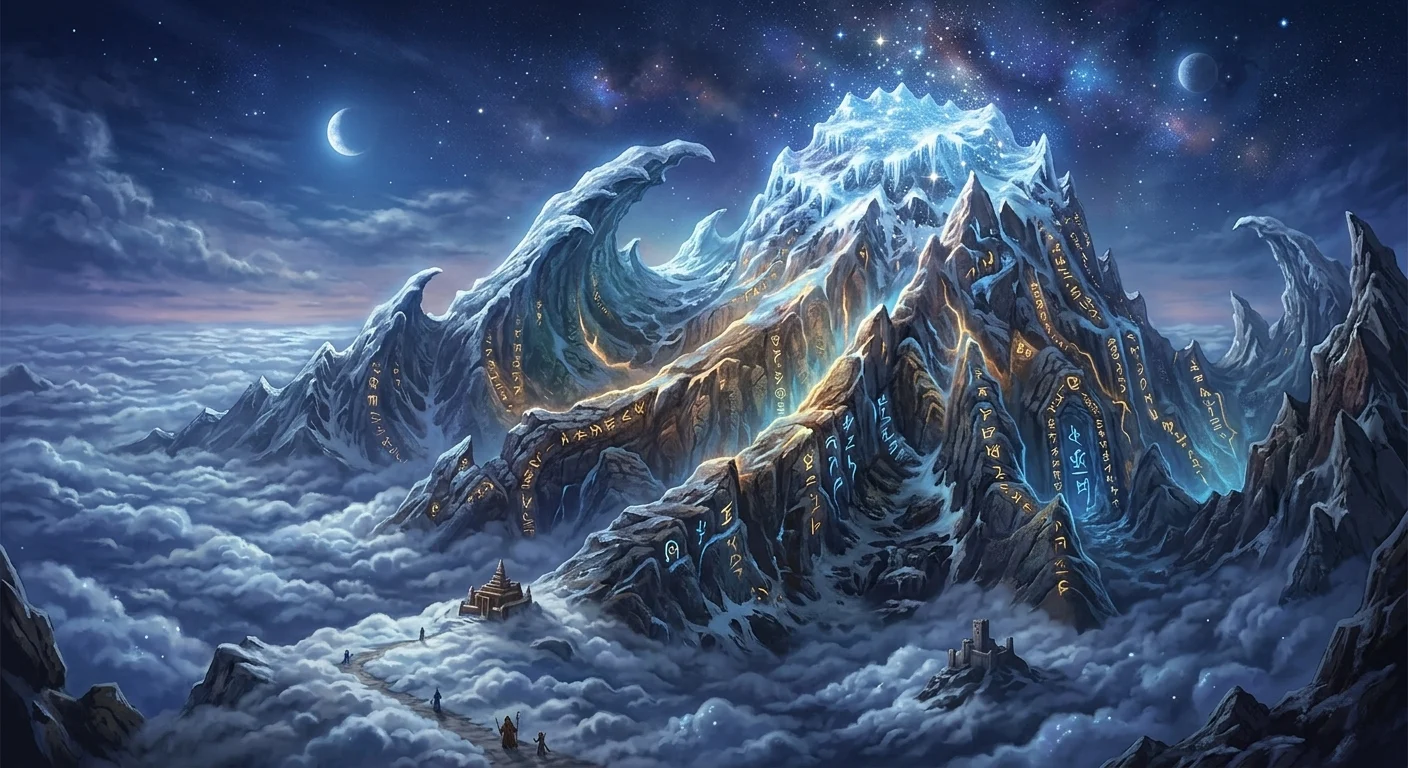
| Like frozen waves | Dynamic shapes captured in stillness |
| As high as ambition | Reaching great heights |
| Like a fortress against the sky | Impenetrable and protective |
| As patient as the centuries | Enduring and unchanging |
| Like a wall dividing worlds | Serving as a boundary or barrier |
Similes for Mountain Size and Grandeur
1. Like Sleeping Giants
Meaning
Describes mountains as immense, powerful entities at rest.
Why It Works
The image of a giant suggests scale far beyond human comprehension. Adding “sleeping” implies that while they appear still, they possess latent power and a history of movement.
Alternative Expression
“Like titans resting beneath the earth”
Examples in Writing
- Formal Example: The mountain range stretched across the horizon like sleeping giants, their peaks dusted with snow.
- Casual Example: Those mountains are huge, like giants lying down.
- Creative Example: The valley was guarded by mountains that lay like sleeping giants, their granite backs rising and falling with the slow breath of geological ages.
2. As Majestic as a King on a Throne
Meaning
Represents the commanding, awe-inspiring presence of a dominant peak.
Why It Works
A king symbolizes authority, power, and centrality. A mountain dominating a landscape shares these qualities, demanding attention and respect from all who gaze upon it.
Alternative Expression
“As commanding as a crown upon the land”
Examples in Writing
- Formal Example: Mount Everest rose as majestic as a king on a throne, ruling over the lesser peaks below.
- Casual Example: That mountain is the king of the range, for sure.
- Creative Example: The peak stood as majestic as a king upon a throne, its snowy crown touching the hem of the sky while lesser hills bowed at its feet.
3. Like a Wall Dividing Worlds
Meaning
Describes a mountain range acting as a massive natural barrier.
Why It Works
Walls create separation and define boundaries. A mountain range can divide climates, cultures, and ecosystems, acting as an impassable divide between two distinct worlds.
Alternative Expression
“Like a curtain drawn across the land”
Examples in Writing
- Formal Example: The Himalayas rise like a wall dividing worlds, separating the Indian subcontinent from the Tibetan Plateau.
- Casual Example: That range is like a giant wall you can’t get past.
- Creative Example: The mountains stood like a wall dividing worlds on one side, lush green valleys; on the other, a cold desert of endless sand.
4. As High as Ambition
Meaning
Represents the soaring, aspirational quality of a tall peak.
Why It Works
Ambition is a human drive that pushes us toward great heights. Comparing a mountain to ambition links physical elevation with emotional and psychological aspiration.
Alternative Expression
“As lofty as a dreamer’s goals”
Examples in Writing
- Formal Example: The summit was as high as ambition, a challenge that called to every climber’s soul.
- Casual Example: That peak is mad high, like my goals for this year.
- Creative Example: The mountain reached as high as ambition itself, its summit a promise to those who dared to look up and dream.
5. Like a Cathedral of Stone
Meaning
Describes mountains as sacred, awe-inspiring, and spiritually uplifting.
Why It Works
Cathedrals are built to inspire reverence and connect humanity with the divine. A mountain’s immense natural architecture can evoke the same feelings of humility, wonder, and spiritual elevation.
Alternative Expression
“Like a temple built by the earth”
Examples in Writing
- Formal Example: The sheer granite walls of Yosemite’s El Capitan rose like a cathedral of stone, inspiring silence among the onlookers.
- Casual Example: It’s so beautiful here, like being in nature’s church.
- Creative Example: We stood in the cirque, surrounded by peaks that soared like cathedrals of stone, their spires lost in the clouds and their silence a form of prayer.
Similes for Mountain Strength and Permanence
6. As Old as Time Itself
Meaning
Represents the immense age and timelessness of mountains.
Why It Works
Mountains are formed over millions of years. Comparing them to time itself emphasizes their ancient origins and their existence on a scale far beyond human lifespans.
Alternative Expression
“As ancient as the earth’s first dawn”
Examples in Writing
- Formal Example: The Appalachian Mountains are as old as time itself, their rounded peaks worn down by eons of weather.
- Casual Example: These mountains have been here forever, like they’re as old as time.
- Creative Example: The mountain sat as old as time itself, its body a record of epochs, its stones whispering secrets of a world before memory.
7. As Patient as the Centuries
Meaning
Describes the enduring, unchanging nature of mountains.
Why It Works
Patience implies waiting and enduring without complaint. Mountains watch civilizations rise and fall, weather countless storms, and remain steadfast through it all.
Alternative Expression
“As enduring as the stars”
Examples in Writing
- Formal Example: The mountain stood as patient as the centuries, unconcerned by the fleeting lives of the creatures on its slopes.
- Casual Example: The mountain doesn’t care, it’s been here for ages and will be here for ages more.
- Creative Example: It waited as patient as the centuries, its flanks scarred by glaciers and its summit pitted by wind, yet still it stood, a silent monument to permanence.
8. Like the Spine of the Earth
Meaning
Represents mountains as the structural backbone of the planet.
Why It Works
A spine provides structure and support for a body. Mountain ranges are formed by tectonic forces that shape the planet’s surface, acting as a literal and figurative structural framework.
Alternative Expression
“Like the earth’s raised backbone”
Examples in Writing
- Formal Example: The Andes run down the coast of South America like the spine of the earth, a continuous chain of peaks and valleys.
- Casual Example: The range goes on forever, like the planet’s backbone.
- Creative Example: The mountains rose like the spine of the earth, a jagged column of bone and rock that held the continent together and pointed defiantly at the heavens.
9. As Immovable as the Tides
Meaning
(Note: This is a paradox tides are known for moving, but their cycle is inexorable and unstoppable. This simile uses “immovable” in the sense of their unchanging pattern, or it can be adapted to “As constant as the tides.”)
Let’s reframe this as:
9. As Constant as the Tides
Meaning
Represents the reliable, unchanging presence of mountains in a changing world.
Why It Works
The tides are a natural phenomenon known for their absolute regularity and dependability. A mountain’s constant presence can offer a similar sense of stability and reliability.
Alternative Expression
“As steadfast as the seasons”
Examples in Writing
- Formal Example: Through war, peace, famine, and feast, the mountain remained as constant as the tides, a familiar landmark for generations.
- Casual Example: It’s always there, you know? Like the tide coming in.
- Creative Example: The peak was as constant as the tides, a fixed point in a world of change, its silhouette a reassurance against the setting sun each evening.
10. Like a Fortress Against the Sky
Meaning
Describes mountains as imposing, defensive structures that challenge the atmosphere itself.
Why It Works
A fortress is built to be impenetrable and withstand attacks. A mountain’s rugged, towering mass appears to challenge the elements wind, rain, and snow as if defying them.
Alternative Expression
“Like a bastion of earth and stone”
Examples in Writing
- Formal Example: The north face of the Eiger rose like a fortress against the sky, a sheer wall of rock that dared climbers to test its defenses.
- Casual Example: That cliff is like a giant wall fighting the weather.
- Creative Example: The range stood like a fortress against the sky, its battlements of granite and snow holding back the storms that roiled in from the ocean.
Similes for Mountain Beauty and Appearance
11. Like Frozen Waves
Meaning
Describes the layered, undulating shapes of mountain ranges.
Why It Works
The repetitive rise and fall of mountains in a range resemble ocean waves that have been instantly petrified. This captures the dynamic, flowing energy hidden in their static form.
Alternative Expression
“Like a sea turned to stone”
Examples in Writing
- Formal Example: From the airplane window, the Alps looked like frozen waves, their whitecaps of snow cresting in a silent ocean of rock.
- Casual Example: The hills look like they’re rolling, like waves that stopped moving.
- Creative Example: The landscape swelled in all directions, mountains rising like frozen waves caught in the act of breaking against an invisible shore.
12. As Serene as a Painting
Meaning
Represents the perfect, composed beauty of a mountain scene.
Why It Works
A painting is a curated, framed representation of beauty. A mountain landscape can sometimes appear so perfect and harmonious that it seems artificial, like a masterfully created work of art.
Alternative Expression
“As perfect as a postcard scene”
Examples in Writing
- Formal Example: The reflection of Mount Fuji in the calm lake was as serene as a painting, a scene of flawless symmetry.
- Casual Example: It’s so beautiful it doesn’t look real, like a picture.
- Creative Example: The valley lay beneath us as serene as a painting, the mountains framing the scene like a gilded border, their colors blended by a master’s hand.
13. Like a Crown of Ice
Meaning
Describes a snow-capped peak as a regal, crowning feature.
Why It Works
A crown is a symbol of royalty and achievement, placed at the highest point. The snow on a mountain’s summit acts as a natural crown, adding to its majesty and implying its sovereignty over the surrounding land.
Alternative Expression
“Like a silver cap upon a monarch’s head”
Examples in Writing
- Formal Example: The peak shone in the sun, its summit capped with snow like a crown of ice.
- Casual Example: You see that snow on top? It’s like the mountain’s wearing a crown.
- Creative Example: The mountain’s head was adorned with a crown of ice, its glacial jewels sparkling with the first light of dawn.
14. As Jagged as a Broken Blade
Meaning
Represents the sharp, rugged, and dangerous appearance of young, unweathered peaks.
Why It Works
A broken blade is dangerous, sharp, and unpredictable. This simile captures the knife-edge ridges, sharp spires, and menacing beauty of tectonically young mountain ranges.
Alternative Expression
“As sharp as shattered glass”
Examples in Writing
- Formal Example: The peaks of the Dolomites rise as jagged as a broken blade, their spires cutting into the sky.
- Casual Example: Those rocks look sharp enough to cut you, like a broken knife.
- Creative Example: The mountain range was as jagged as a broken blade, a weapon of stone left embedded in the earth, its edge still keen after millennia of battle with the wind.
15. Like a Veil of Mist
Meaning
Describes mountains shrouded in clouds or fog, creating a sense of mystery.
Why It Works
A veil partially conceals, creating intrigue and inviting the viewer to imagine what lies behind it. Mist on a mountain does the same, softening its edges and hiding its true scale.
Alternative Expression
“Like a whisper of silk draped on stone”
Examples in Writing
- Formal Example: The summit was hidden from view, wrapped in clouds like a veil of mist.
- Casual Example: You can’t see the top, it’s like the mountain is wearing a scarf.
- Creative Example: The mountain revealed itself slowly, its massive form cloaked in a veil of mist that shifted and thinned, offering only fleeting glimpses of its hidden face.
Similes for Mountains as Challenges and Obstacles
16. Like a Stairway to the Sky
Meaning
Represents the aspirational challenge of climbing a mountain, presenting it as a path to transcendence.
Why It Works
A stairway implies a journey, a deliberate ascent from one level to a higher one. This simile frames the mountain not just as an obstacle but as a means of elevation, both physically and spiritually.
Alternative Expression
“Like a ladder left by the gods”
Examples in Writing
- Formal Example: The long, winding trail up the mountain looked like a stairway to the sky, each step promising a view closer to heaven.
- Casual Example: It’s a long way up, like climbing a giant staircase.
- Creative Example: The ridgeline rose into the clouds like a stairway to the sky, each false summit a landing, each step a test of will.
17. As Unforgiving as the Sea
Meaning
Represents the inherent danger and hostility of high-altitude environments.
Why It Works
The sea is a powerful, impartial force of nature that can be both life-giving and deadly. Similarly, a mountain’s storms, cold, and steep terrain are indifferent to human survival, demanding respect and preparation.
Alternative Expression
“As merciless as winter’s heart”
Examples in Writing
- Formal Example: The upper slopes of K2 were as unforgiving as the sea, a place where a simple mistake meant certain death.
- Casual Example: The weather up there is brutal, it can kill you.
- Creative Example: The mountain was as unforgiving as the sea, its storms crashing against the climbers like waves, its cold a deep, drowning pressure.
18. Like a Test of the Spirit
Meaning
Describes a mountain climb as a profound internal challenge, not just a physical one.
Why It Works
The greatest obstacles are often internal fear, doubt, and exhaustion. A mountain, by pushing climbers to their physical and mental limits, acts as a crucible for personal growth and self-discovery.
Alternative Expression
“Like a mirror for the soul”
Examples in Writing
- Formal Example: The mountain became like a test of the spirit, stripping away pretense and leaving only the raw will to continue.
- Casual Example: It’s not just your body; it messes with your head.
- Creative Example: The climb was like a test of the spirit, a journey into the deepest canyons of one’s own resolve, where every step was a question and the summit was the only answer.
19. As Insurmountable as the Horizon
Meaning
Represents a goal or obstacle that seems impossible to reach or overcome.
Why It Works
The horizon is a line that always retreats, forever out of reach. A daunting mountain peak can evoke a similar feeling of impossibility, its summit appearing impossibly far away, a goal that seems to recede with every step.
Alternative Expression
“Like a wall at the world’s end”
Examples in Writing
- Formal Example: To the early explorers, the Himalayan peaks seemed as insurmountable as the horizon, a barrier that defined the edge of the known world.
- Casual Example: The top looked so far away, like it was impossible to reach.
- Creative Example: The peak loomed above, as insurmountable as the horizon, a cruel trick of perspective that made the mountain grow no closer despite hours of climbing.
Why Mountain Similes Matter
Mountains are more than just landforms; they are symbols. They represent the sublime, the eternal, the challenging, and the beautiful.
Strong similes help readers understand:
- Scale and Grandeur: The sheer physical size of a mountain.
- Permanence and Age: The ancient, enduring nature of rock.
- Emotional Impact: The feelings of awe, insignificance, or inspiration mountains evoke.
- Metaphorical Weight: The challenges, goals, and spiritual journeys mountains represent.
Rather than simply telling readers a mountain is “big” or “old,” similes allow them to feel that scale and age through evocative imagery.
How to Use Mountain Similes Naturally
Match the Tone
Use soft, beautiful similes for peaceful descriptions and harsh, rugged similes for scenes of struggle or danger.
Reflect the Observer’s Perspective
A geologist might compare a mountain to a folded layer cake (stratigraphy).
A poet might compare it to a silent prayer.
A weary climber might compare it to an unrelenting tormentor.
Keep Comparisons Vivid but Familiar
The best similes bridge the gap between the unknown and the known, making the mountain’s qualities accessible to the reader.
Common Mistakes When Writing Mountain Similes
Overusing Clichés
Phrases like “majestic as a king” are effective, but relying on them too heavily can make your writing feel predictable. Try to add a unique twist (e.g., “as majestically worn as a king in exile”).
Mixing Metaphors Unnecessarily
Avoid combining a simile like “like a fortress” with a metaphor about a “gentle hand” in the same description. Keep the image consistent.
Ignoring the Mountain’s Dual Nature
Mountains are both beautiful and dangerous. A good simile often captures this duality. Describing a peak only as “pretty as a picture” may miss its imposing power.
Forgetting the Other Senses
Similes are often visual. Remember you can also describe the sound of a mountain (as quiet as a held breath) or the feel of the air (as thin as a ghost’s whisper).
Similes vs Metaphors for Mountains
Simile
Uses “like” or “as” to make a comparison explicit.
- Example: “The mountain was like a wall.”
Metaphor
Makes a direct comparison, stating one thing is another.
- Example: “The mountain was a wall between us and the unknown.”
Similes are often better for descriptive passages where you want to gently guide the reader’s imagination. Metaphors are more powerful and can be used for dramatic statements or to create a lasting, symbolic image.
Writing Exercise: Create Better Mountain Similes
Start with a simple sentence:
- “The mountain was very large.”
Now rewrite it using different types of imagery:
Size
- “The mountain was as large as a god’s throne.”
Age
- “The mountain was like a forgotten promise, old and worn.”
Beauty
- “The mountain was as beautiful as a diamond in the rough light of dawn.”
Challenge
- “The mountain stood against me like an opponent who had never known defeat.”
Mystery
- “The mountain was like a secret the sky was trying to keep.”
Practicing this exercise regularly with different base sentences will sharpen your ability to generate fresh, original similes.
FAQs
1. What are similes for mountains?
Similes for mountains compare their size, strength, beauty, or challenging nature to familiar objects or concepts using “like” or “as” to create vivid mental images.
2. Why should writers use mountain similes?
They make descriptions more engaging, helping readers visualize and feel the setting, and they can add layers of symbolic meaning to a narrative.
3. What makes a strong mountain simile?
A strong mountain simile is original, easy to visualize, and matches the tone of the scene. It often captures not just the look of the mountain, but its emotional weight.
4. Can mountain similes improve storytelling?
Absolutely. They enhance world-building, strengthen thematic elements (like perseverance or insignificance), and make descriptions more memorable and powerful.
5. How can I create original mountain similes?
Observe real mountains or photographs. Focus on the emotions they evoke in you awe, fear, peace, ambition and find a comparison from your own life experiences or knowledge that captures that specific feeling.
Conclusion
Mountains are not just piles of rock and earth; they are symbols carved into the landscape of our planet and our imagination. They represent our highest aspirations, our greatest challenges, and the enduring, patient power of the natural world.
Simple descriptions often fail to capture their true magnitude and meaning. “Tall” and “old” are accurate, but they lack the emotional resonance that a mountain commands. Similes are the bridge that connects a reader’s everyday experience to the sublime reality of the mountain.
A mountain may stand as patient as the centuries, rise like a cathedral of stone, or challenge a climber like an opponent who has never known defeat. These comparisons do more than decorate our writing; they reveal the profound relationship between humanity and the great heights of our world.
The best similes for mountains help readers feel the cold air, see the jagged peaks, and understand the quiet power of stone that has outlasted empires. They transform geology into poetry and scenery into story.
As you write, look beyond the physical form of the mountain. See the symbol it represents the obstacle, the dream, the ancient god, the spine of the earth. The perfect simile is waiting there, ready to be discovered.
Read More Related Articles :
- Similes for Books | Comparisons to Bring Stories to Life In 2026
- Similes for Stars | Comparisons That Capture Brilliance and Wonder In 2026
- Similes for Dark | Comparisons That Capture Mystery & Fear Unknown In 2026

Liam Bennett is a creative mind behind SimileVibe.com, focused on building clean digital experiences and real connections through design, content, and modern web culture. He’s passionate about turning simple ideas into engaging online experiences that feel authentic and human.