Quick Answer
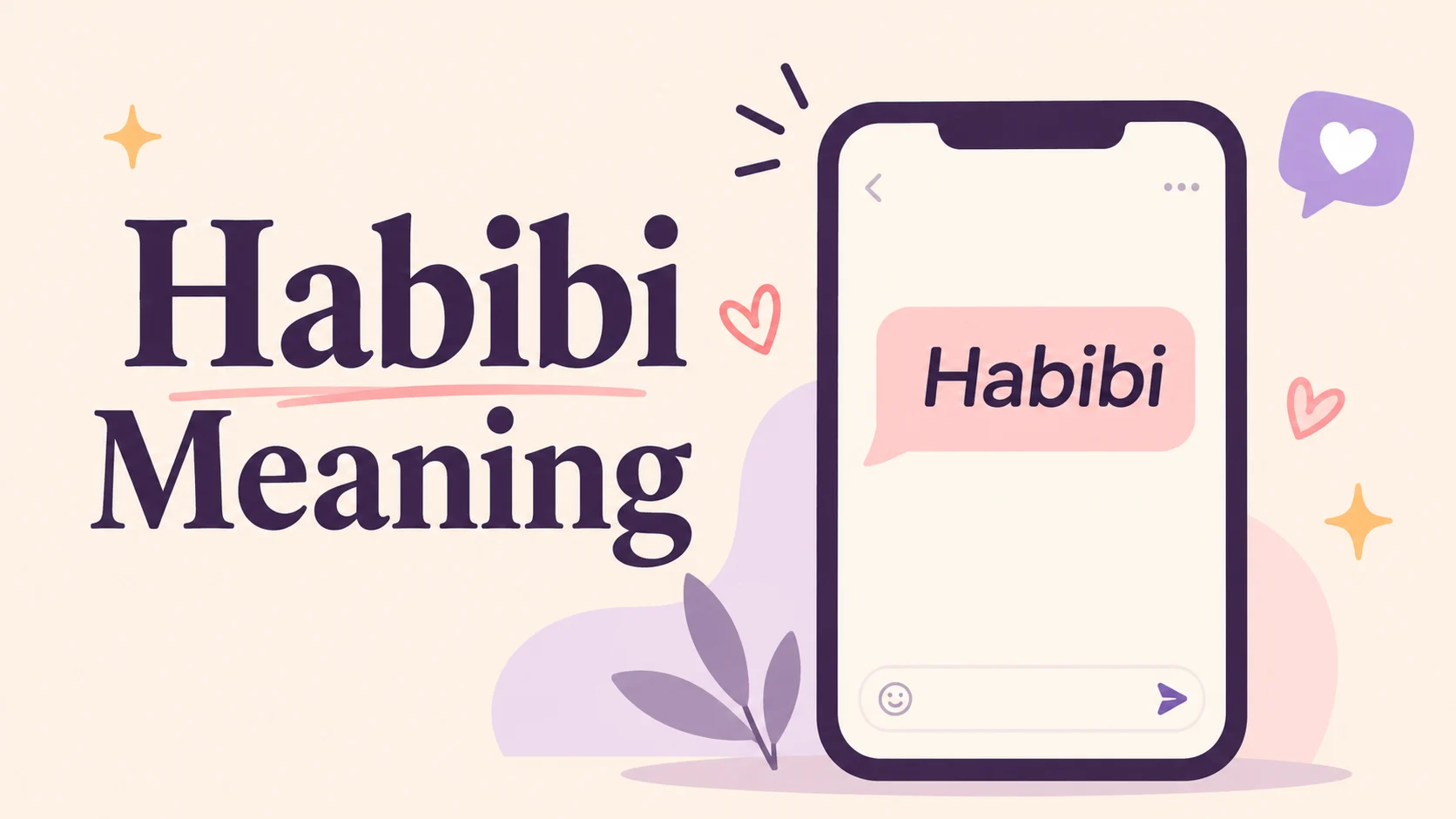
Habibi Meaning is “my love,” “my darling,” or “my beloved” in Arabic. It’s commonly used as an affectionate term for someone you care about.
Habibi Meaning is a popular Arabic expression that translates to “my love” or “my darling.”
It is often used between romantic partners, close friends, and family members.
Depending on the context, it can express love, affection, warmth, or friendship.
You may also see habibi frequently used in songs, social media, texts, and everyday conversation.
Understanding Habibi Meaning also requires looking at the relationship between the people using it.
While it can sound romantic, it does not always indicate romantic feelings.
Arabic speakers may use it casually with someone they feel close to or care about.
Its exact tone depends on the speaker, situation, and relationship.
Habibi Meaning At A Glance
Habibi is an Arabic term of endearment that literally translates to “my love” or “my beloved,” but in everyday use it works more like “dear,” “buddy,” or “babe” depending on who says it. It is used with romantic partners, close friends, family members, and even strangers in a friendly tone across Arabic-speaking cultures and online spaces. Because the word carries so much flexibility, the same message can mean completely different things depending on who sent it.
| Detail | Explanation |
|---|---|
| Most Common Meaning | “My love” or “my darling,” used affectionately |
| Full Form | Arabic word, not an abbreviation |
| Tone | Warm, friendly, sometimes flirty |
| Common Platforms | Text messages, Instagram, TikTok, WhatsApp |
| Formal or Informal | Informal |
What Habibi Actually Means
Habibi comes from the Arabic root that relates to love and affection. In its most literal sense, it translates to “my beloved” or “my love.” The masculine form is “habibi,” used when speaking to a man or boy, while “habibti” is the feminine form, used when speaking to a woman or girl. Native Arabic speakers naturally switch between these forms depending on who they are addressing, and getting the form right is often seen as a small sign of familiarity with the language.
In practice, the word rarely carries the intensity of its literal translation. Arabic speakers use it the way English speakers use “buddy,” “dear,” or “hun.” It shows warmth and closeness rather than a declaration of romantic love every time it is said. This is one of the most important things to understand about habibi: the emotional weight of the word depends far more on delivery than on definition.
Why The Literal Translation Can Be Misleading
If you only look at the dictionary meaning, “my love,” it is easy to assume every use of habibi is romantic. This assumption causes a lot of confusion for people encountering the word for the first time, especially through texting or social media, where tone can be hard to read. In reality, the word functions on a sliding scale, moving from deeply romantic to lightly affectionate depending entirely on context.
Example: A friend texts you, “Habibi, where have you been? We missed you at dinner.” Here, habibi simply signals affection between close friends, not romantic interest. The tone is caring and casual, similar to saying “man, we missed you.” Nothing about the sentence suggests romantic intent; it reads as concern and warmth from a friend who genuinely wanted you there.
Alternative And Regional Meanings
Habibi is not exclusively romantic, and understanding the different ways it gets used helps avoid misreading a message. The word travels across many different relationships, and each use case carries its own emotional register.
| Meaning | Context | Tone | Example |
|---|---|---|---|
| Term of romantic endearment | Between partners | Loving, intimate | “Goodnight, habibi.” |
| Friendly nickname | Between close friends of any gender | Warm, casual | “Habibi, let’s grab coffee later.” |
| Family affection | Parents, siblings, relatives | Tender, familiar | A mother calling her son “habibi.” |
| General friendliness | Strangers, coworkers, service settings | Polite, welcoming | A shopkeeper greeting a customer as “habibi.” |
Habibi Between Friends
In many Arabic-speaking countries, men frequently call male friends “habibi” without any romantic meaning attached. This is a common point of confusion for people encountering the word for the first time, especially outside Arabic-speaking cultures. It functions similarly to how English speakers might say “bro” or “man,” conveying closeness and camaraderie rather than romance.
Habibi In Customer Service And Casual Encounters
It is also common to hear habibi used by shop owners, taxi drivers, or waiters as a general friendly address, similar to how an English speaker might say “boss” or “friend” to a customer. This use carries almost no emotional weight beyond politeness and hospitality.
How Context Changes The Meaning
The same word can read as sweet, casual, or flirty depending on a few key signals. Learning to notice these signals makes it much easier to understand what someone actually means when they use the word with you.
- Relationship: A partner saying “habibi” reads as romantic, while a friend saying it reads as casual affection.
- Emojis: A heart emoji after “habibi” leans romantic, while a laughing emoji keeps it playful and platonic.
- Message tone: “Habibi, you’re unbelieveable😂” feels like a joke between friends, while “Miss you, habibi ❤️” feels romantic.
- Cultural familiarity: In Arabic-speaking communities, the word is used far more loosely than people outside the culture might expect.
- Frequency of use: Someone who uses habibi with everyone, from coworkers to classmates, is likely using it as a general term of friendliness rather than something reserved for you specifically.
- Timing of the message: A late-night “goodnight, habibi” reads differently than a “thanks habibi” sent during a group project discussion.
- Example 1: “Habibi, don’t forget the meeting tomorrow.” This reads as a friendly reminder, not romantic.
- Example 2: “I can’t stop thinking about you, habibi.” This clearly leans romantic due to the surrounding words.
- Example 3: “Habibiii where were you 😭” The extra letters and crying emoji suggest playful exaggeration among friends.
- Example 4: “Happy birthday habibi, hope your day is amazing!” This reads as warm and celebratory, appropriate for a friend, cousin, or close acquaintance rather than something exclusively romantic.
Habibi On Different Platforms
The core meaning of habibi stays consistent across most platforms, but the setting can shift how it feels and how it is typically read by the recipient.
Text Messages And WhatsApp
In direct messages, habibi usually signals real closeness, since it is common between friends and partners who already talk regularly. A simple “Hey habibi, how’s your day?” is typical between people who know each other well. Because texting is private and personal, the word tends to carry a bit more emotional intention than it might in a public comment.
Instagram And TikTok
On social media, habibi often appears in comments or captions as a lighthearted, friendly greeting, even toward people you do not know personally. A comment like “Love this, habibi!” is usually just enthusiastic praise, not a personal statement. Creators and commenters frequently use the word to express appreciation or excitement without any romantic undertone at all.
Dating Apps
On dating apps, habibi tends to lean more affectionate, especially once a conversation has progressed past initial small talk. Since the context is inherently romantic, the word is more likely to be read as flirty, though it can still simply reflect a playful or warm personality rather than deep feelings.
Group Chats
In group settings, habibi usually functions as a general, friendly way to address the whole group or specific members without singling anyone out romantically. “Habibi, who’s free this weekend?” directed at a group chat is almost always platonic and inclusive.
Real Conversation Examples
Person A: “Habibi, are you coming to the gym today?”
Person B: “Yeah, give me twenty minutes.”
Meaning: A casual check-in between friends, no romantic undertone.
Person A: “I had such a good time with you tonight, habibi.”
Person B: “Me too, can’t wait to see you again.”
Meaning: A romantic exchange between two people who are dating.
Person A: “Habibi, your food looks amazing!”
Person B: “Haha thank you, come over and try it sometime.”
Meaning: A friendly, complimentary comment with no romantic intent.
Person A: “Habibi, can you send me the notes from class?”
Person B: “Sure, sending them now.”
Meaning: A neutral, practical request between classmates, using habibi purely as a friendly address.
Is Habibi Flirty Or Just Friendly?
Habibi can be either, and the difference usually comes down to context rather than the word itself. This is why the same term can appear in a wedding toast and a casual group chat without feeling out of place in either.
When It Feels Flirty
If someone you are romantically interested in, or already dating, uses “habibi” alongside affectionate language, compliments, or hearts, it likely carries a flirty or loving tone. Combined with consistent one-on-one attention and personal questions, it often signals genuine romantic interest.
When It Feels Friendly
If it comes from a close friend, family member, or someone in a group chat, it is almost always platonic, similar to saying “dude” or “hun” without romantic weight behind it. The best way to judge this is by looking at how the person treats everyone else, not just you.
When It Feels Neutral Or Polite
In casual public interactions, such as a compliment from an acquaintance or a friendly exchange with a stranger online, habibi often carries no emotional weight beyond basic politeness and warmth.
Habibi From A Guy Or A Girl
Whether habibi comes from a guy or a girl, the meaning depends more on your existing relationship, the surrounding words, and the tone of the conversation than on gender. Someone you have never been romantic with may simply be using it as a friendly habit, especially if they grew up around Arabic-speaking friends or family. Pay attention to consistency, emojis, and how personal the rest of the message feels before assuming romantic intent. If the person uses habibi with many different people in the same casual way, it is likely just part of their natural speech pattern rather than a signal aimed specifically at you.
How To Reply To Habibi
Friendly Replies
- “Haha hey! What’s up?”
- “You too, habibi!”
- “Missed you as well!”
- “Always good hearing from you.”
- “Right back at you!”
Flirty Replies
- “You’re too sweet, habibi.”
- “Stop it, you’re making me smile.”
- “Can’t wait to see you again.”
- “You always know what to say.”
Polite Replies
- “Thank you, that’s kind of you.”
- “Appreciate that, hope you’re doing well.”
- “Same to you!”
- “That means a lot, thank you.”
When To Use Habibi
Habibi fits naturally in casual conversations with friends, family, partners, or people you know from Arabic-speaking communities. It works well in texts, comments, captions, and everyday chats where warmth and familiarity are welcome. It can also be a nice way to add personality to a message with someone you already have an established, friendly rapport with, even if you are not part of an Arabic-speaking community yourself.
When To Avoid Habibi
Skip it in professional emails, job applications, formal announcements, or messages to people you barely know, since it can come across as overly familiar in serious or unfamiliar settings. It is also worth using carefully with people unfamiliar with the term, since they may misread the intent, especially in early conversations where tone has not yet been established. In sensitive conversations, such as formal apologies or serious discussions, sticking to clear, direct language is usually a better choice than slang.
Common Mistakes People Make
| Common Mistake | Correct Understanding |
|---|---|
| Assuming habibi is always romantic | It is frequently used platonically among friends and family |
| Ignoring gender forms | “Habibi” is masculine, “habibti” is feminine |
| Treating it as an English acronym | It is an Arabic word, not a text abbreviation |
| Reading too much into a single use | One instance of habibi does not confirm romantic interest |
| Using it in every formal message | Overuse in professional settings can seem inappropriate |
Similar Terms You Might Confuse With Habibi
| Term | Meaning | Main Difference |
|---|---|---|
| Habibti | Feminine form of habibi | Used when addressing a woman or girl |
| Yalla | “Let’s go” or “come on” | An expression of urgency or encouragement, not affection |
| Hun | English term of endearment | Similar warmth, but no cultural or linguistic tie to Arabic |
| Baby | Common English pet name | Almost always romantic, unlike habibi’s broader use |
| Habibi Albi | “My love, my heart” | A stronger, more intense version used for deep affection |
Quick Recap
- Habibi means “my love” or “my darling” in Arabic, used far more casually in everyday speech.
- It can be romantic, friendly, or familial depending on the relationship.
- Context, emojis, and tone matter more than the word alone.
- It is common in texts, Instagram, TikTok, and dating apps, especially in friendly or affectionate messages.
- Avoid it in formal or professional communication, and consider how the person uses it with others before assuming a personal meaning.
FAQs
What does habibi mean in text?
Habibi is an Arabic word meaning “my love” or “my darling,” often used casually to show warmth or friendliness.
Is habibi rude?
Habibi is not rude; it is a friendly, affectionate term used across many relationships and contexts.
What does habibi mean on TikTok?
On TikTok, habibi usually appears as a friendly or enthusiastic comment rather than a romantic statement.
How should you reply to habibi?
Reply naturally based on the relationship, using a friendly, warm, or lightly flirty tone depending on the context.
Can habibi have different meanings?
Yes, habibi can mean romantic affection, friendly warmth, or familial closeness depending on who says it.
Conclusion
Habibi is an Arabic term of endearment meaning “my love” or “my darling,” but its everyday use is much broader than that translation suggests. It moves comfortably between romantic partners, close friends, and family members, with the real meaning shaped by relationship, tone, and surrounding words rather than the word alone. When you see it in a text or comment, look at who sent it and how the rest of the message reads before deciding what it means. Used thoughtfully, habibi is simply a warm way of showing someone they matter to you.

Liam Bennett is a creative mind behind SimileVibe.com, focused on building clean digital experiences and real connections through design, content, and modern web culture. He’s passionate about turning simple ideas into engaging online experiences that feel authentic and human.