Quick Answer
In parliamentary procedure ayes are the votes cast in favor of a motion or proposal. The word comes from an older form of “yes” still used in Scotland and among sailors. When a speaker announces “the ayes have it” they mean the affirmative votes won. It is the moment a bill becomes law or a proposal moves forward.
Ayes Meaning is connected to the word “aye,” which means yes or a vote in favor of something. The plural form “ayes” is often heard during formal meetings, debates and voting procedures.
When people say “the ayes have it,” they mean that more people voted in favor of a proposal than against it. Ayes Meaning can therefore help you understand how decisions are formally recorded in groups and assemblies.
What Ayes Actually Means
At its core aye means yes. But it is not the casual yes of everyday conversation. It is a formal affirmative used in structured settings where decisions must be recorded and counted. The plural form ayes refers to the people voting yes or the votes themselves.
Dictionaries list it as an adverb and a noun. As an adverb it answers a vote call. As a noun it names the affirmative voters as a group. You might hear “sixteen ayes and five noes” meaning sixteen people voted in favor.
This word belongs to a specific register. You do not use it to agree that you want pizza for dinner. You use it when a chair asks “all in favor say aye” and you need to register your position officially.
Where the Word Comes From
The word has Scandinavian roots. It entered English during the Middle English period around the twelfth century borrowing from early Scandinavian languages. The earliest written evidence appears in the Ormulum a religious text from around 1175.
For centuries aye served as a general affirmative in northern English and Scottish speech. It remains common in Scotland and Northern Ireland where it is simply how people say yes. A Scot saying “aye” is not being formal. They are just agreeing.
But in standard English outside those regions the word became archaic. It survived in two places: nautical language and parliamentary procedure. Sailors say “aye aye sir” to confirm an order. Parliaments use it to count votes.
How Parliamentary Voting Works
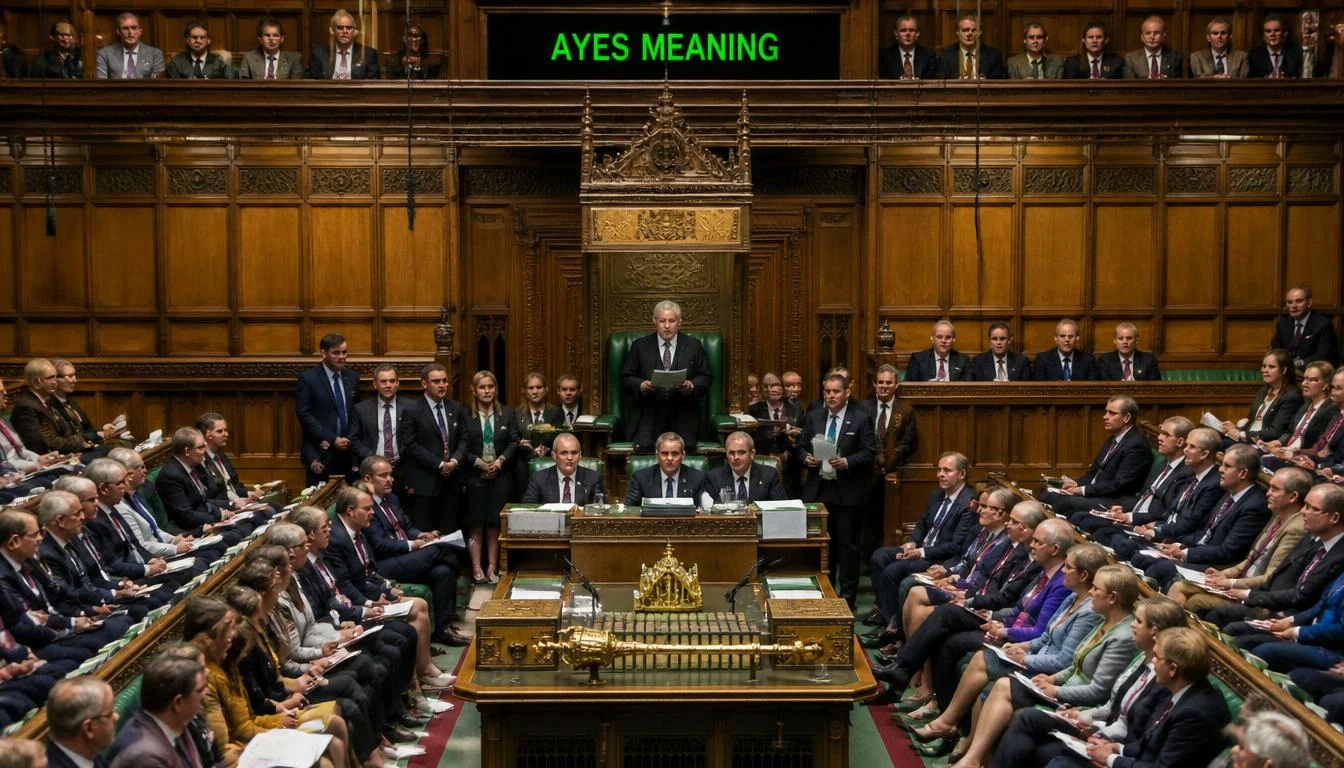
The voting process in the British House of Commons shows how ayes function in practice. The Speaker puts a question to the chamber. Members shout “aye” if they support it or “no” if they oppose. The Speaker listens and decides which side sounded louder.
If the result is unclear a division is called. Members physically walk through one of two lobbies. Those voting aye walk through the lobby to the right of the Speaker. Those voting no walk to the left. Clerks record each name as they pass. The numbers are counted and reported to the Speaker who then announces the result.
This physical movement matters. It is not an anonymous button press. Everyone can see how each member voted. The phrase “ayes to the right noes to the left” comes directly from this layout.
The Speaker then declares “the ayes have it” or “the noes have it.” If the ayes win the motion passes.
The Ayes Have It: A Phrase That Changed History
“The ayes have it” is more than procedure. It is the linguistic moment when collective will becomes official decision. The New York Times once called it “the most imperious of all words”. That is not hyperbole.
When the Speaker says those words a debate ends. A proposal that was just talk becomes law policy or action. Every controversial tax bill every declaration of war every change to how a country runs itself has passed through that phrase or its equivalent.
The word aye also means “always” or “ever” in older Scottish usage. Robert Burns used it that way. There is something fitting about a word meaning both “yes” and “always” being the final word on legislative decisions. The yes is permanent until changed.
Ayes Around the World
Different legislative bodies use different words for the same function. The table below shows the main variations.
The US choice of “yea” instead of “aye” reflects a deliberate break from British practice after independence. Both words mean the same thing. The distinction is cultural not functional.
Ayes vs Yes: Why the Difference Matters
You might wonder why parliaments do not just say yes. The answer lies in formality and clarity.
“Aye” is a single crisp syllable that carries well in a noisy chamber. It is harder to confuse with other words. When hundreds of people shout simultaneously every phonetic advantage matters.
The word also signals that you are participating in a formal process. Saying “aye” instead of “yes” marks the moment as official. It is a small ritual that separates ordinary conversation from binding decision making.
There is a practical dimension too. In older times before electronic voting the Speaker relied on hearing the volume of shouts. A sharp distinct word made that judgment easier. The tradition stuck even as technology changed.
When Ayes Go Wrong
Parliamentary procedure is not foolproof. Members sometimes shout the wrong word by accident. A member intending to vote no might shout aye in the noise and confusion. This has happened in real chambers.
In 1994 a Scottish sheriff caused a minor scandal by reprimanding defendants for saying “aye” instead of “yes” in court. The sheriff claimed aye did not mean yes in Scottish usage. He was widely criticized because it obviously does. The incident revealed how formal institutions sometimes try to suppress regional speech even when that speech is perfectly clear.
These examples remind us that the aye is ultimately a human utterance. It depends on people paying attention and saying the right thing at the right time.
FAQs
Is “Aye” the Same as “Yes”?
In voting contexts, aye means yes. It is also used in Scottish and Northern Irish everyday speech to mean yes. In standard English outside these settings, it may sound old-fashioned or theatrical.
Why Do Sailors Say “Aye Aye”?
The phrase “aye aye” is traditionally used in naval settings to mean “I understand and will comply.” The first “aye” acknowledges the order while the second confirms that it will be carried out.
What Happens If the Ayes and Noes Are Equal?
In many parliamentary systems, a tied vote means the motion does not pass. Some legislatures allow the Speaker or another presiding officer to use a casting vote to break the tie.
Can You Vote Aye by Proxy?
In some legislatures, proxy voting is allowed under specific rules. For example, members of the UK House of Commons can use proxy voting in certain circumstances, such as parental leave. The proxy then votes aye or no on behalf of the absent member.
Does the European Parliament Use Ayes?
No. The European Parliament generally uses terms such as “for” and “against” when recording votes. The use of “aye” and “no” is more closely associated with Westminster-style parliamentary traditions.
Conclusion
The word aye carries more weight than its three letters suggest. It is a yes that counts in a way ordinary agreement never does. From Scottish kitchens to the House of Commons it has survived for centuries because democracies need a way to turn voices into decisions. Next time you hear “the ayes have it” you are hearing the machinery of governance in a single syllable.










1 thought on “Ayes Meaning | Word That Decides Laws In 2026”