Quick answer:
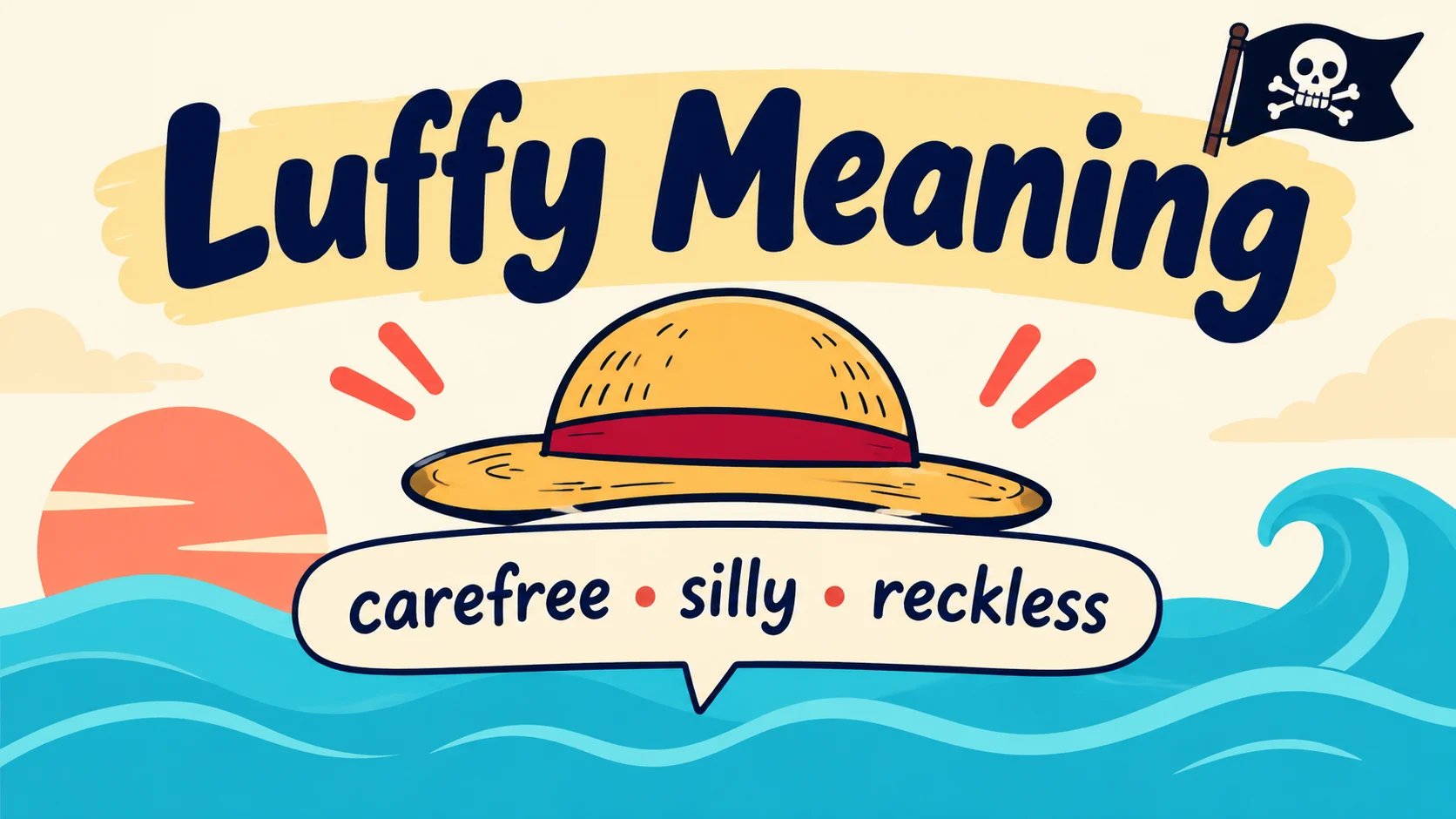
Luffy Meaning usually refers to Monkey D. Luffy, the main character of One Piece, known for his dream of becoming the Pirate King. The name is strongly associated with adventure, freedom, and determination.
If you are searching for Luffy Meaning, you are likely curious about the famous character from One Piece. Monkey D. Luffy is one of anime’s most recognizable protagonists, loved for his fearless personality and adventurous spirit.
The Luffy Meaning can also carry ideas of freedom, friendship, loyalty, and chasing your dreams. As the captain of the Straw Hat Pirates, Luffy has become a cultural icon for anime and manga fans around the world.
Let’s unpack all of it the origin, the tone shifts, real examples, and how to use (or avoid) the word depending on the situation.
Luffy Meaning: Fast Definition
Here’s the featured-snippet version, broken down cleanly:
| Context | Meaning |
|---|---|
| Anime/Manga | Monkey D. Luffy main character of One Piece, a rubber-powered pirate who wants to become the Pirate King |
| Slang (positive) | Someone carefree, funny, a little chaotic, but lovable |
| Slang (negative) | Someone naive, foolish, or lacking common sense |
| Tone | Playful, affectionate, or mildly mocking rarely meant as a serious insult |
| Part of speech | Proper noun (character name) or informal adjective/noun in slang use |
In short: luffy is a name-turned-word. It started as a character’s name and slowly became shorthand for a personality type the type that leaps before looking, laughs at the wrong moments, and somehow still comes out on top.
Where Does “Luffy” Come From?
The Character Origin
Monkey D. Luffy is the lead character of One Piece, created by Japanese manga artist Eiichiro Oda. He’s a young pirate who ate a Devil Fruit that turned his body into rubber, letting him stretch, bounce, and punch his way through impossible odds all while chasing his dream of becoming the King of the Pirates.
There isn’t a long, formal etymology behind the name. Oda designed it to sound like the character feels: light, free, a bit unpredictable, and impossible to pin down. Fans often connect the name’s vibe to English words like “loopy” or “fluffy” not because they’re the literal root, but because the sound and feel line up so naturally with Luffy’s carefree, bouncy personality.
How the Name Became Slang
Slang almost always starts the same way: a character becomes so recognizable that their name starts standing in for a trait. Think about how “Karen” became shorthand for a certain kind of entitled behavior, or how “simp” started as a specific internet joke before becoming everyday vocabulary.
“Luffy” followed the same path. Because the character is:
- Impulsive (he jumps into danger without a plan)
- A little dense about obvious things
- Endlessly optimistic
- Loyal to a fault
- Hilarious in how seriously he takes silly things
…people started using his name to describe real humans who show these same traits. Someone who confidently walks into an obviously bad decision? “Such a luffy move.” Someone who cracks a joke that makes no sense but is somehow funny anyway? “You’re being luffy right now.”
How Popular Is “Luffy” as Slang?
One Piece is one of the best-selling manga series of all time, and its anime adaptation has a massive global fanbase which naturally fed the slang usage. You’ll mostly see “luffy” used as slang in:
- Anime fan communities on Discord, Reddit, and TikTok
- Gen Z texting and meme culture
- Gaming voice chats (especially when someone makes a reckless in-game decision)
- Twitter/X replies reacting to someone’s questionable choice
It hasn’t fully crossed over into mainstream, everyday vocabulary the way words like “simp” or “sus” have it’s still fairly niche and fandom-adjacent. But within online spaces, especially anime-literate ones, it’s instantly understood.
Examples of “Luffy” in a Sentence
Tone matters a lot here. The same word can read as a compliment or a light insult depending on context, punctuation, and who’s saying it.
😄 Friendly / Affectionate Use
- “You just tried to pet a stray cat that hissed at you twice. Absolute luffy behavior 😂”
- “He forgot his own birthday plans but still had the best day ever. Such a luffy.”
- “My dog just ran face-first into the glass door certified luffy moment.”
😐 Neutral / Descriptive Use
- “The new intern has serious luffy energy fearless but has no idea what he’s doing yet.”
- “That plan sounds a little luffy, but honestly, it might just work.”
😬 Dismissive / Mildly Negative Use
- “He invested his entire savings based on a TikTok trend. Peak luffy.”
- “Stop being luffy and actually read the instructions before you break it.”
- “She replied to the scam email asking for more details. That’s a luffy move.”
Usage tip: Add an emoji (😂, 🫠, 🏴☠️) or exaggerated punctuation when you want the word to land as playful rather than mean. Without that softening, “luffy” can come across as more of a genuine dig at someone’s judgment.
Luffy vs. Similar Slang Terms
“Luffy” sits in a specific lane of internet slang the “affectionately calling someone a little foolish” lane. Here’s how it compares to similar terms:
| Term | Core Meaning | Tone | Origin |
|---|---|---|---|
| Luffy | Carefree, reckless, occasionally clueless | Playful to mildly mocking | One Piece character |
| Simp | Overly devoted or submissive to someone romantically | Mocking, sometimes negative | Internet/hip-hop slang |
| Sus | Suspicious, questionable behavior | Playful, casual | Among Us game culture |
| Basic | Unoriginal, predictable | Mildly dismissive | General internet slang |
| Himbo | Attractive but not very sharp, well-meaning | Affectionate | Internet slang (gender-flipped “bimbo”) |
| Goofy | Silly, awkward, funny | Neutral to affectionate | Traditional English slang |
Out of all of these, “luffy” is closest in spirit to “himbo” both describe someone who’s a little oblivious but ultimately good-hearted, rather than someone genuinely malicious or unlikable. That’s a big part of why the word rarely feels like a harsh insult, even in its more negative uses.
Does “Luffy” Have Any Other Meanings?
A few worth noting, since search intent around this word is mixed:
- “Luff” (nautical term): Unrelated in origin, but occasionally confused with “luffy.” In sailing, to luff means to steer a boat closer into the wind, causing the sails to flap. This is a completely separate, older word with zero connection to the anime slang.
- Username/handle: Many gamers and anime fans use “Luffy” or variations of it (Luffy_D, xLuffyx, etc.) as usernames a nod to the character rather than a claim about their own personality.
- Nickname: Some people are nicknamed “Luffy” by friends because of a resemblance in looks, energy, or behavior to the character usually meant warmly.
Polite or Professional Alternatives
“Luffy” is casual, fandom-flavored slang it doesn’t belong in formal writing, emails, or professional conversations. If you want to express the same idea without the slang, here are cleaner alternatives:
| Instead of “luffy,” try… | When to use it |
|---|---|
| Carefree | Describing someone relaxed and easygoing |
| Impulsive | Describing quick, unplanned decisions |
| Adventurous | Positive framing of risk-taking |
| Naive | Neutral-to-negative framing of a lack of awareness |
| Reckless | Negative framing of risky behavior |
| Free-spirited | Positive, personality-focused framing |
| Absent-minded | Describing forgetfulness, not necessarily foolishness |
Swapping in one of these keeps your tone professional while still capturing the same underlying idea.
Quick Reference Table: Luffy Meaning at a Glance
| Aspect | Details |
|---|---|
| Full name (character) | Monkey D. Luffy |
| Source | One Piece by Eiichiro Oda |
| Literal slang meaning | Carefree, silly, reckless, occasionally foolish |
| Common tone | Playful, affectionate, sometimes mildly mocking |
| Best used in | Casual chats, memes, fandom spaces |
| Avoid using in | Professional emails, formal writing, serious criticism |
| Closest slang cousin | Himbo, goofy |
| Opposite vibe | Calculated, cautious, uptight |
Is Calling Someone “Luffy” Rude?
Context is everything here. Among friends who are anime fans, calling someone “luffy” is usually a lighthearted, even affectionate labe similar to calling a friend a “goofball.” It leans into their charm rather than tearing them down.
That said, if it’s aimed at a stranger, said in a mocking tone, or used repeatedly to belittle someone’s intelligence, it can absolutely cross into rude or bullying territory the same way any nickname can turn sour depending on intent and delivery. If you’re not sure how it’ll land, it’s safer to skip it, especially with people who aren’t familiar with One Piece and might just hear “you’re being called foolish” without any of the fandom context softening it.
FAQs
1. What does “luffy” mean in slang?
“Luffy” typically describes someone who’s carefree, silly, or a little reckless. Depending on the tone, it can be a playful compliment or a gentle jab at someone’s judgment.
2. Is “luffy” a compliment or an insult?
It can be either. Among friends, it’s usually affectionate or playful. When directed at a stranger or used seriously, it may sound like criticism of someone’s common sense.
3. Where does the name “Luffy” come from?
The name “Luffy” comes from Monkey D. Luffy, the main character of the manga and anime series One Piece, created by Eiichiro Oda. The character’s name fits his carefree, adventurous personality.
4. Why is Luffy called “Straw Hat”?
Luffy is called “Straw Hat” because he wears a distinctive straw hat that was given to him by Red-Haired Shanks, a pirate he admired as a child. The hat became his signature symbol and inspired the name “Straw Hat Pirates.”
5. Is “luffy” the same as calling someone “foolish”?
Not exactly. “Foolish” generally suggests a lack of intelligence, while “luffy” focuses more on being impulsive, oblivious, goofy, or carefree. It often carries a playful or charming undertone rather than harsh criticism.
6. Can “luffy” be used for a girl or a guy?
Yes. “Luffy” can be used as gender-neutral slang and may describe anyone who has a carefree, goofy, impulsive, or slightly reckless personality.
7. Is “luffy” appropriate to use at work or in professional settings?
Generally, no. “Luffy” is informal internet and fandom-related slang, so it may not be suitable for professional communication. In formal settings, words such as “carefree,” “impulsive,” or “easygoing” are better choices.
8. Does “luffy” mean anything outside of the anime and slang context?
There is an unrelated nautical term, “luff,” used in sailing to describe steering a boat closer to the direction of the wind. Although the words sound similar, the nautical term has no direct connection to the anime character Luffy or the slang usage.
Conclusion
At its core, luffy meaning boils down to this: it’s a word born from a beloved fictional pirate that grew into shorthand for carefree, impulsive, lovably reckless energy. Whether it lands as a compliment or a light tease depends entirely on tone, relationship, and delivery.
Quick takeaways:
- Use it casually with friends who’ll get the reference and the tone.
- Add emojis or playful punctuation to keep it lighthearted.
- Avoid it in professional or formal writing swap in “carefree,” “impulsive,” or “easygoing” instead.
- Remember its roots: it started as a name before it became a vibe.
Next time someone does something bold, silly, and just a little chaotic you’ll know exactly what to call it. 🏴☠️
Read More Related Articles:
- FUPA Meaning | Why This Slang Word Keeps Popping Up Online In 2026
- Pars Meaning | Decode This Word in Seconds In 2026
- Eno Meaning | Uncover Its Meaning With Real Examples In 2026

Liam Bennett is a creative mind behind SimileVibe.com, focused on building clean digital experiences and real connections through design, content, and modern web culture. He’s passionate about turning simple ideas into engaging online experiences that feel authentic and human.