Quick Answer
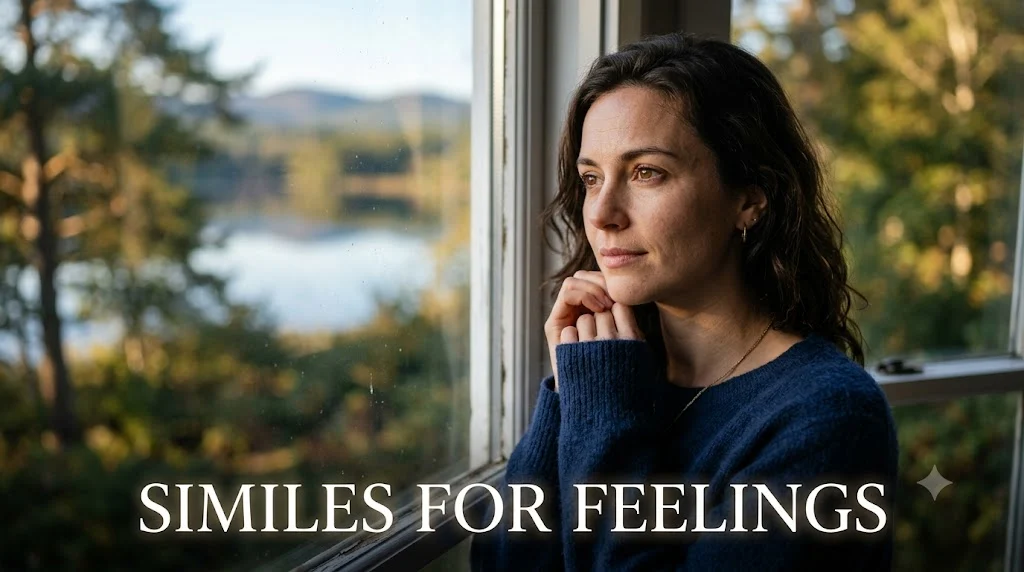
Similes for feelings compare emotional states to familiar experiences using “like” or “as” to create vivid, relatable descriptions. They help writers show emotions through imagery rather than simply naming them.A sad person might feel “as heavy as stone,” while a joyful heart beats “like a drum in celebration.” These comparisons transform abstract emotions into tangible, memorable images that resonate with readers.
Emotions are the heartbeat of human experience. They color our days, shape our decisions, and connect us to others in ways that words often struggle to capture. Yet every writer, poet, and storyteller faces the same challenge: how do you describe a feeling so that readers actually feel it?
Simply writing “she was sad” or “he felt angry” rarely creates emotional impact. These statements tell readers what’s happening but don’t invite them to experience the emotion themselves. That’s where similes become invaluable tools in a writer’s arsenal.
By comparing feelings to familiar objects, natural phenomena, sensory experiences, and physical sensations, similes transform abstract emotions into vivid imagery that readers can instantly understand and connect with. A heartbroken person doesn’t just feel sad they feel “as empty as a house after everyone has left.” An anxious mind doesn’t just worry it races “like a caged animal desperate for escape.
This comprehensive guide explores powerful similes for every major emotion, complete with detailed meanings, contextual explanations, practical examples, and expert writing tips. Whether you’re crafting fiction, writing poetry, developing characters, creating content, or working on academic assignments, these creative comparisons will elevate your descriptive writing and help you convey emotions with greater depth and authenticity.
Understanding Similes for Feelings
Before diving into specific similes, it’s essential to understand what makes a feeling simile effective and how to use it properly.
What Are Similes for Feelings?
A simile is a figure of speech that makes a comparison between two different things using connecting words like “as” or “like.” When applied to emotions, similes help readers understand a feeling by relating it to something they already know or can easily imagine.
The structure is simple:
- As [feeling/quality] as [comparison]: “As sad as a wilting flower”
- [Feeling] like [comparison]: “Her heart ached like a bruise that wouldn’t heal”
- [Action/experience] like [comparison]: “His anger erupted like a volcano”
Why Similes Make Emotions More Powerful
Similes enhance emotional writing in several crucial ways:
1. They Create Visual Imagery
Instead of abstract concepts, similes paint mental pictures. “Joyful” becomes “as bright as sunshine,” instantly creating a visual that readers can see.
2. They Engage Multiple Senses
Strong similes appeal to sight, sound, touch, taste, and smell. “Nervous as the air before a thunderstorm” engages both visual and tactile senses.
3. They Make Emotions Relatable
When readers recognize the comparison, they connect more deeply with the emotion. Everyone understands the weight of carrying something heavy, making “as burdened as a pack mule” immediately accessible.
4. They Show Rather Than Tell
Instead of announcing an emotion, similes demonstrate it through imagery. This is the golden rule of effective writing.
5. They Add Depth and Nuance
A simple emotion can be expressed in countless ways through different similes, each adding a unique shade of meaning.
The Psychology of Emotional Similes
Understanding why similes work so effectively requires looking at how the human brain processes language and emotion.
How the Brain Connects Comparisons
Research in cognitive linguistics suggests that humans naturally understand abstract concepts through concrete, physical experiences. This phenomenon, known as conceptual metaphor theory, explains why we describe emotions using physical sensations and familiar objects.
Example: We understand “sadness” through concepts like:
- Weight: “heavy heart,” “burden of grief”
- Darkness: “dark times,” “dim spirits”
- Cold: “chilly reception,” “cold comfort”
- Low position: “feeling down,” “low spirits”
Similes build on these natural mental connections, making them instinctively understandable to readers across cultures and backgrounds.
Why Readers Remember Emotional Similes
Emotional similes create stronger memories than plain statements because:
- They activate multiple brain regions: Visual, sensory, and emotional areas all respond simultaneously
- They create novel connections: Unusual comparisons surprise the brain and stick in memory
- They trigger personal associations: Readers connect comparisons to their own experiences
Similes for Joy and Happiness
Joy is one of the most sought-after emotions, yet describing it in fresh, engaging ways can be surprisingly challenging. These similes capture happiness in all its forms from quiet contentment to overwhelming elation.
1. As Bright as Morning Sunshine
Meaning:
Describes radiant, uplifting happiness that energizes and warms everyone it touches.
Why It Works:
Morning sunshine symbolizes new beginnings, hope, and gentle warmth. The comparison suggests happiness that is both powerful and comforting.
Alternative Expression:
“As warm as a spring sunrise”
Examples in Writing:
Formal Example:
Her spirit was as bright as morning sunshine, lifting the mood of everyone who entered her presence.
Casual Example:
She wakes up happy every single day it’s like having sunshine in human form.
Creative Example:
His laughter filled the room as bright as morning sunshine streaming through kitchen windows.
2. Like a Child on Christmas Morning
Meaning:
Represents pure, innocent excitement and anticipation.
Why It Works:
The image of a child experiencing Christmas morning evokes universal feelings of wonder, delight, and uncontainable joy.
Alternative Expression:
“Like a child in a candy shop”
Examples in Writing:
Formal Example:
His excitement about the promotion was like a child on Christmas morning.
Casual Example:
When she saw the puppy, she got as excited as a kid on Christmas.
Creative Example:
Joy danced in her eyes like a child’s wonder on Christmas dawn.
3. As Free as a Bird
Meaning:
Describes happiness rooted in freedom, liberation, and release from worry.
Why It Works:
Birds soaring through open skies symbolize complete freedom and unburdened joy.
Alternative Expression:
“As light as wind”
Examples in Writing:
Formal Example:
After completing her final exams, she felt as free as a bird.
Casual Example:
I felt so free like a bird flying wherever it wanted.
Creative Example:
His heart soared as free as birds riding thermal currents.
4. Like Honey on the Tongue
Meaning:
Represents sweet, lingering pleasure and contentment.
Why It Works:
Honey creates a multisensory experience of sweetness, richness, and lasting satisfaction.
Alternative Expression:
“As sweet as nectar”
Examples in Writing:
Formal Example:
The joy of reunion was like honey on the tongue, sweet and lasting.
Casual Example:
That moment was pure sweetness like honey melting in my mouth.
Creative Example:
Contentment settled on his soul like honey slowly dissolving on a warm tongue.
5. As Sparkling as Champagne
Meaning:
Describes effervescent, celebratory happiness that bubbles over.
Why It Works:
Champagne symbolizes celebration and produces visible, joyful bubbles that dance and sparkle.
Alternative Expression:
“As fizzy as soda”
Examples in Writing:
Formal Example:
Her personality was as sparkling as champagne, bringing effervescent joy to every gathering.
Casual Example:
She’s absolutely sparkling tonight like champagne at a wedding.
Creative Example:
Laughter bubbled from her as sparkling as champagne in crystal flutes.
6. Like the First Day of Spring
Meaning:
Represents renewed hope, fresh starts, and the joy of awakening.
Why It Works:
Spring symbolizes rebirth after winter dormancy, bringing warmth, color, and new life.
Alternative Expression:
“Like dawn after a long night”
Examples in Writing:
Formal Example:
His return brought joy like the first day of spring after a bitter winter.
Casual Example:
Getting that job felt like the first day of spring.
Creative Example:
Hope blossomed in her chest like the first day of spring unfolding.
7. As Radiant as a Diamond
Meaning:
Describes joy that shines from within and dazzles others.
Why It Works:
Diamonds are prized for their brilliance and ability to catch and reflect light.
Alternative Expression:
“As brilliant as a star”
Examples in Writing:
Formal Example:
Her smile was as radiant as a diamond, catching every ray of happiness.
Casual Example:
She was glowing like a diamond in sunlight.
Creative Example:
Joy radiated from his face as radiant as diamonds catching candlelight.
8. Like a Firework Display
Meaning:
Represents explosive, dramatic joy that lights up the sky (or room).
Why It Works:
Fireworks create spectacular, unforgettable displays of light and color.
Alternative Expression:
“Like exploding stars”
Examples in Writing:
Formal Example:
His celebration erupted like a firework display, brilliant and unforgettable.
Casual Example:
The party was like a fireworks show constant bursts of excitement.
Creative Example:
Laughter exploded from the crowd like fireworks painting the night sky.
9. As Light as a Feather
Meaning:
Describes joy that makes everything feel easy and effortless.
Why It Works:
Feathers float weightlessly, suggesting freedom from burdens and gravity.
Alternative Expression:
“As buoyant as a balloon”
Examples in Writing:
Formal Example:
After the good news, she walked as light as a feather.
Casual Example:
I felt so light like I could float away.
Creative Example:
His steps danced on air as light as feathers drifting on a breeze.
10. Like Rainbows After Rain
Meaning:
Represents joy that follows hardship, bringing beauty after difficulty.
Why It Works:
Rainbows symbolize hope and beauty emerging after storms.
Alternative Expression:
“Like gold at rainbow’s end”
Examples in Writing:
Formal Example:
Her recovery brought joy like rainbows after rain.
Casual Example:
That happy ending was like a rainbow after the storm.
Creative Example:
Peace settled over them like rainbows arching above rain-soaked fields.
Similes for Sadness and Grief
Sadness touches everyone at some point, and describing it authentically requires sensitivity and precision. These similes capture the weight, darkness, and ache of sorrow.
11. As Heavy as a Stone
Meaning:
Describes profound, crushing sadness that feels physically burdensome.
Why It Works:
Stones are heavy, solid, and unmoving representing the weight of grief that cannot be shifted.
Alternative Expression:
“As weighted as lead”
Examples in Writing:
Formal Example:
Her grief sat as heavy as a stone upon her chest.
Casual Example:
Everything felt so heavy like carrying a rock around.
Creative Example:
Sorrow pressed against his ribs as heavy as river stones.
12. Like Rain on a Window
Meaning:
Represents quiet, continuous sadness that blurs the world.
Why It Works:
Rain creates streaks and blurring on glass, symbolizing how grief distorts perception.
Alternative Expression:
“Like tears streaming down glass”
Examples in Writing:
Formal Example:
Her tears fell like rain on a window, blurring everything she saw.
Casual Example:
Sadness trickled through the day like rain on a glass pane.
Creative Example:
Grief streaked across her vision like rain running down window panes.
13. As Empty as a Desert
Meaning:
Describes emotional emptiness and the absence of feeling.
Why It Works:
Deserts are vast, barren, and devoid of life representing emotional desolation.
Alternative Expression:
“As hollow as a cave”
Examples in Writing:
Formal Example:
After the loss, his world felt as empty as a desert.
Casual Example:
I felt completely empty like a desert with nothing growing.
Creative Example:
His soul stretched barren as a desert under a pitiless sun.
14. Like Autumn Leaves Falling
Meaning:
Represents gentle, melancholic sadness that accompanies change.
Why It Works:
Autumn leaves symbolize endings and the beauty in letting go.
Alternative Expression:
“Like petals wilting”
Examples in Writing:
Formal Example:
Her sadness descended like autumn leaves falling silently from branches.
Casual Example:
I felt myself drifting down like autumn leaves.
Creative Example:
Hope fluttered and dropped from her heart like autumn leaves surrendering to winter.
15. As Dark as a Moonless Night
Meaning:
Describes profound despair and hopelessness.
Why It Works:
Moonless nights are completely dark, lacking any source of light or guidance.
Alternative Expression:
“As black as coal”
Examples in Writing:
Formal Example:
His depression stretched as dark as a moonless night.
Casual Example:
Some days feel as dark as nights without the moon.
Creative Example:
Despair wrapped around him as dark as nights when no stars appear.
16. Like a Broken Instrument
Meaning:
Represents sadness that affects expression and creativity.
Why It Works:
A broken instrument cannot create music, just as sadness silences expression.
Alternative Expression:
“Like a voice without sound”
Examples in Writing:
Formal Example:
Her spirit felt like a broken instrument, unable to produce joy.
Casual Example:
I felt broken like a guitar with snapped strings.
Creative Example:
His heart hung silent like a broken instrument abandoned in an attic.
17. As Still as a Frozen Lake
Meaning:
Describes sadness that paralyzes movement and emotion.
Why It Works:
Frozen lakes are completely still, preserving everything beneath a hard surface.
Alternative Expression:
“As motionless as stone”
Examples in Writing:
Formal Example:
She sat as still as a frozen lake, her emotions trapped beneath the surface.
Casual Example:
I couldn’t move I felt frozen like a lake in winter.
Creative Example:
Grief iced his movements as still as winter lakes locked in frost.
18. Like a Song without Harmony
Meaning:
Represents sadness as disconnection and lack of resolution.
Why It Works:
Songs without harmony feel incomplete, dissonant, and unsettling.
Alternative Expression:
“Like a note that never resolves”
Examples in Writing:
Formal Example:
His life felt like a song without harmony after she left.
Casual Example:
Everything felt off like music missing its harmony.
Creative Example:
Sadness echoed through him like an unfinished melody.
19. As Grey as Storm Clouds
Meaning:
Represents sadness that dampens everything.
Why It Works:
Storm clouds block sunlight and create a uniform grey that affects everything below.
Alternative Expression:
“As muted as twilight”
Examples in Writing:
Formal Example:
Her days stretched as grey as storm clouds building overhead.
Casual Example:
Everything looked grey like a sky about to storm.
Creative Example:
The world faded as grey as clouds before a downpour.
20. Like a Child Lost in a Crowd
Meaning:
Represents the fear and confusion of emotional isolation.
Why It Works:
A lost child experiences terror, confusion, and desperate searching feeling surrounded yet utterly alone.
Alternative Expression:
“Like a stranger in familiar places”
Examples in Writing:
Formal Example:
In her grief, she wandered like a child lost in a crowd.
Casual Example:
I felt completely lost like a kid separated from their parents.
Creative Example:
His confusion stumbled forward like a lost child in a sea of strangers.
Similes for Anger and Frustration
Anger is a powerful, often destructive emotion that demands strong, vivid descriptions. These similes capture rage in all its intensity.
21. Like a Volcano Erupting
Meaning:
Represents explosive anger that cannot be contained.
Why It Works:
Volcanoes build pressure before releasing destructive force matching the buildup and explosion of rage.
Alternative Expression:
“Like an earthquake striking”
Examples in Writing:
Formal Example:
His fury erupted like a volcano after years of pressure.
Casual Example:
He exploded like a volcano hot and destructive.
Creative Example:
Rage burst from him like a volcano spewing fire across the landscape.
22. As Hot as Burning Coal
Meaning:
Describes searing, consuming anger.
Why It Works:
Burning coals represent intense heat that glows with destructive potential.
Alternative Expression:
“As scorching as fire”
Examples in Writing:
Formal Example:
Her anger burned as hot as burning coal in her chest.
Casual Example:
I was so angry I felt like I was on fire.
Creative Example:
Indignation smoldered within him as hot as coals from a dying fire.
23. Like a Thunderstorm Brewing
Meaning:
Represents anger that builds gradually before release.
Why It Works:
Thunderstorms develop over time, with increasing tension before the storm breaks.
Alternative Expression:
“Like a kettle about to boil”
Examples in Writing:
Formal Example:
His anger rumbled like a thunderstorm brewing on the horizon.
Casual Example:
You could feel the anger building, like a storm about to break.
Creative Example:
Resentment gathered in her silence like thunderclouds darkening the sky.
24. As Sharp as Broken Glass
Meaning:
Describes bitter, cutting anger.
Why It Works:
Broken glass cuts deeply and leaves lasting wounds.
Alternative Expression:
“As cutting as a knife”
Examples in Writing:
Formal Example:
His words flew as sharp as broken glass, leaving wounds behind.
Casual Example:
She was razor-sharp with anger.
Creative Example:
Each accusation fell as sharp as shattered glass across the floor.
25. Like a Caged Animal
Meaning:
Represents frustrated anger that feels trapped and desperate.
Why It Works:
Caged animals pace, snarl, and lash out due to confinement mirroring trapped anger.
Alternative Expression:
“Like a prisoner rattling bars”
Examples in Writing:
Formal Example:
His rage paced like a caged animal, desperate for release.
Casual Example:
I felt trapped like a wild animal in a cage.
Creative Example:
Fury stalked the edges of his control like a caged beast.
26. As Red as a Warning Flag
Meaning:
Describes visible, dangerous anger.
Why It Works:
Red flags signal danger and urgency.
Alternative Expression:
“As crimson as fire”
Examples in Writing:
Formal Example:
Her face flushed as red as a warning flag when she heard the news.
Casual Example:
I could see the red rising in his face.
Creative Example:
Anger stained his cheeks as red as flags warning of danger ahead.
27. Like a Boiling Pot
Meaning:
Represents anger that simmers and threatens to overflow.
Why It Works:
Boiling pots bubble and steam, threatening to spill over when heat is too high.
Alternative Expression:
“Like steam building in a kettle”
Examples in Writing:
Formal Example:
Her frustration simmered like a boiling pot, ready to overflow.
Casual Example:
I was so angry I felt like a pot about to boil over.
Creative Example:
Rage bubbled inside him like water at a rolling boil.
28. As Harsh as Winter Wind
Meaning:
Describes cold, biting anger.
Why It Works:
Winter winds are sharp, cutting, and capable of causing pain.
Alternative Expression:
“As bitter as frost”
Examples in Writing:
Formal Example:
His rejection was as harsh as winter wind.
Casual Example:
The anger in her voice cut like winter wind.
Creative Example:
Each word fell as harsh as wind whipping across frozen fields.
29. Like a Spark Igniting Dry Grass
Meaning:
Represents anger that spreads quickly.
Why It Works:
Dry grass burns rapidly once ignited.
Alternative Expression:
“Like gasoline on fire”
Examples in Writing:
Formal Example:
Her anger spread like a spark igniting dry grass.
Casual Example:
The argument turned fiery fast like dry grass catching flames.
Creative Example:
Fury raced through the room like sparks through drought-dried fields.
30. As Tight as a Coiled Spring
Meaning:
Describes barely contained anger.
Why It Works:
Coiled springs store enormous energy and release explosively.
Alternative Expression:
“As wound as a clock spring”
Examples in Writing:
Formal Example:
He sat as tight as a coiled spring, holding back his fury.
Casual Example:
I was wound so tight I felt ready to snap.
Creative Example:
Indignation wound through his muscles as tight as springs ready to uncoil.
Similes for Fear and Anxiety
Fear and anxiety are among the most primal human emotions. These similes capture everything from mild nervousness to paralyzing terror.
31. Like a Rabbit Caught in Headlights
Meaning:
Represents paralyzing, frozen fear.
Why It Works:
The image of a frozen rabbit creates immediate understanding of overwhelming fear.
Alternative Expression:
“Like a deer in headlights”
Examples in Writing:
Formal Example:
She stood like a rabbit caught in headlights, unable to move or speak.
Casual Example:
I froze completely like a deer in headlights.
Creative Example:
Terror pinned him in place like a rabbit caught in blazing lights.
32. As Cold as Ice
Meaning:
Describes chilling dread.
Why It Works:
Ice represents cold that numbs and paralyzes.
Alternative Expression:
“As frozen as winter”
Examples in Writing:
Formal Example:
His blood ran as cold as ice when he heard the footsteps behind him.
Casual Example:
I felt ice cold fear run through me.
Creative Example:
Dread slithered through her veins as cold as winter ice.
33. Like a Bird in a Cage
Meaning:
Represents the helplessness of anxiety.
Why It Works:
Caged birds flutter desperately, unable to escape.
Alternative Expression:
“Like a fish out of water”
Examples in Writing:
Formal Example:
His anxiety made him feel like a bird in a cage, desperate for escape.
Casual Example:
I felt trapped like a bird beating against bars.
Creative Example:
Fear fluttered in her chest like a bird trapped in a cage.
34. As Dark as a Basement at Midnight
Meaning:
Describes overwhelming, consuming fear.
Why It Works:
Basements at midnight are completely dark, representing the unknown and threatening.
Alternative Expression:
“As black as a cave”
Examples in Writing:
Formal Example:
His nightmares stretched as dark as a basement at midnight.
Casual Example:
The fear was absolute as dark as midnight in a basement.
Creative Example:
Terror wrapped around him as dark as basements sealed from light.
35. Like a Cat on a Hot Tin Roof
Meaning:
Represents nervous, jittery anxiety.
Why It Works:
The image suggests physical discomfort and desperate movement.
Alternative Expression:
“Like ants in the pants”
Examples in Writing:
Formal Example:
She paced like a cat on a hot tin roof, unable to settle.
Casual Example:
I was so nervous I felt like a cat on hot tin.
Creative Example:
Anxiety danced through his limbs like a cat on a blazing roof.
36. As Heavy as a Storm Cloud
Meaning:
Describes dread that hangs oppressively.
Why It Works:
Storm clouds are heavy with rain and threaten to break.
Alternative Expression:
“As oppressive as humidity”
Examples in Writing:
Formal Example:
Fear hung over them as heavy as a storm cloud ready to burst.
Casual Example:
The atmosphere was heavy like a storm about to break.
Creative Example:
Dread pressed down as heavy as storm clouds before thunder.
37. Like Leaves Before a Storm
Meaning:
Represents agitated anxiety.
Why It Works:
Leaves rustle and shake before storms, suggesting nervous anticipation.
Alternative Expression:
“Like branches in wind”
Examples in Writing:
Formal Example:
His hands trembled like leaves before a storm.
Casual Example:
I was shaking like leaves in the wind.
Creative Example:
Nerves fluttered through her like leaves dancing before rain.
38. As Sour as Rotten Fruit
Meaning:
Describes the sickening quality of dread.
Why It Works:
Rotten fruit creates a visceral reaction of revulsion and displeasure.
Alternative Expression:
“As bitter as poison”
Examples in Writing:
Formal Example:
The fear in his stomach was as sour as rotten fruit.
Casual Example:
I had a sick feeling in my stomach like something rotten.
Creative Example:
Dread curdled in her gut as sour as forgotten fruit.
39. Like a Whisper in the Dark
Meaning:
Represents subtle, creeping fear.
Why It Works:
Whispers in darkness suggest something unseen and threatening.
Alternative Expression:
“Like footsteps behind you”
Examples in Writing:
Formal Example:
Fear followed her like a whisper in the dark.
Casual Example:
I felt something watching like a whisper I couldn’t quite hear.
Creative Example:
Anxiety crept through the room like whispers from unseen corners.
40. As Sharp as a Blade
Meaning:
Describes sudden, cutting fear.
Why It Works:
Blades cut instantly and cleanly.
Alternative Expression:
“As stabbing as a needle”
Examples in Writing:
Formal Example:
Panic pierced him as sharp as a blade.
Casual Example:
Fear shot through me like a knife.
Creative Example:
Terror sliced through her as sharp as steel against skin.
Similes for Love and Affection
Love takes countless forms romantic, familial, platonic, and self-love. These similes capture the warmth, depth, and complexity of love.
41. As Warm as a Hearth Fire
Meaning:
Represents comforting, home-like love.
Why It Works:
Hearth fires symbolize home, safety, and comfort.
Alternative Expression:
“As cozy as a fireplace”
Examples in Writing:
Formal Example:
Her love was as warm as a hearth fire on a winter evening.
Casual Example:
Being with him felt like sitting by a warm fire.
Creative Example:
Affection radiated from her as warm as flames in a stone hearth.
42. Like a Flower Opening to the Sun
Meaning:
Describes natural, unfolding love.
Why It Works:
Flowers turn toward sunlight for nourishment and growth.
Alternative Expression:
“Like a bud blooming”
Examples in Writing:
Formal Example:
His heart opened to her like a flower opening to the sun.
Casual Example:
I felt my heart opening like a flower.
Creative Example:
Love unfurled within him like a flower reaching for sunlight.
43. As Deep as the Ocean
Meaning:
Describes profound, seemingly bottomless love.
Why It Works:
Oceans are vast, mysterious, and deep beyond measure.
Alternative Expression:
“As endless as the sea”
Examples in Writing:
Formal Example:
His love for her was as deep as the ocean.
Casual Example:
I love you deeper than the ocean.
Creative Example:
Affection stretched within him as deep as oceans beneath distant shores.
44. Like a Safe Harbor
Meaning:
Represents protective, secure love.
Why It Works:
Harbors provide shelter from storms at sea.
Alternative Expression:
“Like a sheltered cove”
Examples in Writing:
Formal Example:
Her embrace felt like a safe harbor in life’s storms.
Casual Example:
You’re my safe harbor.
Creative Example:
Love surrounded him like a harbor sheltering ships from gales.
45. As Gentle as a Summer Breeze
Meaning:
Describes tender, soft affection.
Why It Works:
Summer breezes are pleasant, soothing, and welcome.
Alternative Expression:
“As soft as petals”
Examples in Writing:
Formal Example:
His touch was as gentle as a summer breeze.
Casual Example:
She was so gentle like a soft breeze.
Creative Example:
Love caressed her like summer breezes through open windows.
46. Like Stars in the Night Sky
Meaning:
Represents constant, guiding love.
Why It Works:
Stars remain constant and provide guidance through darkness.
Alternative Expression:
“Like a lighthouse beam”
Examples in Writing:
Formal Example:
Her guidance in his life was like stars in the night sky.
Casual Example:
Your love guides me like stars on a dark night.
Creative Example:
Hope shone from her love like stars scattered across the heavens.
47. As Precious as Gold
Meaning:
Describes valued, treasured love.
Why It Works:
Gold is rare, valuable, and enduring.
Alternative Expression:
“As valuable as treasure”
Examples in Writing:
Formal Example:
Their friendship was as precious as gold.
Casual Example:
You’re worth more than gold to me.
Creative Example:
Their bond gleamed as precious as ancient gold.
48. Like Music in Perfect Harmony
Meaning:
Represents love that feels complete and natural.
Why It Works:
Harmony in music feels satisfying and whole.
Alternative Expression:
“Like a perfect duet”
Examples in Writing:
Formal Example:
Their relationship resonated like music in perfect harmony.
Casual Example:
We just clicked like perfect harmony.
Creative Example:
Love flowed between them like music in perfect harmony.
49. As Sweet as Fresh Berries
Meaning:
Describes innocent, delightful affection.
Why It Works:
Fresh berries are naturally sweet and enjoyable.
Alternative Expression:
“As sweet as sugar”
Examples in Writing:
Formal Example:
Her affection was as sweet as fresh berries.
Casual Example:
She’s just so sweet like summer strawberries.
Creative Example:
Love lingered on his lips as sweet as berries ripe from the vine.
50. Like a Blanket on a Cold Night
Meaning:
Represents protective, comforting love.
Why It Works:
Blankets provide warmth and security.
Alternative Expression:
“Like a warm embrace”
Examples in Writing:
Formal Example:
Her support covered him like a blanket on a cold night.
Casual Example:
Your love wraps around me like a blanket.
Creative Example:
Affection enfolded her like blankets against winter’s chill.
Similes for Surprise and Shock
Surprise can be delightful, unsettling, or completely overwhelming. These similes capture the experience of the unexpected.
51. Like a Lightning Bolt
Meaning:
Describes sudden, striking surprise.
Why It Works:
Lightning is instantaneous, visible, and dramatic.
Alternative Expression:
“Like a flash of light”
Examples in Writing:
Formal Example:
The news struck him like a lightning bolt.
Casual Example:
It hit me like a bolt of lightning.
Creative Example:
Astonishment struck her like lightning from a clear sky.
52. As Stunned as a Deer in Headlights
Meaning:
Represents frozen surprise.
Why It Works:
The image of an immobilized deer captures complete shock.
Alternative Expression:
“As frozen as a statue”
Examples in Writing:
Formal Example:
She stood as stunned as a deer in headlights.
Casual Example:
I was completely stunned like a deer in headlights.
Creative Example:
Surprise paralyzed him as still as deer caught in brilliant light.
53. Like a Glass Shattering
Meaning:
Describes the shattering of expectations.
Why It Works:
Glass shatters suddenly and cannot be restored to its original form.
Alternative Expression:
“Like a bubble bursting”
Examples in Writing:
Formal Example:
His assumptions shattered like glass hitting concrete.
Casual Example:
Everything I thought I knew shattered like glass.
Creative Example:
Reality fractured around her like glass against stone.
54. As Sudden as a Squall
Meaning:
Describes unexpected, abrupt surprise.
Why It Works:
Squalls arise suddenly and violently.
Alternative Expression:
“As unexpected as hail”
Examples in Writing:
Formal Example:
The revelation came as sudden as a squall.
Casual Example:
The news hit us out of nowhere like a sudden storm.
Creative Example:
Astonishment swept over him as sudden as squalls across the ocean.
55. Like a Dream Becoming Real
Meaning:
Represents pleasant, welcome surprise.
Why It Works:
The blurring of dreams and reality creates wonder.
Alternative Expression:
“Like magic manifesting”
Examples in Writing:
Formal Example:
The invitation felt like a dream becoming real.
Casual Example:
It was like a dream come true.
Creative Example:
Joy unfolded before her like dreams becoming reality.
Similes for Calm and Peace
Tranquility is a precious emotional state. These similes capture inner peace and serenity.
56. As Still as a Glassy Lake
Meaning:
Describes complete stillness and calm.
Why It Works:
Glassy lakes are perfectly still, reflecting everything without disturbance.
Alternative Expression:
“As smooth as glass”
Examples in Writing:
Formal Example:
Her mind was as still as a glassy lake.
Casual Example:
I felt completely still like a calm lake.
Creative Example:
Peace settled over him as still as mountain lakes at dawn.
57. Like a Soft Lullaby
Meaning:
Represents soothing, calming peace.
Why It Works:
Lullabies are designed to calm and comfort.
Alternative Expression:
“Like gentle rain”
Examples in Writing:
Formal Example:
Her presence was like a soft lullaby to his troubled mind.
Casual Example:
Her voice calms me like a lullaby.
Creative Example:
Tranquility washed over him like lullabies on quiet nights.
58. As Cool as Morning Mist
Meaning:
Describes refreshing, calming peace.
Why It Works:
Morning mist is cool, gentle, and purifying.
Alternative Expression:
“As refreshing as dew”
Examples in Writing:
Formal Example:
His demeanor remained as cool as morning mist.
Casual Example:
She’s as calm as morning fog.
Creative Example:
Serenity rested on him as cool as mist above quiet fields.
59. Like Floating on a Cloud
Meaning:
Represents weightless, peaceful feelings.
Why It Works:
Clouds are soft, effortless, and detached from worldly concerns.
Alternative Expression:
“Like drifting on air”
Examples in Writing:
Formal Example:
After meditation, she felt like floating on a cloud.
Casual Example:
I felt like I was floating.
Creative Example:
Peace lifted him like floating on billowing clouds.
60. As Soft as Feather Pillows
Meaning:
Describes comfortable, relaxed peace.
Why It Works:
Feather pillows are associated with comfort and rest.
Alternative Expression:
“As gentle as cotton”
Examples in Writing:
Formal Example:
Her presence felt as soft as feather pillows.
Casual Example:
Being with her is as soft as lying on a cloud.
Creative Example:
Calm surrounded her as soft as pillows of down.
Similes for Complex Emotions
Some emotions are too complex for simple labels. These similes capture nuanced emotional states.
61. Like a Sundial
Meaning:
Represents the passage of time and change in emotions.
Why It Works:
Sundials mark time through light and shadow.
Alternative Expression:
“Like a moving shadow”
Examples in Writing:
Formal Example:
His feelings shifted like a sundial, changing with each hour.
Casual Example:
My emotions move like shadows on a sundial.
Creative Example:
Moods crossed her face like light moving across sundials.
62. As Muddled as Autumn Fog
Meaning:
Describes confused, unclear emotions.
Why It Works:
Fog obscures vision and makes direction difficult.
Alternative Expression:
“As confused as leaves in wind”
Examples in Writing:
Formal Example:
His emotions were as muddled as autumn fog.
Casual Example:
I felt completely fogged in.
Creative Example:
Feelings swirled through her as muddled as fog through autumn trees.
63. Like a River
Meaning:
Represents emotional flow and continuity.
Why It Works:
Rivers flow continuously, sometimes smoothly, sometimes turbulent.
Alternative Expression:
“Like running water”
Examples in Writing:
Formal Example:
Her feelings flowed like a river, sometimes calm, sometimes raging.
Casual Example:
Emotions run through me like a river.
Creative Example:
Affection coursed through her like rivers to the sea.
64. As Fragile as Glass
Meaning:
Describes easily broken emotional states.
Why It Works:
Glass represents delicacy and vulnerability.
Alternative Expression:
“As breakable as crystal”
Examples in Writing:
Formal Example:
Her confidence was as fragile as glass.
Casual Example:
I felt like I would shatter.
Creative Example:
Resolve balanced within him as fragile as ancient glass.
65. Like a Symphony
Meaning:
Represents the complexity of multiple emotions.
Why It Works:
Symphonies incorporate many instruments to create one cohesive piece.
Alternative Expression:
“Like a choir of voices”
Examples in Writing:
Formal Example:
Her emotions played like a symphony, each feeling adding depth.
Casual Example:
Everything I felt came together like a symphony.
Creative Example:
Feelings rose and fell within her like symphonic movements.
How to Use Emotion Similes Effectively
Even the best similes fall flat if used incorrectly. These strategies will help you use emotional similes with maximum impact.
Match the Intensity
The simile should match the emotional intensity of the moment.
Mild Emotion: “Her annoyance was like a fly buzzing around her head.”
Intense Emotion: “His fury erupted like a volcano destroying everything in its path.”
Consider Your Character
Similes should reflect the character’s personality, background, and perspective.
Gardener Character: “Her happiness spread like wildflowers across the meadow.”
Musician Character: “His grief echoed through him like a minor chord sustained too long.”
Sailor Character: “Her fear rose like waves before a hurricane.”
Vary Your Usage
Avoid the same simile pattern repeatedly. Mix:
- “As [emotion] as [comparison]”: “As anxious as a cat on hot tin”
- “[Emotion] like [comparison]”: “Fear stalked him like a predator”
- “[Action/experience] like [comparison]”: “His heart raced like a runaway train”
Show, Don’t Tell (Reinforced)
Instead of stating “He was angry,” demonstrate it:
Telling: He was angry.
Showing through Simile: His voice came out as sharp as broken glass, and his hands trembled like leaves before a storm.
Use Sparingly
Similes lose their power when overused. One perfectly placed simile can be more effective than a dozen average ones. Reserve similes for moments that need emphasis, color, or emotional impact.
Avoid Mixed Metaphors
Don’t combine incompatible comparisons:
Confusing: “His anger rose like a tidal wave and simmered like a kettle” (Tidal waves don’t simmer.)
Better: “His anger simmered like a kettle about to boil.”
Common Mistakes to Avoid
Even experienced writers can fall into these traps when using similes.
Using Clichés
Some similes have been used so often they’ve lost their impact:
| Cliché | Better Alternative |
|---|---|
| Mad as a hornet | As volatile as wildfire |
| Happy as a clam | As joyful as a child on an unexpected holiday |
| Sad as a puppy | As hollow as a room after furniture is removed |
| Nervous as a long-tailed cat | As fidgety as a restless hummingbird |
| Bold as brass | As unflinching as a lighthouse facing a storm |
Forcing Comparisons
Avoid stretching to create unexpected similes. The best comparisons feel natural:
Forced: “Her sorrow was like an unsharpened pencil writing nothing.”
Natural: “Her sorrow was like rain on a window, blurring everything.”
Ignoring Tone
Ensure the simile matches the overall tone of your writing:
In a Serious Scene:
- Wrong: “His grief felt like a broken slot machine.”
- Right: “His grief pressed down like a mountain on his chest.”
Inconsistent Imagery
Maintain consistency within the image:
Wrong: “Her happiness bubbled like champagne and settled softly like a feather.”
Right: “Her happiness fizzed like champagne, bubbling with each breath.”
Emotion Similes Across Different Writing Forms
Different types of writing call for different approaches to emotional similes.
Fiction and Creative Writing
Fiction allows for more creative, extended similes. You can develop a comparison over multiple sentences:
“Grief crept through her like morning fog rolling across the valley. It filled every hollow of her heart, clung to every memory, and obscured everything she had once seen clearly.”
Poetry
Poetry demands concise, powerful similes that create immediate emotional resonance:
Sorrow falls like autumn rain,
Cold and endless in its refrain.”
Essays and Personal Writing
Autobiographical writing benefits from similes that feel personally authentic:
“After the accident, I felt like someone had opened a door inside my chest and forgotten to close it. The cold kept getting in.”
Professional and Academic Writing
Professional writing uses similes sparingly and precisely to illustrate points:
“Understanding emotional intelligence is like learning a new language the vocabulary exists, but fluency requires practice.”
Dialogue
Characters should use similes that match their personality and education level:
- Intellectual Character: “His jealousy was like a chemical reaction, volatile and predictable.”
- Simple Character: “His jealousy burned like a hot coal in his pocket.”
- Artistic Character: “His jealousy swirled through him like paint spiraling in water.”
Writing Exercises to Improve Your Simile Skills
Practice these exercises to develop your emotional simile abilities.
Exercise 1: Emotion Expansion
Start with a basic emotion and create five different similes:
Emotion: Anticipation
- Like the moment before a curtain rises
- As electric as charged air before lightning
- Like waiting for your name to be called
- As restless as waves building for a storm
- Like the pause between heartbeats
Exercise 2: Character-Based Similes
Write similes from different character perspectives:
A Chef Feeling Joy:
“Her joy was like the first perfect soufflé of the morning.”
An Athlete Feeling Joy:
“His joy was like crossing the finish line first.”
A Teacher Feeling Joy:
“Her joy was like watching a student finally understand.”
Exercise 3: Evolution of Emotion
Describe a single emotional journey using similes:
From Fear to Relief:
“At first, fear twisted through me like thorns in my veins. Then hope flickered like a candle in the darkness. When the verdict came, relief flooded me like cool water after a long thirst.”
Exercise 4: Emotional Archives
Create your personal collection of emotion similes. Organize them by:
- Intensity (gentle → mild → moderate → strong → overwhelming)
- Type (nature-based, food-based, sensory-based, action-based)
- Emotion (joy, sadness, anger, fear, love, etc.)
Exercise 5: Rewriting Practice
Take a passage with telling language and rewrite it using similes:
Original (Telling):
“She was sad. Her heart hurt. She didn’t want to talk to anyone.”
Rewritten (Showing with Similes):
“Sadness settled over her like fog that refused to lift. Her heart ached like a bruise that wouldn’t heal, and words felt like pebbles too heavy to lift from her chest.”
Emotional Similes in Different Literary Traditions
Understanding how different cultures use emotional similes can broaden your creative palette.
Western Literary Tradition
Western literature often draws from nature and physical objects:
- “As cold as ice” (tangible)
- “Like a raging storm” (natural)
- “As proud as a peacock” (animal-based)
Eastern Literary Tradition
Eastern traditions often use philosophical and natural imagery:
- “Like water seeking its own level” (natural philosophy)
- “As fleeting as cherry blossoms” (seasonal)
- “Like a moon reflected in water” (illusion/reality)
Arabic Poetry
Arabic poetry is known for its elaborate similes:
- Her beauty was like a full moon among stars
- “His generosity was like rain on thirsty soil”
- “His wisdom was like an endless ocean”
Contemporary Usage
Modern writers are creating new emotional similes from technology and contemporary life:
- “Her anxiety buzzed like an unending notification”
- “His memory was like a corrupted file, impossible to read”
- “Grief clicked through her like endless loading screens”
- “Joy streamed through him like finding a new discovery”
The Connection Between Similes and Metaphors
While this article focuses on similes, understanding their relationship to metaphors strengthens both.
Simile vs Metaphor: Quick Comparison
Simile: Uses “like” or “as”
- “Her anger was like a fire that consumed everything”
Metaphor: Makes a direct comparison
- “Her anger was a fire that consumed everything”
When to Use Each
Use Similes When:
- You want a gentler comparison
- You want to emphasize the comparison itself
- The contrast between items is important
Use Metaphors When:
- You want more powerful emotional impact
- You want the comparison to be more immediate
- You’re creating a sustained image
Converting Similes to Metaphors
Practice turning similes into metaphors:
Simile: “His love was as deep as the ocean.
Metaphor: “His love was an ocean, mysterious and endless.”
Simile: “Her joy was like sunlight after rain.”
Metaphor: “Her joy was sunlight after rain.”
Emotional Simile Quick Reference Guide
Joy and Happiness
| Simile | Best Used For |
|---|---|
| As bright as morning sunshine | Radiant, energizing joy |
| Like a child on Christmas | Pure, excited happiness |
| As free as a bird | Liberating joy |
| Like honey on the tongue | Sweet, lasting contentment |
| As sparkling as champagne | Effervescent, celebratory joy |
| Like the first day of spring | Renewed, hopeful happiness |
Sadness and Grief
| Simile | Best Used For |
|---|---|
| As heavy as a stone | Crushing, weighty grief |
| Like rain on a window | Quiet, continuous sadness |
| As empty as a desert | Emotional emptiness |
| Like autumn leaves falling | Gentle, melancholic sadness |
| As dark as a moonless night | Profound despair |
Anger and Frustration
| Simile | Best Used For |
|---|---|
| Like a volcano erupting | Explosive, destructive anger |
| As hot as burning coal | Intense, consuming fury |
| Like a thunderstorm brewing | Building, simmering anger |
| As sharp as broken glass | Bitter, cutting anger |
| Like a caged animal | Frustrated, trapped anger |
Fear and Anxiety
| Simile | Best Used For |
|---|---|
| Like a rabbit caught in headlights | Frozen, paralyzing fear |
| As cold as ice | Chilling dread |
| Like a bird in a cage | Helpless anxiety |
| As dark as a basement at midnight | Overwhelming fear |
| Like a cat on a hot tin roof | Nervous, jittery anxiety |
Love and Affection
| Simile | Best Used For |
|---|---|
| As warm as a hearth fire | Comforting, home-like love |
| Like a flower opening to the sun | Natural, unfolding love |
| As deep as the ocean | Profound, deep love |
| Like a safe harbor | Protective, secure love |
| As gentle as a summer breeze | Tender, soft affection |
FAQs
1. What are similes for feelings?
Similes for feelings are figures of speech that compare emotional states to familiar experiences, objects, or natural phenomena using “like” or “as.” They help writers describe emotions in vivid, relatable terms rather than simply naming the feeling.
2. Why are similes important for describing emotions?
Similes transform abstract emotions into concrete images that readers can visualize and connect with. They engage multiple senses, create stronger emotional resonance, and help writers show rather than tell.
3. How can I create original similes for feelings?
Observe real emotional experiences and connect them to sensory images from your surroundings. Consider your character’s background, the intensity of the emotion, and the context. Practice converting emotions into comparisons from nature, food, actions, or technology.
4. What’s the difference between a simile and a metaphor?
A simile uses “like” or “as” to make a comparison (“Her heart was as heavy as stone”), while a metaphor makes a direct comparison without these words (“Her heart was stone”). Similes tend to be gentler, while metaphors create more immediate impact.
5. How many similes should I use in my writing?
Use similes sparingly for maximum impact. One well-placed, powerful simile is more effective than several mediocre ones. Reserve them for moments that need emphasis, vivid description, or emotional depth.
6. Can similes be too cliché?
Yes, overused similes like “mad as a hornet” or “happy as a clam” can make writing feel stale. Try to create fresh, original comparisons that reflect your unique perspective or your character’s specific experiences.
7. Are similes appropriate for academic writing?
While academic writing generally prefers direct language, thoughtful similes can help illustrate complex emotional concepts. Use them judiciously and ensure they serve a clear explanatory purpose.
8. How do I choose the right simile for my context?
Consider the intensity of the emotion, your character’s background and personality, the overall tone of your piece, and what elements of the emotion you want to emphasize (duration, intensity, physical sensation, etc.).
9. Can I use similes in dialogue?
Absolutely! Characters should use similes that reflect their personality, education level, and cultural background. A character’s choice of simile can reveal important traits and make them feel more authentic.
10. How do I know if my simile is effective?
A good simile should be immediately understandable, create clear imagery, match the emotional intensity of the moment, and resonate with readers. Read it aloud and consider whether it feels natural and impactful.
Conclusion
Emotions are the language of the soul, but translating them into words that truly resonate is one of the writer’s greatest challenges and responsibilities. Similes provide a bridge between the abstract world of feelings and the concrete world of human experience, allowing readers to not just understand emotions but to feel them.
When you describe sorrow “as heavy as stone,” you invite readers to experience its weight. When you capture joy “like a child on Christmas morning,” you help them remember their own moments of pure delight. When you portray fear “like a rabbit caught in headlights,” you connect them to the primal response of being frozen by terror.
The 65 similes explored in this article represent just a fraction of what’s possible. The most powerful similes often come from your own observations the way sunlight catches dust motes in a room, the sound of rain against a window, the weight of an object in your hands. By paying attention to the world around you and the emotions within you, you can create comparisons that are uniquely yours.
As you continue your writing journey, remember:
- Match the intensity of your simile to the intensity of the emotion
- Reflect your character’s world in their comparisons
- Show, don’t tell through vivid imagery
- Use sparingly for maximum impact
- Create original connections that feel natural and powerful
So take these similes, adapt them, and use them as stepping stones to create your own. Observe the emotions that shape human experience and find the images that capture them honestly. Your readers will feel the difference.