Quick Answer
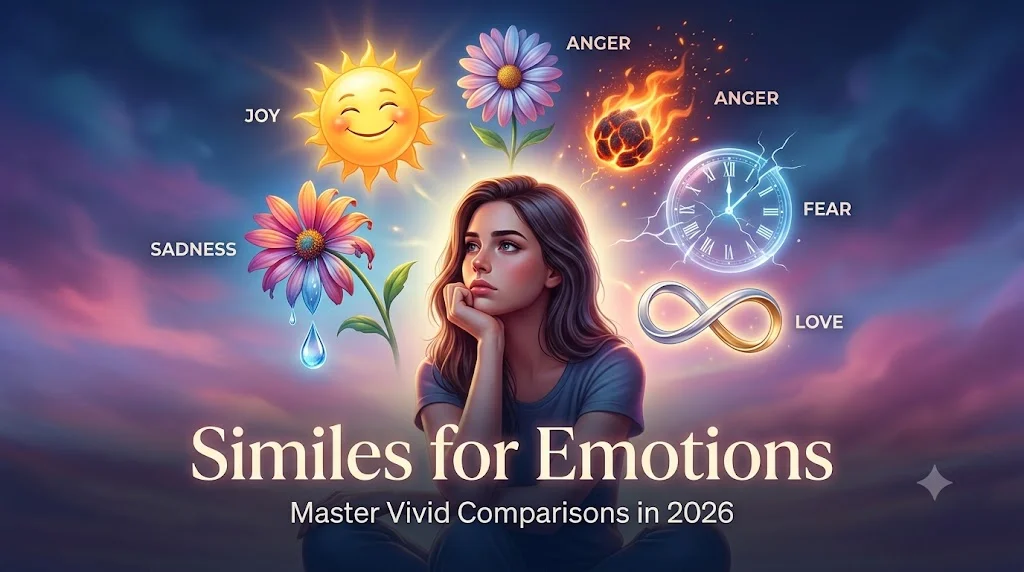
Similes for emotions are powerful figures of speech that compare feelings to vivid, relatable images using “like” or “as.” They transform abstract emotions into concrete experiences, making writing more engaging and memorable.For example, “she was as joyful as a child on Christmas morning” or “his anger burned like wildfire.” This guide explores over 75 similes for a wide range of emotions, providing definitions, examples, and practical writing tips to master this essential literary device.
Human beings are emotional creatures. Our lives are a complex tapestry of feelings, from the soaring heights of joy to the crushing depths of sorrow. As a writer, your primary challenge is to translate this complex, internal world onto the page, making your readers feel what your characters feel. You want them to laugh, cry, rage, and hope alongside the people you create.
However, simply stating an emotion is rarely effective. Telling the reader “John was sad” or “Maria was angry” is a weak, flat way to convey a feeling. It lacks texture, depth, and the power to truly resonate. This is where the magic of similes comes in.
A simile is a figure of speech that compares two different things using the words “like” or “as.” For emotions, this comparison is transformative. It takes the abstract an emotion you can’t see or touch and connects it to something concrete and universal that the reader already understands.
Similes for emotions are the secret weapon of masterful storytellers. They create vivid, instant mental images that evoke a visceral response. Instead of feeling like a distant observer reading about a feeling, the reader is drawn into the emotional experience itself. They don’t just understand the character is sad; they feel the sadness, because they know what it’s like to be “as cold as a forgotten winter.”
In this guide, we will dive deep into the art of using similes for emotions. We will provide a comprehensive list of similes for happiness, sadness, anger, fear, love, and many more. You’ll learn why they work, how to use them naturally, and how to avoid common pitfalls. By the end, you’ll have a powerful toolkit to create emotional depth that will captivate your readers and make your writing unforgettable.
What are Similes for Emotions?
A simile is a literary device that makes a direct comparison between two essentially different things, using the words “like” or “as”.
When applied to emotions, similes serve as a bridge, connecting an intangible feeling to a tangible, relatable experience.
The Anatomy of a Simile for Emotions:
- The Subject: The character and the emotion they are feeling. (e.g., “Her joy…”)
- The Connector: “Like” or “as.”
- The Object: The concrete image or experience used for comparison. (e.g., “…was like a burst of sunlight.”)
Similes vs. Metaphors
While similes are often confused with metaphors, there’s a key difference:
- Simile: Uses “like” or “as” to make a softer comparison. It highlights similarities.
- Example: “His fear was like a rat trapped in a cage.”
- Metaphor: Makes a direct, implied comparison without “like” or “as.” It states one thing is another.
- Example: “His fear was a rat trapped in a cage.”
Both are powerful, but similes often feel more descriptive and accessible, while metaphors can be more potent and direct. The best writers use both effectively.
Why Similes are Crucial for Emotional Depth in Writing
1. Show, Don’t Tell
This is the golden rule of writing. Instead of telling the reader a character is “nervous,” a simile shows it. “He was as nervous as a long-tailed cat in a room full of rocking chairs” paints a funny, vivid picture that is instantly understood and felt.
2. Create Relatability
By comparing a personal, specific feeling to a universal experience, you allow your reader to connect with the character on a deeper level. Everyone knows the feeling of being “as cold as stone,” making the character’s sadness a shared, relatable experience.
3. Add Vivid Imagery
Similes transform abstract concepts into vivid sensory experiences. They don’t just appeal to the mind; they appeal to the senses. You can almost hear the roar of anger or feel the warmth of love.
4. Establish Tone and Mood
The type of simile you choose can set the tone for a scene. A dark, violent simile (like a predator) creates a tense mood, while a soft, peaceful simile (like a flowing river) creates a calming one.
Similes for Happiness and Joy
Happiness is often described as light, freedom, and boundless energy. The similes you choose should reflect its warmth and uplifting nature.
1. As Bright as a Summer Morning
Meaning: This simile describes a joy that is radiant, clear, and full of potential. It’s a happiness that seems to illuminate everything around it.
Why It Works: Summer mornings are universally associated with positive feelings the start of a long, beautiful day, warm sunlight, and clear skies.
Examples in Writing:
- Formal: His face broke into a grin, as bright as a summer morning, as he saw his daughter walk across the stage to receive her diploma.
- Casual: When she got the job offer, she was as bright as a summer morning for a whole week.
- Creative: Her laughter chimed through the room, as bright as a summer morning chasing away the shadows of doubt.
2. Like a Child on Christmas Morning
Meaning: This similes describes a state of pure, unadulterated, and enthusiastic excitement. It’s a joy that is impossible to contain, full of wonder and anticipation.
Why It Works: The memory of Christmas morning is a near-universal symbol of excitement and the joy of receiving a highly anticipated gift.
Alternative: Like a kid in a candy store.
Examples in Writing:
- Formal: The crowd erupted in cheers, like children on Christmas morning, as the winning goal was scored.
- Casual: He was bouncing off the walls, like a child on Christmas morning, when he got his new video game.
- Creative: Her excitement was palpable and uncontainable, like a child on Christmas morning tearing through wrapping paper.
3. As Light as a Feather
Meaning: Describes a feeling of relief that makes one feel unburdened, carefree, and weightless. The source of stress or worry has been lifted.
Why It Works: A feather is the ultimate symbol of lightness. It floats effortlessly, suggesting a freedom from the heavy anchors of anxiety or sadness.
Alternative: As buoyant as a cork.
Examples in Writing:
- Formal: After submitting her final thesis, she felt as light as a feather, the months of pressure finally gone.
- Casual: I felt as light as a feather after I apologized and we made up.
- Creative: His heart was as light as a feather, soaring on the thermals of newfound peace.
4. Like a Burst of Sunlight
Meaning: This simile represents happiness that is sudden, powerful, and warm, chasing away gloom or negativity.
Why It Works: The image of sunlight breaking through storm clouds is a powerful symbol of hope and sudden joy.
Alternative: Like a ray of sunshine.
Examples in Writing:
- Formal: Her smile was like a burst of sunlight, a moment of pure warmth in the otherwise cold and tense courtroom.
- Casual: Seeing my best friend after a year was like a burst of sunlight.
- Creative: The good news hit him like a burst of sunlight, melting the ice that had formed around his heart.
5. As Free as a Bird
Meaning: Describes a joy derived from a sense of liberation and boundless possibility, unencumbered by responsibilities or constraints.
Why It Works: Birds are the ultimate symbol of freedom, able to fly anywhere they wish. The feeling of being without limits is a profound joy.
Alternative: As wild as the wind.
Examples in Writing:
- Formal: On the last day of school, the students felt as free as birds, ready to embark on their summer adventures.
- Casual: Quitting that stressful job made me feel as free as a bird.
- Creative: Her spirit soared, as free as a bird, across the endless sky of her own creation.
6. Like the First Day of Spring
Meaning: Symbolizes a happiness that is fresh, renewing, and full of hope after a long, difficult period. It’s a feeling of new beginnings.
Why It Works: Spring represents rebirth, renewal, and the end of a harsh winter a perfect metaphor for overcoming hardship and feeling a sense of renewal.
Alternative: As fresh as a daisy.
Examples in Writing:
- Formal: Peace washed over him like the first day of spring, a feeling of renewal after years of conflict.
- Casual: Their relationship felt new and exciting, like the first day of spring.
- Creative: The world seemed to open up to her, like the first day of spring, after she finally forgave herself.
Similes for Sadness and Grief
Sadness can feel heavy, empty, or isolating. Similes for sadness often use imagery of coldness, weight, and desolation.
7. As Cold as Stone
Meaning: This simile describes a profound, stagnant, and isolating sadness that leaves a person feeling numb and disconnected. It suggests a heart that has been frozen by grief or despair.
Why It Works: Stone is a cold, lifeless, and unyielding material. It perfectly captures the feeling of emotional paralysis and withdrawal.
Alternative: As cold as ice.
Examples in Writing:
- Formal: His heart, once so full of love, was now as cold as stone after her betrayal.
- Casual: He sat in the corner, his expression as cold as stone.
- Creative: She wrapped her arms around herself, her eyes empty and her soul as cold as stone beneath the weight of her loss.
8. Like a Heavy Blanket
Meaning: Represents a sadness that is oppressive, suffocating, and inescapable. It feels like a weight that is physically pressing down on the person, making it hard to move or function.
Why It Works: A heavy blanket, while sometimes associated with comfort, can also feel stifling and restrictive. This captures the draining, all-consuming nature of deep sadness.
Alternative: Like a lead weight.
Examples in Writing:
- Formal: The grief descended on her like a heavy blanket, making it impossible to get out of bed.
- Casual: I couldn’t shake the sadness; it hung over me like a heavy blanket all day.
- Creative: The silence in the room pressed down on them like a heavy blanket, muffling any attempt at conversation.
9. As Dark as a Storm Cloud
Meaning: Symbolizes a sadness that is turbulent, foreboding, and full of impending despair. It suggests an emotional state on the verge of breaking into something more intense, like uncontrollable crying.
Why It Works: Storm clouds are dark, ominous, and carry the potential for violent release. This simile captures the intensity and instability of deep grief.
Alternative: As dark as the deepest sea.
Examples in Writing:
- Formal: His mood was as dark as a storm cloud, a heavy presence that affected everyone in the room.
- Casual: Don’t talk to him; he’s been as dark as a storm cloud all day.
- Creative: A sorrow as dark as a storm cloud gathered in her eyes, threatening to spill over in a thunderous downpour of tears.
10. Like Rain on a Windowpane
Meaning: This is a gentler, more melancholic sadness. It’s a quiet, persistent sorrow that feels both tender and hopeless, like watching the world through a veil of tears.
Why It Works: Rain on a window is a classic image of melancholy. It’s soft and rhythmic, yet it creates a barrier, blurring the outside world and creating a sense of isolation.
Alternative: Like tears from a weeping sky.
Examples in Writing:
- Formal: A quiet, profound sadness washed over her, like rain on a windowpane, as she watched the children play in the distance.
- Casual: My thoughts drifted to the past, a sadness trickling down my mind like rain on a windowpane.
- Creative: Her memories were blurred and distant, like rain on a windowpane, obscuring the happy faces from years gone by.
11. As Hollow as an Empty Drum
Meaning: This simile describes a feeling of emptiness, loss, and a sense that something vital is missing. There is a profound inner void.
Why It Works: A drum, when not struck, is perfectly hollow. It has a shape but no substance, much like a person who is going through the motions of life without any real feeling inside.
Alternative: As empty as a ghost town.
Examples in Writing:
- Formal: He went through the motions of his day, feeling as hollow as an empty drum.
- Casual: Ever since he left, I’ve just felt as hollow as an empty drum.
- Creative: Her chest was as hollow as an empty drum, the silence where her heart used to beat echoing with every step she took.
12. Like a Fading Echo
Meaning: Represents a sadness that is born from memory and loss. It’s the ghost of a feeling that was once vibrant but is now just a distant, sorrowful remnant.
Why It Works: An echo is a copy of a sound that gets progressively weaker until it fades away entirely. This perfectly captures the lingering pain of a memory that is losing its power.
Alternative: Like a dying ember.
Examples in Writing:
- Formal: His love for her lingered in his mind like a fading echo, a bittersweet reminder of what he had lost.
- Casual: The joy of that day is now just like a fading echo in my mind.
- Creative: The sound of his laughter was like a fading echo in the empty apartment, a painful reminder of his absence.
Similes for Anger and Frustration
Anger is a hot, explosive, and volatile emotion. Similes often use imagery of fire, storms, and wild animals.
13. Like a Volcano About to Erupt
Meaning: Describes a state of intense, suppressed anger that is about to explode violently. It’s the moment before a character loses control.
Why It Works: A volcano represents the ultimate buildup of pressure before a catastrophic release. The image is powerful and immediately conveys extreme danger.
Alternative: As hot as a furnace.
Examples in Writing:
- Formal: His face was red, and his voice was a low growl, like a volcano about to erupt.
- Casual: Dad was like a volcano about to erupt when he saw the broken window.
- Creative: He stood there, trembling, the rage inside him like a volcano about to erupt, his knuckles white and his jaw clenched tight.
14. As Hot as Fire
Meaning: A simple but powerful way to describe burning anger. The feeling is consuming and destructive.
Why It Works: Fire is a universal symbol of danger, destruction, and uncontrollable energy.
Alternative: As hot as embers.
Examples in Writing:
- Formal: His glare was as hot as fire, making her take a step back in fear.
- Casual: The look she gave him was as hot as fire.
- Creative: The injustice of it all burned in his chest, as hot as fire, demanding to be unleashed.
15. Like a Caged Animal
Meaning: This simile describes the frustration and anger that comes from feeling trapped, powerless, and restricted. It’s a restless, violent energy that can’t find an outlet.
Why It Works: A caged animal is a powerful symbol of frustration. It is full of wild energy and aggression but is confined and unable to act on its instincts.
Alternative: As wild as a storm.
Examples in Writing:
- Formal: He paced back and forth in his office, like a caged animal, furious at his confinement.
- Casual: I was so frustrated with the situation I felt like a caged animal.
- Creative: Rage paced within him like a caged animal, its growls growing louder with every passing moment of forced silence.
16. As Sharp as a Serpent’s Tongue
Meaning: While anger can be explosive, it can also be cold, calculated, and incredibly cutting. This simile describes venomous, word-based anger.
Why It Works: A serpent’s tongue is a classic symbol of venom, deceit, and sharp, painful words.
Alternative: As cutting as a knife.
Examples in Writing:
- Formal: Her retort was as sharp as a serpent’s tongue, leaving him wounded and speechless.
- Casual: She didn’t yell; her words were quiet, but they were as sharp as a serpent’s tongue.
- Creative: His anger was a weapon, his words forged in bitterness and honed as sharp as a serpent’s tongue.
17. Like a Storm Brewing
Meaning: Describes the early stages of anger, the quiet, tense buildup before a full-blown outburst. It creates an atmosphere of simmering tension.
Why It Works: A brewing storm is a perfect metaphor for the atmospheric pressure that builds before a storm breaks, mirroring the rising tension of suppressed anger.
Alternative: Like thunderclouds gathering.
Examples in Writing:
- Formal: I could see the anger in his eyes, like a storm brewing on the horizon.
- Casual: The atmosphere in the room was tense, like a storm brewing.
- Creative: He said nothing, his silence ominous and heavy, like a storm brewing before the first strike of lightning.
18. As Red as a Raging Bull’s Eyes
Meaning: This is a very vivid, almost primal, description of anger. It suggests a loss of reason and an instinctual, aggressive response.
Why It Works: The image of a raging bull is one of pure, uncontrolled fury and aggression. The red eyes symbolize danger and loss of sanity.
Alternative: As red as a lobster.
Examples in Writing:
- Formal: He charged into the room, his eyes as red as a raging bull’s eyes, ready for a fight.
- Casual: I saw him turn, his face as red as a raging bull’s eyes.
- Creative: The man’s face contorted with rage, his eyes as red as a raging bull’s eyes, fixated on his opponent.
Similes for Fear and Anxiety
Fear is paralyzing, cold, and makes the world feel dangerous. Similes often focus on vulnerability, being hunted, and the physical symptoms of a racing heart.
19. Like a Deer in Headlights
Meaning: Describes a state of paralyzing fear where a person is frozen and unable to move or think, even though they know they are in danger.
Why It Works: This is a common idiom that everyone can picture. A deer’s instinct is to freeze in front of an oncoming car, a fatal response that perfectly mirrors the feeling of being frozen by terror.
Alternative: As still as a statue.
Examples in Writing:
- Formal: The witness stood like a deer in headlights, unable to speak as the lawyer bore down on him with questions.
- Casual: When they called my name, I was like a deer in headlights.
- Creative: She stood frozen in the doorway, her heart hammering, like a deer in headlights before the oncoming horror.
20. As Cold as Ice
Meaning: This simile describes a fear that causes a person to feel physically chilled. It represents the “cold sweat” of extreme anxiety.
Why It Works: Ice is the ultimate symbol of coldness. When we are terrified, our blood can feel cold, and we can experience chills.
Alternative: As cold as a corpse.
Examples in Writing:
- Formal: A prickle of dread ran down his spine, leaving him as cold as ice.
- Casual: I froze, my hands as cold as ice.
- Creative: His soul was as cold as ice when he heard the news, a numbness spreading through his limbs and into his heart.
21. Like a Mouse Before a Cat
Meaning: Captures the feeling of being prey, vulnerable, and utterly powerless in the face of a dominant threat.
Why It Works: The cat-and-mouse dynamic is a primal one. It perfectly illustrates the feeling of being watched, hunted, and completely at someone else’s mercy.
Alternative: Like a cornered animal.
Examples in Writing:
- Formal: The new employee cowered in the corner of the boss’s office, like a mouse before a cat.
- Casual: I felt so intimidated, like a mouse before a cat.
- Creative: His confidence evaporated, leaving him feeling small and defenseless, like a mouse before a cat.
22. As Shaky as a Leaf in the Wind
Meaning: This simile describes the physical manifestation of fear trembling and uncontrollable nervousness.
Why It Works: A leaf in the wind is a fragile, quivering object with no control over its movement. This perfectly captures how anxiety can make someone’s body tremble.
Alternative: As nervous as a long-tailed cat in a room full of rocking chairs.
Examples in Writing:
- Formal: Her hands were as shaky as a leaf in the wind as she signed the contract.
- Casual: I was as shaky as a leaf in the wind before the interview.
- Creative: His voice was a tremulous whisper, as shaky as a leaf in the wind, betraying the terror he felt inside.
23. Like a Drowning Man
Meaning: Describes a feeling of panic, helplessness, and an inability to breathe. The character is overwhelmed and fighting a losing battle.
Why It Works: Drowning is a terrifying, visceral experience. The frantic struggle for air and the feeling of being pulled under is a potent metaphor for overwhelming anxiety.
Alternative: Like a fish out of water.
Examples in Writing:
- Formal: Panic consumed him, and he felt like a drowning man, gasping for air in a sea of his own anxiety.
- Casual: I felt like a drowning man, trying to keep my head above water in the advanced class.
- Creative: He clawed at the surface of reality, like a drowning man, trying to escape the nightmare engulfing him.
24. As Dark as a Tomb
Meaning: This simile describes a fear that is deeply primal and claustrophobic. It represents the terror of the unknown, of death, and of being trapped.
Why It Works: A tomb is a place of ultimate silence, darkness, and finality. It is the most terrifying place a human can imagine being.
Alternative: As dark as the deepest cellar.
Examples in Writing:
- Formal: The cave was as dark as a tomb, and the group’s growing fear was palpable.
- Casual: The basement was creepy, as dark as a tomb.
- Creative: A terrifying thought, as dark as a tomb, settled in her mind and refused to leave.
25. Like a Heartbeat in the Dead of Night
Meaning: Describes a fear that is amplified by the surrounding silence. The sound of one’s own racing heart becomes a loud, terrifying monologue.
Why It Works: In the stillness of night, small sounds become magnified. This simile highlights the feeling of being isolated with your own fear, where your own body seems to betray you.
Alternative: Like a drum in a silent hall.
Examples in Writing:
- Formal: She lay in bed, her heart pounding like a heartbeat in the dead of night, each thump a stark reminder of her fear.
- Casual: I couldn’t sleep; I could hear my heart beating, like a heartbeat in the dead of night.
- Creative: The terror was deafening, his pulse a frantic drum like a heartbeat in the dead of night.
Similes for Love and Affection
Love is warm, gentle, and all-consuming. Similes often use imagery of warmth, light, and safe havens.
26. As Warm as the Morning Sun
Meaning: Describes a love that is comforting, radiant, and life-giving. It makes the person feel safe and cherished.
Why It Works: Morning sun feels gentle, hopeful, and welcoming, much like the feeling of being loved.
Alternative: As comforting as a favorite memory.
Examples in Writing:
- Formal: His love for his family was as warm as the morning sun, a constant source of comfort and strength.
- Casual: Every time I see her, I feel as warm as the morning sun.
- Creative: Her affection was as warm as the morning sun, chasing away the lingering chill from his lonely past.
27. Like a Gentle River
Meaning: This simile describes a love that is constant, patient, and steady. It doesn’t rush but flows consistently, nourishing everything in its path.
Why It Works: A river is a symbol of life, a source of sustenance, and a constant presence in the landscape. It is a powerful metaphor for a reliable and enduring love.
Alternative: As steady as the tide.
Examples in Writing:
- Formal: His devotion to her was like a gentle river, ever-present and quietly powerful.
- Casual: Our friendship flows like a gentle river.
- Creative: Their love for each other was a quiet, unyielding force, like a gentle river carving its way through the heart of the land.
28. As Sweet as Honey
Meaning: A classic and simple simile that describes a love that is delightful, affectionate, and pleasing. It captures the sweetness of being with a loved one.
Why It Works: Honey is nature’s purest, sweetest substance. It’s a simple, universally understood symbol of goodness.
Alternative: As sweet as sugar.
Examples in Writing:
- Formal: The relationship, in its early days, was as sweet as honey.
- Casual: My grandma’s hugs are as sweet as honey.
- Creative: His whispered words of love were as sweet as honey, coating her heart in a golden, delicious warmth.
29. Like a Safe Harbor
Meaning: Describes a love that provides protection, security, and a sense of home. It’s a place to escape the storms of life.
Why It Works: A harbor is a literal safe space in a dangerous environment. It’s a place ships can go to find refuge from the wild sea, a perfect metaphor for the safety found in true love.
Alternative: Like a warm blanket on a cold night.
Examples in Writing:
- Formal: In the midst of her chaotic world, he was like a safe harbor, a constant source of peace.
- Casual: You’re my anchor, my safe harbor.
- Creative: Home was not a place but a person, his presence like a safe harbor from the relentless storms of the world.
30. As Bright as a Diamond
Meaning: This simile describes a love that is rare, precious, and possesses an enduring brilliance. It shines above all else.
Why It Works: Diamonds are highly prized for their beauty, value, and durability. They are a symbol of commitment and eternal strength.
Alternative: As precious as gold.
Examples in Writing:
- Formal: Their love for each other was as bright as a diamond, unbreakable and lasting a lifetime.
- Casual: Her smile is as bright as a diamond.
- Creative: A shared glance passed between them, their affection for one another as bright as a diamond, illuminating the dark room.
31. Like the Melody of a Favorite Song
Meaning: This describes a love that feels familiar, comforting, and brings immediate joy. It’s a feeling you know by heart.
Why It Works: A favorite song is something we play on repeat. It’s tied to memories, emotions, and a sense of peace. It feels like coming home.
Alternative: Like a familiar tune.
Examples in Writing:
- Formal: The sound of her voice was like the melody of a favorite song, a soothing balm for his weary soul.
- Casual: Being with you is like the melody of a favorite song.
- Creative: Her laughter was like the melody of a favorite song, a sound he had memorized and would never forget.
Similes for Loneliness
32. Like an Island in the Sea
Meaning: This is a profound simile for isolation. It describes a loneliness that is complete, surrounded by something unreachable, and totally separate from the world.
Why It Works: An island is physically isolated by water. It’s a place that is visible from afar but difficult to reach, capturing the feeling of being alone in a world full of people.
Examples in Writing:
- Formal: Despite the crowd, he felt like an island in the sea, utterly and completely alone.
- Creative: Her isolation was absolute, the city around her a vast ocean and she like an island in the sea, with no shore in sight.
33. As Empty as a Ghost Town
Meaning: This similes describes a loneliness that stems from abandonment or loss. It’s a deserted feeling where there was once life.
Why It Works: A ghost town was once a thriving community. Its emptiness is a reminder of what was and is no more.
Examples in Writing:
- Formal: The house felt as empty as a ghost town, the silence echoing with memories of laughter that would never return.
- Creative: He walked through his life as empty as a ghost town, a solitary figure in a place that had long since been abandoned by hope.
Similes for Nervousness
34. Like a Mouse in a House Full of Cats
Meaning: This captures a feeling of extreme vulnerability and a heightened state of alertness. The character is in a constant state of terror, hyper-aware of every possible threat.
Why It Works: It takes the classic predator-prey dynamic to the extreme, implying danger lurks around every corner.
Examples in Writing:
- Formal: The new intern felt like a mouse in a house full of cats, terrified of making a mistake in front of the senior staff.
- Creative: He walked into the boardroom like a mouse in a house full of cats, his senses on high alert for any sign of danger.
Common Mistakes When Writing Similes for Emotions
While similes are powerful, they can also be poorly executed. Here are common pitfalls to avoid:
1. Overusing Similes
A powerful simile can create a strong image. Ten in a single paragraph will just create confusion and make the writing feel forced. Like a heavy spice, use them sparingly to have the greatest impact.
2. Using Clichés
Scared as a rabbit,” “sad as a willow,” “angry as a bear” these are tired, overused comparisons that no longer create a vivid image. The reader’s eye will just glaze over them. Strive for originality.
3. Ignoring Tone
A funny simile feels completely out of place in a tragic scene. Make sure your simile matches the emotional tone and context of your writing. An “as angry as a wet cat” simile undermines a story about a tragic betrayal.
4. Making Comparisons Too Complex
A simile should simplify understanding, not complicate it. If a reader has to stop and think about what you’re comparing, you’ve missed the mark. The best similes create an instant, effortless image.
How to Create Original Similes for Emotions
Creating your own powerful similes is a skill you can develop.
Writing Exercise: Build Your Own Simile
- Start with the Emotion: Pick an emotion (e.g., “confusion”).
- Brainstorm Associations: What is confusing? A maze, fog, a broken compass, a hallway of mirrors.
- Form the Simile: “His confusion was like a maze with no exit.
- Refine the Image:
- Too Generic: “He was as confused as a lost tourist.”
- More Specific: “His mind was like a maze where every path led to a dead end.”
- Adding Contrast: “His thoughts were like a compass spinning wildly, offering no direction.”
Tips for Originality:
- Draw from Your Character’s World: A sailor might compare loneliness to a drifting ship, an artist might compare sadness to a fading color, a musician might compare love to a perfect chord.
- Mix Your Senses (Synesthesia): Try to describe one sense with another. For example, an emotion might smell, sound, or taste a certain way.
- Example: “Her anger tasted like copper and rust.” or “His sadness was like the color grey on a rainy day.”
- Observe the World Around You: Pay attention to specific, real-world details. A crushed soda can on the street, the flutter of a pigeon’s wings, the drip of a faucet. These mundane things can spark the most original comparisons.
Similes vs Metaphors in Emotional Writing
As mentioned earlier, knowing when to use a simile versus a metaphor is a mark of a skilled writer.
Simile
- Strengths: More descriptive, gentle, and allows for a more detailed picture. It feels like a crafted observation.
- When to use: When you want to focus on the description of the feeling, to expand upon it with an extended comparison.
- Example: “Her love for him was like a garden she had carefully tended, watching it bloom and grow.”
Metaphor
- Strengths: More direct, powerful, and immediate. It claims a connection, creating a stronger, more startling image.
- When to use: When you want to make a powerful, unshakeable statement of identification. When you want to state that the feeling is that thing.
- Example: “Her love for him was the garden she had carefully tended.”
A metaphor makes a bolder claim and can have a stronger emotional punch. A simile often feels more observational and descriptive. The best writers use a combination of both to create a rich, multi-layered emotional landscape.
FAQs
1. What are similes for emotions?
Similes for emotions are figures of speech that compare an abstract feeling (like sadness or joy) to a concrete, relatable object or experience using “like” or “as.” This makes the emotion more vivid and understandable. For example, “She was as angry as a hornet.”
2. Why should writers use similes for emotions?
Using similes helps writers “show, not tell” the character’s feelings. They make the writing more vivid, engaging, and emotional, allowing readers to connect with the character on a deeper level by relating the emotion to a universal experience.
3. What is the difference between a simile and a metaphor for emotions?
A simile uses “like” or “as” to make a comparison (e.g., “His fear was like a trapped animal.”). A metaphor makes a direct comparison by stating one thing is the other (e.g., “His fear was a trapped animal.”). Metaphors are more direct and powerful, while similes are more descriptive.
4. How can I avoid clichéd similes?
To avoid clichés like “as brave as a lion,” challenge yourself to think of more specific, unusual comparisons. Consider your character’s profession, passions, or the world they live in. A sailor might compare an emotion to the sea, while an artist might compare it to a color or texture.
5. How many similes should I use in my writing?
Similes are like a spice use them sparingly for the best effect. Overusing similes can overwhelm the reader and dilute their impact. One powerful, well-placed simile is often far more effective than several mediocre ones.
Conclusion:
Emotions are the lifeblood of storytelling. They are what make characters human and stories unforgettable. But emotions are also abstract, invisible, and notoriously difficult to pin down.
Similes are one of the most effective tools in a writer’s arsenal for tackling this challenge. They provide a bridge between the intangible world of feelings and the tangible world of human experience. By comparing a heart-wrenching sadness to “rain on a windowpane” or a burning anger to a “volcano about to erupt,” a writer doesn’t just tell the reader what to feel; they guide the reader to experience that feeling for themselves.
This guide has explored a treasure trove of similes for happiness, sadness, anger, fear, love, and more. Use this as a springboard for your own creativity. Don’t just copy them; understand why they work and how you can create your own. Experiment, play with language, and don’t be afraid to make mistakes. The more you practice, the more instinctive it will become to translate abstract emotions into vivid, compelling images.
By mastering the art of similes, you empower yourself to write with greater depth, nuance, and empathy. You move beyond simple description and step into the realm of true emotional connection. Your readers will thank you for it they won’t just read your stories, they will feel them.








2 thoughts on “Similes For Emotions | Guide to Vivid Comparisons In 2026”