Quick Answer
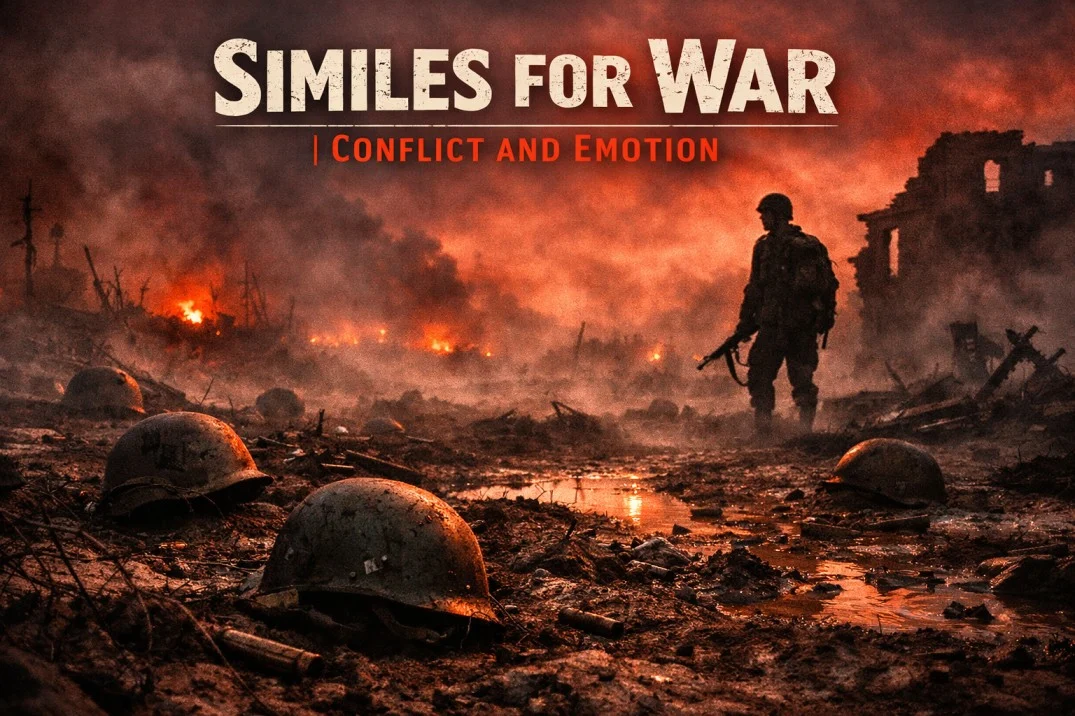
Similes for war compare conflict, destruction, fear, courage, and chaos to familiar images using “like” or “as.” They help writers create stronger emotional imagery in storytelling, poetry, essays, and descriptive writing.
When words need to capture the intensity and uncertainty of conflict, Similes for War can make difficult ideas easier to understand. Writers often use vivid comparisons to describe battles, fear, destruction, courage, and loss. A well-chosen simile helps readers picture the emotional and physical reality of war more clearly.
In literature, history, and creative writing, Similes for War add depth without making descriptions unnecessarily complicated. These comparisons can show how war feels, sounds, or moves while giving readers a stronger emotional connection to the subject. From a battlefield raging like a storm to fear spreading like wildfire, similes can make powerful war imagery more memorable.
Quick List of Similes for War
| Simile | Meaning |
|---|---|
| Like thunder tearing through mountains | Violent destruction |
| As cold as steel at midnight | Emotional numbness |
| Like wildfire through dry forests | Rapid spread of conflict |
| As loud as collapsing skies | Explosive chaos |
| Like wolves circling wounded prey | Imminent danger |
| As heavy as smoke-filled air | Emotional burden |
| Like ghosts wandering ruins | Loss and aftermath |
| As relentless as crashing waves | Continuous attacks |
| Like ash falling from burned paper | Fragile destruction |
| As sharp as shattered metal | Violent pain |
Similes for Describing Battle and Chaos
1. Like Thunder Tearing Through Mountains
Meaning
Describes violent explosions, destruction, or overwhelming force.
Why It Works
Thunder feels massive and uncontrollable, making it ideal for battle imagery.
Alternative Expression
“Like storms breaking open the earth”
Examples in Writing
Formal Example
The artillery struck like thunder tearing through mountains.
Casual Example
The explosions sounded unbelievably loud.
Creative Example
Cannons roared across the valley like thunder splitting ancient mountains apart.
2. As Loud as Collapsing Skies
Meaning
Represents overwhelming noise and battlefield chaos.
Why It Works
The image creates scale and emotional intensity instantly.
Alternative Expression
“As deafening as the end of the world”
Examples in Writing
Formal Example
The battlefield became as loud as collapsing skies.
Casual Example
The noise was unbearable.
Creative Example
Gunfire shattered the silence loud as heavens crashing into earth.
3. Like Fire Racing Through Dry Forests
Meaning
Represents war spreading rapidly and uncontrollably.
Why It Works
Wildfire imagery mirrors destruction moving without restraint.
Alternative Expression
“Like sparks devouring summer fields”
Examples in Writing
Formal Example
Conflict spread through the region like fire racing through dry forests.
Casual Example
The violence spread everywhere quickly.
Creative Example
War consumed villages like flames swallowing thirsty woods in summer heat.
4. As Relentless as Crashing Waves
Meaning
Describes continuous attacks or pressure.
Why It Works
Waves never fully stop, mirroring ongoing conflict.
Alternative Expression
“As constant as winter storms”
Examples in Writing
Formal Example
Enemy attacks arrived as relentless as crashing waves.
Casual Example
The pressure never seemed to stop.
Creative Example
The bombs fell relentless as black waves against a shattered shore.
5. Like Wolves Circling Wounded Prey
Meaning
Represents danger, fear, or vulnerability.
Why It Works
The predatory imagery creates immediate tension.
Alternative Expression
“Like shadows hunting the weak”
Examples in Writing
Formal Example
The enemy closed in like wolves circling wounded prey.
Casual Example
They felt trapped and surrounded.
Creative Example
Fear moved through the trenches like wolves stalking bleeding animals in snow.
Emotional Similes for War Writing
Why Emotional Imagery Matters
War writing is not only about weapons and destruction. The emotional reality — fear, grief, courage, trauma, and survival — often leaves the deepest impact on readers.
6. As Cold as Steel at Midnight
Meaning
Represents emotional numbness or fear.
Why It Works
Steel feels lifeless, sharp, and emotionally distant.
Alternative Expression
“As empty as frozen stone”
Examples in Writing
Formal Example
His expression became as cold as steel at midnight.
Casual Example
After the battle, he seemed emotionally shut down.
Creative Example
Silence settled over him cold as midnight steel beneath winter rain.
7. Like Smoke Crawling Across Broken Streets
Meaning
Represents destruction and lingering trauma.
Why It Works
Smoke symbolizes aftermath and emotional suffocation.
Alternative Expression
“Like shadows spreading after sunset”
Examples in Writing
Formal Example
Fear moved through the city like smoke across broken streets.
Casual Example
The tension lingered everywhere afterward.
Creative Example
Memories crawled through his mind like smoke drifting above ruined stone.
8. As Heavy as Smoke-Filled Air
Meaning
Represents emotional exhaustion or grief.
Why It Works
Smoke-filled air feels difficult to breathe through, much like sorrow.
Alternative Expression
“As crushing as wet earth”
Examples in Writing
Formal Example
The silence after battle felt as heavy as smoke-filled air.
Casual Example
The atmosphere felt emotionally exhausting.
Creative Example
Grief settled over the camp heavy as smoke trapped beneath black skies.
9. Like Ghosts Wandering Through Ruins
Meaning
Represents loss, memory, or survivors after destruction.
Why It Works
Ghost imagery creates haunting emotional depth.
Alternative Expression
“Like shadows searching empty halls”
Examples in Writing
Formal Example
The survivors moved like ghosts wandering through ruins.
Casual Example
Everyone looked emotionally drained afterward.
Creative Example
Children drifted through shattered streets like ghosts searching for vanished homes.
10. As Sharp as Shattered Metal
Meaning
Describes sudden pain, fear, or emotional wounds.
Why It Works
Shattered metal feels dangerous and violent.
Alternative Expression
“As cutting as broken blades”
Examples in Writing
Formal Example
The memory struck him as sharp as shattered metal.
Casual Example
That experience still hurts deeply.
Creative Example
Regret tore through him sharp as twisted steel after the explosion.
Similes for Soldiers, Courage, and Survival
11. Like Trees Standing Through Storms
Meaning
Represents resilience and endurance.
Why It Works
Trees surviving storms symbolize strength under pressure.
Alternative Expression
“Like mountains refusing to crumble”
Examples in Writing
Formal Example
The soldiers stood like trees through storms despite exhaustion.
Casual Example
They stayed strong no matter what happened.
Creative Example
The wounded men remained standing like battered trees beneath violent skies.
12. As Steady as a Burning Lantern
Meaning
Represents hope and determination.
Why It Works
Lanterns symbolize guidance in darkness.
Alternative Expression
“As unwavering as northern stars”
Examples in Writing
Formal Example
Her courage remained as steady as a burning lantern.
Casual Example
She stayed calm during everything.
Creative Example
Hope glowed inside them steady as lantern light beneath endless rain.
13. Like Iron Buried Beneath Fire
Meaning
Represents hidden strength.
Why It Works
Iron surviving fire symbolizes endurance under pressure.
Alternative Expression
“Like stone beneath crashing tides”
Examples in Writing
Formal Example
His determination remained like iron buried beneath fire.
Casual Example
He stayed mentally strong.
Creative Example
Courage rested inside him like iron surviving the furnace.
14. As Fierce as Cornered Lions
Meaning
Represents desperate bravery or aggression.
Why It Works
Cornered animals fight with heightened intensity.
Alternative Expression
“As fearless as storm-driven wolves”
Examples in Writing
Formal Example
The soldiers fought as fierce as cornered lions.
Casual Example
They fought with everything they had.
Creative Example
The defenders roared through the smoke fierce as trapped lions beneath burning skies.
15. Like Roots Clinging to Cracked Earth
Meaning
Represents survival under impossible conditions.
Why It Works
Roots symbolize persistence and resilience.
Alternative Expression
“Like sparks surviving heavy rain”
Examples in Writing
Formal Example
The refugees survived like roots clinging to cracked earth.
Casual Example
They somehow kept going despite everything.
Creative Example
Hope survived inside the camp like roots gripping dry earth during drought.
16. As Dark as Smoke Before Dawn
Meaning
Represents hopelessness, uncertainty, or fear before disaster.
Why It Works
Smoke before sunrise creates imagery that feels suffocating, unclear, and emotionally heavy.
Alternative Expression
“As bleak as ashes beneath rain”
Examples in Writing
Formal Example
The soldiers’ morale became as dark as smoke before dawn.
Casual Example
Everything felt hopeless after the attack.
Creative Example
Fear settled across the camp dark as smoke drifting beneath a dying dawn.
17. Like Rain Falling on Graves
Meaning
Represents sorrow, mourning, and emotional loss.
Why It Works
Rain over graves creates haunting imagery associated with grief and remembrance.
Alternative Expression
“Like tears disappearing into stone”
Examples in Writing
Formal Example
The silence after the funeral felt like rain falling on graves.
Casual Example
The atmosphere felt painfully sad afterward.
Creative Example
Memories returned softly like rain whispering over forgotten graves at dusk.
18. As Merciless as Winter Winds
Meaning
Represents cruelty, suffering, or relentless conflict.
Why It Works
Winter winds feel harsh, cold, and impossible to escape.
Alternative Expression
“As unforgiving as frozen seas”
Examples in Writing
Formal Example
The fighting became as merciless as winter winds.
Casual Example
The conditions were brutally harsh.
Creative Example
War swept through the villages merciless as winter winds tearing across empty plains.
19. Like Chains Dragging Across Stone
Meaning
Represents emotional burden, suffering, or psychological trauma.
Why It Works
The scraping imagery feels heavy, painful, and impossible to ignore.
Alternative Expression
“Like echoes trapped beneath ruins”
Examples in Writing
Formal Example
The memory lingered like chains dragging across stone.
Casual Example
The guilt stayed with him constantly.
Creative Example
Regret followed him through sleepless nights like chains scraping across cold stone corridors.
20. As Sudden as Lightning in Darkness
Meaning
Represents surprise attacks, panic, or instant fear.
Why It Works
Lightning appears without warning, creating immediate tension and shock.
Alternative Expression
“As unexpected as shattered glass at midnight”
Examples in Writing
Formal Example
The ambush arrived as sudden as lightning in darkness.
Casual Example
Everything changed instantly.
Creative Example
Gunfire erupted sudden as lightning tearing through midnight skies.
21. Like Ash Falling From Burned Paper
Meaning
Represents fragile destruction, loss, or fading memories.
Why It Works
Ash feels delicate and irreversible, symbolizing things permanently destroyed.
Alternative Expression
“Like dust drifting from ruined walls”
Examples in Writing
Formal Example
Hope disappeared like ash falling from burned paper.
Casual Example
Everything they built slowly fell apart.
Creative Example
Dreams crumbled around them like ash floating from blackened pages into cold air.
22. As Silent as Empty Trenches
Meaning
Represents eerie stillness after violence or tragedy.
Why It Works
Empty trenches suggest absence, loss, and haunting quietness.
Alternative Expression
“As still as abandoned battlefields”
Examples in Writing
Formal Example
The valley became as silent as empty trenches after the attack.
Casual Example
The place felt unnaturally quiet afterward.
Creative Example
Night settled across the ruins silent as forgotten trenches beneath pale moonlight.
23. Like Storm Clouds Swallowing the Horizon
Meaning
Represents approaching danger, fear, or inevitable conflict.
Why It Works
Storm clouds create visual tension and emotional anticipation.
Alternative Expression
“Like darkness spreading across open seas”
Examples in Writing
Formal Example
Tension gathered like storm clouds swallowing the horizon.
Casual Example
Everyone could feel something bad coming.
Creative Example
War approached the kingdom like black storm clouds devouring the evening sky.
24. As Bitter as Smoke in Winter Air
Meaning
Represents emotional pain, grief, or lingering trauma.
Why It Works
Smoke in cold air feels sharp, unpleasant, and difficult to escape.
Alternative Expression
“As painful as frost against open wounds”
Examples in Writing
Formal Example
The defeat tasted as bitter as smoke in winter air.
Casual Example
The loss still hurts deeply.
Creative Example
Grief lingered inside him bitter as smoke drifting through frozen streets at dawn.
25. Like Broken Clocks After an Explosion
Meaning
Represents chaos, shattered normalcy, or lives permanently changed.
Why It Works
Broken clocks symbolize time stopping after destruction.
Alternative Expression
“Like shattered mirrors after storms”
Examples in Writing
Formal Example
The city felt like broken clocks after an explosion.
Casual Example
Nothing felt normal anymore.
Creative Example
Their lives scattered apart like broken clocks buried beneath smoking rubble.
Similes for Essays and Historical Writing
Using War Similes Effectively
In essays, speeches, or historical writing, similes should strengthen clarity rather than distract from facts. Strong comparisons help readers emotionally connect with historical events while maintaining professionalism.
For example:
Instead of:
“The battle was chaotic.”
You could write:
“The battlefield moved like a storm tearing through dry forests.”
Effective formal similes are:
- concise
- emotionally balanced
- easy to visualize
- contextually appropriate
Avoid overly dramatic comparisons in academic writing unless the tone supports emotional intensity.
How to Use Similes Naturally in War Writing
Match the Emotional Tone
War similes should fit the atmosphere of the scene.
A tragic moment may require softer imagery:
“Silence drifted through the ruins like falling ash.”
A battle sequence may need harsher imagery:
“Bullets tore through the night like metal storms.”
Strong similes feel emotionally connected to:
- fear
- survival
- grief
- courage
- destruction
- hope
The most memorable comparisons often come from sensory details and human experience rather than exaggerated language.
Common Mistakes When Writing Similes About War
Overusing Violent Imagery
Not every sentence needs explosions or fire imagery. Too much intensity weakens emotional impact.
Making War Sound Glorious
War writing should maintain emotional honesty and realism rather than romanticizing destruction.
Using Generic Comparisons
Phrases like:
- “cold as ice”
- “fast as lightning”
often feel repetitive unless used creatively.
Ignoring Human Emotion
The strongest war similes focus not only on violence but also on fear, grief, survival, and memory.
Similes vs Metaphors in War Writing
Key Difference
A simile compares using “like” or “as.”
Example:
“The battlefield sounded like thunder.”
A metaphor states the comparison directly.
Example:
“The battlefield was thunder.”
Similes often create reflective emotional imagery, while metaphors feel stronger and more immediate. Both are valuable literary devices in war literature and storytelling.
FAQs
1. Why are similes important in war writing?
Similes help writers describe fear, destruction, courage, and emotional trauma in vivid and relatable ways.
2. Can similes improve historical essays?
Yes. Carefully chosen similes can make historical writing more engaging and emotionally understandable without sacrificing clarity.
3. What makes a strong war simile?
A strong war simile combines emotional realism, sensory imagery, and clear visualization while fitting the tone of the scene.
4. Are similes useful in military fiction?
Absolutely. Similes deepen atmosphere, tension, and emotional immersion in war novels and storytelling.
5. How can writers create original similes for war?
Observe sound, movement, weather, fear, silence, and human reactions during conflict scenes. Original similes often come from sensory detail and emotional truth.
Conclusion
War is difficult to describe because its reality stretches beyond ordinary language. Fear, destruction, courage, grief, survival, and silence often exist together in the same moment. That is why similes remain such powerful tools in war writing. They help transform abstract emotion into imagery readers can immediately feel and understand.
The strongest similes for war do more than sound dramatic. They reveal emotional truth. A battlefield can roar like thunder, but a single quiet moment after conflict may feel heavier than the violence itself. Great comparisons capture both chaos and humanity at once.
As you experiment with figurative language, focus on observation rather than exaggeration. Notice the sound of distant explosions, the stillness after fear, the smoke hanging in cold air, or the determination hidden inside exhausted soldiers. Those details create authentic imagery.
Sometimes one honest simile can reveal more about war than pages of direct description ever could.








2 thoughts on “Similes for War | Comparisons That Capture Conflict and Emotion In 2026”