Quick Answer
Similes for anxiety compare feelings of nervousness, worry, and fear to familiar experiences using “like” or “as.” They transform abstract emotional distress into vivid imagery that readers instantly understand making anxiety feel real, relatable, and deeply human. Examples include “anxious as a cat in a room full of rocking chairs” or “like a storm brewing on the horizon.”
Anxiety is one of the most universal human experiences, yet it remains one of the most difficult emotions to describe.
Whether it’s a quiet, persistent hum of worry or a sudden, overwhelming wave of panic, anxiety can feel impossible to put into words. It settles in the chest, tightens the throat, races the heart, and clouds the mind but explaining that to someone who isn’t feeling it can feel like describing color to a person who has never seen.
This is where similes become indispensable.
By comparing anxiety to something familiar, tangible, and visual, similes bridge the gap between private experience and shared understanding. They allow writers, speakers, and everyday people to communicate the weight, speed, and texture of anxious feelings in ways that simple adjectives never could.
Whether you’re a writer crafting a character’s inner world, a student working on a descriptive essay, a blogger trying to connect with readers, or simply someone looking for better words to express what you’re feeling, this guide will help.
In this comprehensive article, you’ll discover:
- What similes for anxiety are and why they matter
- A curated collection of powerful anxiety similes organized by category
- How to use them naturally and effectively in your writing
- Common mistakes to avoid
- Practical writing exercises to build your skills
Let’s dive in.
What Are Similes for Anxiety?
Understanding the Basics
A simile is a figure of speech that compares two different things using the connecting words “like” or “as.” Its purpose is to create a vivid mental picture by linking an abstract or unfamiliar concept to something concrete and recognizable.
An anxiety simile, then, is a comparison that helps describe the feeling of being anxious, nervous, worried, or scared by relating it to something else.
Basic definition: Anxiety similes are figures of speech that compare the feeling of anxiety to something else, using “like” or “as.” They help illustrate the intensity or nature of anxiety in a more vivid and relatable way.
How Similes Differ from Metaphors
It’s worth understanding the distinction:
| Simile | Metaphor |
| Uses “like” or “as” | Makes a direct comparison |
| “My anxiety is like a storm brewing on the horizon.” | “My anxiety is a storm brewing on the horizon.” |
| Feels gentler, more descriptive | Feels stronger, more direct |
Both are powerful, but similes often feel more accessible and relatable because they acknowledge the comparison rather than asserting it.
Why Similes for Anxiety Matter
Making the Invisible Visible
Anxiety is invisible. You can’t see it, touch it, or point to it. But similes make it visible by connecting it to things we can see, feel, and understand.
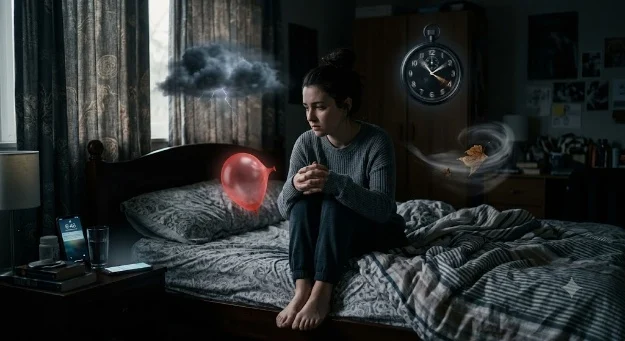
When you say, “My anxiety feels like a balloon about to pop,” anyone who has ever felt tension building knows exactly what you mean. They can picture it. They can feel it.
Creating Emotional Connection
Good writing whether fiction, poetry, memoir, or blog posts depends on emotional connection. Readers need to care, and they can’t care about what they can’t understand.
Similes for anxiety help readers:
- Empathize with characters or people who are struggling
- Recognize their own feelings in someone else’s experience
- Feel seen and less alone in their struggles
- Understand the intensity of an experience they haven’t personally had
Enhancing Descriptive Writing
For writers, similes are one of the most effective tools in the toolbox. They add color, depth, and texture to otherwise flat descriptions.
Consider these two sentences:
Without simile: “She felt anxious before the presentation.
With simile: “She sat in the waiting room, anxious as a student waiting for exam results, her stomach churning with every tick of the clock.
The second sentence paints a picture. It puts the reader in the room. It creates tension and immediacy.
Normalizing the Experience of Anxiety
In 2026, conversations about mental health are more open than ever. Yet anxiety can still feel isolating like something unique and shameful.
Similes help normalize anxiety by showing that these feelings are universal. When someone reads, “I felt like a leaf in a storm, tossed around by worries I couldn’t control,” they recognize something familiar. They realize they’re not alone.
Quick List of Similes for Anxiety
| Simile | Meaning |
| Anxious as a cat in a room full of rocking chairs | Extremely nervous and jumpy, constantly on edge |
| Like a balloon about to pop | Filled with pressure and ready to burst |
| Like a storm brewing on the horizon | A growing sense of dread building up |
| Like a ticking time bomb | Feeling like something bad will happen any second |
| As shaky as a leaf in the wind | Trembling from fear or nerves |
| Like a deer caught in headlights | Frozen with fear and unable to act |
| Like a fish out of water | Feeling completely out of place and panicked |
| Like walking on thin ice | Worried that one wrong move could lead to disaster |
| As tight as a knot | Feeling full of stress and tension |
| Like a clock ticking down | Feeling the pressure of something coming |
Comprehensive List of Similes for Anxiety
To make this guide as practical and useful as possible, we’ve organized the similes into thematic categories. Each simile includes:
- The comparison
- Meaning (what it communicates)
- Why it works (what makes it effective)
- Examples in writing (formal, casual, and creative)
Category 1: Similes for Racing Thoughts and Mental Overload
Like Bees Buzzing in the Brain
Meaning: Many nervous thoughts happening at once, making it impossible to focus.
Why It Works: The image of bees suggests chaos, noise, and something that won’t leave you alone. It captures the relentless, intrusive quality of anxious thoughts.
Examples in Writing:
- Formal: His mind was like bees buzzing in the brain, each worry competing for attention.
- Casual: I couldn’t focus my head was full of buzzing bees.
- Creative: Thoughts swarmed through her consciousness like bees defending a disturbed hive, each one a sharp sting of fear.
Like a Question with No Answer
Meaning: Feeling unsure, stuck, or unable to find resolution.
Why It Works: Anxiety often involves rumination turning a problem over and over without finding a solution. This simile captures that endless loop.
Examples in Writing:
- Formal: Her anxiety lingered like a question with no answer, unresolved and maddening.
- Casual: I kept going in circles, like a question no one could answer.
- Creative: His mind spun on a single unanswerable question, each loop tightening the knot in his chest.
As Confused as a Squirrel in Traffic
Meaning: Unsure what to do, darting between options without clarity.
Why It Works: It’s a vivid, slightly humorous image that captures the frantic, indecisive quality of anxious thinking.
Examples in Writing:
- Formal: He stood at the crossroads, as confused as a squirrel in traffic.
- Casual: I felt like a squirrel trying to cross a busy road no idea which way to go.
- Creative: Decisions flew at him from every direction, leaving him darting like a squirrel in rush-hour traffic.
Like a Timer Ticking Down
Meaning: Feeling the pressure of something coming, with time running out.
Why It Works: Anxiety is often tied to deadlines, expectations, and the sense that time is slipping away. This simile captures that urgency.
Examples in Writing:
- Formal: Each passing moment felt like a timer ticking down to an inevitable conclusion.
- Casual: I could feel the clock ticking, and it was making me out of control.
- Creative: The seconds dripped away like sand in an hourglass, each grain another ounce of pressure on his chest.
Like Trying to Hold Water in Your Hands
Meaning: Feeling like you’re losing control, unable to keep things together.
Why It Works: The image of water slipping through fingers perfectly captures the helplessness that often accompanies anxiety.
Examples in Writing:
- Formal: His composure slipped away like trying to hold water in his hands.
- Casual: I felt like I was losing my grip on everything.
- Creative: Control drained from her fingers like water through cracks, leaving nothing but the cold awareness of her failure.
Category 2: Similes for Physical Sensations and Body Reactions
As Shaky as a Leaf in the Wind
Meaning: Trembling from fear or nerves, physically unstable.
Why It Works: The image of a leaf being tossed by wind is universally recognizable and immediately conveys vulnerability and lack of control.
Examples in Writing:
- Formal: Her hands were as shaky as a leaf in the wind as she prepared to sign the documents.
- Casual: I was shaking like a leaf before the interview.
- Creative: Fear rippled through him, leaving his limbs trembling like autumn leaves in a gale.
Like a Drum Beating Too Fast
Meaning: Heart racing from fear or nerves.
Why It Works: The sound of a drum is loud, insistent, and hard to ignore exactly how a racing heart feels during anxiety.
Examples in Writing:
- Formal: His heart pounded like a drum beating too fast, each thump echoing in his ears.
- Casual: My heart was going out of control, like a drum solo gone wrong.
- Creative: Panic drummed against her ribs, a frantic rhythm that drowned out all rational thought.
As Tight as a Knot
Meaning: Feeling full of stress and tension, physically and mentally constricted.
Why It Works: A knot suggests something pulled tight, difficult to untie, and uncomfortable all hallmarks of anxiety.
Examples in Writing:
- Formal: Her stomach was as tight as a knot as she awaited the verdict.
- Casual: I felt so tight I could barely breathe.
- Creative: Worry coiled in his gut like a serpent, each loop pulling tighter until movement became impossible.
Like Thunder Rumbling in the Chest
Meaning: A big, powerful nervous feeling inside, overwhelming and loud.
Why It Works: Thunder suggests something immense, uncontrollable, and impossible to ignore.
Examples in Writing:
- Formal: The announcement sent thunder rumbling in his chest.
- Casual: I could feel the fear rumbling inside me like a storm.
- Creative: The words hit her like a thunderclap, leaving only the echo of her own heartbeat.
As Sweaty as a Cold Can on a Hot Day
Meaning: Sweating from nerves, physically showing stress.
Why It Works: It’s a simple, relatable image that captures one of the most visible signs of anxiety.
Examples in Writing:
- Formal: His palms were as sweaty as a cold can on a hot day.
- Casual: My hands were dripping, and I couldn’t make it stop.
- Creative: Nervous moisture beaded on his skin like condensation on a chilled glass in July.
As Stiff as a Board
Meaning: So nervous you can’t move freely, frozen in place.
Why It Works: The image of a board suggests rigidity, inflexibility, and an inability to relax.
Examples in Writing:
- Formal: He sat as stiff as a board throughout the proceedings.
- Casual: I was so nervous I couldn’t move a muscle.
- Creative: Fear turned her body to wood, every joint locked in place.
Like Your Stomach Is Full of Knots
Meaning: Feeling twisted up inside, unable to eat or relax.
Why It Works: The physical sensation of a churning stomach is one of the most common symptoms of anxiety.
Examples in Writing:
- Formal: Her stomach was full of knots as she prepared to speak.
- Casual: I felt so sick with worry I couldn’t eat.
- Creative: Anxiety tied her insides into tangles, each twist a reminder of what was coming.
Category 3: Similes for Fear of the Unknown
Like a Storm Brewing on the Horizon
Meaning: A growing sense of dread and fear building up, something bad approaching.
Why It Works: Storms are ominous and powerful. The image of one approaching suggests inevitability and danger.
Examples in Writing:
- Formal: A sense of dread gathered like a storm brewing on the horizon.
- Casual: I could feel something bad coming, like dark clouds rolling in.
- Creative: Trouble loomed on the edges of her awareness, a thundercloud heavy with unanswered questions.
Like Waiting for Bad News
Meaning: Feeling something bad is coming and being unable to stop it.
Why It Works: Anticipation is a core component of anxiety. This simile captures the dread of waiting for an outcome you can’t control.
Examples in Writing:
- Formal: The silence stretched, each moment feeling like waiting for bad news.
- Casual: I felt like I was waiting for the other shoe to drop.
- Creative: Every second was a held breath, every tick of the clock a step closer to the thing she dreaded.
As Unsure as Flipping a Coin
Meaning: Can’t decide or feel steady, uncertain about what’s coming.
Why It Works: The randomness of a coin flip captures the lack of control and predictability that anxiety brings.
Examples in Writing:
- Formal: His confidence was as unsure as flipping a coin.
- Casual: I had no idea what was going to happen it was a total toss-up.
- Creative: The outcome balanced on a knife’s edge, every possibility feeling equally likely and equally terrifying.
Like Standing on the Edge of a Diving Board
Meaning: Scared of what’s next, poised at the moment before something big.
Why It Works: The height, the anticipation, the fear of the plunge all perfectly capture the moment anxiety peaks before a major event.
Examples in Writing:
- Formal: She stood on the precipice, feeling like she was on the edge of a diving board.
- Casual: I felt like I was about to jump into the deep end.
- Creative: His life had narrowed to this single moment, teetering like a diver above dark water.
Like a Clock Running Out of Time
Meaning: Pressured by urgency and the fear of not finishing in time.
Why It Works: The ticking clock is one of the most powerful symbols of pressure.
Examples in Writing:
- Formal: Each minute felt like a clock running out of time.
- Casual: I was racing against the clock and losing.
- Creative: Time was a thief, stealing seconds from his already-dwindling supply of calm.
Category 4: Similes for Feeling Trapped and Stuck
Like a Deer Caught in Headlights
Meaning: Frozen with fear and unable to act, paralyzed by the situation.
Why It Works: This is one of the most recognized and powerful similes for fear. The image is immediate and visceral.
Examples in Writing:
- Formal: He stood frozen like a deer caught in headlights, unable to respond.
- Casual: I completely froze like a deer in headlights.
- Creative: The question struck her like a blinding beam, leaving her rooted and speechless.
As Trapped as a Bird in a Cage
Meaning: Feeling stuck, unable to escape, no way out.
Why It Works: The cage is a powerful symbol of confinement, perfectly capturing the suffocating quality of anxiety.
Examples in Writing:
- Formal: She felt as trapped as a bird in a cage, desperate for freedom.
- Casual: I felt like I was locked in and couldn’t get out.
- Creative: His life had become a gilded prison, beautiful but inescapable.
Like a Fish Out of Water
Meaning: Feeling completely out of place and panicked, unable to cope.
Why It Works: The desperation of a fish gasping for air is instantly understandable.
Examples in Writing:
- Formal: In the crowded room, she felt like a fish out of water.
- Casual: I was totally out of my element.
- Creative: He gasped for familiar ground, floundering in unfamiliar territory like a fish on dry land.
Like Standing on Thin Ice
Meaning: Worried that one wrong move could lead to disaster.
Why It Works: The danger is immediate and present. Every step feels risky.
Examples in Writing:
- Formal: He navigated the conversation like walking on thin ice.
- Casual: I felt like I was on thin ice the whole time.
- Creative: Each word was a step onto uncertain surface, the crack of failure always a whisper away.
Like Being Lost in a Maze
Meaning: Not knowing what to do, confused and stuck.
Why It Works: A maze suggests confusion, dead ends, and frustration perfect for describing anxious indecision.
Examples in Writing:
- Formal: His thoughts wandered like being lost in a maze.
- Casual: I had no idea which way to turn.
- Creative: Every path led to another wall, another dead end, another reason to panic.
As Small as an Ant in a Stadium
Meaning: Feeling tiny and overwhelmed by surroundings or expectations.
Why It Works: The contrast between the tiny ant and the vast stadium creates a sense of insignificance and helplessness.
Examples in Writing:
- Formal: In the presence of her superiors, she felt as small as an ant in a stadium.
- Casual: I felt so small and insignificant.
- Creative: The world was too big, too loud, too much and she was nothing but a speck.
Category 5: Similes for Overwhelming Pressure
Like a Balloon About to Pop
Meaning: Filled with pressure and ready to burst, holding too much tension.
Why It Works: The image of a balloon stretched to its limit captures the feeling of being at one’s breaking point.
Examples in Writing:
- Formal: Her anxiety was like a balloon about to pop.
- Casual: I felt like I was going to explode.
- Creative: Tension swelled inside him, expanding with every worry, waiting for the sharp point that would release it all.
As Tense as a Stretched Rubber Band
Meaning: Feeling pulled tight inside, ready to snap.
Why It Works: Rubber bands are flexible but have limits. When stretched too far, they snap. The same is true for people under pressure.
Examples in Writing:
- Formal: He waited, as tense as a stretched rubber band.
- Casual: I was wound so tight I could barely function.
- Creative: His nerves were elastic pulled to breaking, vibrating with the strain of holding together.
Like a Ticking Time Bomb
Meaning: Feeling like something bad is going to happen at any second.
Why It Works: The ticking creates urgency, and the explosive ending suggests catastrophic consequences.
Examples in Writing:
- Formal: The tension in the room was like a ticking time bomb.
- Casual: I felt like I was sitting on a bomb.
- Creative: Danger counted down in his chest, each second bringing him closer to detonation.
As Jumpy as Popcorn in a Hot Pan
Meaning: Reacting quickly from stress, unable to stay still.
Why It Works: The image is lively, chaotic, and impossible to ignore much like the physical experience of anxiety.
Examples in Writing:
- Formal: She was as jumpy as popcorn in a hot pan at every unexpected sound.
- Casual: I was popping all over the place.
- Creative: Every noise was a trigger, sending him bouncing from his seat like kernels in hot oil.
Like a Juggler with Too Many Balls
Meaning: Overloaded with tasks and fears, trying not to drop anything.
Why It Works: The image of juggling perfectly captures the frantic, multi-tasking quality of anxious overthinking.
Examples in Writing:
- Formal: Her responsibilities felt like a juggler with too many balls in the air.
- Casual: I was trying to keep too many things going at once.
- Creative: Worries spun around him like juggling pins, each one demanding attention, each one threatening to fall.
As Wound Up as a Toy Spring
Meaning: Ready to snap, full of coiled tension.
Why It Works: The spring suggests potential energy waiting to be released.
Examples in Writing:
- Formal: He was as wound up as a toy spring, waiting for the right moment to unwind.
- Casual: I was so wound up I couldn’t sit still.
- Creative: Energy coiled in his muscles like a spring held tight, desperate for release.
Category 6: Similes for Vulnerability and Fragility
As Fragile as a Soap Bubble
Meaning: Emotionally delicate, easily broken.
Why It Works: Soap bubbles are beautiful but fleeting. One wrong touch and they’re gone. This captures the fragility of someone barely holding it together.
Examples in Writing:
- Formal: Her composure was as fragile as a soap bubble.
- Casual: I felt like I was going to break any second.
- Creative: Her calm was a shimmering film, beautiful but ready to burst at the lightest touch.
Like a Candle in the Wind
Meaning: Fragile and easily overwhelmed by circumstances.
Why It Works: A candle in the wind could go out at any moment, vulnerable and small.
Examples in Writing:
- Formal: His confidence flickered like a candle in the wind.
- Casual: I felt like I could be blown over any second.
- Creative: Hope guttered in her chest, a flame too small to withstand the storm.
As Shaky as a Tower of Blocks
Meaning: Ready to fall apart, unstable.
Why It Works: The image of a tower swaying before collapse is immediate and visual.
Examples in Writing:
- Formal: His resolve was as shaky as a tower of blocks.
- Casual: I felt like everything was going to tumble down.
- Creative: Each breath was a tremor threatening to topple the fragile structure of her control.
Like a Mirror Before It Breaks
Meaning: On the verge of falling apart, emotionally fragile.
Why It Works: A mirror reflects everything clearly, but when it breaks, it shatters into pieces.
Examples in Writing:
- Formal: She felt like a mirror before it breaks, each word a potential crack.
- Casual: I was one bad moment away from falling apart.
- Creative: The reflection stared back at her, whole for now, but carrying the shadow of its own destruction.
Category 7: Similes for Anticipation and Suspense
Like a Student Waiting for Exam Results
Meaning: Nervous anticipation with no control over the outcome.
Why It Works: Almost everyone has experienced this, making it universally relatable.
Examples in Writing:
- Formal: He sat in silence, anxious as a student waiting for exam results.
- Casual: I was like a kid waiting for report cards.
- Creative: The future hung in the balance like an unopened envelope, each second a lifetime of waiting.
Like Waiting for a Verdict
Meaning: Filled with dread over an unknown outcome.
Why It Works: The stakes feel high, and the outcome is completely out of your control.
Examples in Writing:
- Formal: The moments dragged on like waiting for a verdict.
- Casual: I was just waiting for the judgment to come down.
- Creative:* Her fate was in someone else’s hands, and all she could do was wait.
Like a Rabbit Sensing Danger
Meaning: Hyper-alert and ready to flee at any moment.
Why It Works: Rabbits are prey animals, constantly on alert for threats. This captures the hypervigilance of anxiety.
Examples in Writing:
- Formal: She moved through the room like a rabbit sensing danger.
- Casual: I could feel something was off, and I was ready to run.
- Creative: Every shadow was a threat, every sound a warning, her instincts screaming to flee.
Like a Phone Ringing at 3 AM
Meaning: A sudden, sharp feeling that something is very wrong.
Why It Works: A late-night phone call is universally understood as bad news.
Examples in Writing:
- Formal: The message sent a jolt through him, like a phone ringing at 3 AM.
- Casual: I knew right away it was bad news.
- Creative: The notification was a knife in the dark, slicing through the quiet of his night.
Category 8: Similes for Feeling Exposed and Watched
Like a Bug Under a Magnifying Glass
Meaning: Feeling exposed and stressed, watched too closely.
Why It Works: The image is uncomfortable and invasive exactly how anxiety can feel in social situations.
Examples in Writing:
- Formal: Under the scrutiny of the panel, he felt like a bug under a magnifying glass.
- Casual: Everyone was watching me, and I hated it.
- Creative: Eyes bore into him, each gaze a lens focusing heat on his exposed skin.
Like Shoes Squeaking in a Silent Room
Meaning: Feeling exposed and embarrassed, even by small things.
Why It Works: The squeaking draws attention, and attention is the last thing you want when you’re anxious.
Examples in Writing:
- Formal: Every move he made felt like shoes squeaking in a silent room.
- Casual: I felt like everyone was looking at me, judging me.
- Creative:* His discomfort echoed in the quiet space, each awkward moment a spotlight he couldn’t escape.
Like a Spider in the Corner
Meaning: Feeling small and watched, trying to hide.
Why It Works: Spiders are small, often unnoticed, and trying to stay out of the way.
Examples in Writing:
- Formal: She withdrew like a spider in the corner, hoping no one would notice her.
- Casual: I just wanted to disappear.
- Creative:* He shrank into himself, a small creature in the corner of his own life.
As Quiet as a Whisper
Meaning: So nervous you don’t want to speak.
Why It Works: Whispering suggests fear of being heard, of drawing attention.
Examples in Writing:
- Formal: His voice was as quiet as a whisper when he finally spoke.
- Casual: I could barely get the words out.
- Creative:* Sound died in her throat, strangled by the fear of being heard.
Category 9: Similes for Escape and Urge to Flee
Like a Mouse in a Room Full of Cats
Meaning: Feeling small and scared, surrounded by threats.
Why It Works: The predator-prey dynamic captures the sense of being hunted and helpless.
Examples in Writing:
- Formal: In the hostile environment, he felt like a mouse in a room full of cats.
- Casual: I felt like everyone was out to get me.
- Creative:* Danger lurked in every corner, every face a potential predator.
Like a Bird in a Thunderstorm
Meaning: Scared and unsure where to fly for safety.
Why It Works: The bird is buffeted by forces beyond its control, desperate for shelter.
Examples in Writing:
- Formal: She fluttered like a bird in a thunderstorm, seeking refuge.
- Casual: I didn’t know where to go or what to do.
- Creative:* Fear beat its wings against her ribs, desperate for a way out.
Like a Squirrel Crossing Traffic
Meaning: Quick, reactive, and terrified of making a mistake.
Why It Works: The darting, panicked movements of a squirrel on a road capture the feeling perfectly.
Examples in Writing:
- Formal: His decisions came like a squirrel crossing traffic, reactive and panicked.
- Casual:* I was jumping from one thing to the next, totally freaked out.
- Creative:* Life was a highway, and he was just trying not to get hit.
Like Being Chased by Invisible Bees
Meaning: Feeling scared without knowing why, a constant sense of threat.
Why It Works: The threat is invisible, which makes it more frightening. You can’t fight what you can’t see.
Examples in Writing:
- Formal: Panic pursued him like being chased by invisible bees.
- Casual:* I felt like something was after me all the time.
- Creative:* Fear was a swarm he couldn’t see, humming just beyond his vision, always following.
How to Use Anxiety Similes Naturally
Using similes effectively is about more than just inserting them into your writing. It’s about choosing the right comparison for the right moment.
Match the Intensity
Different situations call for different levels of intensity.
| Situation | Appropriate Simile |
| Mild worry before a test | “Like a student waiting for exam results” |
| Moderate social anxiety | “Like a fish out of water” |
| Severe panic attack | “Like a ticking time bomb” |
| Chronic, ongoing anxiety | “Like a storm brewing on the horizon” |
Reflect the Character’s Perspective
The best similes are rooted in the character’s world and experience.
- A student might compare anxiety to waiting for exam results.
- A sailor might compare it to choppy waters.
- A gardener might compare it to a drought.
- A musician might compare it to a drum beating too fast.
Keep It Simple
The strongest similes are often the easiest to understand. If your reader has to work too hard to understand the comparison, it loses its power.
Vary Your Comparisons
Using too many similes, or using the same one repeatedly, can feel repetitive and lose impact. Mix it up.
Common Mistakes When Writing Anxiety Similes
Overusing Similes
Too many similes can make writing feel cluttered and overdone. Use them where they have the most impact, not on every page.
Relying on Clichés
Phrases like “nervous as a cat” or “scared to death” are so common they’ve lost their power. Try to find fresher comparisons.
Ignoring Tone
A humorous simile might feel out of place in a serious emotional scene. Make sure the comparison fits the mood.
Making Comparisons Too Complex
If your reader has to stop and think about what the simile means, it’s not doing its job.
Similes vs. Metaphors for Anxiety
Simile
Uses “like” or “as.”
Example: “My anxiety was like a storm brewing on the horizon.”
Metaphor
Makes a direct comparison.
Example: “My anxiety was a storm brewing on the horizon.”
When to Use Which
- Similes often feel gentler and more descriptive. They’re great for building atmosphere.
- Metaphors tend to create stronger emotional impact. They’re great for moments of high intensity.
Writing Exercise: Create Your Own Anxiety Similes
Step 1: Start with a Simple Sentence
“I felt anxious.”
Step 2: Identify the Specific Feeling
Ask yourself:
- Is my heart racing?
- Am I frozen in place?
- Are my thoughts spinning?
- Do I feel trapped?
Step 3: Find a Comparison
What else feels that way?
- A racing heart → Like a drum beating too fast
- Frozen in place → Like a deer caught in headlights
- Spinning thoughts → Like bees buzzing in the brain
- Feeling trapped → Like a bird in a cage
Step 4: Write the Simile
Put it all together.
Practice example:
Simple: I felt anxious.
Improved: My heart pounded like a drum beating too fast, each beat a reminder of the moment I was dreading.
Step 5: Practice with Different Categories
Try creating similes for each type of anxiety experience:
| Type | Example |
| Physical | “My hands trembled like leaves in a storm.” |
| Mental | “My thoughts were a tangled knot I couldn’t undo.” |
| Emotional | “Fear sat in my chest like a stone I couldn’t swallow.” |
| Behavioral | “I paced the room like a caged animal.” |
Why These Comparisons Matter: The Deeper Purpose
Validation Through Language
When someone reads a simile that matches exactly how they feel, it’s validating. It says, “This is real. Other people feel this too. You’re not Mad.”
Connection Through Shared Experience
Similes are a form of shorthand. They tap into shared human experiences that don’t need explanation. When you say, “I felt like a child lost in a crowd,” everyone understands the fear, the confusion, the desperate search for something familiar.
Healing Through Expression
Writing about anxiety whether through fiction, poetry, journaling, or simple description can be therapeutic. Finding the right words can help untangle feelings, process experiences, and gain perspective.
Conclusion
Anxiety is a universal human experience, but it is deeply personal. No two people feel stress and anxiety the same way, and no single description can capture every aspect of it.
That’s the power of similes.
They offer multiple windows into the same feeling, each one revealing something slightly different. A person might feel like a balloon about to pop one day and like a leaf in a storm the next. Both are valid. These are real. Its help us understand what it means to be human and afraid.
Whether you’re writing a character’s inner turmoil, describing your own experience, or simply looking for better words, similes for anxiety are a gift. They transform invisible feelings into visible images. They connect the isolated experience of anxiety to the shared vocabulary of human life.
Remember this: A single thoughtful comparison can reveal more about a person’s heart than paragraphs of explanation ever could.
FAQs
1. What are similes for anxiety?
Similes for anxiety are figures of speech that compare the feeling of anxiety to something else using “like” or “as” to create vivid, relatable imagery.
2. Why should writers use anxiety similes?
They help readers empathize with characters, understand complex emotions, and visualize abstract feelings in concrete terms.
3. What makes a strong anxiety simile?
It’s strong simile is easy to visualize, emotionally accurate, connected to the situation, and fresh rather than clichéd.
4.Can anxiety similes help with mental health?
Yes. Finding words for difficult feelings can be validating and therapeutic. It helps people articulate their experiences and feel less alone.
5. How can I create my own anxiety similes?
Observe the physical and emotional sensations of anxiety and connect them to familiar images from nature, everyday life, or personal experience.
Read More Related Articles :
- Similes for Books | Comparisons to Bring Stories to Life In 2026
- Similes for Stars | Comparisons That Capture Brilliance and Wonder In 2026
- Similes for Dark | Comparisons That Capture Mystery & Fear Unknown In 2026

Liam Bennett is a creative mind behind SimileVibe.com, focused on building clean digital experiences and real connections through design, content, and modern web culture. He’s passionate about turning simple ideas into engaging online experiences that feel authentic and human.