Quick Answer:
Similes for “mad” are figures of speech that compare anger, frustration, or irrational behavior to other things using “like” or “as.” They transform abstract emotion into vivid imagery that readers instantly understand.Common examples include:
- “As mad as a hornet” Intense, aggressive anger
- “Like a volcano about to erupt” Anger building toward explosion
- “Boiling like a kettle” Simmering frustration ready to overflow
- “Like a bull ready to charge” Focused, confrontational anger
These comparisons work because they connect emotion to concrete, visual experiences.
Some emotions refuse to be described with a single word.
“Mad,” “angry,” and “furious” all attempt to capture something that lives in the body, the voice, and the space between people. Yet no one-word label can do justice to the heat that rises through your chest, the sharpness that enters your voice, or the tension that fills a room when someone’s patience finally snaps.
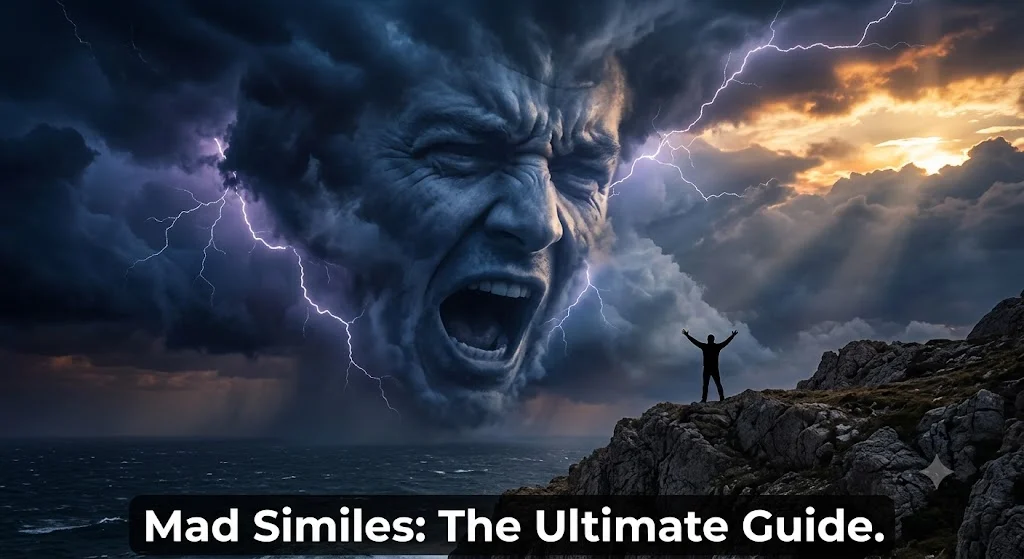
This is where similes transform writing. By comparing anger to familiar experiences storms, animals, natural forces writers can create descriptions that readers feel, not just read.
In this comprehensive guide, you’ll discover over 45 powerful similes for describing madness, anger, and frustration. Organized by emotional intensity and writing context, each comparison includes its meaning, example sentences, and tips for natural usage. Whether you’re crafting a novel, writing poetry, or simply want more expressive language, these similes will make your descriptions unforgettable.
Quick List of Similes for Mad
| Simile | Meaning |
|---|---|
| As mad as a hornet | Intense, aggressive anger ready to attack |
| Like a volcano about to erupt | Anger building toward explosive release |
| Boiling like a kettle | Frustration reaching the breaking point |
| Like a bull ready to charge | Focused, confrontational fury |
| As mad as a wet hen | Irritated and upset, often over something small |
| Like a storm about to break | Tension and anger gathering |
| Seeing red | Overwhelming, consuming anger |
| Like a caged tiger | Restrained but dangerous fury |
| Burning like wildfire | Anger spreading quickly and intensely |
| Fuming like a chimney | Visible, steaming anger |
| Like a shaken soda bottle | Ready to burst emotionally |
| As mad as a hatter | Irrational or unpredictable anger |
| Like thunder in the room | Anger that dominates the atmosphere |
| Smoldering like embers | Quiet but dangerous simmering anger |
Types of Similes for Mad
Understanding the different ways anger manifests helps you choose the right simile for every writing situation.
Intensity-Based Similes
These comparisons emphasize the strength or degree of anger.
1. As mad as a hornet
Angry and ready to attack. Hornets sting aggressively when disturbed, making this simile perfect for sharp, reactive anger.
Example: “She was as mad as a hornet when she found her work had been copied.”
2. Like a volcano about to erupt
Anger building toward explosive release. This works for characters holding back fury that will eventually explode.
Example: “His jaw tightened, and he looked like a volcano about to erupt.”
3. Boiling like a kettle
Frustration reaching the breaking point. Kettles whistle when water boils, suggesting anger that will soon be heard.
Example: “After hours of waiting, his patience was boiling like a kettle.”
4. Angry like a raging bull
Uncontrollable fury and strength. The image of a charging bull suggests focused, dangerous anger.
Example: “He was angry like a raging bull when insulted.”
5. Fuming like a chimney
Anger rising visibly, like smoke. Suggests someone who cannot hide their frustration.
Example: “She was fuming like a chimney after the argument.”
Behavior-Based Similes
These similes describe how anger manifests in actions and demeanor.
6. Like a storm about to break
Tension and anger gathering before an outburst. Works well for describing atmosphere before conflict.
Example: “The meeting felt like a storm about to break; silence filled the room.”
7. Paced like a caged tiger
Restless, contained anger. Tigers pace when confined, suggesting someone barely holding back fury.
Example: “He paced the office like a caged tiger, barely holding himself together.”
8. Like thunder in the room
Intense presence of anger that fills the space. Thunder commands attention so does this kind of anger.
Example: “When she arrived, there was like thunder in the room; conversations stopped.”
9. Like a whirlwind of fury
Fast-moving, chaotic anger affecting everything nearby. Perfect for scenes where anger disrupts everything.
Example: “She stormed through the office like a whirlwind of fury, papers flying.”
10. Like a hawk swooping
Precise, targeted anger striking quickly. Works for anger directed at a specific person or issue.
Example: “He turned on the critic like a hawk swooping, sharp and focused.”
Appearance-Based Similes
These comparisons describe how anger appears on someone’s face or body.
11. Seeing red
Overwhelming anger that dominates perception. The visual metaphor suggests anger clouding judgment.
Example: “On hearing the insult, she started seeing red and struggled to stay calm.”
12. Red as a beet
Flushed, angry complexion. Works for visible, physical manifestations of anger.
Example: “His face was red as a beet after the argument.”
13. Like a thundercloud
Dark, ominous appearance suggesting anger. Clouds before a storm mirror someone’s angry expression.
Example: “His face was like a thundercloud throughout the entire meeting.”
14. Eyes like daggers
Sharp, piercing look of anger. The visual suggests anger that cuts or wounds.
Example: “Her eyes were like daggers as she glared at him.”
15. Like a lit fuse
Impending explosion after a trigger. The image suggests inevitable eruption.
Example: “He was a lit fuse about to reach the bomb after hearing the verdict.”
Creative and Less Common Similes for Mad
Beyond the familiar comparisons, these creative similes offer fresh ways to describe anger.
16. Like a shaken soda bottle
Ready to burst into an emotional explosion. The playful image works well for moments of barely contained frustration.
Example: “After the repeated insults, he felt like a shaken soda bottle.”
17. As cross as two sticks
Irritated or angry in a cranky way. A British idiom conveying grumpy, sharp irritation.
Example: “Mum was as cross as two sticks when the children tracked mud inside.”
18. Smoldering like embers before flame
Quiet, simmering anger that can flare suddenly. Works for characters holding resentment.
Example: “His resentment was smoldering like embers before flame, barely visible until provoked.”
19. Like a geyser raw with pressure
Sudden, forceful outburst after intense pressure. Suggests anger built up over time.
Example: “After weeks of silence, he erupted like a geyser raw with pressure.”
20. Hot-headed like summer’s blaze
Quick-tempered, easily angered. Summer heat evokes sudden, intense warmth.
Example: “He’s hot-headed like summer’s blaze, so steer conversations gently.”
21. Mad as a March hare
Unpredictably angry or agitated. From hare behavior in spring suggests erratic, energized anger.
Example: “He was as mad as a March hare after the referee’s call.”
22. Like a red rag to a bull
Something that provokes immediate anger. Perfect for triggers that always cause fury.
Example: “The suggestion was like a red rag to a bull for him; he erupted immediately.”
23. Like a broken dam
Flood of unstoppable rage. Suggests anger that cannot be contained.
Example: “He burst angry like a broken dam.”
24. Mad as a kicked dog
Hurt and defensive anger. Suggests someone lashing out from feeling wounded.
Example: “He looked mad as a kicked dog.”
25. Like a forest fire
Rapid and destructive rage. Perfect for anger that spreads quickly and consumes everything.
Example: “His anger spread like a forest fire.”
Similes for Different Types of Anger
Anger takes many forms. Matching the simile to the type of anger strengthens your writing.
Explosive Anger
26. Like a ticking bomb
Silent but ready to explode. The countdown image creates tension.
Example: “His silence was mad as a ticking bomb.”
27. Like a firecracker
Sudden explosive anger. Small but loud and startling.
Example: “He went off mad as a firecracker.”
28. Like a storm at sea
Wild and uncontrollable anger. The chaos of stormy waves mirrors emotional turmoil.
Example: “His heart was angry like a storm at sea.”
29. Like a dragon
Mythical, fierce wrath. Suggests anger that breathes destruction.
Example: “She was angry like a dragon breathing fire.”
30. Like crashing waves
Repeated surges of fury. Works for anger that comes in waves rather than all at once.
Example: “His anger came angry like crashing waves.”
Silent or Contained Anger
31. Like a pressure cooker
Contained but building anger ready to explode. Suggests pressure building beneath the surface.
Example: “She seethed like a pressure cooker.”
32. As cold as ice
Distant, unforgiving anger. Not all anger is hot some freezes.
Example: “Her stare was as cold as ice.”
33. Like a snake coiled to strike
Ready to attack but waiting. Suggests patient, calculated anger.
Example: “He sat there like a snake coiled to strike.”
34. As hard as stone
Unyielding, emotionless anger. Suggests someone who will not bend.
Example: “Her face was as hard as stone.”
Defensive Anger
35. Like a cornered animal
Desperate and dangerous anger. Someone with nothing to lose.
Example: “She was furious as a cornered animal.”
36. Like a wounded bear
Fierce and defensive anger. Suggests pain behind the rage.
Example: “She was as angry as a wounded bear.”
37. Like a parent protecting their child
Protective, fierce anger. This anger comes from love or duty.
Example: “She was furious as a parent protecting their child.”
38. Like a lion defending cubs
Fierce protective rage. Stronger version of protective anger.
Example: “She was angry like a lion defending cubs.”
How to Use Mad Similes in Writing
Similes are powerful tools, but using them effectively requires attention to context and technique.
Match the Simile to the Emotion’s Intensity
A character mildly irritated should not be described like a “volcano about to erupt.” Save explosive comparisons for moments of genuine fury.
Mild frustration:
“As cross as two sticks”
“Fuming like a chimney”
Intense anger:
“Like a volcano about to erupt”
“As mad as a hornet”
Raging fury:
“Like a forest fire”
“Like a storm at sea”
Consider Your Character’s Voice and World
A sailor might compare anger to a “storm at sea.” A chef might say someone was “boiling like a kettle.” Match similes to your character’s experience and perspective.
Avoid Overusing Similes
One well-placed simile does more work than three scattered throughout a paragraph. Too many comparisons weaken emotional impact.
Be Aware of Clichés
Some similes have been used so often they’ve lost their power. “Mad as a hornet” is common enough that readers may barely notice it. When possible, create fresh comparisons that feel original.
Match Tone to the Scene
A humorous simile may feel out of place in a serious emotional scene. Consider the overall mood of your writing before choosing a comparison.
Similes vs. Metaphors for Mad
While similes use “like” or “as” to compare, metaphors make direct comparisons. Both can be powerful, but they work differently.
| Simile | Metaphor |
|---|---|
| “He was mad as a hornet.” | “He was a hornet.” |
| “She was angry like a storm.” | “She was a storm.” |
| “His fury was like fire.” | “His fury was fire.” |
Similes often feel gentler and more descriptive, while metaphors tend to create stronger emotional impact. Choose based on the effect you want.
Writing Exercise: Create Your Own Mad Similes
Start with these simple steps to develop fresh, original comparisons for anger:
Step 1: Observe anger in real life. How do people look, sound, and move when angry?
Step 2: Connect the feeling to sensory experiences. What does anger feel like? Heat? Pressure? Sharpness?
Step 3: Compare anger to things from nature, daily life, or common experiences.
Example progression:
Basic: “He was angry.”
Nature: “He was like a storm about to break.”
Fire: “His anger was like burning embers.”
Object: “He was like a pot about to boil over.”
Animal: “He paced like a caged tiger.”
Try it yourself:
Write a simple sentence describing someone angry. Then rewrite it using five different types of imagery nature, fire, animals, objects, and weather.
FAQs
1. What is a simile for being really angry?
The most vivid similes for intense anger include “as mad as a hornet,” “like a volcano about to erupt,” and “angry like a raging bull.” These comparisons create strong visual images of extreme fury.
2. What does “as mad as a March hare” mean?
This simile describes unpredictable, erratic anger or agitation. It comes from hare behavior during mating season in spring, when hares appear to behave wildly.
3. Are there similes for different types of anger?
Yes. Different similes work for explosive anger, contained fury, mild irritation, defensive rage, and cold anger. Choose comparisons that match the emotional intensity and character.
4. Can similes for anger be used in professional writing?
Use them sparingly in professional contexts. In academic or business writing, one or two well-chosen similes can add emphasis, but overuse can seem unprofessional.
5. What makes a good simile for anger?
A good anger simile is easy to visualize, emotionally accurate, and connected to the situation. It should help readers feel the anger rather than just register the word.
6. What is the difference between “mad as a hornet” and “mad as a hatter”?
“As mad as a hornet” describes aggressive, defensive anger ready to lash out. “As mad as a hatter” suggests irrational, unpredictable, or eccentric behavior rather than pure anger.
Conclusion
Anger is one of the most powerful emotions humans experience, yet it can be surprisingly difficult to describe with precision. Single words like “mad” or “angry” only hint at the heat, tension, and complexity of true fury.
Similes bridge this gap by transforming abstract emotion into concrete, sensory images. Whether someone is boiling like a kettle, raging like a storm at sea, or smoldering like embers before flame, these comparisons help readers experience anger rather than simply read about it.
The best similes for madness match the type and intensity of anger while fitting naturally into your character’s world and voice. They make writing more vivid, more memorable, and more emotionally resonant.
As you write, observe anger around you how it looks, sounds, and feels. The most powerful comparisons often come from honest observation and creative connections between emotion and experience.
Ready to strengthen your descriptive writing? Start with one or two similes from this guide and practice building them into scenes that make readers feel every moment of anger, frustration, and fury.
Read More Related Articles: