Quick Answer
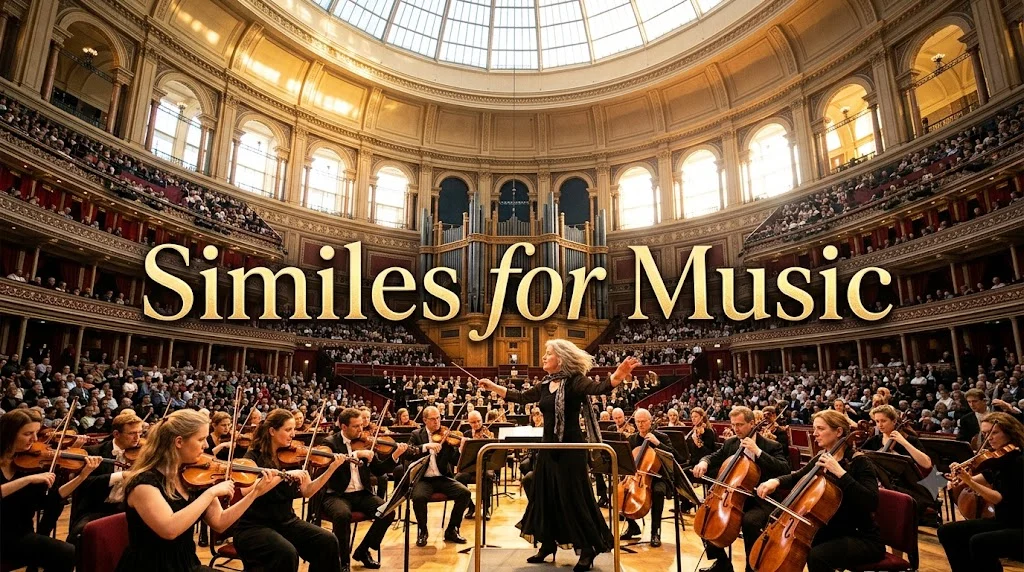
Similes for music are powerful figures of speech that compare musical elements to familiar experiences using “like” or “as.” They transform abstract descriptions of sound into vivid, relatable imagery.Examples include: “Her voice was as smooth as silk,” or “The beat was like a steady heartbeat.” Whether you’re a songwriter, poet, or storyteller, similes help your audience see and feel your descriptions of music.
Music is a universal language, yet describing it with words can feel like trying to catch smoke. It moves us, lifts our spirits, breaks our hearts, and brings us to our feet, but how do you explain the specific, ethereal sensation of a perfect melody?
This is where the magic of a well-crafted simile comes into play. A simile is a figure of speech that compares two distinct things using the words “like” or “as.” It is a powerful tool for songwriters, poets, and storytellers, acting as a bridge between the intangible world of sound and the concrete world of our senses.
By comparing a piece of music to something we can see, touch, or feel like “as smooth as silk” or “like a roaring thunderstorm” we can instantly convey its texture, its mood, and its power. This guide explores a rich collection of similes for music, breaking them down by the feeling they evoke, to help you add depth and creativity to your writing.
The Power of Similes in Musical Description
Why use a simile when you can just say “the music was loud? The answer lies in the power of suggestion. When you say “the music was as loud as thunder,” you’re not just giving a volume reading; you’re conjuring images of a storm, a sense of awe, and even a slight feeling of danger.
A simile invites the reader or listener to engage their imagination. It makes your writing “sizzle,” turning a simple description into a sensory experience. Songwriters have used this technique for decades to create hits, from Outkast telling us to “Shake it, like a Polaroid picture” to Simon & Garfunkel describing comfort “like a bridge over troubled water”. A fresh, surprising simile can be the difference between a forgettable line and a lyric that stays with you forever.
Similes for Different Musical Qualities
Similes for Melody and Harmony
When we talk about the main tune or how notes fit together, we’re often talking about its texture and flow.
| Simile | Meaning & Imagery | Example in a Sentence |
|---|---|---|
| As smooth as silk | Effortlessly flowing and pleasant to the ear. | The saxophonist’s solo was as smooth as silk, sliding through each note with a luxurious ease. |
| As sweet as a lullaby | Gentle, comforting, and soothing. | Her gentle humming was as sweet as a lullaby, calming the restless baby instantly. |
| As bright as sunshine | Uplifting, cheerful, and full of joy. | The pop song was as bright as sunshine, instantly putting everyone in a good mood. |
| As clear as a bell | Pure, resonant, and easy to distinguish. | The soprano’s high note rang out as clear as a bell, cutting through the orchestra. |
| As rich as a symphony | Full, complex, and layered with depth. | The arrangement was as rich as a symphony, with each instrument adding to a glorious whole. |
| As harmonious as a choir of angels | Perfectly blended and beautifully heavenly. | The quartet’s voices were as harmonious as a choir of angels, their tones blending in perfect unity. |
Similes for Rhythm and Tempo
Rhythm is the pulse of music, and these similes help describe its speed and drive.
Similes for Volume and Power
These comparisons are perfect for describing the sheer force and intensity of a performance.
Similes for Subtlety and Calm
Not all music is loud and bombastic. These similes capture the art of quiet and peace.
| Simile | Meaning & Imagery | Example in a Sentence |
|---|---|---|
| As gentle as a breeze | Light, soft, and caressing. | The flute’s melody was as gentle as a breeze, delicate and calming. |
| Like a whisper in the wind | Soft, subtle, and barely there. | The ambient track faded out like a whisper in the wind. |
| As soft as a feather | Very light, delicate, and airy. | The pianist’s touch on the keys was as soft as a feather, creating a gossamer sound. |
| As peaceful as a quiet lake | Completely calm, still, and serene. | The acoustic guitar piece was as peaceful as a quiet lake at dawn. |
| Like a soft lullaby | Comforting, tender, and sleep-inducing. | The final movement was like a soft lullaby, bringing a sense of closure and calm. |
Similes for Emotional Impact of Music
Music’s true power lies in how it makes us feel. These similes capture the specific emotions a song can evoke.
| Simile | Meaning & Imagery | Example in a Sentence |
|---|---|---|
| As haunting as a ghost’s whisper | Eerie, memorable, and unsettlingly beautiful. | The melody lingered in my mind, as haunting as a ghost’s whisper. |
| Like sunshine after heavy rain | Uplifting, hopeful, and a relief from sadness. | The major key change was like sunshine after heavy rain, full of hope. |
| As cold as a winter night | Lonely, melancholic, and distant. | The slow, minor-key song felt as cold as a winter night. |
| As uplifting as a sunrise | Inspiring, hopeful, and energizing. | The chorus was as uplifting as a sunrise, filling me with a sense of new beginnings. |
| As warm as a cozy blanket | Comforting, nostalgic, and safe. | Hearing that old song was as warm as a cozy blanket, bringing back happy memories. |
Similes for Specific Genres and Instruments
Different styles of music and instruments often lend themselves to specific types of comparisons.
Jazz and Soul
- As smooth as a jazz solo: Effortless and full of style.
- As unpredictable as a jazz improvisation: Spontaneous, dynamic, and full of surprises.
- As rich as velvet: Deep, luxurious, and full of texture.
Classical and Orchestral Music
- As graceful as a ballerina: Elegant, poised, and flowing.
- As grand as a symphony: Majestic, sweeping, and powerful.
- As deep as the ocean: Profound, emotional, and filled with feeling.
Guitar and Piano
- As fast as a racing car: For a blistering guitar solo.
- As sharp as a knife: For a piercing, high violin note or a biting guitar riff.
- As bouncy as a trampoline: For a lively, upbeat piano part.
How to Create Powerful and Original Similes
While a list of similes is a great starting point, crafting a truly original one is a skill that separates a good writer from a great one.
1. Think Beyond the Sound
Consider how the music makes you feel, what it reminds you of visually, and what physical sensation it evokes.
- Focus on the Senses: Instead of just “sounds happy,” think: What does it feel like? Warm and inviting? Sharp and cold? Does it move like a flowing river or jar you like a sudden crash?
- Surprise the Listener: Clichés are easy but forgettable. A fresh simile, like comparing a song to “a bed as big as Belgium,” is far more memorable. Try to find an unexpected connection.
- Create a Strong Visual: The best similes paint a picture. Compare your music to something we can see, like “a spinning carousel” or “a crackling fireplace”. The more visual the comparison, the stronger the impact.
2. Make it “Functional” to Your Story
A great simile shouldn’t just be decorative; it should serve the story or the emotion you’re trying to convey.
- Songwriting Example: Instead of a generic “stuck here like a jet plane on the ground,” a more powerful, contextual simile for a song about county fairs is “stuck here like a tent peg in the ground.” The simile relates directly to the setting, making it “functional” and truer to the story.
- Context is Key: Think about your overall theme. If you’re writing about a summer romance, comparisons to sunshine, beaches, and warmth will naturally resonate better than comparisons to snow or ice.
FAQs
1. What are similes for music?
Similes for music compare music to something else using words like “as” or “like” to make descriptions more vivid and expressive.
2. What is a good simile for beautiful music?
A common example is “Music flowed like a gentle river,” which describes music as calm, smooth, and soothing.
3. Why are similes used to describe music?
Similes help readers imagine how music sounds or feels by comparing it to familiar experiences, emotions, or objects.
4. What is the difference between a simile and a metaphor?
A simile uses words such as “like” or “as,” while a metaphor makes a direct comparison without those words.
5. Can students use similes for music in school writing?
Yes. Similes make essays, poems, and creative writing more engaging by adding vivid imagery and helping readers connect with the description.
Conclusion
Similes are the secret ingredient to making your writing about music sing. By comparing the intangible magic of sound to the tangible world we know, you create an emotional connection with your audience. Whether you are describing the “as smooth as silk” quality of a singer’s voice or the “like a roaring thunderstorm“ power of an orchestra, these tools will elevate your writing and help you capture the true essence of music.
So, the next time you’re trying to describe a song, a performance, or a feeling, don’t just say it compare it. The possibilities are as endless as music itself.







2 thoughts on “Similes for Music | Comparisons for Sound, Rhythm & Emotion In 2026”