Quick Answer
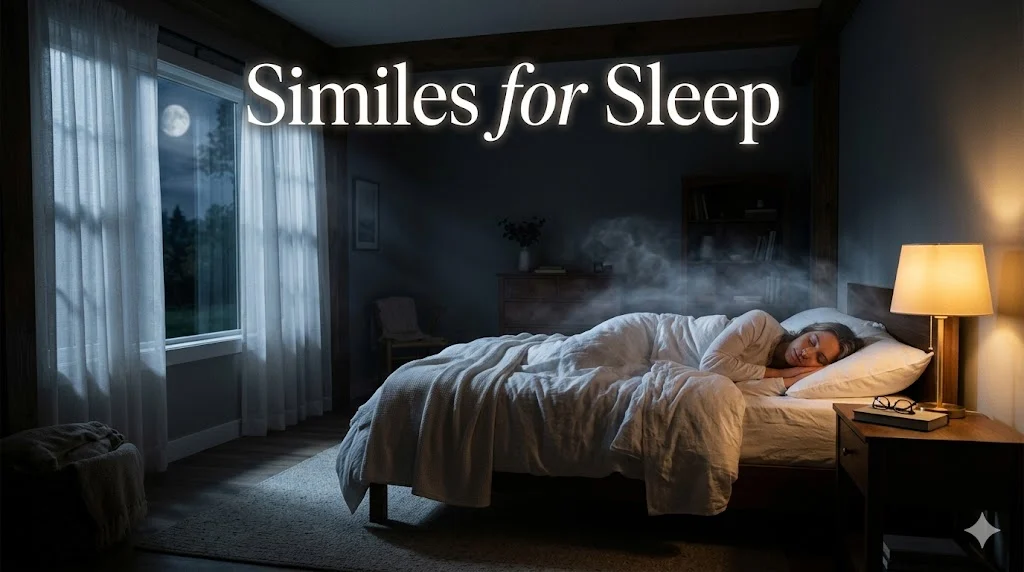
Similes for sleep compare rest, drowsiness, and dreaming to familiar experiences using words like “as” or “like.” They help writers capture the gentle, heavy, peaceful, or mysterious quality of sleep through imagery that readers can instantly feel and visualize.
Sleep is one of the most universal human experiences, yet it remains one of the most difficult things to describe well. Saying someone “fell asleep” tells readers almost nothing about how that sleep looked, felt, or affected the person around them. Was it peaceful? Heavy? Sudden? Reluctant? Deep?
That is where similes become essential tools for any writer.
By comparing sleep to familiar experiences drawn from nature, comfort, stillness, and the human body, similes transform a simple biological act into something readers can actually feel on the page. A character who “drifted into sleep like a leaf settling on still water” creates an entirely different emotional impression than one who “dropped into sleep like a stone thrown into a well.”
Whether you are writing fiction, poetry, personal essays, school assignments, or song lyrics, similes for sleep will add depth, atmosphere, and sensory richness to your work.
This guide covers powerful similes for sleep organized by theme, complete with meanings, explanations, examples in three writing registers, and practical tips to help you use them naturally and effectively.
Quick List of Similes for Sleep
| Simile | Meaning |
|---|---|
| As deep as the ocean floor | Profound and undisturbed rest |
| Like a leaf settling on still water | Gentle and gradual drifting off to sleep |
| As heavy as a stone | Sudden, weighted unconsciousness |
| Like falling through soft clouds | Dreamy and weightless rest |
| As peaceful as a frozen lake | Completely calm and undisturbed sleep |
| Like a candle slowly burning out | Gradual fading of awareness |
| As quiet as snowfall | Silent and unnoticeable rest |
| Like sinking into warm sand | Comfortable and enveloping sleep |
| As still as a painting | Motionless and serene rest |
| Like a ship drifting from the shore | Gradual separation from wakefulness |
Similes for Peaceful and Gentle Sleep
As Peaceful as a Frozen Lake
Meaning
Describes sleep that is completely undisturbed, calm, and silent.
Why It Works
A frozen lake holds perfect stillness. Nothing moves beneath or above the surface, making it an ideal image for the kind of deep, uninterrupted sleep that seems to suspend time itself.
Alternative Expression
“As still as a windless sea”
Formal Example:
She slept as peacefully as a frozen lake beneath a winter sky.
Casual Example:
He was completely out, peaceful as anything.
Creative Example:
Sleep had settled over her as peacefully as ice spreading across a lake in December, smooth and absolute.
Like a Leaf Settling on Still Water
Meaning
Describes a slow, gentle drifting into sleep without resistance or struggle.
Why It Works
The image of a leaf falling onto water captures the gradual, weightless quality of falling asleep naturally. There is no crash, no jolt, only a soft and inevitable descent.
Alternative Expression
“Like a feather drifting to the ground”
Examples in Writing
Formal Example:
He fell into rest like a leaf settling on still water, quietly and without effort.
Casual Example:
She just kind of drifted off without even realizing it.
Creative Example:
Sleep claimed her like a leaf released from a branch, turning slowly through cool air before coming to rest on a mirror-calm surface.
As Quiet as Snowfall
Meaning
Represents sleep that arrives silently and covers everything in stillness.
Why It Works
Snowfall is one of nature’s most noiseless events. It transforms noisy, complicated landscapes into quiet, muffled ones, just as sleep silences the busy mind.
Alternative Expression
“As silent as midnight fog”
Examples in Writing
Formal Example:
Sleep came over the child as quiet as snowfall, soft and without warning.
Casual Example:
She was asleep before you even noticed.
Creative Example:
Drowsiness settled across the room as quiet as snow falling on an empty street, erasing the noise of the day one flake at a time.
Like Sinking into Warm Sand
Meaning
Describes sleep that feels physically comfortable, enveloping, and deeply pleasurable.
Why It Works
Warm sand molds itself around the body, offering support from every direction. This makes it a natural comparison for the feeling of a perfect bed at the moment of sleep.
Alternative Expression
“Like melting into a soft mattress”
Examples in Writing
Formal Example:
Exhausted and content, he slept like he was sinking into warm sand.
Casual Example:
The moment she lay down, it felt like sinking into the beach.
Creative Example:
Sleep came not as a wall but as a slow immersion, like pressing bare feet into sun-warmed sand until the warmth crept upward through every muscle.
As Still as a Painting
Meaning
Represents complete motionlessness during sleep.
Why It Works
A painting is fixed and permanent, capturing a moment that does not shift or breathe. Comparing a sleeping person to a painting emphasizes their total physical stillness.
Alternative Expression
“As motionless as a marble statue”
Examples in Writing
Formal Example:
She lay in bed as still as a painting, undisturbed by anything around her.
Casual Example:
He didn’t move at all the whole night.
Creative Example:
In sleep she became a painting, colors muted, breath barely visible, hands folded as if posed by an artist who understood the beauty of complete rest.
Similes for Heavy and Deep Sleep
As Heavy as a Stone
Meaning
Describes sleep that arrives suddenly and is impossible to resist or shake off.
Why It Works
A stone’s weight is final and absolute. This comparison captures the feeling of exhaustion-driven sleep that pins a person down and refuses to let go.
Alternative Expression
“As immovable as granite”
Examples in Writing
Formal Example:
After the long journey, sleep fell on him as heavy as a stone.
Casual Example:
He was out cold the second he hit the pillow.
Creative Example:
Fatigue had been building for days, and when sleep finally arrived, it arrived as heavy as a stone dropped into deep water, pulling him straight down with no resistance.
Like a Ship Drifting from the Shore
Meaning
Describes the gradual movement from wakefulness into sleep, particularly the moment when conscious thought begins to lose its anchor.
Why It Works
A ship drifting from shore captures the sense of gentle but unstoppable separation. The land of waking life slowly recedes while the open water of sleep stretches ahead.
Alternative Expression
“Like a boat unmoored from the dock”
Examples in Writing
Formal Example:
His thoughts grew loose and slow, drifting like a ship leaving shore.
Casual Example:
He was halfway asleep already, kind of floating off.
Creative Example:
Consciousness released its grip the way a ship releases a harbor, not with force but with quiet inevitability, until the lights of waking life were only small flickers in the distance.
As Deep as the Ocean Floor
Meaning
Represents sleep that is profound, unreachable, and far removed from surface awareness.
Why It Works
The ocean floor is among the most remote places on Earth, untouched by light or noise from above. This makes it a powerful comparison for truly deep, dreamless sleep.
Alternative Expression
“As deep as a mountain well”
Examples in Writing
Formal Example:
She slept as deep as the ocean floor, beyond the reach of any sound.
Casual Example:
Nothing could wake her; she was completely gone.
Creative Example:
He had descended into sleep as deep as the ocean floor, where light could not follow and voices dissolved long before they reached him.
Like a Candle Slowly Burning Out
Meaning
Describes sleep that arrives as a gradual dimming of awareness and energy.
Why It Works
A candle burning out does not simply switch off. It flickers, dims, and fades, which mirrors the slow ebbing of consciousness as a tired person drifts toward sleep.
Alternative Expression
“Like a fire slowly dying to embers”
Examples in Writing
Formal Example:
Her energy faded like a candle slowly burning out until sleep finally took hold.
Casual Example:
She was fighting to stay awake but just kept fading.
Creative Example:
Awareness dimmed in her like the last candle in a room burning past midnight, the flame pulling smaller and smaller until one soft breath extinguished it entirely.
As Irresistible as Gravity
Meaning
Represents sleep that cannot be refused or delayed, especially when exhaustion is overwhelming.
Why It Works
Gravity is the one force no person can simply decide to ignore. Comparing sleep to gravity captures how the body eventually surrenders no matter how strongly the mind resists.
Alternative Expression
“As unavoidable as nightfall”
Examples in Writing
Formal Example:
By the third hour, sleep became as irresistible as gravity.
Casual Example:
There was no fighting it; he had to sleep.
Creative Example:
She had resisted for hours, but sleep made no argument, offered no discussion. It simply pulled the way gravity pulls—steady, patient, and certain.
Similes for Dreamy and Restless Sleep
Like Falling Through Soft Clouds
Meaning
Describes sleep that feels weightless, dreamy, and pleasantly disorienting.
Why It Works
Falling through clouds combines two familiar sensations—the slight vertigo of falling and the softness of clouds—to create the sensation of dreaming or hypnagogic sleep.
Alternative Expression
“Like floating through warm air”
Examples in Writing
Formal Example:
Half-conscious, she drifted like someone falling through soft clouds.
Casual Example:
It was that weird floaty feeling right before you actually fall asleep.
Creative Example:
Between waking and dreaming, she passed through a space like falling through soft clouds, tumbling gently without fear, cushioned from every side.
As Restless as a Wind-Tossed Sea
Meaning
Describes troubled, interrupted, or unsatisfying sleep.
Why It Works
A wind-tossed sea is never still. It shifts, churns, and resists calm, making it the perfect image for sleep that does not provide rest.
Alternative Expression
“As unsettled as storm clouds”
Examples in Writing
Formal Example:
His night was as restless as a wind-tossed sea, full of turning and waking.
Casual Example:
She tossed and turned the whole night.
Creative Example:
Sleep offered him no peace that night, only waves, each dream breaking against the next like water against rocks, leaving him soaked in exhaustion by morning.
Like a Door Swinging Between Two Rooms
Meaning
Describes the state of being half-awake and half-asleep, moving back and forth between consciousness and dreams.
Why It Works
A swinging door occupies neither one room nor the other. This captures the liminal, uncertain quality of light or interrupted sleep.
Alternative Expression
“Like standing on a threshold”
Examples in Writing
Formal Example:
He remained like a door swinging between two rooms, never fully asleep but never truly awake.
Casual Example:
She kept dozing off and coming back without ever really sleeping.
Creative Example:
For an hour he swung like a door between waking and dreaming, catching fragments of both worlds without belonging to either.
As Fitful as a Lamp in the Wind
Meaning
Represents sleep that keeps flickering between rest and wakefulness.
Why It Works
A lamp in the wind provides light in an unreliable, interrupted way. Sleep that functions similarly offers rest in short, inconsistent bursts.
Alternative Expression
“As broken as an interrupted song”
Examples in Writing
Formal Example:
Her sleep proved as fitful as a lamp in the wind, offering only brief periods of rest.
Casual Example:
He couldn’t stay asleep for more than an hour at a time.
Creative Example:
Rest came to her as fitfully as a candle flame fighting a draft, present for a moment, then snatched away, then returning again in a smaller flicker.
Like Chasing Something Just Out of Reach
Meaning
Describes the frustrating experience of trying to fall asleep but being unable to.
Why It Works
Reaching for something that keeps moving away captures the feeling of sleep that seems close but refuses to arrive.
Alternative Expression
“Like trying to hold smoke in your hands”
Examples in Writing
Formal Example:
Sleep felt that night like chasing something just out of reach.
Casual Example:
I lay there for hours trying to fall asleep and just couldn’t.
Creative Example:
She reached for sleep the way you reach for something in a dream, hand always extended, sleep always one step further, retreating into the dark at exactly her speed.
Similes for the Feeling of Waking from Sleep
Like Surfacing from Deep Water
Meaning
Describes the slow, disorienting process of waking from deep sleep.
Why It Works
Surfacing from deep water requires effort and takes time. This captures the heaviness and gradual return of awareness that follows truly deep rest.
Alternative Expression
“Like rising through layers of fog”
Examples in Writing
Formal Example:
Waking that morning felt like surfacing from deep water.
Casual Example:
It took him a while to figure out where he was when he woke up.
Creative Example:
Consciousness returned slowly, like surfacing from fathoms of dark water, each layer of sleep releasing her one at a time before she finally broke into the air of morning.
As Reluctant as a Bear Leaving Hibernation
Meaning
Describes extreme difficulty waking up and strong resistance to leaving sleep.
Why It Works
Hibernating bears are famous for their deep, long sleep and the slow, groggy process of emerging from it. This is a vivid and slightly humorous comparison for someone who does not want to wake up.
Alternative Expression
“As slow to rise as winter fog”
Examples in Writing
Formal Example:
On cold mornings, waking was as reluctant for her as a bear leaving hibernation.
Casual Example:
He absolutely did not want to get out of bed.
Creative Example:
She emerged from sleep as reluctant as a bear pulled from hibernation, batting away the alarm, burrowing deeper, growling at the intrusion of the morning.
Like Stepping Out of Warm Water into Cold Air
Meaning
Represents the unpleasant contrast between the comfort of sleep and the demands of being awake.
Why It Works
The shock of cold air after warm water is physical and immediate. This comparison gives waking up a sensory dimension that most readers immediately recognize.
Alternative Expression
“Like leaving a fire to stand in the snow”
Examples in Writing
Formal Example:
Waking felt like stepping out of warm water into cold air, startling and unwelcome.
Casual Example:
It felt awful dragging himself out of bed.
Creative Example:
Each morning the alarm pulled him like stepping from a warm bath into a cold room, the contrast sharp enough to feel like a small injustice.
Similes for Children’s Sleep
As Sweet as a Lullaby
Meaning
Describes innocent, contented sleep in a child.
Why It Works
A lullaby is gentle, loving, and closely associated with helping children fall asleep. It evokes warmth, security, and tenderness, making it a natural comparison for peaceful childhood rest.
Alternative Expression
“As soft as a bedtime story”
Examples in Writing
Formal Example:
The baby’s sleep was as sweet as a lullaby, unhurried and calm.
Casual Example:
She looked so peaceful sleeping.
Creative Example:
He watched his daughter sleep, her breath rising and falling as sweet as a lullaby hummed in a darkened room.
Like a Small Animal Tucked into Its Den
Meaning
Represents the cozy, protected, and natural quality of a child’s sleep.
Why It Works
Small animals curl up in their dens where they feel safe and sheltered. This image captures both the innocence of childhood and the comforting security that sleep provides.
Alternative Expression
“Like a bird folded under its wing”
Examples in Writing
Formal Example:
The child slept like a small animal tucked safely into its den.
Casual Example:
He was curled up in bed looking completely cozy.
Creative Example:
She found him asleep in the nest of his blankets, tucked in like a small animal that had found exactly the right den, warm and sealed off from the world.
Similes for Describing Sleep in Nature and Seasons
Like a Forest at Midnight
Meaning
Describes collective or deep sleep as a kind of natural, shared stillness.
Why It Works
A forest at midnight is alive but silent, breathing but motionless. It captures the quality of a sleeping household, city, or world.
Alternative Expression
“Like a field at dusk”
Examples in Writing
Formal Example:
The entire household lay quiet, like a forest at midnight.
Casual Example:
Everyone was asleep, not a sound in the house.
Creative Example:
By ten o’clock the house had become a forest at midnight, full of breath and presence but empty of noise, every room deep in its own particular darkness.
As Dormant as Seeds Beneath Winter Ground
Meaning
Represents sleep as a form of natural waiting and renewal.
Why It Works
Seeds do not die in winter. They rest, preserving life and energy until conditions allow growth. This comparison gives sleep a sense of purpose and biological wisdom.
Alternative Expression
“As resting as roots in frozen ground”
Examples in Writing
Formal Example:
He slept as dormant as seeds beneath winter ground, gathering strength.
Casual Example:
She was resting hard after a tough week.
Creative Example:
She lay dormant as seeds in winter soil, not absent but gathering, not finished but paused, storing everything the spring of morning would need.
Why Sleep Similes Matter in Writing
Sleep is easy to mention but difficult to describe. Strong similes help writers communicate qualities of rest that plain language cannot reach. They help readers understand whether a sleep is peaceful or troubled, deep or shallow, reluctant or welcome, innocent or exhausted. They also help readers feel the atmosphere of a scene, whether that is the hushed comfort of a sleeping house, the frustrating restlessness of insomnia, or the delicious heaviness of a well-earned rest.
When writers skip similes and rely on simple statements like “she fell asleep” or “he slept deeply,” they miss the opportunity to make readers feel something alongside their characters. A well-chosen simile turns a physical event into an emotional experience.
How to Use Sleep Similes Naturally
Match the Simile to the Emotional Tone
- If a scene is peaceful and warm, use gentle natural imagery such as snowfall or still water.
- If sleep is troubled or elusive, use imagery of wind, restlessness, or things just out of reach.
- If sleep is sudden and overpowering, use heavy physical imagery like stone or gravity.
Reflect the Character’s World and Experience
A sailor might experience sleep like a calm harbor. A farmer might drift off like fields settling after harvest. A child might sleep like an animal in a den. Grounding similes in a character’s world makes them feel organic rather than decorative.
Use Similes Sparingly but Deliberately
One strong simile does more work than five average ones. Choose moments that deserve the emphasis and allow the image to breathe.
Avoid Clichés Unless You Refresh Them
Phrases like “slept like a baby” or “slept like a log” have been used so often that they no longer create vivid images. If you use a familiar simile, add fresh detail to make it feel new again.
Common Mistakes When Writing Sleep Similes
Overloading a Single Scene
Using three or four similes in close succession dilutes the impact of each one. Space them out across a piece to maintain their power.
Choosing Imagery That Contradicts the Mood
A humorous or light comparison in the middle of a tense or grief-filled scene can break the emotional spell. Always check that the tone of your simile matches the tone of the moment.
Making Comparisons Too Abstract
The best similes are immediately visual and sensory. If a reader has to work hard to understand what you are comparing, the simile is not doing its job.
Using Similes as Decoration Rather Than Meaning
Every simile should add information about how a sleep felt, what it meant, or how it affected a character. Similes that only add color without adding meaning slow a piece down.
Similes vs Metaphors for Sleep
Simile
Uses “like” or “as” to make a comparison. Example: “He fell asleep like a stone dropped into water.”
Metaphor
Makes a direct identification between two things. Example: “He was a stone dropped into water.”
Both are effective. Similes tend to feel more descriptive and observational, as if a narrator is noticing and naming something. Metaphors tend to feel more immediate and immersive, as if the comparison is simply true.
In practice, many writers use both in the same piece, choosing based on the rhythm and intensity of the moment.
Writing Exercise: Create Better Sleep Similes
Start with a plain sentence: “She fell asleep.”
Now rewrite it using different types of imagery.
Nature:
“She drifted into sleep like a leaf carried downstream.”
Weight:
“Sleep took her like a stone finding the bottom of a lake.”
Light:
“She faded like the last candle in a long hallway.”
Sound:
“She slipped into sleep as quietly as snow falling on snow.”
Warmth:
“Sleep wrapped around her like something that had been waiting all day.”
Practicing this exercise regularly trains you to notice the many different qualities sleep can have and to find the right image for each one.
FAQs
- What are similes for sleep?
Similes for sleep compare the act, feeling, or quality of sleeping to familiar experiences using “like” or “as” to create vivid, emotionally resonant descriptions. - Why should writers use sleep similes?
They transform a simple physical act into something readers can feel. They also help establish mood, reveal character, and build atmosphere in any type of writing. - What makes a strong sleep simile?
A strong sleep simile is easy to visualize, emotionally accurate, and appropriate to the tone of the scene. It adds meaning, not just decoration. - Can sleep similes work in poetry?
Absolutely. Sleep has been one of poetry’s great subjects for centuries precisely because it sits at the border of consciousness and mystery. Similes help poets explore that border with precision and beauty. - How do I avoid clichéd sleep similes?
Look for images that are specific, personal, or unexpected. Instead of “slept like a log,” try “slept like a field after harvest, quiet and spent.” The goal is imagery that feels fresh and true. - Are sleep similes appropriate for children’s writing?
Yes. Simple, warm, nature-based similes work beautifully in children’s writing. Comparing a sleeping child to a small animal in its den or to a flower closed for the night is both accessible and emotionally resonant.
Conclusion
Sleep is more than rest. It is a daily surrender, a crossing from the world of light and noise into something quieter and stranger. It is where the body heals and the mind wanders and is heavy or gentle, welcome or elusive, deep or troubled, and it looks and feels different in every person who experiences it.
Simple descriptions fail to capture any of this. Saying someone fell asleep or slept deeply does not tell readers how it felt, what it looked like, or what it meant. Similes bridge that gap. They take something invisible and interior and give it shape, texture, and emotional weight.
- A person who sleeps as deep as the ocean floor is unreachable in a way that tells us something about their exhaustion or their peace.
- A person who drifts off like a leaf settling on still water tells us about the ease of their surrender.
- A person who lies in bed chasing sleep like something just out of reach tells us about their anxiety and longing.
The right simile does not just describe sleep. It reveals the world that sleep is escaping from and the quality of the rest that is offered in return.
As you write, pay attention to the many ways people sleep around you and the many ways you sleep yourself. Notice the weight of it, the sound of it, the feeling of crossing into it and climbing back out. Those observations are the raw material of the most powerful similes, images drawn from life that readers recognize before they even finish reading the sentence.
The best writing about sleep makes readers feel sleepy themselves. It slows the prose, quiets the room, and lets the words drift the way a mind drifts in the minutes before everything goes dark and still.