Quick Answer
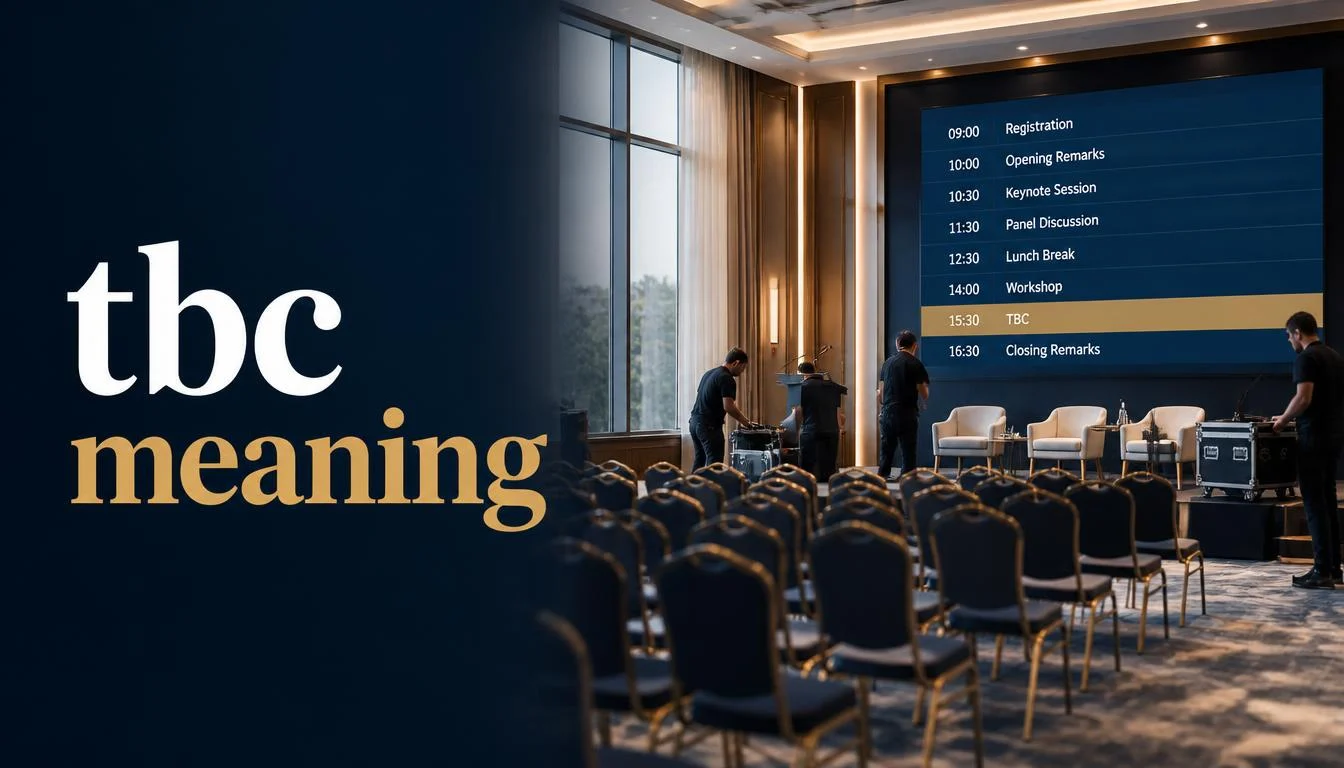
TBC meaning is usually “to be confirmed” or “to be continued,” depending on the context. In text messages, it often means that a detail hasn’t been finalized yet.
Understanding TBC meaning can help you interpret text messages, social media posts, and online conversations more easily. People commonly use this abbreviation when sharing plans, discussing events, or mentioning details that still need confirmation.
The meaning of TBC depends on the situation. For example, someone might write “Meeting time TBC” when the time hasn’t been decided, or use TBC at the end of a story to suggest that more is coming. Recognizing the context helps you understand what the sender really means.
What Does TBC Mean?
TBC is an abbreviation for “to be confirmed.” It indicates that information remains undecided, unverified, or awaiting official confirmation.
For example, if a school notice says, “Parent meeting: Friday, time TBC,” the meeting may be planned for Friday, but its exact time hasn’t been finalized.
The abbreviation is particularly useful when people need to share preliminary information without presenting uncertain details as facts.
Here are some common examples:
- Event: The concert date is TBC.
- Work: The meeting location is TBC.
- Travel: Our departure time is TBC.
- School: The examination schedule is TBC.
- Text message: “Let’s meet next weekend. Time TBC!”
TBC is widely understood in British and international English. In American English, people also use it, especially in business, entertainment, education, and event planning.
What Does TBC Mean in Text Messages?
In texting, TBC usually means “to be confirmed.” Someone uses it when they want to discuss a plan but don’t yet have every detail.
For example:
Person A: Are we meeting on Saturday?
Person B: Yes, probably! The time is TBC.
This means Saturday is the expected day, but the exact meeting time still needs confirmation.
Other texting examples include:
- “Dinner is TBC. I’ll message you later.”
- “The party location is TBC.”
- “Our weekend plans are TBC until everyone replies.”
- “The match schedule is TBC, so keep checking.”
TBC doesn’t automatically mean that a plan has been canceled. It simply signals that at least one detail remains unconfirmed.
Other Meanings of TBC
Although “to be confirmed” is the most common interpretation in scheduling and everyday communication, TBC can have other meanings depending on the subject.
To Be Continued
In entertainment and storytelling, TBC may sometimes be used informally to mean “to be continued,” particularly when someone wants to suggest that a story or conversation isn’t finished.
However, TBC is not the standard abbreviation for “to be continued.” The more widely recognized abbreviation is TBC in some informal contexts, while TBC can be ambiguous. TBC most commonly means “to be confirmed,” and TBC should be interpreted according to the surrounding message.
For example, a creator might write, “More updates coming soon, TBC,” but readers should use the context to determine the intended meaning.
To Be Completed
In project management, task lists, or administrative documents, someone might use TBC informally to indicate that a task or section still needs completion. However, “to be completed” is not the usual expansion of TBC.
For clarity, writers should spell out the intended phrase when the audience might misunderstand it.
Context-Specific Uses
TBC can also appear as an abbreviation in specialized organizations, technical documents, or internal workplace systems. Those meanings aren’t universal.
When you encounter TBC in an unfamiliar setting, read the surrounding sentence before deciding what it means.
TBC vs. TBD vs. TBA
TBC, TBD, and TBA look similar, but they communicate slightly different things.
| Abbreviation | Full Form | Meaning |
|---|---|---|
| TBC | To Be Confirmed | A detail awaits confirmation. |
| TBD | To Be Determined | A decision or detail still needs to be decided. |
| TBA | To Be Announced | Information will be announced later. |
TBC: To Be Confirmed
Use TBC when a detail exists in a preliminary form but still needs confirmation.
Example: “The venue is TBC.”
TBD: To Be Determined
Use TBD when someone hasn’t yet decided on a particular detail.
Example: “The final budget is TBD.”
TBA: To Be Announced
Use TBA when an organization expects to share information publicly at a later time.
Example: “The guest speaker is TBA.”
These abbreviations sometimes overlap in everyday use. Still, choosing the most precise one makes your message easier to understand.
How to Use TBC in Everyday Communication
TBC works best when you need to communicate uncertainty briefly. It is especially useful in lists, schedules, planning documents, and informal messages.
In Text Messages
Use TBC when discussing plans that aren’t completely finalized.
Example: “We’re meeting tomorrow, but the location is TBC.”
This tells the other person that the plan is progressing but one detail remains unsettled.
In Emails
TBC can help you communicate tentative arrangements professionally.
Example:
“The training session is scheduled for November 12. The final start time is TBC, and I’ll share an update once it’s confirmed.”
For formal emails, spelling out the phrase can be helpful if your audience may not know the abbreviation.
In Event Schedules
Event organizers frequently use TBC when publishing preliminary schedules.
Example:
| Event Detail | Information |
|---|---|
| Event | Annual Conference |
| Date | November 12 |
| Venue | City Convention Center |
| Start Time | TBC |
This format communicates the available information without suggesting that every detail is final.
In Workplace Conversations
Teams may use TBC to track information that still requires approval.
Example: “The launch date is TBC pending final approval.”
This makes it clear that the launch date depends on a remaining decision.
Is TBC Formal or Informal?
TBC can be used in both formal and informal situations. Its suitability depends on your audience and the type of communication.
Appropriate uses include:
- Workplace schedules
- Project planning documents
- Business emails
- Event announcements
- Personal messages
- Travel itineraries
In a professional document, introduce the full phrase if readers might not recognize the abbreviation.
For example, write “The delivery date is to be confirmed” in a formal report. In an internal team schedule, simply writing “Delivery date: TBC” may be enough.
The goal is clarity, not avoiding abbreviations altogether.
Common Mistakes When Using TBC
A few simple mistakes can make TBC confusing.
1. Treating TBC as a confirmed date
If a schedule says “Time: TBC,” don’t assume the time is final. Wait for an update.
2. Confusing TBC with TBD
TBC generally means that confirmation is pending. TBD suggests that a decision still needs to be made.
3. Using TBC without explaining it to unfamiliar readers
If you’re writing for a broad audience, spell out “to be confirmed” at least once.
4. Assuming TBC means canceled
An unconfirmed detail doesn’t mean the entire event or plan has been canceled. It means the information isn’t final.
5. Forgetting to provide an update
If you use TBC in a schedule or message, replace it with the confirmed information once it’s available.
How to Reply When Someone Says TBC
You don’t need a complicated response when someone tells you a detail is TBC. Your reply should reflect whether you’re simply acknowledging the information or need a definite answer.
Here are some natural responses:
- Casual: “Okay, just let me know when it’s confirmed.”
- Friendly: “Sounds good! Keep me posted.”
- Professional: “Thank you. Please share the confirmed details when available.”
- Planning ahead: “No problem. Do you have an estimated date?”
- Time-sensitive: “Thanks. Could you confirm the time before Friday?”
If the missing detail affects your own plans, it’s reasonable to ask when the final information will be available.
FAQs
What does TBC stand for?
TBC most commonly stands for “to be confirmed.” It indicates that a detail hasn’t received final confirmation.
What does TBC mean in a text from a friend?
It usually means that a plan, date, time, or location hasn’t been finalized. Your friend may be waiting for more information before confirming the details.
Is TBC the same as TBD?
No. TBC means “to be confirmed,” while TBD means “to be determined.” TBC often indicates pending confirmation; TBD more directly indicates that a decision remains to be made.
What does TBC mean on an event ticket?
It generally means that a particular detail, such as the event time or venue, hasn’t been confirmed. Check the organizer’s official updates for the final information.
Is TBC professional to use in an email?
Yes. TBC is common in professional schedules and internal emails. For formal external communication, consider spelling out “to be confirmed” to avoid confusion.
Should I write TBC or tbc?
Both forms are understandable, but TBC is the conventional presentation in many professional and informational contexts. Follow your organization’s style guide if it specifies a preferred format.
Does TBC mean an event is canceled?
No. TBC means that a detail remains unconfirmed. It doesn’t, by itself, indicate cancellation.
What is the difference between TBA and TBC?
TBC means “to be confirmed,” while TBA means “to be announced.” TBA often appears when an organizer plans to announce information publicly later.
Conclusion
The tbc meaning is usually “to be confirmed.” It’s a practical abbreviation for dates, times, locations, schedules, and plans that aren’t finalized yet.
When you see TBC in a text message, email, or announcement, look at the surrounding context to understand which detail needs confirmation. When writing it yourself, use the abbreviation when your audience understands it, and provide an update once the information becomes official.









