Quick Answer
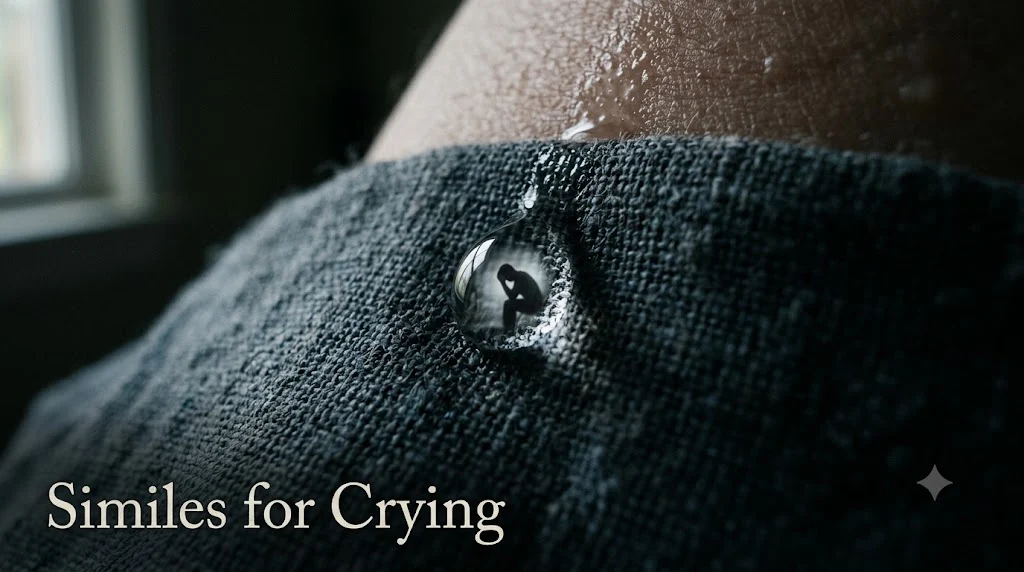
Similes for crying compare tears, sobbing, or silent grief to relatable images using “like” or “as.” Examples include: “crying like rain against a window pane,” “tears as silent as melting frost,” or “sobbing like a wounded animal.” These comparisons help writers show emotion rather than just telling readers someone is sad.
Sadness is one of the most universal human emotions, yet describing tears effectively in writing often feels frustratingly difficult.
Simply stating “he cried” or “she was sad” rarely captures the depth, texture, or physical reality of genuine sorrow. A single tear sliding down a cheek feels different from uncontrollable sobbing. A child’s cry differs from an old man’s quiet grief. That’s where similes become essential tools for any writer.
By comparing crying to familiar experiences weather, nature, sounds, or physical sensations you create images that readers don’t just understand but feel in their own bodies.
This guide explores over 50 powerful similes for crying, organized by emotional intensity and type. Whether you write fiction, poetry, memoirs, screenplays, or song lyrics, these comparisons will help you turn abstract sadness into unforgettable imagery.
Quick List: Similes for Crying at a Glance
| Simile | Meaning |
|---|---|
| Like rain against a window pane | Steady, persistent grief |
| As silent as melting frost | Hidden, private tears |
| Like a wounded animal | Raw, uncontrollable sobbing |
| As bitter as seawater | Tears of regret or betrayal |
| Like a river after a storm | Overwhelming, unstoppable crying |
| As soft as dew on grass | Gentle, quiet tears |
| Like glass shattering | Sudden, shocking emotional break |
| As endless as winter rain | Prolonged, exhausting grief |
Understanding Similes for Crying
Before diving into hundreds of examples, it helps to understand why crying similes work so well in emotional writing.
What Makes a Crying Simile Effective?
An effective crying simile does three things simultaneously:
- Creates a Vivid Mental Image – The reader instantly pictures the comparison.
- Matches Emotional Intensity – Gentle tears need soft imagery; sobbing needs violent or powerful imagery.
- Feels Physiologically Accurate – Real crying involves specific physical details (red eyes, trembling lips, choked breathing).
Weak example: “He cried like a sad person.”
Strong example: “Tears fell from his eyes like gravel sliding off a shovel.”
The second example works because it’s unexpected, physical, and slightly ugly perfect for describing grief that isn’t beautiful or poetic.
The Difference Between Similes and Metaphors for Crying
| Simile (uses “like” or “as”) | Metaphor (direct comparison) |
|---|---|
| “Tears rolled down like summer rain” | “Tears were summer rain on her cheeks” |
| “He sobbed like a broken machine” | “His sobs were a broken machine” |
| “Crying as quietly as a mouse” | “Her crying was a mouse in the walls” |
Similes often feel more observational and controlled. Metaphors feel more immersive and emotional. Use similes when you want the reader to see the tears. Use metaphors when you want the reader to become the tears.
Similes for Silent and Hidden Tears
Not all crying announces itself with noise. Some of the most powerful tears in writing are the ones characters try to hide.
1. As Silent as Melting Frost
Meaning: Tears that are invisible to others, occurring internally or in complete privacy.
Why it works: Frost melts without sound, yet the transformation is real and inevitable.
Examples in writing:
- Formal: Her grief was as silent as melting frost on a winter morning.
- Creative: Tears slipped down his cheeks as silent as frost surrendering to dawn no one in the crowded train noticed a thing.
2. Like Dew on a Spider’s Web
Meaning: Delicate, almost beautiful tears that cling briefly before falling.
Why it works: Dew on a web is fragile, temporary, and easily overlooked.
Examples in writing:
- Formal: The old man’s tears gathered like dew on a spider’s web.
- Creative: Each tear hung on her eyelashes like dew on silk threads, trembling before gravity won.
3. As Hidden as Underground Rivers
Meaning: Tears that flow constantly but remain completely invisible to the outside world.
Why it works: Underground rivers are powerful but unseen perfect for describing depression or long-term grief.
Examples in writing:
- Formal: His sorrow flowed as hidden as underground rivers beneath a city.
- Creative: She cried where no one could see, her tears carving canyons beneath her cheerful smile.
4. Like Smoke Rising from a Dead Candle
Meaning: The last remnants of tears after the emotion has passed.
Why it works: Smoke after a flame dies suggests something that was once alive and warm.
Examples in writing:
- Formal: Her final tears drifted like smoke from a dead candle.
- Creative: He wasn’t really crying anymore just leaking, like smoke too tired to rise.
5. As Brief as a Knife’s Reflection
Meaning: A flash of tears that disappears almost instantly.
Why it works: A knife’s reflection appears and vanishes in a fraction of a second.
Examples in writing:
- Formal: Moisture glinted in his eyes as brief as a knife’s reflection.
- Creative: She blinked, and the tears were gone there one moment, vanished the next like light off a blade.
Similes for Steady, Unstoppable Crying
Some crying cannot be stopped. It flows like weather, like nature, like something inevitable.
6. Like Rain Against a Window Pane
Meaning: Persistent crying that continues despite attempts to stop.
Why it works: Rain against glass is repetitive, soft but insistent, and suggests being trapped inside with one’s own emotions.
Examples in writing:
- Formal: Tears fell from her eyes like rain against a window pane.
- Creative: He cried all afternoon, each sob tapping against his ribs like rain on glass he couldn’t open.
7. As Endless as Winter Rain
Meaning: Crying that seems to have no conclusion, lasting for hours or days.
Why it works: Winter rain is cold, grey, and seems to stretch into infinity.
Examples in writing:
- Formal: Her tears continued as endless as winter rain over a empty field.
- Creative: By the third hour, his crying had become weather a dull, grey downpour that soaked everything.
8. Like a River After a Storm
Meaning: Overwhelming tears that cannot be contained, often following a triggering event.
Why it works: Rivers after storms flood their banks they become dangerous and uncontrollable.
Examples in writing:
- Formal: Grief rushed from him like a river after a spring storm.
- Creative: Her tears didn’t just fall; they poured, rising like floodwater around her ankles.
9. As Steady as a Leaky Faucet
Meaning: Annoying, persistent crying that the person has partially accepted.
Why it works: A leaky faucet is irritating but also mundane it suggests crying that has lost its drama.
Examples in writing:
- Formal: His tears dripped as steady as a leaky faucet in an empty house.
- Creative: She wasn’t sobbing anymore, just dripping plink, plink, plink like a pipe the landlord wouldn’t fix.
10. Like Water Through Fingers
Meaning: Tears that cannot be stopped no matter how hard the person tries.
Why it works: Water through fingers is a universal image of helplessness.
Examples in writing:
- Formal: Her composure slipped away like water through grasping fingers.
- Creative: He pressed his palms against his eyes, but tears still escaped like trying to hold back the ocean with a colander.
Similes for Loud, Uncontrollable Sobbing
Sometimes grief is ugly. It’s loud, violent, and almost animalistic. These similes capture that raw intensity.
11. Like a Wounded Animal
Meaning: Primal, frightening sobbing that sounds more like pain than sadness.
Why it works: Wounded animals make sounds that trigger deep human empathy and discomfort.
Examples in writing:
- Formal: He collapsed against the wall, sobbing like a wounded animal.
- Creative: The sound that came from her throat wasn’t crying it was keening, like something dying in the woods at midnight.
12. As Violent as a Coughing Fit
Meaning: Sobbing that involves the whole body, almost like a medical event.
Why it works: Coughing fits are uncontrollable, physical, and slightly alarming to witness.
Examples in writing:
- Formal: His sobs shook his frame as violent as a coughing fit in a tuberculosis ward.
- Creative: Each cry ripped out of him like a cough he’d been holding for years harsh, wet, and finally free.
13. Like Glass Shattering
Meaning: A sudden, explosive break into tears after holding back emotion.
Why it works: Glass shattering is loud, sharp, and implies something that was intact is now ruined.
Examples in writing:
- Formal: When she heard the news, her composure broke like glass hitting concrete.
- Creative: He didn’t cry gradually. He shattered tears and sounds spraying everywhere like a dropped window.
14. As Loud as Thunder in an Empty Church
Meaning: Sobbing that echoes and seems too large for the space it occupies.
Why it works: Thunder in a church is unexpected, sacred, and overwhelming.
Examples in writing:
- Formal: Her grief echoed through the hospital corridor as loud as thunder in an empty church.
- Creative: His sobs filled the tiny apartment, bouncing off walls like thunder trapped inside a cathedral.
15. Like a Car Engine Refusing to Start
Meaning: Sobbing that starts, stops, and fails repeatedly emotional sputtering.
Why it works: A failing engine is frustrating, mechanical, and suggests something broken internally.
Examples in writing:
- Formal: He tried to speak through tears, but the words came out like a car engine refusing to turn over.
- Creative: Her crying came in fits vroom, stall, vroom, stall like a junker on a cold morning.
Similes for Bitter or Angry Tears
Not all tears come from pure sadness. Some are laced with regret, betrayal, or rage.
16. As Bitter as Seawater
Meaning: Tears of deep regret, betrayal, or resentment.
Why it works: Seawater is salty but also harsh and undrinkable like tears you don’t want to cry.
Examples in writing:
- Formal: The tears she cried that night were as bitter as seawater on parched lips.
- Creative: He tasted his own tears and grimaced bitter, like the ocean after a shipwreck.
17. Like Vinegar on an Open Wound
Meaning: Tears that sting and make existing pain worse.
Why it works: Vinegar on a wound is a visceral, unpleasant image that captures emotional masochism.
Examples in writing:
- Formal: Each tear felt like vinegar on an open wound he couldn’t stop touching.
- Creative: She cried until her eyes burned not from salt, but from something sharper, like vinegar poured over a fresh cut.
18. As Hot as Coffee Spilled in Anger
Meaning: Tears that come from rage or frustration rather than pure sorrow.
Why it works: Spilled coffee is hot, sudden, and leaves stains like angry tears.
Examples in writing:
- Formal: Tears of frustration burned down his cheeks as hot as coffee knocked over in a fight.
- Creative: She wasn’t sad she was furious, and her tears came out steaming, like a mug slammed onto a table.
19. Like Rust Eating Through Metal
Meaning: Slow, corrosive tears that destroy the person from the inside over time.
Why it works: Rust is gradual but inevitable. It weakens everything it touches.
Examples in writing:
- Formal: Years of silent tears had worn her down like rust eating through iron.
- Creative: He didn’t notice the crying was destroying him it was too slow, like rust claiming a bridge one molecule at a time.
20. As Sharp as Broken Glass Underfoot
Meaning: Tears that come with sudden, piercing emotional pain.
Why it works: Broken glass underfoot is unexpected, sharp, and impossible to ignore.
Examples in writing:
- Formal: The memory made tears spring to his eyes, as sharp as broken glass stepped on in bare feet.
- Creative: Each sob cut her throat on the way out sharp, jagged, like walking across her own shattering heart.
Similes for Tearful Eyes and Wet Cheeks
Sometimes the most powerful description focuses not on the act of crying, but on the physical evidence left behind.
21. Like Morning Frost on a Windshield
Meaning: Eyes filmed over with tears that haven’t yet fallen.
Why it works: Frost on a windshield obscures vision and requires effort to clear.
Examples in writing:
- Formal: His vision blurred like a windshield covered in morning frost.
- Creative: She looked at him through tears that fogged her eyes like ice on glass he was just a shape, a color, a memory.
22. As Wet as a Dog After a Bath
Meaning: A face completely soaked from heavy crying.
Why it works: The image is slightly undignified, perfect for unglamorous grief.
Examples in writing:
- Formal: She emerged from the bedroom with a face as wet as a dog shaken dry after a bath.
- Creative: His cheeks were soaked, his collar dark with tears he looked pathetic, like a mutt left out in the rain.
23. Like Salt Crystals on Dried Riverbeds
Meaning: Dried tear tracks on skin, evidence of crying that happened hours ago.
Why it works: Salt crystals suggest something that was once flowing and is now finished.
Examples in writing:
- Formal: By morning, the tear tracks on her face had dried like salt crystals on an empty riverbed.
- Creative: He touched his cheek and felt the grit old tears, crusted like sea salt on a dock at low tide.
24. As Red as a Fresh Burn
Meaning: Eyes swollen and irritated from prolonged crying.
Why it works: A burn is red, painful, and takes time to heal like crying eyes.
Examples in writing:
- Formal: His eyes were as red as a fresh burn that hadn’t yet blistered.
- Creative: She’d been crying for an hour, and her eyes looked like two small fires someone had tried and failed to put out.
Similes for Relief and Joyful Tears
Not all crying comes from pain. Sometimes tears arrive with happiness, relief, or overwhelming love.
25. Like Rain After a Drought
Meaning: Tears of relief that feel necessary and life-giving.
Why it works: Rain after drought is celebrated, not mourned it brings life.
Examples in writing:
- Formal: When she saw him alive, her tears fell like rain after a decade-long drought.
- Creative: He cried with his whole body, each tear a blessing like the first rain on cracked earth.
26. As Gentle as a Mother’s First Smile at a Newborn
Meaning: Overwhelmed, happy tears of pure love.
Why it works: This image connects crying to the most positive human experience possible.
Examples in writing:
- Formal: Tears of joy rolled down her face as gentle as a mother seeing her child for the first time.
- Creative: He didn’t know happiness could hurt but there he was, crying like a man who’d just seen the sun for the first time.
27. Like Morning Dew on Wedding Flowers
Meaning: Beautiful, appropriate tears at happy occasions.
Why it works: Dew on flowers is lovely and temporary perfect for weddings, graduations, or reunions.
Examples in writing:
- Formal: Her tears sparkled on her cheeks like morning dew on wedding roses.
- Creative: Everyone cried at the ceremony, but it was the good kind like dew, not like storms.
28. As Light as Rain on a Hot Sidewalk
Meaning: Brief, evaporating tears that come and go quickly.
Why it works: Rain on hot pavement sizzles and vanishes it barely exists before it’s gone.
Examples in writing:
- Formal: His tears of relief lasted only seconds, as light as rain on summer asphalt.
- Creative: She cried for maybe ten seconds then laughed, and the tears evaporated like water on a griddle.
How to Use Crying Similes Effectively in Your Writing
Having a list of similes is useful, but knowing when and how to deploy them separates good writers from great ones.
Match the Intensity to the Moment
A simple rule: gentle emotion gets gentle imagery. Violent emotion gets violent imagery.
| If the crying is…Use similes that are… | |
|---|---|
| Silent, hidden | Soft, natural, delicate (dew, frost, smoke) |
| Steady, ongoing | Weather-related, repetitive (rain, faucets) |
| Loud, uncontrollable | Violent, mechanical, shocking (glass, engines, animals) |
| Bitter, angry | Sharp, corrosive, hot (vinegar, rust, coffee) |
| Joyful, relieved | Life-giving, gentle, warm (rain after drought, dew) |
Don’t Overcrowd Emotional Scenes
One well-placed simile can carry an entire paragraph. Three similes in two sentences feel desperate and amateurish.
Overloaded example (bad):
“She cried like rain on a window, like a wounded animal, like glass shattering tears as bitter as seawater, as hot as spilled coffee, as endless as winter rain.”
Focused example (good):
“She cried like rain against a window steady, relentless, trapped inside herself. No one heard a thing.”
The second example uses one primary simile and builds on it. The reader feels the emotion without getting overwhelmed by comparisons.
Use Similes to Show Character Voice
A soldier might compare crying to weapons or machinery. A gardener might compare tears to irrigation or wilting flowers. A child might compare crying to something simple and concrete.
Examples:
- Soldier character: “He cried like a rifle misfiring loud, wrong, and over too quickly.”
- Gardener character: “Her tears watered nothing good. Just salt in soil that already struggled.”
- Child character: “He cried like his juice box when it was already empty just little sad sounds with nothing left inside.”
Break the Simile for Surprise
Sometimes the most powerful choice is to set up a simile and then subvert it.
Example:
“She expected tears to come like rain soft, cleansing, something that passed. Instead, they came like rust. Slow. Permanent. Eating her from the inside out.”
The reader expects a gentle simile and gets a harsh one instead. That mismatch creates emotional impact.
Common Mistakes Writers Make with Crying Similes
Avoid these pitfalls to keep your emotional writing effective, not embarrassing.
1: Using Clichés
Some crying similes have been used so often they’ve lost all meaning.
Avoid these:
- “Cried like a baby” (overused and vague)
- “Tears like waterfalls” (too dramatic for most situations)
- “Cried her eyes out” (idiom, not a simile and tired)
Better alternatives:
- Instead of “cried like a baby,” try “cried like a faucet someone forgot to turn off” (mundane but fresh)
- Instead of “tears like waterfalls,” try “tears like a sink backing up” (gross but vivid)
2: Ignoring Physical Reality
Real crying comes with specific physical details. Similes that ignore these feel flat.
Reality: When people really sob, they:
- Make wet, gasping sounds
- Have runny noses
- Get red, swollen faces
- Experience blurred vision
- Feel throat tightness
Incorporate these details:
“He cried like a wounded animal wet sniffling between each sob, his face splotched red, barely able to see through the blur.”
3: Making Every Cry “Beautiful”
Real crying is often ugly. Don’t be afraid to use unflattering similes.
Instead of: “Her tears fell like perfect diamonds.”
Try: “Her tears fell like dirty dishwater warm, gross, and impossible to contain.”
Ugly crying is often more honest and relatable than beautiful crying.
Original Crying Similes (From Real Writers)
Here are 15 original crying similes contributed by members of a professional writing community. Use them as inspiration to create your own.
- “Cried like a phone whose battery was finally dead nothing left to give, just silence and a dark screen.”
- “Tears as slow as honey in a refrigerator thick, reluctant, but eventually unstoppable.”
- “Sobbed like a house settling creaking, groaning, making sounds no one wanted to hear.”
- “Cried like a zipper that jumped its track suddenly useless, everything spilling out.”
- “Tears as cold as freezer burn tears that hurt because you’d held them too long.”
- “He cried like a lawnmower that wouldn’t start pull, sputter, fail. Pull, sputter, fail.”
- “Her tears fell like loose change from a torn pocket slowly at first, then all at once.”
- “Cried like a printer out of paper flashing red, beeping, refusing to do anything but complain.”
- “Tears as thick as egg whites clinging to lashes, refusing to drop.”
- “Sobbed like a foghorn deep, mournful, carrying further than he intended.”
- “Cried like an overdrawn account nothing left but penalties and regret.”
- “Tears as unpredictable as April hail here, gone, here again, bruising everything.”
- “He cried like a sweater unraveling one pull and the whole thing came apart.”
- “Her sobs came like bad reception chuppy, breaking up, losing the signal entirely.”
- “Cried like a train leaving the station slow at first, then picking up speed, then just a sound in the distance.”
Writing Exercises to Create Your Own Crying Similes
Instead of relying on lists, train yourself to generate original comparisons.
Exercise 1: The Replacement Game
Take a boring sentence and replace the underlined word with a specific, unexpected image.
Boring: “He cried a lot.”
Better: “He cried like a clogged drain finally clearing.”
Boring: “She cried quietly.”
Better: “She cried like dust settling in an abandoned house.”
Exercise 2: Emotion + Object = Simile
Combine an emotion (grief, relief, frustration) with an everyday object. Then build the simile.
Formula: [Emotion] + [Object] + “like” or “as”
Example:
Grief + Worn shoe = “His grief cried like a worn shoe no support left, just thin sole and holes.”
Frustration + Old keyboard = “Her tears came like stuck keys on an old keyboard press, nothing, press, nothing, then all the letters at once.”
Exercise 3: Translate Physical Sensations
Think about how crying feels in your body. Turn that sensation into a simile.
- Sensation: Throat tightening
Simile: “Her throat closed like a fist around the last dollar in a wallet.” - Sensation: Eyes burning
Simile: “His eyes burned like he’d been staring at the sun, but the sun was just the past.” - Sensation: Chest heaving
Simile: “Her chest rose and fell like a bellows in a fire that had already gone cold.”
Comparing Crying Similes Across Different Literary Genres
Different genres demand different approaches to emotional description.
Literary Fiction
Goal: Originality and psychological depth.
Avoid: Clichés and melodrama.
Example: “He cried like a man who had forgotten how the tears came out wrong, too salty, too slow, like something learned from a book instead of felt.”
Romance Novels
Goal: Emotional resonance without becoming saccharine.
Avoid: Overly violent or ugly imagery.
Example: “Tears slipped down her cheeks like the first warm rain of spring unexpected, welcome, and impossible to regret.”
Horror and Thriller
Goal: Unsettling, uncomfortable crying.
Avoid: Beautiful or comforting imagery.
Example: “She cried like a doll with a cracked face tears coming from somewhere mechanical, wrong, something that shouldn’t be able to weep at all.”
Young Adult Fiction
Goal: Relatable but not simplistic.
Avoid: Overly complex or abstract comparisons.
Example: “He cried like his phone dying at the worst possible moment helpless, frustrated, and completely out of control.”
Poetry
Goal: Compression and musicality.
Avoid: Verbose, explanatory similes.
Example: “Rain like crying / crying like rain / both wet, both wordless.”
FAQs
What is a good simile for crying silently?
“As silent as melting frost” or “like a mouse bleeding in a wall” (if you want something darker) or “as quiet as a photograph” (if you want something more abstract).
How do you describe crying without using “like” or “as”?
Those would be metaphors or literal descriptions. For literal: “Tears pooled in his lower lids before spilling down his cheeks.” For metaphor: “His eyes were two leaking faucets.”
Can you use a crying simile for positive emotions?
Absolutely. See section on joyful tears: “Like rain after a drought,” “as gentle as a mother’s smile,” etc.
What’s the most powerful crying simile ever written?
Many writers point to this line from The Road by Cormac McCarthy: “He cried like a wounded animal.” Its power comes from stripping away all civilization from grief reducing a human to something primal.
How many similes should I use in one scene?
One strong simile per emotional beat is plenty. A 3-page crying scene might contain 2-3 similes total. More than that feels like the author doesn’t trust the reader to understand the emotion.
Conclusion: Making Your Readers Cry With Words
The best similes for crying don’t just describe tears they create them in your readers.
When you write “she cried,” a reader understands the fact. But when you write “she cried like a garden hose someone had stepped on spurting, desperate, unable to find release,” the reader doesn’t just understand. They feel.
That’s the magic of a well-crafted simile. It bridges the gap between your imagination and your reader’s nervous system.
The 50+ similes in this guide give you a powerful starting point. But your most effective comparisons will come from paying attention to your own tears how they feel, what they sound like, what they remind you of.
Crying is human. Similes are art. Together, they turn private grief into public understanding.
Now go make your readers cry. But only if the story needs it.








1 thought on “Similes for Crying | Comparisons For Tears, Sorrow and Raw Emotion In 2026”