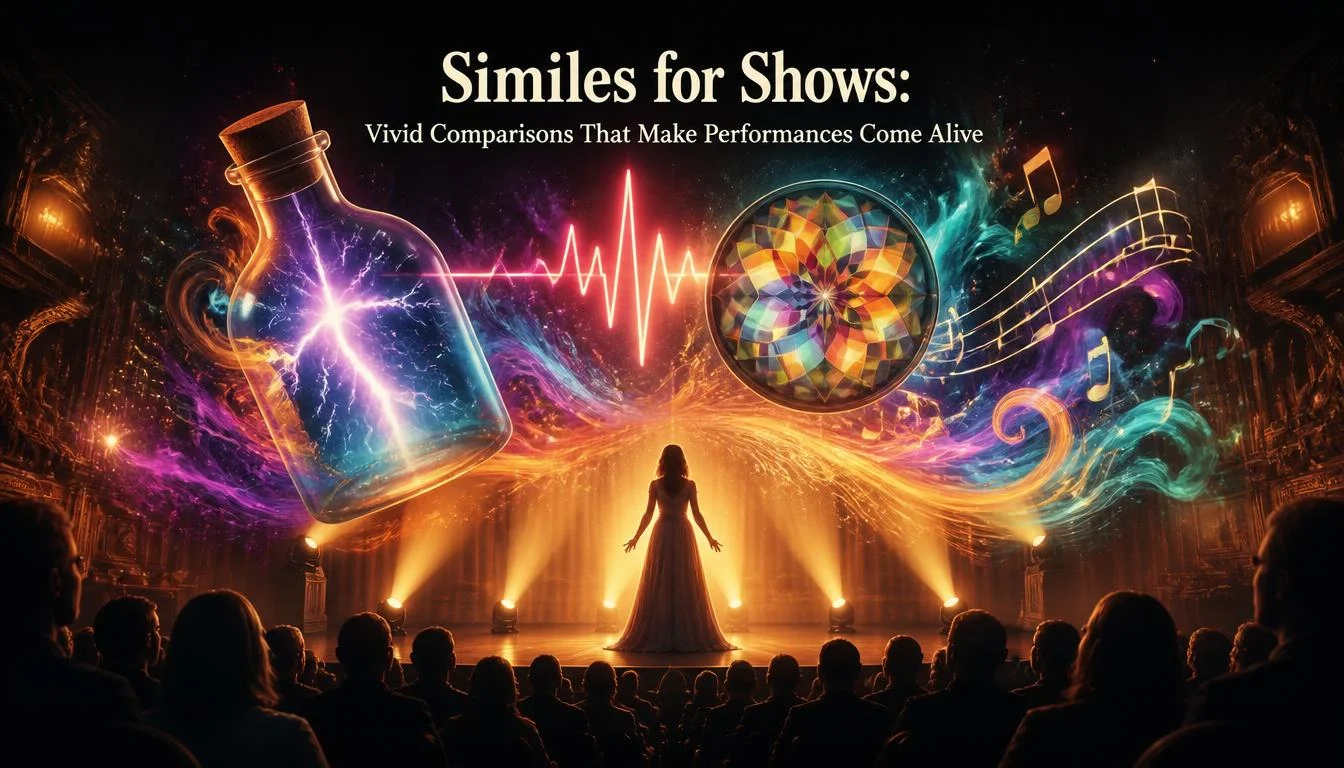
Quick Answer
Similes for shows compare a show to something familiar using “like” or “as,” making descriptions more vivid and expressive.
Examples include “as captivating as a magnet” and “like a window into another world.”
Similes for shows can make your writing more colorful by helping readers imagine the atmosphere, excitement, or emotional impact of a performance. Whether you are describing a TV show, stage performance, or live event, a well-chosen simile adds depth to your words.
Using similes for shows also helps you avoid repetitive descriptions and express your ideas creatively. From a thrilling performance to a slow and dramatic production, these comparisons can make your writing more engaging and memorable.
Similes for Shows That Bring Performances to Life
Great similes do more than decorate your writing. They create bridges between the familiar and the extraordinary, letting readers understand something new through something they already know. The following similes for shows cover a range of emotional tones and contexts from quiet intimacy to explosive energy.
1. Like lightning trapped in a bottle
Meaning: A performance so electric and contained it feels like it might explode at any moment.
Why It Works: This simile captures both the raw energy of a show and its controlled precision. The image of something powerful being held within glass suggests tension, brilliance, and the thrill of witnessing something dangerous yet beautiful.
Alternative Expression: Like a storm raging inside a theater
Formal Example: The lead actor’s monologue was like lightning trapped in a bottle controlled, devastating, and impossible to look away from.
Casual Example: That concert was like lightning trapped in a bottle. I’m still buzzing.
Creative Example: She sang, and the room held its breath, like lightning trapped in a bottle, waiting for the glass to shatter.
2. Like a heartbeat you can feel in your teeth
Meaning: A show with such intense rhythm or bass that it becomes physically overwhelming.
Why It Works: This comparison merges sound with physical sensation, capturing how the best concerts or performances don’t just entertain they invade your body. The unexpected placement of “teeth” makes the image stick.
Alternative Expression: Like bass notes vibrating through your bones
Formal Example: The percussion section pounded like a heartbeat you could feel in your teeth, grounding the entire performance in primal rhythm.
Casual Example: That DJ set was like a heartbeat in my teeth. My whole body was vibrating.
Creative Example: The drums spoke, and we listened with our ribs, like a heartbeat you can feel in your teeth.
3. Like watching a tightrope walker with no net
Meaning: A performance filled with tension because everything could fall apart at any moment.
Why It Works: This simile captures the exquisite vulnerability of live performance the sense that disaster lurks just beneath the surface of brilliance. It works especially well for improvisational theater, stand-up comedy, or any high-stakes live event.
Alternative Expression: Like watching someone defuse a bomb while dancing
Formal Example: Her improvised solo was like watching a tightrope walker with no net breathtaking precisely because failure was always possible.
Casual Example: That stand-up set was like a tightrope walker with no net. You could feel the danger.
Creative Example: He walked the stage like a tightrope with no net beneath him, and we loved him for the risk.
4. Like the first sip of coffee after a sleepless night
Meaning: A show that provides sudden, essential energy when you needed it most.
Why It Works: This comparison grounds the experience of watching something energizing in everyday bodily knowledge. It suggests relief, awakening, and the transformation from exhaustion to alertness.
Alternative Expression: Like a jolt of electricity straight to the heart
Formal Example: The opening number hit like the first sip of coffee after a sleepless night sudden, welcome, and impossible to ignore.
Casual Example: That episode was like my first coffee after an all-nighter. Instantly woke me up.
Creative Example: The lights came up, and the music poured in like morning coffee after a night of no sleep, bitter and beautiful and necessary.
5. Like a conversation you didn’t want to end
Meaning: A show so engaging and natural it feels intimate and personal.
Why It Works: This simile emphasizes connection over spectacle. It works particularly well for character-driven dramas, talk shows, or any performance that prioritizes human interaction over production value.
Alternative Expression: Like catching up with an old friend who really gets you
Formal Example: The dialogue flowed like a conversation you didn’t want to end, each exchange revealing new layers of character.
Casual Example: That series was like a conversation you never want to end.
Creative Example: Their scenes together felt like conversations you didn’t want to end, words passing between them like secrets shared in the dark.
6. Like a kaleidoscope turning in slow motion
Meaning: A visually stunning show with constantly shifting, beautiful imagery.
Why It Works: This simile captures both the visual splendor and the sense of constant transformation. The “slow motion” element adds a dreamlike quality, suggesting that the beauty is almost too much to process in real time.
Alternative Expression: Like watching colors learn to dance
Formal Example: The projection design shifted like a kaleidoscope turning in slow motion, each frame a complete composition.
Casual Example: The visuals in that show were like a kaleidoscope in slow motion. Absolutely stunning.
Creative Example: The stage transformed like a kaleidoscope turning in slow motion, and we sat there, dizzy with beauty.
7. Like a secret whispered in a crowded room
Meaning: A quiet, intimate moment within a larger, louder production.
Why It Works: This simile captures the power of contrast the way a small, still moment can feel more powerful than any spectacle. It’s particularly effective for describing quiet character moments in otherwise bombastic shows.
Alternative Expression: Like finding stillness in the middle of a storm
Formal Example: In the midst of the chaos, their duet arrived like a secret whispered in a crowded room, commanding attention through restraint.
Casual Example: That quiet scene in the finale was like a secret whispered in a crowded room. Everyone went silent.
Creative Example: She stepped forward, and her voice was like a secret whispered in a crowded room, pulling us all closer.
8. Like a roller coaster that only goes up
Meaning: A show that builds tension and excitement without pause or relief.
Why It Works: This comparison plays with the familiar metaphor of emotional ups and downs by removing the “downs.” It suggests an experience that’s thrilling but potentially exhausting, constantly escalating.
Alternative Expression: Like a rocket that forgot how to land
Formal Example: The final act escalated like a roller coaster that only goes up, each scene more intense than the last.
Casual Example: That thriller was like a roller coaster that only goes up. I couldn’t breathe by the end.
Creative Example: The story climbed like a roller coaster that only goes up, and we held on, terrified and thrilled.
9. Like watching fireworks through a rainy window
Meaning: Something beautiful but slightly distant or muted, beauty experienced through a barrier.
Why It Works: This simile adds melancholy to spectacle. It’s perfect for describing performances that feel emotionally remote, or moments of beauty tinged with sadness or separation.
Alternative Expression: Like hearing your favorite song through a wall
Formal Example: The finale felt like watching fireworks through a rainy window beautiful, but somehow unreachable.
Casual Example: That ending was like fireworks through a rainy window. Gorgeous, but I felt weirdly distant.
Creative Example: The last scene glowed like fireworks through a rainy window, and I cried without knowing why.
10. Like a house party where everyone knows the words
Meaning: A show with communal energy and shared enthusiasm among the audience.
Why It Works: This simile captures the specific joy of collective experience the way a crowd can transform a performance into something greater than the sum of its parts. It works best for concerts, cult classics, or any show with devoted fans.
Alternative Expression: Like a family reunion where everyone actually likes each other
Formal Example: The concert felt like a house party where everyone knows the words, strangers becoming friends through shared song.
Casual Example: That show was like a house party where everyone knows the words. Total vibes.
Creative Example: We sang together like a house party where everyone knows the words, our voices becoming something larger than ourselves.
11. Like the pause before a thunderclap
Meaning: A moment of tense silence that precedes something powerful.
Why It Works: This simile captures anticipation and the weight of imminent release. It’s especially useful for describing dramatic pauses, cliffhangers, or moments when a show holds its breath before delivering impact.
Alternative Expression: Like the world holding its breath
Formal Example: The silence before the final reveal hung like the pause before a thunderclap, electric with possibility.
Casual Example: That cliffhanger was like the pause before a thunderclap. I screamed.
Creative Example: The stage went dark, and we waited like the pause before a thunderclap, knowing something was coming.
12. Like a mirror held up to your own life
Meaning: A show that feels uncomfortably or beautifully reflective of your own experiences.
Why It Works: This simile speaks to the power of art to illuminate our own lives. It works particularly well for character-driven stories, dramas, or any performance that invites self-reflection.
Alternative Expression: Like reading your own diary performed on stage
Formal Example: The play functioned like a mirror held up to your own life, revealing truths you’d been avoiding.
Casual Example: That show was like a mirror to my own life. I felt seen in the weirdest way.
Creative Example: I watched myself on that stage, like a mirror held up to my own life, and I didn’t know whether to laugh or cry.
13. Like a warm bath after a long day
Meaning: A comforting, soothing show that provides emotional relief.
Why It Works: This simile emphasizes comfort and restoration. It works best for cozy shows, familiar favorites, or any performance that functions as self-care rather than stimulation.
Alternative Expression: Like a hug from someone who really means it
Formal Example: The series unfolded like a warm bath after a long day, each episode a gentle invitation to relax.
Casual Example: That show is like a warm bath after a long day. Pure comfort.
Creative Example: I sank into that show like a warm bath after a long day, letting the stories wash over me.
14. Like a puzzle where the picture keeps changing
Meaning: A complex, mysterious show that rewards careful attention and re-watching.
Why It Works: This simile captures intellectual engagement and the pleasure of discovery. It’s perfect for mystery series, mind-bending films, or any show that demands active viewership.
Alternative Expression: Like a maze where the walls move
Formal Example: The narrative functioned like a puzzle where the picture keeps changing, demanding that viewers reconsider everything they thought they knew.
Casual Example: That show is like a puzzle where the picture keeps changing. I’ve watched it three times.
Creative Example: The plot unfolded like a puzzle where the picture keeps changing, each piece revealing new questions.
15. Like a sneeze you can’t hold back
Meaning: A show with sudden, uncontrollable moments of emotion or laughter.
Why It Works: This simile is deliberately unglamorous, which makes it memorable. It captures the involuntary nature of genuine reaction the way a great comedy or tragedy catches you off guard.
Alternative Expression: Like laughing when you know you shouldn’t
Formal Example: The comedian’s timing was like a sneeze you can’t hold back sudden, uncontrollable, and deeply satisfying.
Casual Example: That punchline was like a sneeze I couldn’t hold back. I completely lost it.
Creative Example: The joke landed, and my laugh burst out like a sneeze you can’t hold back, embarrassing and real.
16. Like reading a letter written just for you
Meaning: A show that feels personally meaningful despite being created for a mass audience.
Why It Works: This simile captures the paradox of art that feels intimate even when shared by millions. It works well for describing moments of personal connection with a performance.
Alternative Expression: Like finding your name in a song you’ve heard a hundred times
Formal Example: The monologue felt like reading a letter written just for you, as if the writer had somehow accessed your private thoughts.
Casual Example: That song felt like a letter written just for me. How did they know?
Creative Example: I sat in the dark, hearing words like a letter written just for me, and wondered how strangers could know me so well.
17. Like watching a flower bloom in time-lapse
Meaning: A show that reveals beauty through gradual, patient development.
Why It Works: This simile emphasizes slow revelation and organic growth. It’s ideal for describing character development, long-form storytelling, or any show that rewards patience.
Alternative Expression: Like watching a seed become a tree
Formal Example: The character’s transformation unfolded like watching a flower bloom in time-lapse gradual, inevitable, and quietly breathtaking.
Casual Example: That character arc was like watching a flower bloom in time-lapse. So satisfying.
Creative Example: She grew through the seasons like a flower blooming in time-lapse, each episode a petal opening.
18. Like a joke that gets funnier every time you hear it
Meaning: A show with layers that reveal new humor or meaning on repeated viewing.
Why It Works: This simile captures the rare quality of art that improves with familiarity. It’s perfect for describing shows with dense writing, inside jokes, or running gags.
Alternative Expression: Like a song where you notice new instruments each listen
Formal Example: The comedy worked like a joke that gets funnier every time you hear it, each viewing revealing new layers of wit.
Casual Example: That show is like a joke that gets funnier every time. I catch new stuff on every rewatch.
Creative Example: I returned to that show like a joke that gets funnier every time, finding new reasons to laugh in old familiar scenes.
19. Like the smell of rain on hot pavement
Meaning: A show that evokes nostalgia or a specific, powerful sensory memory.
Why It Works: This simile relies on the Proustian power of scent to trigger memory. It’s particularly effective for describing shows that evoke a specific time, place, or feeling.
Alternative Expression: Like finding an old photo you forgot you had
Formal Example: The period drama felt like the smell of rain on hot pavement immediate, evocative, and impossibly nostalgic.
Casual Example: That show hit me like the smell of rain on hot pavement. Instant nostalgia.
Creative Example: The opening credits washed over me like the smell of rain on hot pavement, and suddenly I was sixteen again.
20. Like a tight hug from someone stronger than you
Meaning: A show that feels emotionally overwhelming in a safe, comforting way.
Why It Works: This simile combines intensity with safety. It captures the paradox of being emotionally moved by something that also feels protective.
Alternative Expression: Like crying in the arms of someone who understands
Formal Example: The finale embraced the audience like a tight hug from someone stronger than you overwhelming but deeply reassuring.
Casual Example: That ending was like a tight hug from someone stronger than me. I sobbed.
Creative Example: The final scene held me like a tight hug from someone stronger than me, and I let myself fall apart.
21. Like a magician who shows you the trick and still amazes you
Meaning: A show so skillfully made that even understanding how it works doesn’t diminish its impact.
Why It Works: This simile captures technical mastery and the pleasure of craft. It’s ideal for describing shows where you appreciate the artistry even as you’re moved by it.
Alternative Expression: Like a chef who tells you the recipe and it still tastes like magic
Formal Example: The direction worked like a magician who shows you the trick and still amazes you transparent yet inexplicably powerful.
Casual Example: That show is like a magician who shows you the trick and still amazes you. I see how it works and I’m still floored.
Creative Example: I knew every technique they used, and still the show unfolded like a magician showing his trick and still amazing me.
22. Like a song stuck in your head for days
Meaning: A show that lingers in your thoughts long after it ends.
Why It Works: This simile captures the persistence of certain artistic experiences. It’s perfect for describing shows that burrow into your consciousness and refuse to leave.
Alternative Expression: Like a word you can’t stop saying
Formal Example: The melody lingered like a song stuck in your head for days, resurfacing at odd moments long after the credits rolled.
Casual Example: That theme song is like a song stuck in my head for days. I can’t escape it.
Creative Example: The show stayed with me like a song stuck in my head for days, playing on repeat in the quiet moments.
23. Like watching someone dance who forgot the audience exists
Meaning: A performance so authentic and unselfconscious it feels completely genuine.
Why It Works: This simile emphasizes purity of expression and the absence of performance anxiety. It’s particularly effective for describing artists who seem to lose themselves in their craft.
Alternative Expression: Like overhearing someone sing when they think they’re alone
Formal Example: Her performance was like watching someone dance who forgot the audience exists raw, honest, and utterly captivating.
Casual Example: That performance was like watching someone dance who forgot we were there. So real.
Creative Example: He played like someone dancing who forgot the audience exists, lost in something private and beautiful.
24. Like a door opening into a room you didn’t know existed
Meaning: A show that reveals new possibilities or perspectives you hadn’t considered.
Why It Works: This simile captures discovery and expanded awareness. It works well for describing groundbreaking or innovative shows that change how you see things.
Alternative Expression: Like finding a path you never noticed before
Formal Example: The experimental production felt like a door opening into a room you didn’t know existed, revealing theatrical possibilities previously unimagined.
Casual Example: That show was like a door opening into a room I didn’t know existed. Changed how I see things.
Creative Example: The story opened like a door into a room I didn’t know existed, and I walked through, changed.
25. Like a campfire story told by someone who’s been there
Meaning: A show with authenticity and the weight of genuine experience behind it.
Why It Works: This simile emphasizes credibility and intimacy. It’s perfect for describing autobiographical work, documentary-style performances, or any show that feels rooted in real experience.
Alternative Expression: Like advice from someone who’s actually lived it
Formal Example: The solo performance unfolded like a campfire story told by someone who’s been there personal, gripping, and impossible to dismiss.
Casual Example: That show was like a campfire story from someone who’s been there. You could feel the truth in it.
Creative Example: She told her story like a campfire story told by someone who’s been there, and we gathered close, warmed by her truth.
How to Use Similes for Shows Naturally
Knowing a collection of similes is only half the battle. The real skill lies in deploying them effectively knowing when a comparison illuminates and when it distracts.
Match the Simile to Your Emotional Goal
Are you trying to convey excitement? Nostalgia? Unease? Awe? Each simile carries its own emotional temperature. “Like a heartbeat you can feel in your teeth” creates a very different response than “like a warm bath after a long day.” Before choosing a simile, ask yourself what you want your reader to feel.
Consider Your Context
A simile that works beautifully in a personal blog post might feel out of place in formal criticism. “Like a sneeze you can’t hold back” is perfect for casual writing but might undermine a serious academic analysis. Let your audience and purpose guide your choices.
Don’t Stack Similes
One vivid comparison is more powerful than three competing ones. If you describe a show as being “like lightning trapped in a bottle, like a heartbeat in your teeth, like a roller coaster that only goes up,” you’ve created confusion rather than clarity. Choose the strongest comparison and let it breathe.
Common Mistakes When Writing Similes
Even experienced writers stumble when crafting comparisons. Here are pitfalls to avoid.
The Cliché Trap
If you’ve heard a simile a hundred times, your readers have too. “Like watching paint dry” or “like a moth to a flame” have lost their power through overuse. Push yourself to find fresh comparisons that surprise and delight.
The Mixed Metaphor Problem
Similes that combine incompatible images create unintentional comedy. “The show was like a roller coaster that sank like a stone” leaves readers confused about what you’re actually describing. Keep your imagery consistent within each comparison.
The Over-Explanation
Trust your readers. If you write “the performance was like lightning trapped in a bottle,” you don’t need to add “because it was energetic and contained.” The simile does the work. Explanation often dilutes impact.
Similes vs. Metaphors: Knowing the Difference
Writers sometimes use these terms interchangeably, but they serve different purposes.
A simile uses “like” or “as” to make an explicit comparison: “The show was like a dream.” A metaphor makes an implicit comparison by stating that one thing is another: “The show was a dream.”
Similes tend to feel more conversational and accessible. They acknowledge the act of comparison, which can create a sense of the writer thinking alongside the reader. Metaphors feel more declarative and can carry greater emotional weight through their directness.
Neither is inherently better. The choice depends on your tone, context, and the effect you want to create. Sometimes a simile’s gentle “like” feels more appropriate; sometimes a metaphor’s bold assertion carries more power.
Tips for Creating Original Similes
The best similes for shows come from your own observations and experiences. Here’s how to generate comparisons that feel fresh and personal.
Draw from Unexpected Domains
The most memorable similes connect entertainment to seemingly unrelated experiences. Comparing a show to coffee, weather, physical sensations, or everyday objects creates unexpected resonance. The further apart the domains, the more surprising and often more effective the comparison.
Pay Attention to Physical Sensations
How does a great performance make your body feel? Do you get chills? Does your chest tighten? Does your foot tap without permission? These physical responses can become the foundation for powerful similes.
Test Your Similes Aloud
A simile that looks good on paper might stumble when spoken. Read your comparisons aloud. Do they flow naturally? Do they create the image you intended? Your ear often catches problems your eye misses.
FAQs
What is a simile for a show?
A simile for a show is a comparison using “like” or “as” that describes a performance, concert, or series through vivid imagery. For example, “The concert was like lightning trapped in a bottle” captures energy and intensity through an unexpected comparison.
How do I choose the right simile for describing a performance?
Match the simile’s emotional tone to what you want readers to feel. Energetic similes work for exciting shows, while softer comparisons suit intimate or nostalgic performances. Consider your audience and context before deciding.
Can I use multiple similes in one description?
Yes, but use them sparingly. One well-chosen simile creates clarity; three competing comparisons create confusion. Let each comparison breathe before introducing another.
What’s the difference between a simile and a metaphor for shows?
Similes use “like” or “as” to make explicit comparisons (“The show was like a dream”). Metaphors state one thing is another (“The show was a dream”). Similes feel more conversational; metaphors feel more declarative.
How can I create original similes instead of using clichés?
Draw from personal experiences and unexpected domains. Connect performances to physical sensations, everyday objects, or unrelated experiences. Test comparisons aloud to ensure they create the image you intended.
Conclusion
Similes for shows transform ordinary descriptions into experiences readers can feel in their bones. Whether you’re capturing the electric tension of live theater, the comforting embrace of a favorite series, or the overwhelming beauty of a concert, the right comparison bridges the gap between observation and emotion. Experiment with these similes, adapt them to your voice, and don’t be afraid to create your own. Your unique perspective the specific way a performance made you feel is what will make your writing unforgettable. Start comparing, start experimenting, and watch your descriptions come alive.