Quick Answer
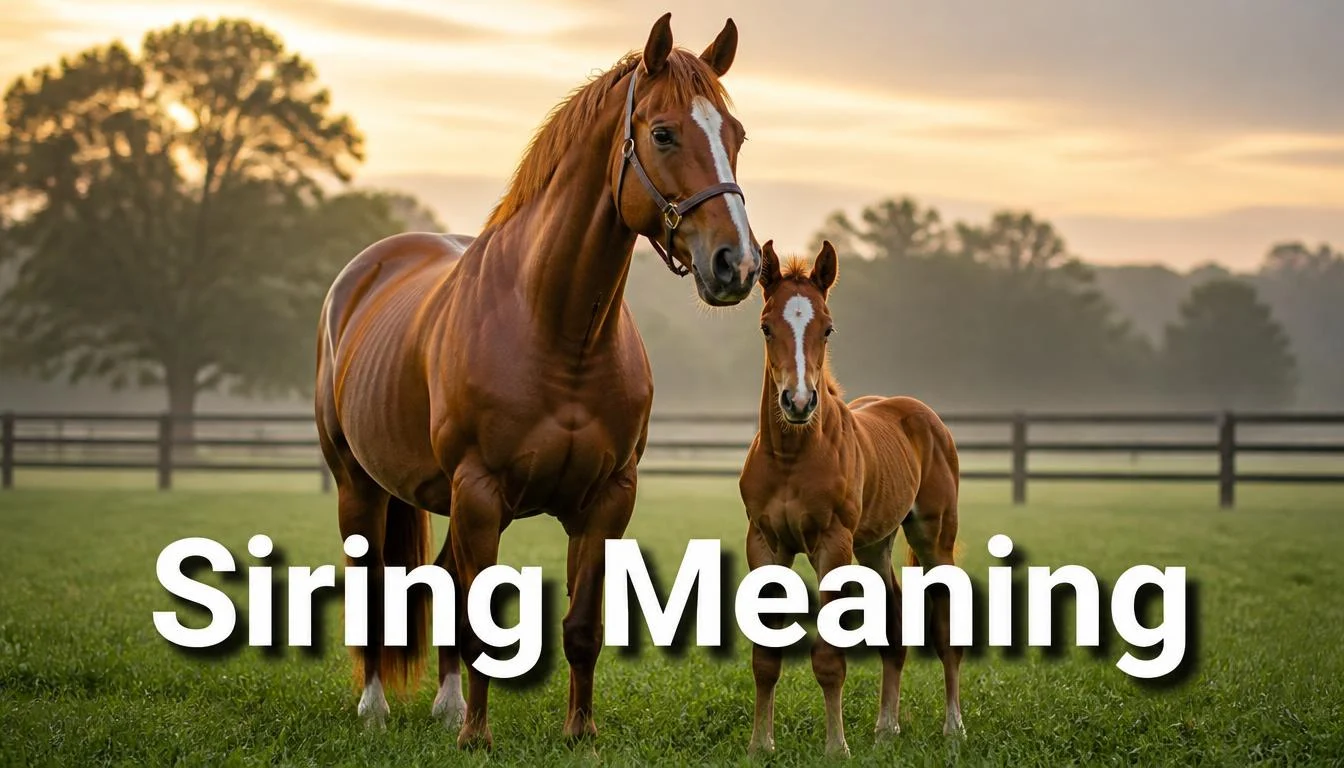
iring means fathering offspring. When a male animal sires young, he is the biological father whose sperm fertilized the egg. The word shows up most in animal breeding, especially with horses, cattle and dogs. The male parent is the sire, and the female parent is the dam.
The siring meaning is connected with the idea of becoming the biological father of offspring. The word is commonly used in discussions about animals, breeding and genetics. For example, a male horse may be described as having sired several foals. It focuses on the role of the male in producing offspring.
In everyday English, siring can also refer to a man fathering a child. However, the word often sounds formal or somewhat old fashioned in ordinary conversation. You are more likely to see it in books, historical writing, breeding records and discussions about family lineage.
What Siring Means
To sire is to be the male parent of an animal. It is a verb, so you can say a stallion sired a foal, a bull sired a calf or a dog sired a litter. The noun form, sire, names the father himself. A young horse might be described as “by” one sire and “out of” one dam, which is the standard shorthand in racing and breeding circles.
The word does not carry any judgment about care or involvement. A sire may never see his young after mating. In many species he does not stay around at all. Siring is only about biological contribution.
Where the Word Comes From
Sire entered English from Old French, and its roots go back to the Latin word senior, meaning older. That origin explains why the same word once addressed kings and lords. Respect for age and rank turned a title of authority into a word for a male parent, and animal breeders kept the second meaning alive.
Scientific Versus Everyday Usage
Biologists rarely say “siring” in a paper. They tend to write about paternity, male reproductive success or the number of offspring a male fathers. The word feels more at home in stables, kennels and farms.
In everyday speech, people use it loosely. A writer might say a famous stallion sired a dynasty of winners. A breeder might ask which bull sired a certain heifer. In both cases the meaning is the same, even though the tone shifts from scientific to practical.
Sire, Dam, Stud and Father Compared
These four words overlap, which causes plenty of confusion. The table below separates them.
| Term | Who or what it describes | Typical setting | Key difference |
|---|---|---|---|
| Sire | The male parent of an animal | Breeding records and pedigrees | Focuses on biological parentage |
| Dam | The female parent of an animal | Breeding records and pedigrees | The mother counterpart to the sire |
| Stud | A male animal kept for breeding | Horse farms and kennels | Describes a job or a place, not just parentage |
| Father | A male parent in general | Everyday language | Includes an emotional and social role |
The stud versus sire distinction trips up many readers. A stallion is a stud while he stands at a breeding farm and takes mares. He becomes the sire of a specific foal only after a mating produces one. So every sire has been a stud at some point, but a stud has not necessarily sired anything yet.
How Siring Looks Across Different Animals
Siring is not one process. It changes with the species, the environment and even the technology available to breeders.
Horses and the Thoroughbred Bloodline
Thoroughbred racing takes siring more seriously than almost any other field. Every Thoroughbred alive today traces its male line back to one of three foundation sires: the Byerley Turk, the Darley Arabian and the Godolphin Arabian. These horses lived in the late seventeenth and early eighteenth centuries in England.
The Jockey Club, which keeps the North American Thoroughbred registry, requires natural mating for registration. Artificial insemination is not allowed in this breed. That rule limits how many mares a single stallion can cover in a season, which keeps the pool of sires wider than it might otherwise be.
Cattle and Artificial Insemination
Dairy farming shows the opposite approach. Semen from a proven bull can be frozen and shipped worldwide, so one Holstein bull may sire many thousands of calves during and even after his lifetime. Farmers choose sires by looking at traits like milk yield and udder health in his daughters.
The result is faster genetic progress on the farm. It also means a small number of bulls have an outsized influence on the breed.
Wild Animals With Unusual Systems
Nature offers stranger examples. Male seahorses are famous because the female deposits her eggs into his brood pouch. He fertilizes them there and carries the developing embryos until they are born. He is the sire and also the one who gives birth, which makes seahorses a favorite trivia answer.
Northern elephant seals show a different pattern. Dominant bulls guard beaches full of females and father most of the pups born that season. Many younger males never mate at all. Male lions face another kind of pressure. When a new coalition takes over a pride, the incoming males often kill the existing cubs so that the females come into breeding condition sooner.
These cases prove that siring success is rarely fair or evenly shared. In many species a minority of males fathers the majority of young.
Why the Sire Shapes a Whole Population
This is where siring stops being a vocabulary question and becomes a genetics one. Each sire passes half of his genes to every offspring. When one male sires an enormous number of young, his genes spread quickly through the group.
That can be good. A sire with strong hips, disease resistance or high milk output can lift the quality of an entire herd in just a few generations. It can also be a problem. If too many animals descend from the same few sires, the population loses genetic variety. Relatives start mating with relatives, and harmful recessive traits show up more often. Breeders call this inbreeding, and the risk grows as the pool of sires shrinks.
Sires in Conservation Programs
Zoos and conservation groups face this problem in its sharpest form. Endangered species often exist as small populations where every male matters. Accredited zoos in North America run Species Survival Plans through the Association of Zoos and Aquariums. These plans rely on studbooks, which are records of who fathered and bore every animal in the program. Managers use them to pair animals so that no single sire dominates.
The IUCN Red List, run by the International Union for Conservation of Nature, tracks how threatened wild species are. Low genetic diversity is one of the concerns that conservation biologists weigh when they assess small populations. A species with few surviving males and few unrelated bloodlines has less room to recover.
The Balance Breeders Try to Strike
Good breeders try to hold two goals at once. They want the traits that a top sire provides. They also want to avoid narrowing the gene pool. Many programs limit how often a single male can be used. Others track how closely related the sire and dam are before approving a mating.
Reading a Pedigree Like a Breeder
For anyone buying a horse or a dog, the sire is usually the first name they look up. A pedigree chart lists the sire on the top line and the dam below, then repeats the pattern for grandparents. The American Kennel Club, for example, registers purebred dogs with the names of both sire and dam on the record.
A few habits help when you read one.
- Look for repeated names. A sire that appears on both sides of the chart signals line breeding or inbreeding.
- Check what the sire actually produced. A stallion with a famous name but few successful offspring is a weaker bet than a lesser known male whose young keep performing.
- Compare the sire’s strengths with the dam’s weaknesses. Breeders often choose a male who corrects a flaw in the female instead of copying it.
Racing fans add another layer. Lists of leading sires rank stallions by the earnings of their offspring each year. A horse who never won a major race himself can still top that list if his young do the winning.
Sire as a Human Word
People sometimes use the verb for humans, though it sounds formal or literary. A novel might say a character sired three sons. Genealogy writing uses it the same way, and a family historian might note that a man sired children with two different wives.
Then there is the title. “Sire” was a respectful address for a king in medieval and later literature. Someone might say “Yes, sire” to a monarch in a play or film. That usage has nothing to do with fatherhood in the biological sense, even though the two meanings share a root. Context tells you which one is in play.
FAQs
Can a female animal sire young?
No. Sire refers strictly to the male parent. The female parent is the dam. A few unusual species blur the roles of who carries the young, as with seahorses, but the male who fertilizes the eggs is still the sire.
Is a sire always a purebred animal?
Not at all. The word only tells you which male fathered the young. A sire can be purebred, a crossbreed or a wild animal. Registries do care about breed status, but the term itself does not.
How many offspring can one sire produce?
It depends on the method. A wild male might father a handful of young in a season. A dairy bull used for artificial insemination can sire many thousands over his lifetime. Rules in some breeds, like the Thoroughbred, cap the number by requiring natural mating.
Does a good sire guarantee good offspring?
No. Genes from the dam matter just as much. Environment, nutrition and training also shape how an animal turns out. A strong sire improves the odds but never removes the luck involved.
What does “sired by” mean on a pedigree?
It names the father of the animal on the record. You will often see it written as “by” the sire “out of” the dam. Reading those two names tells you the immediate parentage of that animal.
Do wildlife researchers use DNA to confirm a sire?
Yes. Paternity testing with DNA lets researchers confirm which male fathered which young. This has shown that observed mating does not always match actual fatherhood, since females in some species mate with several males.
Conclusion
Siring sounds like a small vocabulary word until you see how much it controls. It describes the simple fact of fatherhood but also explains how bloodlines form and how breeds improve. It shapes how zoos protect rare animals too. Whether you meet it in a stable, on a farm or in an old novel, the core idea stays the same: someone is the male parent, and his genes travel on.









