Quick Answer
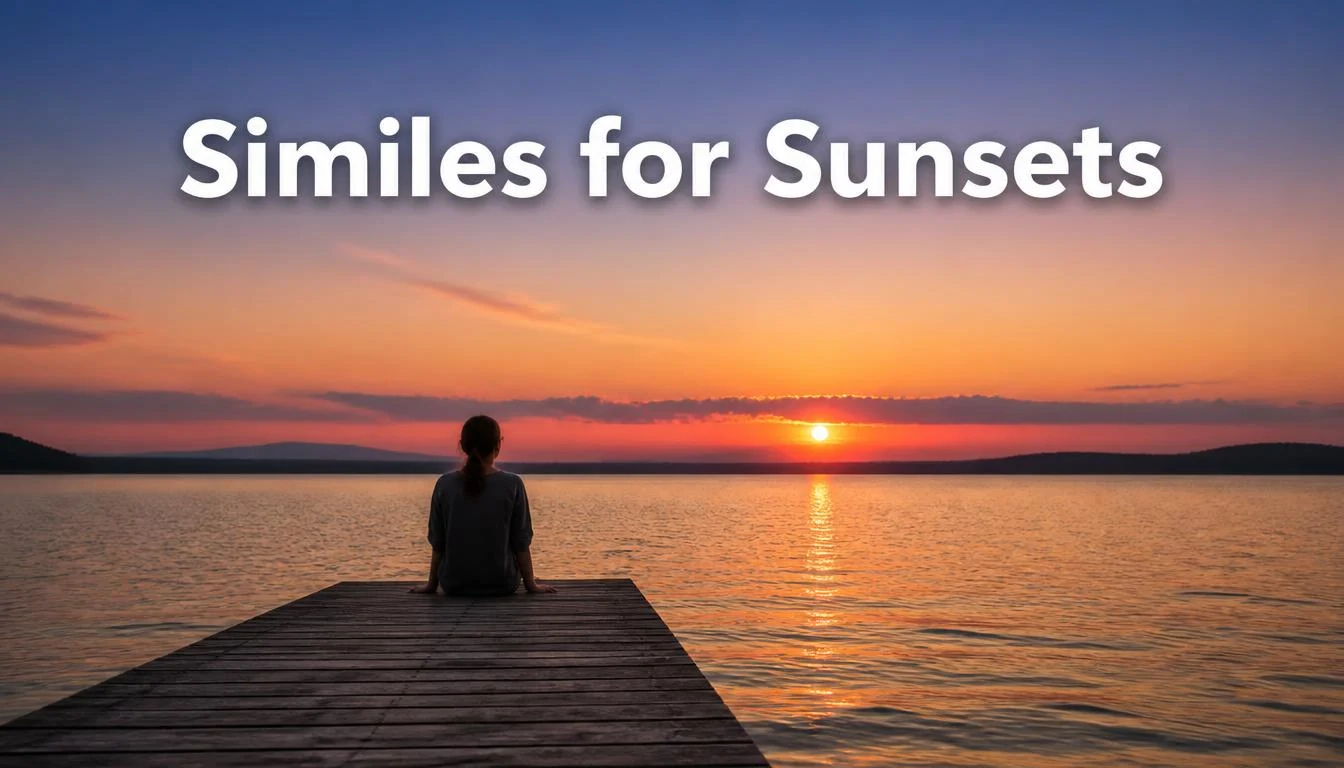
Similes for sunsets compare the evening sky to beautiful things, such as a sky on fire, a golden blanket, or a glowing ember. They help writers describe sunset colors, peaceful moods, and breathtaking scenery.
Similes for sunsets make descriptions more colorful, emotional, and memorable. By comparing a sunset to familiar objects, natural wonders, or beautiful moments, you can help readers imagine the sky’s glowing colors and peaceful atmosphere.
Whether you are writing a poem, creating a story, or completing a school assignment, sunset similes can bring your words to life. Comparisons such as “the sunset glowed like molten gold” or “the sky blushed like a shy bride” help capture the beauty, warmth, and magic of the setting sun.
Similes That Paint the Sky Before It Disappears
1. Like a bruised peach bleeding into the horizon
Meaning and why it works: The bruise suggests damage and sweetness at once a sunset that is beautiful but already past its peak. The verb “bleeding” gives the color motion, so the sky feels alive and slightly wounded.
Best for: Poetry and literary fiction; a tone of tender melancholy.
Swap-in: Like a peach left too long on the windowsill.
See it in action:
Formal: The evening sky hung over the valley like a bruised peach bleeding into the horizon, beautiful in a way that asked for silence.
Casual: Man, the sky looked like a bruised peach bleeding into the horizon we just stood there with our coffee getting cold.
2. As if the sky were a stained-glass window left out in the rain
Meaning and why it works: Stained glass implies deliberate art and sacred light, while “left out in the rain” adds neglect and softness. The comparison makes the sunset feel both crafted and abandoned, which is oddly moving.
Best for: Creative nonfiction and descriptive essays; a tone of quiet wonder.
Swap-in: As if a cathedral window had melted into the clouds.
See it in action:
Creative: The clouds thinned to a wet shimmer, as if the sky were a stained-glass window left out in the rain.
Formal: Observers described the afterglow as a stained-glass window left out in the rain, its colors softened by coming weather.
3. Like a match struck inside a jar of honey
Meaning and why it works: This one is about trapped light. The match is small and brief; the honey is thick and golden. Together they capture that low, syrupy glow that seems to come from inside the air rather than above it.
Best for: Poetry and captions; a tone of intimate surprise.
Swap-in: Like a candle flame viewed through amber glass.
See it in action:
Casual: The light went all weird and gold, like a match struck inside a jar of honey.
Creative: For ten minutes the whole street glowed like a match struck inside a jar of honey, and nobody wanted to go inside.
4. As though someone spilled a jar of marmalade across a blue tablecloth
Meaning and why it works: The image is domestic and imperfect, which keeps the sunset from feeling too grand. “Marmalade” brings texture and bitterness; “blue tablecloth” grounds the sky in something ordinary and human.
Best for: Blogging and personal essays; a tone of playful warmth.
Swap-in: As though a child had finger-painted the clouds with orange jam.
See it in action:
Formal: The western sky resembled a jar of marmalade spilled across a blue tablecloth, its edges uneven and its color stubborn.
Casual: The sunset looked like someone knocked over the marmalade jar on a blue tablecloth. Gorgeous, honestly.
Writer’s Note: A simile lands hardest when the vehicle the thing you compare to is more concrete than the tenor. “Bruised peach” works because we can feel the fuzz and see the bruise. If the comparison needs a second comparison to make sense, cut it and start again.
Similes for the Feeling of Dusk
5. Like the last warm hand withdrawing from yours
Meaning and why it works: This simile is about temperature and touch, not color. It captures the moment the heat leaves the day and the body notices the absence. The word “withdrawing” is gentle, not violent, which suits dusk’s slow goodbye.
Best for: Fiction and memoir; a tone of intimate loss.
Swap-in: Like a blanket being pulled away one inch at a time.
See it in action:
Creative: Dusk arrived like the last warm hand withdrawing from yours, leaving a cool palm and the smell of dust.
Formal: The transition felt like the last warm hand withdrawing from yours gradual, physical, and impossible to hold.
6. As gentle as a sigh you didn’t know you were holding
Meaning and why it works: The comparison is internal and physical. A sigh releases tension, and dusk often releases the day’s pressure. The phrase “didn’t know you were holding” adds self-recognition, which makes the simile feel personal.
Best for: Dialogue and poetry; a tone of relief.
Swap-in: As soft as a breath let go after bad news.
See it in action:
Casual: The whole evening felt as gentle as a sigh you didn’t know you were holding.
Creative: The light loosened, as gentle as a sigh you didn’t know you were holding, and the room got quieter.
7. Like a promise that doesn’t need words
Meaning and why it works: This one leans on trust rather than imagery. It works because sunsets are often shared in silence, and silence can feel like agreement. The simile gives the sky a relational quality without overexplaining.
Best for: Speeches and wedding readings; a tone of steady tenderness.
Swap-in: Like a nod from across a crowded room.
See it in action:
Formal: The horizon held its color like a promise that doesn’t need words, and the guests stopped talking without being asked.
Casual: The sky went all soft and pink, like a promise that doesn’t need words.
8. As melancholic as a song fading out before the final chorus
Meaning and why it works: The comparison borrows structure from music: expectation, delay, and release. “Fading out” implies something unresolved, which is exactly what a sunset often feels like an ending that refuses to land.
Best for: Music journalism and creative nonfiction; a tone of unresolved longing.
Swap-in: As bittersweet as a vinyl record skipping on the last track.
See it in action:
Creative: The dusk was as melancholic as a song fading out before the final chorus, leaving the room humming a tune it couldn’t finish.
Formal: The evening was described as melancholic as a song fading out before the final chorus beautiful, unresolved, and difficult to applaud.
Similes for the Vanishing Act
9. Like a coin sinking into dark water
Meaning and why it works: The image is small, heavy, and final. The coin catches light for a second, then disappears. That’s the sunset’s last trick: a bright thing swallowed by something darker and quieter.
Best for: Poetry and short fiction; a tone of clean finality.
Swap-in: Like a stone dropped down a well with no splash.
See it in action:
Casual: The sun dropped like a coin sinking into dark water one second it was there, the next it was gone.
Formal: The final sliver of light vanished like a coin sinking into dark water, leaving only a faint ripple of color.
10. As if the day were folding itself into a letter and sealing it
Meaning and why it works: This simile gives the sunset a purpose: closure. Folding and sealing are deliberate actions, and the letter implies something worth keeping. The comparison turns an atmospheric event into a small ceremony.
Best for: Essays and reflective blogging; a tone of orderly nostalgia.
Swap-in: As if the sky were closing a book it had been reading all afternoon.
See it in action:
Creative: The day folded itself into a letter and sealed it, the flap of cloud pressing down on the last light.
Formal: The horizon behaved as if the day were folding itself into a letter and sealing it, complete but not yet sent.
11. Like a curtain drawn by someone who loves the play too much to leave
Meaning and why it works: The simile introduces a person behind the action, which makes the fading light feel intentional and reluctant. “Loves the play too much to leave” adds emotional resistance the sunset isn’t just ending; it’s being ended by someone who wishes it weren’t.
Best for: Fiction and drama writing; a tone of theatrical wistfulness.
Swap-in: Like a stagehand who takes a final bow before the lights go down.
See it in action:
Formal: The dusk descended like a curtain drawn by someone who loves the play too much to leave, slow and unwilling.
Casual: The sky closed up like a curtain drawn by someone who loves the play too much to leave.
12. As quietly as a cat leaving a room it has grown bored of
Meaning and why it works: The cat is a master of unannounced exits. The simile captures the absence of drama in dusk no thunder, no fanfare, just a soft disappearance. “Grown bored of” adds a flicker of humor and character.
Best for: Dialogue and personal essays; a tone of wry affection.
Swap-in: As quietly as a guest who slips out during the toast.
See it in action:
Creative: The light left as quietly as a cat leaving a room it has grown bored of, and nobody noticed until the furniture went gray.
Casual: The sunset just sort of bailed, as quietly as a cat leaving a room it has grown bored of.
Writer’s Note: Don’t stack two similes in one sentence unless they’re doing different jobs. One can carry the visual, the other the emotional but if both are describing color, you’re probably repeating yourself. Pick the one that makes the reader feel the temperature change.
Similes for Heat, Texture, and Strange Beauty
13. Like a skillet left on the stove after the fire’s gone out
Meaning and why it works: The skillet retains heat even after the flame dies, which mirrors the way sunset warmth lingers in the air and on skin. The comparison is industrial and domestic at once, giving the sky a surprising physical weight.
Best for: Poetry and working-class fiction; a tone of grounded realism.
Swap-in: Like a radiator that’s still ticking after the heating clicks off.
See it in action:
Casual: The air felt like a skillet left on the stove after the fire’s gone out still warm, but you know it’s over.
Creative: The evening held its heat like a skillet left on the stove after the fire’s gone out, radiating a stubborn, fading warmth.
14. As sticky as the air after a storm that never arrived
Meaning and why it works: This simile is about anticipation and discomfort. The storm didn’t come, but the air is still thick. Sunsets often carry that same unresolved tension: something is happening, but nothing breaks.
Best for: Fiction and weather writing; a tone of uneasy beauty.
Swap-in: As heavy as a coat you forgot to take off indoors.
See it in action:
Formal: The atmosphere grew as sticky as the air after a storm that never arrived, beautiful and faintly oppressive.
Creative: The sky went pink and thick, as sticky as the air after a storm that never arrived.
15. Like the glow of a cigarette in a dark parking lot
Meaning and why it works: The image is small, solitary, and stubborn. A cigarette glow is brief and human; a sunset is vast and natural. Pairing them makes the sky feel intimate and slightly lonely, which is often how dusk actually feels.
Best for: Noir fiction and songwriting; a tone of solitary reflection.
Swap-in: Like a phone screen lighting up a face in a dark room.
See it in action:
Creative: The last light hung over the parking lot like the glow of a cigarette in the dark, small and refusing to go out.
Formal: The western sky burned like the glow of a cigarette in a dark parking lot concentrated, fragile, and out of place.
16. As if the clouds were made of crushed velvet and cherry juice
Meaning and why it works: This simile is unashamedly sensory. Velvet gives texture; cherry juice gives stain and sweetness. The combination makes the sky feel touchable and slightly excessive, which is exactly what a dramatic sunset is.
Best for: Captions and poetry; a tone of lush extravagance.
Swap-in: As if the sky had been upholstered in plum-colored silk.
See it in action:
Casual: The clouds looked like crushed velvet and cherry juice I wanted to reach up and touch them.
Formal: The upper clouds appeared as if made of crushed velvet and cherry juice, their texture richer than their color.
Similes for the Afterglow
17. Like the taste of salt on a wrist after swimming
Meaning and why it works: This simile is memory-based and physical. Salt on skin is a residue proof that something happened. The afterglow of a sunset is similar: a trace of light that stays after the source is gone.
Best for: Memoir and poetry; a tone of sensory nostalgia.
Swap-in: Like the smell of sunscreen on a towel left in the car.
See it in action:
Creative: The afterglow stayed on the horizon like the taste of salt on a wrist after swimming, faint and impossible to wash off.
Formal: The residual light lingered like the taste of salt on a wrist after swimming a physical memory rather than a visual one.
18. As if the horizon were a wound that heals in slow motion
Meaning and why it works: The image is uncomfortable but precise. A wound implies rupture, and healing implies time. The sunset’s reds and oranges can look like an injury to the sky, but the fading suggests repair. The simile gives beauty a cost.
Best for: Literary fiction and poetry; a tone of painful beauty.
Swap-in: As if the sky had been split and was quietly stitching itself shut.
See it in action:
Formal: The horizon reddened as if it were a wound that heals in slow motion, beautiful and difficult to watch.
Casual: The sky looked like a wound that heals in slow motion all red and gold and slowly closing up.
19. Like a photograph left too long in the sun
Meaning and why it works: The comparison is about fading and damage. A photograph in sunlight loses color, just as the sunset loses its intensity. The simile works because it makes the sky feel like an object with a history, not just a backdrop.
Best for: Essays and visual art writing; a tone of elegiac softness.
Swap-in: Like a postcard that’s been on the fridge for a decade.
See it in action:
Creative: The colors thinned like a photograph left too long in the sun, until the whole sky was a pale, expensive memory.
Formal: The afterglow faded like a photograph left too long in the sun, its edges softening before its center.
20. As tender as a bruise you keep pressing
Meaning and why it works: This simile is about voluntary pain the way people return to a feeling. A bruise is tender to the touch, and pressing it is both soothing and hurtful. Sunsets often invite that same contradictory impulse: to look at something that hurts because it’s ending.
Best for: Poetry and song lyrics; a tone of aching intimacy.
Swap-in: As sore as a muscle you can’t stop stretching.
See it in action:
Formal: The last light was as tender as a bruise you keep pressing, painful in a way that felt necessary.
Creative: The sky went soft and sore, as tender as a bruise you keep pressing, and I stood there pressing.
Writer’s Note: Test your simile by removing the word “like” or “as.” If the sentence still makes literal sense, the comparison probably isn’t doing enough work. A good simile should collapse into nonsense when you strip away the figurative frame that’s how you know it’s carrying meaning.
QUICK-REFERENCE TABLE
| Simile | Best Tone | Best Used In |
| Like a bruised peach bleeding into the horizon | Tender melancholy | Poetry, literary fiction |
| As if the sky were a stained-glass window left out in the rain | Quiet wonder | Creative nonfiction, essays |
| Like the last warm hand withdrawing from yours | Intimate loss | Memoir, fiction |
| As gentle as a sigh you didn’t know you were holding | Relief | Dialogue, poetry |
| Like a coin sinking into dark water | Clean finality | Short fiction, captions |
| As if the day were folding itself into a letter and sealing it | Orderly nostalgia | Reflective blogging, essays |
| Like a skillet left on the stove after the fire’s gone out | Grounded realism | Poetry, working-class fiction |
| As if the clouds were made of crushed velvet and cherry juice | Lush extravagance | Captions, poetry |
| Like the taste of salt on a wrist after swimming | Sensory nostalgia | Memoir, personal essays |
| As tender as a bruise you keep pressing | Aching intimacy | Song lyrics, poetry |
PRACTICAL WRITING GUIDE
How to Write Similes for Sunsets Without Sounding Like Everyone Else
The Four Traps That Make a Simile Fall Flat
Cliché. If the comparison arrives before the image does, it’s probably borrowed. “Red as fire” tells us nothing we haven’t heard. Fix it by asking what kind of fire a campfire, a house fire, a match in a jar?
- Weak: The sunset was as red as fire.
- Fixed: The sunset was like a match struck inside a jar of honey.
Mixed imagery. Two incompatible comparisons fight for the reader’s attention. “The sky was like a painting and also a curtain falling” makes the mind change channels mid-sentence. Choose one vehicle and commit.
- Weak: The sunset was like a curtain of fire and a painting of gold.
- Fixed: The sunset was like a curtain drawn by someone who loved the play too much to leave.
Overexplaining. A simile should not come with instructions. If you write “like a bruised peach, meaning it looked hurt and sweet and beautiful,” you’ve explained the joke. Trust the image.
- Weak: The sky was like a bruised peach, which is to say it looked beautiful but damaged.
- Fixed: The sky hung like a bruised peach bleeding into the horizon.
Mismatched tone. A comic simile in a funeral scene will pull readers out of the moment. Ask what emotion the scene needs before you reach for the image.
- Weak (in a grief scene): The sunset was like a pizza left in the oven too long.
- Fixed: The sunset was as tender as a bruise you keep pressing.
Simile vs. Metaphor, Without the Jargon
A simile says one thing is like another. A metaphor says one thing is another. That small grammatical shift changes the pressure.
Simile: The sunset was like a coin sinking into dark water.
Metaphor: The sunset was a coin sinking into dark water.
The simile keeps both things visible sunset and coin. The metaphor collapses them into one image. Use a simile when you want the reader to feel the comparison happening; use a metaphor when you want to be blunt and total.
A Four-Step Method for Original Similes
Step 1: Pick the feeling. Before you describe the sky, name the emotion you want the reader to carry. Is it relief, grief, anticipation, or delight?
Step 2: Find a concrete image. Leave the sky. Look at ordinary objects: kitchen tools, clothing, weather, sounds, textures. The best similes for sunsets often come from the ground, not the clouds.
Step 3: Test the fit. Say the comparison aloud. Does it create a small shock of recognition? If it feels obvious, push the image one step further.
Step 4: Trim the excess. Remove any explanation, adjective, or clause that tells the reader what to feel. Let the image do the work.
Worked example:
- Feeling: reluctant ending.
- Concrete image: a guest slipping out during a toast.
- Test: “The sunset left like a guest slipping out during a toast.” The fit is close, but “guest” is vague.
- Trim and sharpen: “As quietly as a cat leaving a room it has grown bored of.”
Quick Tips for Real Writing Situations
In dialogue, keep similes short and character-specific. A mechanic and a pastry chef will compare the same sunset to different things. Let the comparison reveal who is speaking.
In poetry, place the simile where the line breaks. A comparison that lands at the end of a line gets a moment of suspension before the reader moves on.
In blogging and captions, front-load the image. The first five words decide whether someone stops scrolling. “Like a bruised peach bleeding into the horizon” is a better opening than “The sunset was beautiful and looked like…”.
In essays, use one strong simile per paragraph, not three. A single comparison can organize a whole descriptive passage if you let it echo.
FAQs
What is a good simile for a sunset?
A good simile for a sunset is one that captures a specific feeling, not just a color. “Like a coin sinking into dark water” works because it gives the fading light weight and finality. The best choice depends on whether you want warmth, melancholy, surprise, or closure.
What are some fresh similes for sunsets?
Fresh similes for sunsets borrow images from ordinary life rather than classical clichés. Try “like a skillet left on the stove after the fire’s gone out” or “as tender as a bruise you keep pressing.” Both avoid the usual red-and-gold language and give the sky a physical, human texture.
How is a simile different from a metaphor?
A simile uses “like” or “as” to compare two things; a metaphor states that one thing is another. “The sunset was like a stained-glass window” is a simile. “The sunset was a stained-glass window” is a metaphor. The simile keeps both images visible; the metaphor fuses them.
How do I write my own simile for a sunset?
Start with the emotion you want to create, then find a concrete object that carries that emotion. Test the comparison aloud, and cut any explanation. For example, if the feeling is reluctant ending, compare the sunset to a guest who slips out during a toast then sharpen the image until it surprises you.
Can you give an example of a sunset simile in a sentence?
“The afterglow stayed on the horizon like the taste of salt on a wrist after swimming.” This sentence works because it uses a sensory memory salt, skin, residue rather than a visual cliché. It tells the reader how the light feels, not just what it looks like.
Is it okay to use similes for sunsets in school writing?
Yes, similes are a standard descriptive technique in school writing and are often taught as part of figurative language. The key is to avoid clichés and make sure the comparison fits the tone of the piece. One precise simile is stronger than three generic ones.
How many similes should I use in one paragraph?
One strong simile per paragraph is usually enough in essays and fiction. In poetry, you can use more, but each comparison should do a different job one for texture, one for emotion, one for movement. If two similes describe the same quality, cut one.
How do I avoid clichés when describing a sunset?
Avoid the first comparison that comes to mind, especially “red as fire” or “like a painting.” Look for images from your own environment: kitchen objects, weather, sounds, textures. A cliché is a comparison that has stopped making the reader see; a fresh simile makes the familiar strange again.
Why do poets use similes for sunsets?
Poets use similes for sunsets because direct description often feels inadequate for something so visual and transient. A comparison gives the reader a second image to hold alongside the first, which can carry emotion, memory, and texture that plain language cannot.
Can a simile be too creative or confusing?
Yes. If the comparison requires a second comparison to make sense, or if it pulls the reader out of the scene, it is too creative for its context. A good simile creates a small shock of recognition, not a puzzle. Test it on someone who hasn’t read the rest of the piece.
Conclusion
The sky will keep doing what it does bruising, bleeding, sinking, healing and writers will keep reaching for comparisons that make strangers feel the same dusk. The next time you open a notebook or a caption box, don’t settle for “beautiful.” Borrow a skillet, a coin, a bruised peach, and write one simile for sunsets that only you could have found. Then read it aloud. If it makes the room a little quieter, you’ve done your job.









