Quick Answer
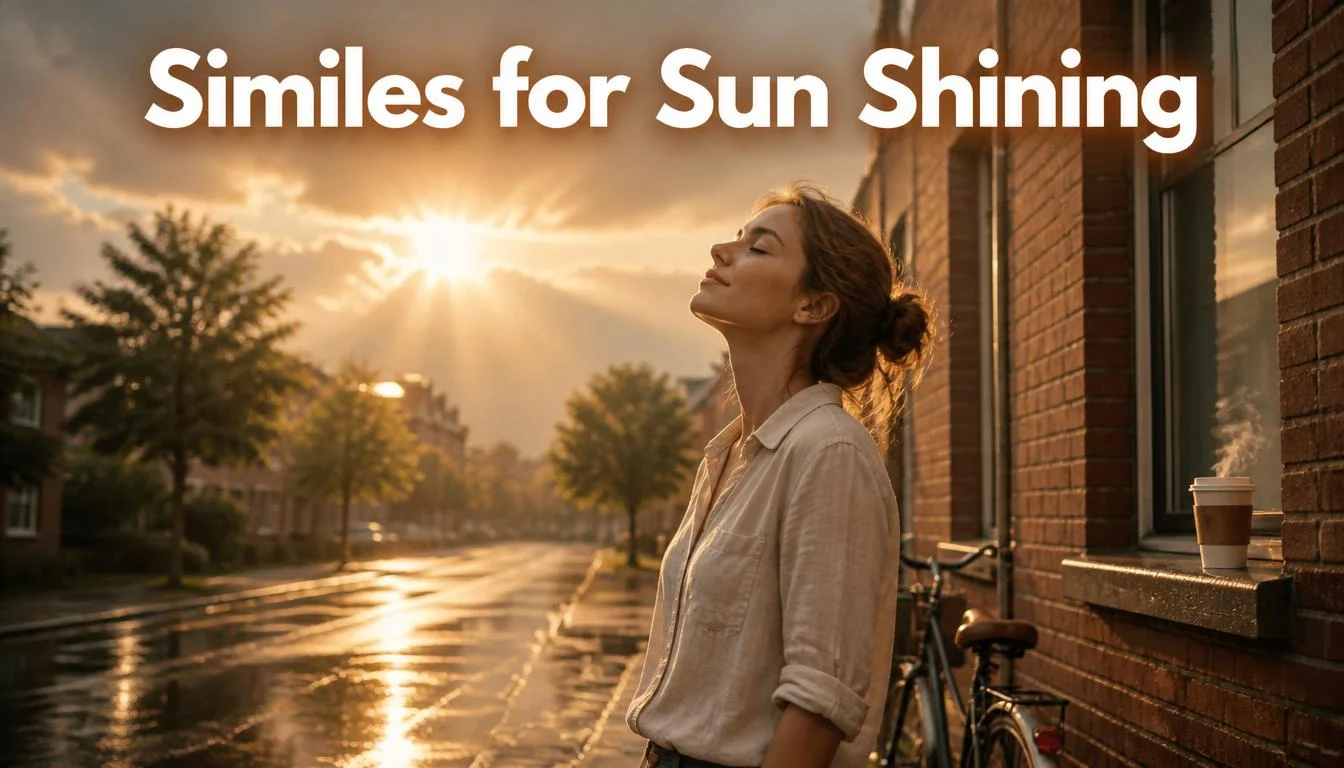
Similes for sun shining compare sunlight to familiar things, such as gold, fire, diamonds, and glowing lanterns. Examples include “the sun shone like gold” and “the sunlight sparkled like diamonds.”
Similes for sun shining make your writing more vivid by comparing the sun’s brightness, warmth, and beauty to familiar objects or experiences. Whether you are writing a poem, creating a story, or describing a beautiful morning, these comparisons help readers imagine the golden rays and sparkling light.
From “the sun shone like a golden crown” to “sunlight danced like glitter on the water,” the right simile can bring your descriptions to life. Students, poets, and creative writers can use these expressions to describe sunny days, glowing landscapes, and peaceful moments in nature with greater detail and imagination.
Similes That Make Warmth Feel Like a Physical Gift
Sunlight on skin is one of the oldest human pleasures. These comparisons turn temperature into tenderness.
1. As warm as a borrowed sweater on a cold morning
Meaning and why it works: The warmth here is not the sun’s heat but the unexpected comfort of being cared for. A borrowed sweater carries someone else’s scent and body heat, so the simile gives sunlight a relational, almost intimate quality. It works because the reader feels the wool before they see the light.
Best for: Fiction and personal essays, creating an intimate, nostalgic tone.
Swap-in: As warm as a mug pressed between cold palms.
See it in action:
Formal: The afternoon light fell across her shoulders, as warm as a borrowed sweater on a cold morning, and she stopped pretending she was not homesick.
Creative: Sun on the back porch warm as a borrowed sweater, and twice as hard to give back.
2. Like honey sliding off a spoon
Meaning and why it works: This simile captures viscosity and slowness. Sunlight that moves like honey is not harsh or sudden; it drapes, lingers, and catches on every surface. The sensory detail is both taste and texture, making the light feel edible and luxurious.
Best for: Poetry and descriptive passages, creating a slow, golden, sensual tone.
Swap-in: Like syrup warming in a glass jar.
See it in action:
Casual: The light through the blinds was like honey off a spoon slow, sticky, impossible to rush.
Formal: Morning arrived like honey sliding off a spoon, coating the courtyard in a slow, golden film.
3. As gentle as a hand on a fevered forehead
Meaning and why it works: Here the sun becomes a caregiver. The comparison borrows the tenderness of a hand checking for fever light, deliberate, concerned. It gives sunlight a healing presence rather than a blinding one, and the touch detail makes the warmth feel personal.
Best for: Memoir, illness narratives, and comfort scenes, creating a tender, protective tone.
Swap-in: As gentle as a mother’s palm against a sleeping child’s cheek.
See it in action:
Creative: The sun came through the hospital window, gentle as a hand on a fevered forehead, and for a moment nobody spoke.
Formal: April light rested on the garden, as gentle as a hand on a fevered forehead, asking nothing in return.
Writer’s Note: A simile about warmth lands best when the reader has already felt cold. Place it after a shadow, a silence, or a shiver.
When Light Breaks Through: Similes for Hope and Relief
Some sunlight arrives like news. These comparisons are for the moments when brightness feels like rescue.
4. Like a match struck in a dark room
Meaning and why it works: This is sunlight as sudden revelation. A match is small, but in total darkness it changes everything. The simile works because it captures contrast: the value of the light is measured against the dark that preceded it. It also carries a faint smell of sulfur and the sound of a strike.
Best for: Fiction, speeches, and inspirational writing, creating a dramatic, hopeful tone.
Swap-in: Like a phone flashlight clicking on in a power outage.
See it in action:
Formal: The news reached her like a match struck in a dark room, small and sudden, but enough to redraw the walls.
Creative: One sentence from him, and the whole week lit up a match in a dark room, sulfur and all.
5. As relief spreads like sunlight under a door
Meaning and why it works: This simile is about arrival without announcement. Light under a door is quiet, indirect, and impossible to ignore. It suggests hope that does not demand attention but changes the atmosphere of a closed space. The image is architectural and intimate.
Best for: Essays and short fiction, creating a quiet, contemplative tone.
Swap-in: Like dawn leaking through a curtain gap.
See it in action:
Casual: The good news slid under the door like sunlight no knock, no drama, just everything looking different.
Creative: Relief did not burst in. It spread like sunlight under a door, patient and certain, until the whole room forgot it had been dark.
6. Like the first warm day after a long winter
Meaning and why it works: This comparison works through collective memory. Almost everyone knows the specific relief of stepping outside without a coat for the first time in months. The sun becomes a seasonal promise, and the simile carries the weight of endurance rewarded.
Best for: Blogging, personal essays, and speeches, creating a communal, uplifting tone.
Swap-in: Like the first day you can leave the windows open.
See it in action:
Creative: Her apology landed like the first warm day after a long winter nobody cheered, but everybody unbuttoned their coat.
Formal: The verdict arrived like the first warm day after a long winter, and the city exhaled in a way it had not exhaled in years.
Writer’s Note: Hope similes are strongest when you name what was lost or endured first. Light means little without a shadow behind it.
Similes for Sunlight That Feels Too Bright to Bear
Not all sunshine is welcome. These comparisons are for glare, exposure, and the vulnerability of being seen.
7. As relentless as a spotlight on an empty stage
Meaning and why it works: This simile turns sunlight into scrutiny. A spotlight on an empty stage is wasted, exposed, and a little absurd there is nowhere to hide and nothing to justify the attention. It gives bright light an uncomfortable, theatrical edge.
Best for: Fiction and poetry, creating an exposed, uneasy tone.
Swap-in: As unforgiving as a fluorescent tube in a motel bathroom.
See it in action:
Formal: The noon sun hung over the parking lot, as relentless as a spotlight on an empty stage, and she felt every flaw in her posture.
Creative: August light a spotlight on an empty stage. Even the pigeons looked embarrassed.
8. Like a camera flash that never stops
Meaning and why it works: This comparison emphasizes duration and intrusion. A camera flash is tolerable because it ends. Sunlight that behaves like a never-ending flash is aggressive, bleaching, and impossible to adjust to. The simile captures the feeling of being photographed without consent.
Best for: Creative nonfiction and fiction, creating a tense, overexposed tone.
Swap-in: Like a interrogation lamp with no off switch.
See it in action:
Casual: The beach at noon was like a camera flash that never stops beautiful for ten seconds, then just blinding.
Creative: He opened the curtains and the room became a camera flash that never stops. She closed her eyes and still saw white.
9. As sharp as a blade of light through a keyhole
Meaning and why it works: Here the sun is narrow, precise, and almost threatening. A blade of light through a keyhole is focused and intentional, suggesting surveillance or revelation. The simile works because it makes brightness feel like an edge rather than a glow.
Best for: Thrillers, poetry, and dramatic fiction, creating a tense, cinematic tone.
Swap-in: As precise as a laser through smoke.
See it in action:
Formal: A single ray crossed the dark hallway, as sharp as a blade of light through a keyhole, and fell on the letter she had hidden.
Creative: Morning found the crack in the blinds and used it sharp as a blade through a keyhole, aimed straight at my face.
Writer’s Note: If your sunlight simile feels flat, ask what the light is doing. Is it comforting, exposing, interrupting, or accusing? The verb behind the comparison gives it a job.
Sunlight in Motion: Comparisons for Glancing, Glancing, and Glancing
Sunlight is never still. These similes catch it moving across water, walls, and skin.
10. Like a coin spinning on a table
Meaning and why it works: This simile captures flicker and transience. A spinning coin throws light in changing directions, never settling. Sunlight on water or a moving car does the same bright one second, gone the next. The image is kinetic and slightly restless.
Best for: Poetry and descriptive fiction, creating a shimmering, unstable tone.
Swap-in: Like foil crinkling under a kitchen light.
See it in action:
Creative: The lake threw sunlight back at us like a coin spinning on a table here, there, gone, back.
Formal: Reflections danced across the ceiling, like a coin spinning on a table, refusing to land.
11. As liquid as gold poured into a mold
Meaning and why it works: This comparison emphasizes shape and weight. Sunlight that pours like molten gold fills the spaces it enters doorways, cupped hands, the hollow of a collarbone. The simile gives light a physical body and a sense of craftsmanship.
Best for: Literary fiction and poetry, creating a rich, artisanal tone.
Swap-in: As fluid as warm wax running down a candle.
See it in action:
Formal: Evening light filled the empty bowls on the table, as liquid as gold poured into a mold, and the whole kitchen became an altar.
Creative: Sun through the car window, liquid gold poured into the shape of my lap. I did not move for miles.
12. Like a curtain pulled back an inch at a time
Meaning and why it works: This simile is about gradual revelation. Sunlight that advances like a slowly opened curtain gives the sense of something deliberate being revealed a face, a truth, a room. It works because it combines light with the sound and motion of fabric.
Best for: Fiction, memoir, and stage writing, creating a suspenseful, theatrical tone.
Swap-in: Like a page turning in a bright book.
See it in action:
Creative: Dawn came like a curtain pulled back an inch at a time, first the floor, then the chair, then the sleeping dog’s ear.
Formal: Light entered the gallery like a curtain pulled back an inch at a time, revealing each painting as if for the first time.
13. As restless as light on a moving train
Meaning and why it works: This comparison is pure motion. Light on a moving train slides, jerks, and flickers across faces and seats. It captures sunlight that will not stay put the kind that makes a moment feel transient. The sensory detail is visual rhythm.
Best for: Travel writing and fiction, creating a transient, cinematic tone.
Swap-in: As jumpy as a reflection in a rearview mirror.
See it in action:
Casual: The afternoon was restless as light on a moving train every time I tried to read, it slid across the page.
Creative: Sun on the bus seats, restless as light on a moving train, kept touching the stranger’s hands and apologizing.
Similes for Sunlight That Feels Like a Promise
Some sun is not just warm it is a signal. These comparisons are for light that says keep going.
14. Like a letter you were not expecting
Meaning and why it works: This simile gives sunlight the quality of good news. An unexpected letter carries surprise, intimacy, and the weight of someone’s attention. Sunlight that arrives like a letter feels personal, as if the day chose you specifically.
Best for: Personal essays and blogging, creating a warm, serendipitous tone.
Swap-in: Like a text from someone you missed.
See it in action:
Formal: The morning light lay across her desk like a letter she was not expecting, and she read it slowly, line by golden line.
Creative: Sun through the café window a letter I was not expecting, addressed to nobody, still somehow for me.
15. As steady as a lighthouse in fog
Meaning and why it works: This simile borrows reliability from the sea. A lighthouse in fog is not bright enough to illuminate everything, but it is constant enough to guide. Sunlight that behaves this way is not dramatic; it is dependable. The image adds salt, distance, and the sound of waves.
Best for: Speeches, essays, and fiction, creating a reassuring, maritime tone.
Swap-in: As steady as a porch light left on for someone.
See it in action:
Formal: Her optimism held through the crisis, as steady as a lighthouse in fog, asking no one to applaud.
Creative: He was not a bonfire. He was a lighthouse in fog steady, patient, and impossible to lose.
16. Like the glow of a phone screen in a dark theater
Meaning and why it works: This is a contemporary simile for small, intimate light. A phone screen in a dark theater is private, focused, and slightly illicit. Sunlight compared to it feels personal and close, as if the warmth is meant only for you. The image is modern without being trendy.
Best for: Contemporary fiction, blogging, and captions, creating an intimate, slightly secretive tone.
Swap-in: Like the ember of a cigarette in a dark alley.
See it in action:
Casual: The last of the sun on my face was like a phone screen in a dark theater small, private, and gone too soon.
Creative: Evening light found the kitchen window and held on, a phone screen in a dark theater, until the room gave up and turned on the lamps.
Writer’s Note: The best sun similes often borrow from small, ordinary light sources matches, phone screens, porch bulbs. Grand comparisons can overwhelm; small ones illuminate.
Similes for Sunlight That Stings, Bleaches, and Reveals
Bright light is not always kind. These comparisons are for glare, heat, and the ache of being seen clearly.
17. As bleaching as a laundromat in August
Meaning and why it works: This simile is about erasure. A laundromat in August is hot, bright, and chemically clean a place where color fades. Sunlight that bleaches does not warm; it removes. The comparison gives bright light a sterile, exhausting quality.
Best for: Fiction and creative nonfiction, creating a washed-out, weary tone.
Swap-in: As draining as a parking lot at noon.
See it in action:
Formal: The afternoon was as bleaching as a laundromat in August, and the garden seemed to lose its color by the hour.
Creative: July sun, a laundromat in August my curtains went from red to pink to a rumor of pink.
18. Like a spotlight on a cracked wall
Meaning and why it works: This simile is about unwanted revelation. A spotlight on a cracked wall does not create the crack; it simply makes it impossible to ignore. Sunlight that behaves this way exposes what was hidden and offers no mercy. The image is architectural and honest.
Best for: Memoir, poetry, and literary fiction, creating a raw, unflinching tone.
Swap-in: Like a magnifying glass on a dry leaf.
See it in action:
Creative: Morning light came through the window like a spotlight on a cracked wall, and every fault line in the plaster was suddenly a map of the argument.
Formal: The sun crossed the courtroom floor like a spotlight on a cracked wall, and the witness began to speak more carefully.
19. As heavy as a wool coat in July
Meaning and why it works: This comparison turns heat into weight. A wool coat in July is oppressive, absurd, and inescapable. Sunlight that feels heavy is not nourishing; it presses. The simile works because it gives warmth a physical burden, and the reader feels the fabric before the temperature.
Best for: Fiction and poetry, creating an oppressive, suffocating tone.
Swap-in: As thick as a blanket over a fever.
See it in action:
Casual: The sun at noon was heavy as a wool coat in July everyone walked slower and nobody knew why.
Creative: Heat came off the pavement like a wool coat in July, and the city wore it without complaint.
20–21. Two Similes for the Quiet After Sunlight
20. Like the warmth left in a chair after someone stands up
Meaning and why it works: This simile is about residue. The sun has moved on, but its warmth remains in the wood, the fabric, the stone. It captures absence and memory in a single physical detail. The image is intimate and slightly melancholy, and the reader feels the chair before they understand the loss.
Best for: Memoir, poetry, and closing lines, creating a tender, elegiac tone.
Swap-in: Like the indent of a head on a pillow.
See it in action:
Formal: The evening was warm with a warmth that was not quite sunlight, like the warmth left in a chair after someone stands up.
Creative: After she left, the porch held her shape a chair still warm, sunlight with nowhere to go.
21. As faint as a remembered smell of citrus
Meaning and why it works: This is the most delicate simile in the collection. It describes sunlight that is almost gone a trace, a suggestion. A remembered smell of citrus carries the sharpness of the original without its presence. The comparison makes fading light feel like memory itself.
Best for: Poetry and literary fiction, creating a faint, nostalgic tone.
Swap-in: As faint as the last note of a song through a wall.
See it in action:
Creative: The last light on the windowsill was faint as a remembered smell of citrus there, not there, gone.
Formal: What remained of the afternoon was as faint as a remembered smell of citrus, and she did not turn on the lamp.
Quick-Reference Table: The Strongest Similes for Sun Shining
| Simile | Best Tone | Best Used In |
| As warm as a borrowed sweater on a cold morning | Intimate, nostalgic | Fiction, personal essays |
| Like honey sliding off a spoon | Slow, golden, sensual | Poetry, descriptive passages |
| Like a match struck in a dark room | Dramatic, hopeful | Speeches, fiction |
| As relief spreads like sunlight under a door | Quiet, contemplative | Essays, short fiction |
| Like the first warm day after a long winter | Communal, uplifting | Blogging, speeches |
| As relentless as a spotlight on an empty stage | Exposed, uneasy | Fiction, poetry |
| As sharp as a blade of light through a keyhole | Tense, cinematic | Thrillers, dramatic fiction |
| As steady as a lighthouse in fog | Reassuring, maritime | Speeches, essays |
| Like a phone screen in a dark theater | Intimate, secretive | Contemporary fiction, captions |
| Like the warmth left in a chair after someone stands up | Tender, elegiac | Memoir, closing lines |
How to Write Sun Similes That Actually Work
The Four Traps That Make Bright Comparisons Fall Flat
Trap 1: The cliché that arrives before the reader does. “As bright as the sun” is not a simile; it is a reflex. It tells the reader nothing they did not already know. Weak: Her smile was as bright as the sun. Fixed: Her smile was as bright as a kitchen light left on for someone who never came home.
Trap 2: Mixed imagery that fights itself. A simile should hold one clear image. If you compare sunlight to both a blade and a blanket in the same sentence, the reader’s mind cannot settle. Weak: The sun was like a warm knife and a soft blanket. Fixed: The sun was like a warm blade laid flat against the window.
Trap 3: Overexplaining the comparison. If you have to tell the reader why the simile works, it does not work. Trust the image. Weak: The sunlight was like honey, meaning it was slow and golden and sweet and thick. Fixed: The sunlight moved like honey.
Trap 4: Mismatched tone. A comic simile in a tragic scene pulls the reader out of the moment. Match the comparison to the emotional register. Weak (in a funeral scene): The sun was like a disco ball. Fixed (in a funeral scene): The sun was like a hand on a shoulder nobody wanted to move.
Simile vs. Metaphor in Plain Language
A simile says something is like something else. A metaphor says it is that thing. The difference is a small word and a large effect: similes keep one foot in reality, metaphors jump all the way in.
Simile: The morning sun was like a coin spinning on a table.
Metaphor: The morning sun was a coin spinning on a table.
The simile lets the reader watch the comparison happen. The metaphor asks the reader to accept it as fact.
A Four-Step Method for Original Sun Similes
Step 1: Name the feeling, not the light. Before you describe the sun, decide what it is doing emotionally. Is it comforting, exposing, interrupting, or fading? Feeling: comfort after a hard week.
Step 2: Find a concrete image from ordinary life. Do not reach for grand objects. Reach for a borrowed sweater, a warm chair, a porch light. Image: a mug pressed between cold palms.
Step 3: Test the fit. Say the simile aloud. Does it hold one image? Does it add something the plain word “sunlight” cannot? Test: “The sun was like a mug pressed between cold palms.” It holds, and it adds tenderness.
Step 4: Trim the excess. Remove any explanation, any second image, any adverb doing the work of the comparison. Final: The morning sun was like a mug pressed between cold palms.
Quick Tips for Using Sun Similes in Different Forms
- Dialogue: Keep similes short and character-specific. A farmer and a physicist will compare sunlight to very different things.
- Poetry: Let the simile be the whole line. Do not bury it in a paragraph. Give it white space.
- Blogging: Use one strong sun simile per section, not per sentence. Let it anchor the paragraph.
- Essays: Place the simile at the turn of an argument where the abstract idea needs a concrete image to land.
- Captions: One simile, one image, no explanation. “Sunlight like a borrowed sweater” is enough.
FAQs
What is a good simile for sun shining?
A good simile for sun shining is one that adds emotion or sensory detail rather than restating brightness. “As warm as a borrowed sweater on a cold morning” works because it makes sunlight feel personal and comforting. “Like a match struck in a dark room” works because it captures sudden hope. The best choice depends on the tone of your piece.
What is the difference between a simile and a metaphor?
A simile compares two things using “like” or “as,” while a metaphor states that one thing is another. “The sun was like honey sliding off a spoon” is a simile. “The sun was honey sliding off a spoon” is a metaphor. Similes keep a small distance between the comparison and reality; metaphors close that gap completely.
How do you write a simile for sun shining?
Start with the feeling you want the sunlight to create comfort, exposure, hope, or fatigue. Then choose a concrete image from ordinary life that carries that feeling, such as a warm chair, a phone screen, or a lighthouse. Test the comparison aloud, and remove any explanation that tells the reader why it works.
Can you give an example of a sun shining simile in a sentence?
“The afternoon light fell across her shoulders, as warm as a borrowed sweater on a cold morning.” This sentence uses a simile for sun shining to create intimacy and nostalgia. Another example: “The lake threw sunlight back at us like a coin spinning on a table.”
How many similes should you use in a piece of writing?
Use similes sparingly one or two per page in prose, or one per stanza in poetry. Too many comparisons compete for attention and make the writing feel decorative. The strongest approach is to place a simile where the writing needs a concrete image, not where it simply needs more words.
How do you avoid clichés when writing about sunlight?
Avoid any comparison you have heard before, such as “bright as the sun” or “like a ray of sunshine.” Instead, borrow from specific, small, ordinary light sources: a phone screen, a porch bulb, a match, a warm chair. The more specific the image, the less likely it is to feel borrowed.
Are similes for sun shining useful in school writing?
Yes. Similes for sun shining help students practice sensory detail, emotional precision, and the difference between telling and showing. A student who can write “the sun was like a spotlight on an empty stage” understands how to use figurative language to create tone, not just decoration.
What is a simile for sunlight that feels hopeful?
“Like a match struck in a dark room” is a strong hopeful simile because it captures sudden, small light that changes everything. “Like sunlight under a door” is quieter and suggests relief arriving without announcement. Both work because they name what the light is doing, not just how it looks.
Can similes for sun shining be used in poetry and storytelling?
Absolutely. In poetry, a sun simile can carry an entire stanza’s emotional weight. In storytelling, it can establish mood in a single line exposure, comfort, or dread. The key is to choose a comparison that belongs to the character’s world, not the writer’s vocabulary.
What is a simile for sunlight that feels too bright or harsh?
“As relentless as a spotlight on an empty stage” captures harsh, exposing light. “As bleaching as a laundromat in August” captures light that drains color and energy. Both similes work because they compare sunlight to something uncomfortable and specific, not just something bright.
Conclusion
Sunlight is never just light it is comfort, exposure, hope, and memory wearing the same golden coat. The right similes for sun shining turn that coat into something a reader can feel on their skin and carry into their own day. Collect them like small windows, swap them when the tone shifts, and never settle for “bright as the sun” when a borrowed sweater or a lighthouse in fog is waiting. Write one fresh sun simile today then notice how the room changes around it.









