Quick Answer
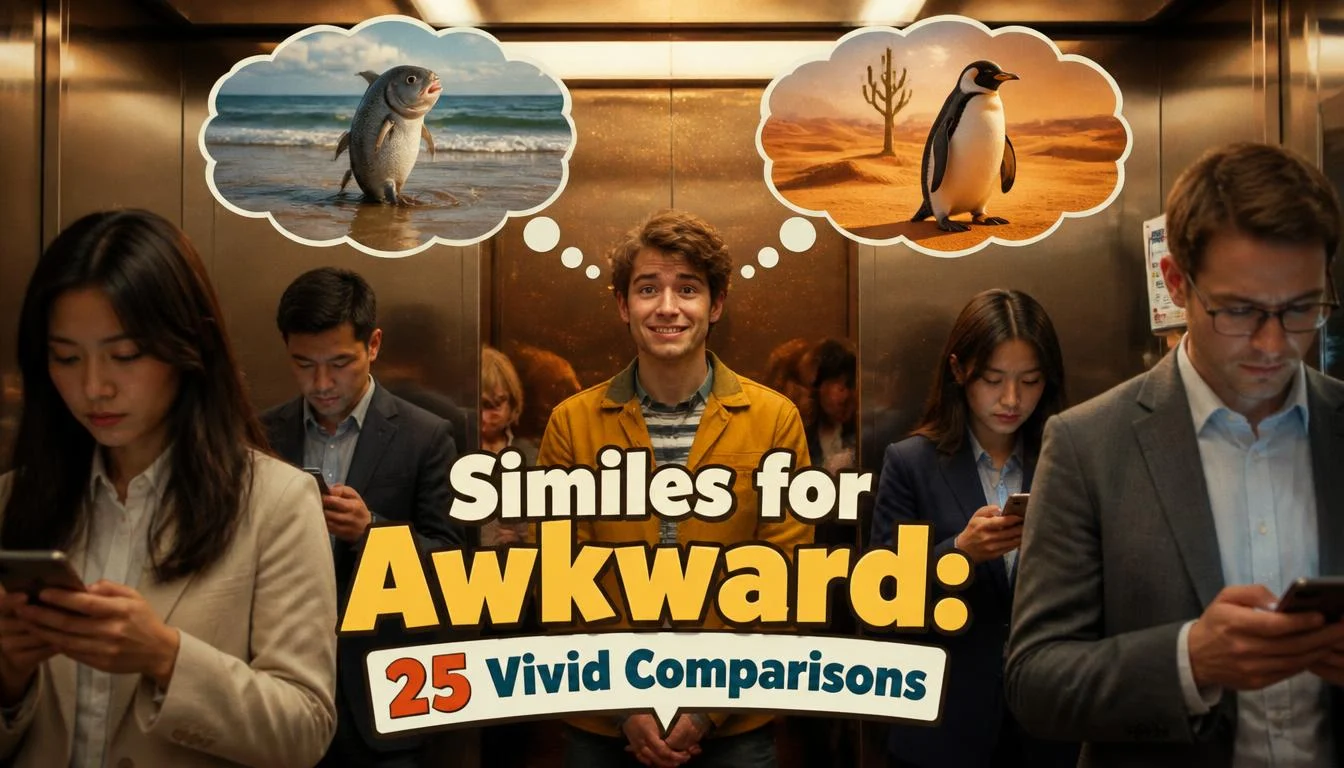
Similes for awkward include as awkward as a giraffe on roller skates, like a fish out of water, as uncomfortable as sitting on a cactus, and like a bull in a china shop.
Similes for Awkward are a creative way to describe uncomfortable moments, embarrassing situations, and socially clumsy behavior. By comparing awkward experiences to familiar things, similes make your writing more vivid, relatable, and engaging.
Whether you’re writing a story, crafting a poem, or improving your everyday English, similes for awkward can help you express feelings of discomfort, nervousness, and embarrassment in a memorable way. From funny comparisons to expressive descriptions, these similes add personality and color to your writing.
What Makes a Simile Work for Awkwardness
Before diving into the collection, it’s worth understanding why some similes land while others fall flat. Awkwardness lives in the gap between what we expect and what actually happens the pause that stretches too long, the joke that dies, the handshake that goes left when yours goes right.
Effective similes for awkward moments tap into universal experiences. They reference situations we’ve all endured: spilled drinks, forgotten names, accidental texts, or that moment when you’re not sure if someone is joking. The comparison should feel both surprising and instantly recognizable.
Context matters enormously. A simile perfect for a humorous blog post might feel too casual in a literary novel. A poetic comparison could disrupt a fast-paced dialogue scene. Throughout this article, I’ll note where each simile shines best.
Similes for Awkward That Bring Discomfort to Life
1. Awkward as a wave to someone who wasn’t waving at you
Meaning: The specific humiliation of a misdirected friendly gesture.
Why It Works: This captures that split-second freeze when you realize your enthusiasm was completely misplaced. The imagery is painfully universal.
Alternative Expression: Like offering a high-five to someone reaching for their phone.
Examples in Writing:
- Formal: “He raised his hand in greeting, only to watch her embrace someone behind him awkward as a wave to someone who wasn’t waving at you.”
- Casual: “I waved at Jake across the cafeteria and he just stared. Awkward as a wave to someone who wasn’t waving at you.”
- Creative: “Her hand hung in the air, a frozen flag of misplaced hope, awkward as a wave to someone who wasn’t waving at you.”
2. Like wearing a swimsuit to a business meeting
Meaning: Being conspicuously, uncomfortably out of place.
Why It Works: The visual absurdity immediately communicates both vulnerability and misjudgment. It works for dress codes, social settings, or emotional states.
Alternative Expression: Like bringing a birthday cake to a funeral.
Examples in Writing:
- Formal: “Her casual attire in the boardroom felt like wearing a swimsuit to a business meeting every glance reminded her of the miscalculation.”
- Casual: “I showed up in jeans and everyone else wore suits. Like wearing a swimsuit to a business meeting.”
- Creative: “She stood among the dark suits like a tropical fish in a shark tank, exposed and utterly misplaced.”
3. Awkward as a dad trying to use teenage slang
Meaning: The cringe of someone desperately trying to fit in where they clearly don’t belong.
Why It Works: This plays on generational disconnect with affectionate humor. The image is specific enough to make readers smile while wincing.
Alternative Expression: Like a teacher trying to be “cool” with students.
Examples in Writing:
- Formal: “His attempt to connect with the younger team members was awkward as a dad trying to use teenage slang.”
- Casual: “My uncle said ‘lit’ at dinner. Awkward as a dad trying to use teenage slang.”
- Creative: “The words left his mouth like borrowed clothes that didn’t fit awkward as a dad trying to use teenage slang.”
4. Like a silence that’s been left on speakerphone
Meaning: An extended, amplified emptiness that everyone notices but no one knows how to fill.
Why It Works: It captures the modern experience of dead air on calls while suggesting collective discomfort.
Alternative Expression: Like a pause that stretches into its own conversation.
Examples in Writing:
- Formal: “The room fell quiet, like a silence that’s been left on speakerphone, broadcasting everyone’s unease.”
- Casual: “After his question, the group chat went dead. Like a silence that’s been left on speakerphone.”
- Creative: “The quiet hummed between them, like a silence that’s been left on speakerphone impossible to ignore, impossible to end.”
5. Awkward as a first kiss that lands on the nose
Meaning: A moment of intended intimacy that misses its mark entirely.
Why It Works: It’s specific, slightly romantic, and immediately conjures the physical memory of misalignment.
Alternative Expression: Like going for a hug when they offer a handshake.
Examples in Writing:
- Formal: “Their parting embrace was awkward as a first kiss that lands on the nose well-intentioned but fundamentally misaligned.”
- Casual: “We went for a hug at the same time he stuck out his hand. Awkward as a first kiss that lands on the nose.”
- Creative: “Their faces met at wrong angles, affection colliding with uncertainty, awkward as a first kiss that lands on the nose.”
6. Like being the only one laughing at your own joke
Meaning: The isolation of finding something funny when no one else does.
Why It Works: It captures the slow fade of laughter into self-consciousness, a deeply relatable experience.
Alternative Expression: Like being the only one clapping when the plane lands.
Examples in Writing:
- Formal: “Her punchline hung in the air like being the only one laughing at your own joke the humor curdling into embarrassment.”
- Casual: “I made a joke in the meeting and nobody laughed. Like being the only one laughing at your own joke.”
- Creative: “His laughter echoed alone, a lonely sound, like being the only one laughing at your own joke in a room full of stone faces.”
7. Awkward as a toddler meeting a stranger
Meaning: Pure, unfiltered uncertainty about how to interact with someone unfamiliar.
Why It Works: It strips social discomfort to its innocent roots no pretense, just confusion.
Alternative Expression: Like a cat encountering a cucumber.
Examples in Writing:
- Formal: “He stood at the networking event, awkward as a toddler meeting a stranger, unsure where to look or what to do with his hands.”
- Casual: “First day at the new job, I was awkward as a toddler meeting a stranger.”
- Creative: “She approached the group with the hesitant steps of a child, awkward as a toddler meeting a stranger, hoping someone would offer a hand.”
8. Like a text message that was meant to be a draft
Meaning: The panic of sending something you never intended anyone to see.
Why It Works: Modern, instantly recognizable, and loaded with the specific dread of digital communication.
Alternative Expression: Like hitting “reply all” by accident.
Examples in Writing:
- Formal: “The email hung in his sent folder, awkward as a text message that was meant to be a draft irreversible and deeply regretted.”
- Casual: “I sent my mom a screenshot of our conversation. Awkward as a text message that was meant to be a draft.”
- Creative: “The words traveled through cyberspace like regrets made visible, awkward as a text message that was meant to be a draft.”
9. Awkward as two people reaching for the same door handle
Meaning: The clumsy dance of mirrored intentions colliding.
Why It Works: It’s a small, everyday moment that captures the essence of social friction neither person wrong, both uncomfortable.
Alternative Expression: Like going in for a hug when they extend a hand.
Examples in Writing:
- Formal: “Their hands met on the door, awkward as two people reaching for the same door handle, each retreating with apologies.”
- Casual: “We both grabbed for the check at the same time. Awkward as two people reaching for the same door handle.”
- Creative: “Fingers brushed, intentions tangled, awkward as two people reaching for the same door handle a moment of accidental intimacy neither wanted.”
10. Like wearing someone else’s clothes
Meaning: Feeling fundamentally not yourself, visibly uncomfortable in your own skin.
Why It Works: It’s a physical sensation everyone knows the scratch of wrong fabric, the pinch of wrong size applied to emotional states.
Alternative Expression: Like speaking words that don’t sound like you.
Examples in Writing:
- Formal: “At the formal dinner, he felt like wearing someone else’s clothes every gesture stiff, every word borrowed.”
- Casual: “Trying to sound professional on the phone. Like wearing someone else’s clothes.”
- Creative: “Her new persona sat on her shoulders like someone else’s clothes, ill-fitting and itching with every movement.”
11. Awkward as a laugh that comes out as a snort
Meaning: When your body betrays your attempt at composure.
Why It Works: It’s visceral and involuntary the kind of moment that replays in your mind for years.
Alternative Expression: Like a voice crack during a serious speech.
Examples in Writing:
- Formal: “Her attempt at dignified amusement emerged awkward as a laugh that comes out as a snort, shattering the solemn atmosphere.”
- Casual: “I tried to laugh quietly and snorted instead. Awkward as a laugh that comes out as a snort.”
- Creative: “The snort escaped like a wild thing, awkward as a laugh that comes out as a snort, undignified and unforgettable.”
12. Like being caught singing to yourself with headphones on
Meaning: The vulnerability of being observed in an unguarded moment.
Why It Works: It captures the specific embarrassment of private behavior made public, a universal fear.
Alternative Expression: Like talking to yourself and realizing someone’s behind you.
Examples in Writing:
- Formal: “The janitor rounded the corner while she belted out the chorus, leaving her awkward as being caught singing to yourself with headphones on.”
- Casual: “My roommate walked in while I was dancing in the kitchen. Awkward as being caught singing to yourself with headphones on.”
- Creative: “The music stopped, but her mouth kept moving awkward as being caught singing to yourself with headphones on, a private joy suddenly exposed.”
13. Awkward as a hug that lasts too long
Meaning: When affection overstays its welcome and both parties notice.
Why It Works: Time becomes the enemy those extra seconds stretch into eternity, and neither person knows how to end it.
Alternative Expression: Like a handshake that neither person releases.
Examples in Writing:
- Formal: “Their embrace lingered past comfort, awkward as a hug that lasts too long, each waiting for the other to pull away first.”
- Casual: “We hugged for like five seconds too long. Awkward as a hug that lasts too long.”
- Creative: “They held each other past the moment, past the meaning, awkward as a hug that lasts too long arms locked in mutual uncertainty.”
14. Like forgetting someone’s name mid-introduction
Meaning: The mental blank that strikes at the worst possible moment.
Why It Works: It’s a cognitive failure with social consequences, the gap between knowing and accessing knowledge.
Alternative Expression: Like walking into a room and forgetting why.
Examples in Writing:
- Formal: “He extended his hand, mind blank, awkward as forgetting someone’s name mid-introduction.”
- Casual: “I introduced my coworker and completely blanked on her name. Awkward as forgetting someone’s name mid-introduction.”
- Creative: “The name dissolved like sugar in water, leaving only the sweet, desperate silence awkward as forgetting someone’s name mid-introduction.”
15. Awkward as a joke that needs explaining
Meaning: The death of humor through clarification.
Why It Works: It captures the moment comedy becomes homework, draining all joy from the room.
Alternative Expression: Like a meme no one in the group chat understands.
Examples in Writing:
- Formal: “The silence that followed his quip was awkward as a joke that needs explaining, humor evaporating under the weight of confusion.”
- Casual: “I made a reference nobody got and had to explain it. Awkward as a joke that needs explaining.”
- Creative: “He laughed alone, then tried to translate his own humor, awkward as a joke that needs explaining the punchline buried under footnotes.”
16. Like a surprise party where the guest of honor doesn’t show
Meaning: Elaborate effort meeting complete anticlimax.
Why It Works: It’s disappointment at scale, the specific ache of preparation meeting absence.
Alternative Expression: Like planning a proposal and getting dumped first.
Examples in Writing:
- Formal: “The decorated room felt awkward as a surprise party where the guest of honor doesn’t show, balloons sagging with unmet expectation.”
- Casual: “We planned this whole thing and he forgot. Awkward as a surprise party where the guest of honor doesn’t show.”
- Creative: “Confetti settled on empty chairs, the celebration deflating, awkward as a surprise party where the guest of honor doesn’t show.”
17. Awkward as making eye contact through a window
Meaning: Connection attempted through an invisible barrier.
Why It Works: It’s the tease of proximity without access, the frustration of being seen but not reached.
Alternative Expression: Like waving at someone who has earbuds in.
Examples in Writing:
- Formal: “They locked eyes through the glass, awkward as making eye contact through a window present but impossibly separated.”
- Casual: “I saw my ex across the street through the café window. Awkward as making eye contact through a window.”
- Creative: “Their gazes met through the pane, awkward as making eye contact through a window, intimacy filtered through glass.”
18. Like a waiter who forgets your order
Meaning: The small betrayal of being overlooked in a transaction.
Why It Works: It’s minor but memorable the moment you realize you’ve been invisible.
Alternative Expression: Like being skipped in line without anyone noticing.
Examples in Writing:
- Formal: “He waited as dishes arrived at every table but his, feeling awkward as a waiter who forgets your order.”
- Casual: “Everyone got their food except me. Awkward as a waiter who forgets your order.”
- Creative: “His empty place setting gaped, awkward as a waiter who forgets your order hunger and humiliation mingling.”
19. Awkward as a slow elevator ride with a stranger
Meaning: Forced proximity without social script.
Why It Works: It’s claustrophobic politeness both people performing normalcy in an abnormal situation.
Alternative Expression: Like sharing a cab with someone you barely know.
Examples in Writing:
- Formal: “The elevator descended with painful slowness, awkward as a slow elevator ride with a stranger, both staring at the numbers.”
- Casual: “Stuck in the elevator with my boss for five floors. Awkward as a slow elevator ride with a stranger.”
- Creative: “The floors ticked by like minutes, awkward as a slow elevator ride with a stranger silence pressing in from all sides.”
20. Like clapping when the plane lands and no one joins in
Meaning: Enthusiastic participation meeting collective restraint.
Why It Works: It’s a specific cultural moment the impulse to celebrate, the social pressure to conform.
Alternative Expression: Like cheering at a movie when the theater is silent.
Examples in Writing:
- Formal: “His applause echoed alone, awkward as clapping when the plane lands and no one joins in.”
- Casual: “I started clapping at the end of the presentation. Alone. Awkward as clapping when the plane lands and no one joins in.”
- Creative: “His hands met in solitary celebration, awkward as clapping when the plane lands and no one joins in joy refusing to be contained.”
21. Awkward as a wedding toast that bombs
Meaning: Public performance failing in real time.
Why It Works: It’s high stakes with high visibility a moment meant to shine that crashes instead.
Alternative Expression: Like a speech that gets interrupted by a phone ringing.
Examples in Writing:
- Formal: “The best man’s speech faltered, awkward as a wedding toast that bombs, champagne glasses frozen mid-air.”
- Casual: “My brother’s speech at my wedding was terrible. Awkward as a wedding toast that bombs.”
- Creative: “The words fell like dropped plates, awkward as a wedding toast that bombs shattering the celebration into uncomfortable pieces.”
22. Like running into your ex at the grocery store
Meaning: Unexpected confrontation with your past in mundane circumstances.
Why It Works: It combines surprise, history, and the absurdity of cereal aisles as battlegrounds.
Alternative Expression: Like seeing your therapist at a party.
Examples in Writing:
- Formal: “They rounded the same aisle simultaneously, awkward as running into your ex at the grocery store carts colliding with history.”
- Casual: “Guess who I saw at Whole Foods? Awkward as running into your ex at the grocery store.”
- Creative: “The avocado display became a stage, awkward as running into your ex at the grocery store both reaching for the same fruit, neither reaching for words.”
23. Awkward as a bad lie that everyone sees through
Meaning: Deception failing in real time while you’re still performing it.
Why It Works: It captures the layered discomfort the lie, the awareness, the silent judgment.
Alternative Expression: Like claiming you’re fine when you’re clearly crying.
Examples in Writing:
- Formal: “His excuse hung transparent in the air, awkward as a bad lie that everyone sees through.”
- Casual: “I said I was late because of traffic. Everyone knew I overslept. Awkward as a bad lie that everyone sees through.”
- Creative: “The untruth sat on his tongue like a stone, awkward as a bad lie that everyone sees through the room collectively rolling its eyes.”
24. Like dancing to music only you can hear
Meaning: Being out of sync with everyone around you.
Why It Works: It’s rhythm mismatch, social misalignment made physical and visible.
Alternative Expression: Like laughing at a joke before the punchline.
Examples in Writing:
- Formal: “She moved to her own beat, awkward as dancing to music only you can hear, while others watched in puzzled silence.”
- Casual: “I was nodding along to a song in my head and everyone stared. Awkward as dancing to music only you can hear.”
- Creative: “Her body swayed to invisible melodies, awkward as dancing to music only you can hear a private rhythm in a silent world.”
25. Awkward as a compliment that sounds like an insult
Meaning: Words intended as praise landing as criticism.
Why It Works: It’s verbal miscommunication at its most painful good intentions curdling in real time.
Alternative Expression: Like saying “You look tired” as a concern.
Examples in Writing:
- Formal: “His attempt at flattery emerged awkward as a compliment that sounds like an insult, her smile freezing in place.”
- Casual: “He told me I looked ‘different’ in my new dress. Awkward as a compliment that sounds like an insult.”
- Creative: “The words intended as roses arrived as thorns, awkward as a compliment that sounds like an insult beauty twisted into bruise.”
How to Use Similes Naturally in Your Writing
Knowing great similes is only half the battle. The real skill lies in deploying them effectively without overwhelming your prose or breaking your reader’s immersion.
Placement matters. Similes work best at moments of emotional intensity when a character feels something deeply and you need readers to feel it too. Avoid sprinkling them randomly throughout descriptive passages. One well-placed comparison can do more work than three scattered ones.
Match tone to context. The similes above range from humorous to painful, from casual to literary. A simile like “awkward as a dad trying to use teenage slang” fits a comedic essay but might undermine a serious scene about social anxiety. Read your work aloud and listen for tonal mismatches.
Trust your readers. Once you’ve established awkwardness through a vivid simile, don’t over-explain. Let the comparison do its work. If you write “her laugh came out like a snort,” you don’t need to add “which was embarrassing.” Readers will feel it.
Vary your construction. Not every comparison needs to follow the “like” or “as” formula. Sometimes a simile works best embedded in action: “He reached for a handshake as she leaned in for a hug, their bodies colliding in mutual miscalculation.”
Common Mistakes When Writing Similes for Awkward Moments
Even experienced writers stumble into these traps. Recognizing them helps you avoid them.
Clichés that have lost their power. “Awkward as a bull in a china shop” was fresh once. Now it’s wallpaper. If you’ve heard a simile a hundred times, your readers have too.
Comparisons that confuse rather than clarify. A simile should illuminate, not obscure. If readers need to think too hard about how the comparison relates to awkwardness, it’s not working. The connection should feel inevitable once stated.
Overloading with too many comparisons. One perfect simile beats three mediocre ones. If you’ve described a moment as awkward using five different comparisons, you’ve diluted the impact of each.
Mismatched emotional register. Comparing a minor social faux pas to a catastrophic event creates tonal whiplash. Match the scale of your simile to the scale of the moment.
Similes vs. Metaphors: Knowing the Difference
Writers sometimes use these terms interchangeably, but they function differently in prose.
A simile uses “like” or “as” to make an explicit comparison: “The silence was awkward as a missed high-five.”
A metaphor states that one thing is another: “The silence was a missed high-five, hanging in the air between them.”
Both techniques have strengths. Similes create distance the “like” acknowledges that the comparison isn’t literal, which can feel more precise and controlled. Metaphors create immediacy they collapse the distance between comparison and reality, often feeling more visceral and bold.
For awkward moments, similes often work better because they mirror the experience itself: we recognize awkwardness by comparing it to other awkward moments. The “like” echoes the way we process social discomfort through pattern recognition, through memory, through “this feels like that time when…”
Tips for Creating Original Similes for Awkwardness
The best similes feel discovered rather than manufactured. Here’s how to generate your own.
Draw from your own embarrassing memories. What moments still make you cringe? The time you called your teacher “Mom.” The email you sent to the wrong person. The joke that landed flat. These personal experiences carry emotional truth that readers recognize.
Observe the physical sensations of awkwardness. Where do you feel it? The heat in your face, the stiffness in your shoulders, the way your hands suddenly don’t know where to go. Translate these physical experiences into comparisons.
Look for unexpected connections. The best similes surprise while making perfect sense. A social miscalculation compared to a GPS rerouting. A silence compared to a computer freezing mid-update. These unexpected pairings feel fresh.
Test your similes on real readers. If they wince in recognition, you’ve succeeded. If they look confused, revise.
FAQs
What is the best simile for awkward silence?
“Like a silence that’s been left on speakerphone” captures the amplified, inescapable nature of dead air. For more poetic contexts, try “like a pause that forgot how to end.”
How do I make my awkward similes feel original?
Draw from specific, personal experiences rather than generic comparisons. Instead of “awkward as a fish out of water,” try “awkward as a vegan at a barbecue festival” specificity creates freshness.
Are similes for awkward moments only for comedy writing?
Not at all. While many awkward similes lean humorous, they work equally well in literary fiction, memoir, poetry, and even academic writing about social dynamics. Tone depends on context and construction.
Can I use multiple similes for awkwardness in one paragraph?
Technically yes, but sparingly. One strong simile per moment usually suffices. Stacking comparisons dilutes impact let each one breathe.
How do I know if my awkward simile is working?
Read it aloud. If you feel a small wince of recognition that “oh yes, I know that feeling” it’s working. If you have to explain the connection, revise or try another comparison.
Conclusion
Similes for awkward moments give writers a powerful tool for capturing one of the most universally human experiences that burning, squirming, “please let the floor swallow me” feeling we all know too well. Whether you’re writing a coming-of-age novel, a humorous blog post, or a poem about social anxiety, these comparisons help readers not just understand awkwardness but feel it in their bones.









