Quick Answer
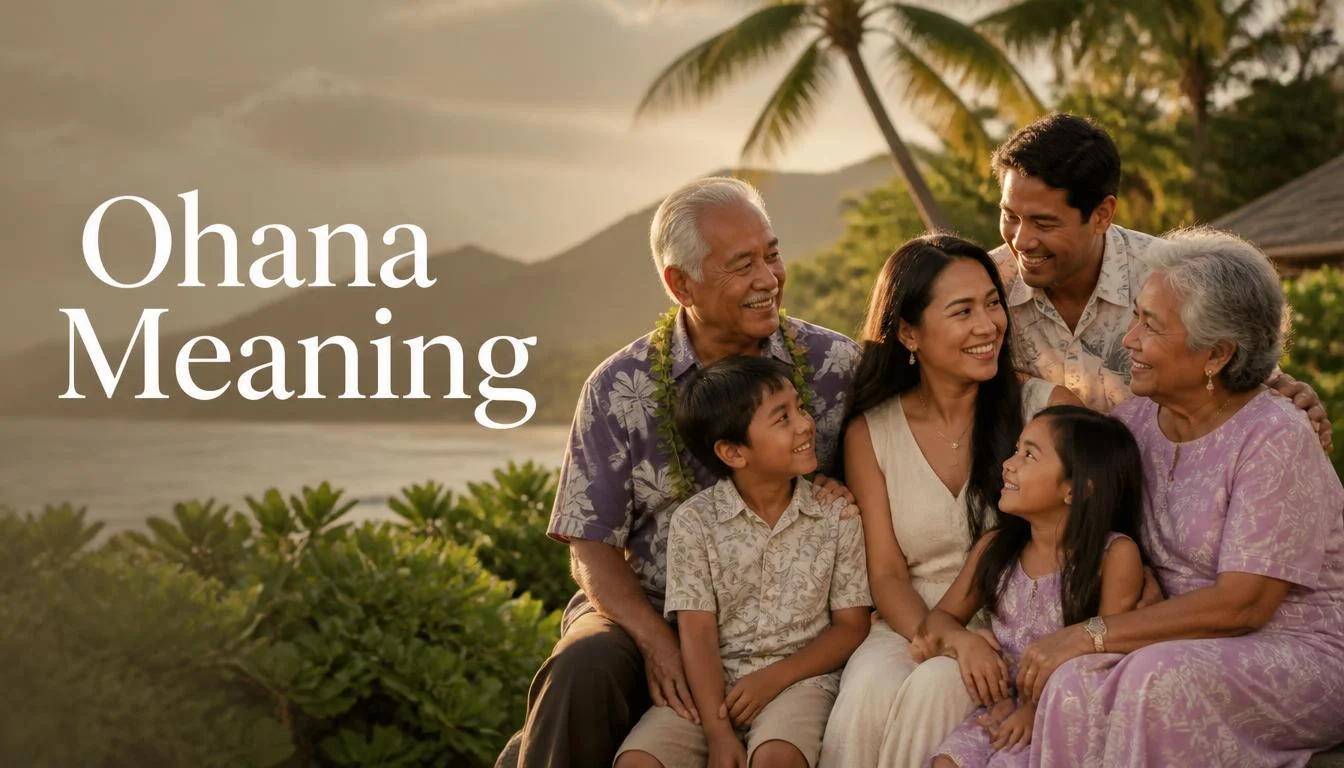
Ohana Meaning refers to family in Hawaiian culture, including relatives and the people you consider your family. It represents love, loyalty, support and the belief that family members care for one another.
The Ohana Meaning goes beyond the simple definition of family. Originating from the Hawaiian language, the word represents a deep connection between people who love, support and care for each other. It reminds us that family is not always limited to blood relationships. Sometimes, the people who stand beside us through life’s challenges become our family too.
Today, the Ohana Meaning is widely recognized through Hawaiian culture, tattoos and popular entertainment. It symbolizes togetherness, unconditional love and a sense of belonging. Whether you use the word to describe your loved ones or express your appreciation for close friends, Ohana carries a beautiful message. It teaches us that true family stays connected, offers support and makes sure no one feels alone.
What Is the Meaning of Ohana in Hawaiian?
In Hawaiian, ʻohana means family. It is commonly used to describe relatives and extended family connections, although its significance can extend to the relationships people build and maintain throughout their lives.
The word is often associated with care, belonging, cooperation, and mutual responsibility. Rather than treating family as a group of people who simply share a surname or household, this broader interpretation emphasizes the relationships that keep people connected.
For example, a person might describe their grandparents, cousins, siblings, and other relatives as their ʻohana. Someone may also use the word when speaking about a close-knit community or a group that has developed a strong sense of belonging.
There is an important distinction, however. The Hawaiian word itself translates to family, while ideas such as unconditional love, loyalty, and never abandoning one another are cultural interpretations commonly associated with it. These ideas help explain the word’s emotional appeal, but they do not replace its basic meaning.
What Does the ʻ in ʻOhana Mean?
You may see the word written as ohana or ʻohana. The second spelling includes a Hawaiian character called the ʻokina, which represents a glottal stop, a brief pause in the flow of speech.
The ʻokina is an important part of Hawaiian spelling because it can distinguish words and their meanings. When writing the word in Hawaiian, ʻohana is the more accurate form. The spelling ohana is common in English-language searches, tattoos, captions, and casual conversation.
The mark is not decorative punctuation. It represents a real sound in the language and deserves to be preserved when practical.
The Cultural Origins of the Word ʻOhana
To understand the word fully, it helps to look at Hawaiian culture rather than treating it as a popular quote or a decorative word. Family relationships have traditionally been an important part of Hawaiian social life, connecting people across generations and helping communities maintain their responsibilities to one another.
Family Beyond the Immediate Household
In many cultures, family is commonly understood as parents and their children. Hawaiian family relationships can encompass a wider network, including grandparents, aunts, uncles, cousins, and other relatives who share responsibilities and maintain close connections.
These relationships can involve helping raise children, caring for older relatives, sharing resources, and passing cultural knowledge from one generation to the next. The particular arrangements differ between families, so there is no single structure that describes every Hawaiian household.
This wider understanding helps explain why the word resonates with people who value relationships that extend beyond a traditional nuclear family. It recognizes that support often comes from several people rather than from parents alone.
The Importance of Shared Responsibility
Family connection is not only about affection. It can also involve practical responsibilities, such as helping relatives during difficult periods or contributing to the well-being of a wider family group.
In this sense, ʻohana can express a relationship built through both connection and action. A relative who offers time, guidance, or care may strengthen family bonds in ways that go beyond simply saying that they love someone.
It is important not to assume that every Hawaiian family follows identical traditions. Hawaiian culture has its own regional, historical, and family differences, just as other cultures do. Still, the relationship between family, belonging, and shared responsibility helps explain the importance of the word.
How Disney’s Lilo & Stitch Made ʻOhana Famous
Many people first encountered the word through Disney’s 2002 animated film Lilo & Stitch. Set in Hawaii, the story follows Lilo, a young Hawaiian girl, and Stitch, an unusual creature who gradually becomes part of her life.
Lilo’s relationship with Stitch develops against a backdrop of family challenges. She lives with her older sister, Nani, after the death of their parents. Nani is trying to care for Lilo while managing the pressures of adulthood, work, and the possibility of losing custody of her younger sister.
Their situation gives the word a particular emotional weight. Family is not presented as a perfect group in which everyone always agrees. Instead, the characters struggle, make mistakes, and try to remain connected despite their problems.
Why the Famous Quote Matters
The film popularized the message that family means nobody gets left behind or forgotten. This idea captures the emotional heart of the story and has become closely associated with the word in popular culture.
Stitch begins as an outsider who does not understand ordinary family relationships. Through Lilo and Nani, he gradually discovers that belonging involves more than simply staying in a place. It means being accepted, cared for, and given a chance to become part of something larger than yourself.
That is why the message reaches audiences of different ages. Children may connect with the idea of having someone who stands by them, while adults may recognize the effort required to maintain relationships during difficult times.
However, Disney’s interpretation is a memorable expression of the concept, not the complete definition of a Hawaiian word. The cultural meaning existed long before the movie introduced it to international audiences.
Ohana vs. Family vs. Aloha
The words ohana, family, and aloha are sometimes used interchangeably in English-language posts about Hawaii. They are connected through themes of relationships and care, but they do not mean exactly the same thing.
| Word | Basic meaning | Common association |
|---|---|---|
| ʻOhana | Family | Relatives, belonging, and family connections |
| Family | A group of related people | Kinship, shared history, and mutual support |
| Aloha | Love, affection, greeting, or farewell, depending on context | Warmth, care, and connection |
| Community | People connected through a place or shared interest | Cooperation, participation, and belonging |
| Friendship | A relationship between friends | Trust, companionship, and mutual care |
Is Ohana the Same as Aloha?
No. Although both words are important in Hawaiian culture, their meanings differ.
ʻOhana refers to family. Aloha has a wider range of meanings, including love, affection, greeting, and farewell. Its use can convey warmth and care, depending on the situation.
A person might use aloha when greeting someone or saying goodbye. By contrast, ʻohana is the appropriate word when talking about family relationships.
The two ideas can complement each other. A family may express aloha through the way its members treat one another, but the words themselves are not interchangeable.
Does Ohana Include Friends?
It can, depending on how the word is being used. In contemporary English, people often use ohana to describe a close group of friends who provide the care and support associated with family.
For instance, a person living far from relatives might call a group of trusted friends their chosen family. Someone might also describe a supportive team as their ʻohana to express a strong sense of connection.
This is a common modern interpretation rather than a reason to assume that the Hawaiian word has exactly the same meaning as every English expression for chosen family.
Different Ways People Use Ohana Today
The word appears in conversations, social media captions, personal messages, artwork, and everyday expressions. Its meaning often depends on the relationship being described and the context in which it appears.
1. In Family Conversations
A person might use ʻohana when talking about relatives who stay connected despite living in different places. It can express affection for parents, siblings, grandparents, cousins, and other family members.
For example:
- “My ʻohana always makes me feel at home.”
- “Nothing matters more than spending time with my ʻohana.”
- “I’m grateful for an ʻohana that supports me.”
Each example uses the word to emphasize family connection rather than simply naming a group of relatives.
2. In Social Media Captions
On Instagram, Facebook, and other social platforms, people often use the term under pictures of family gatherings, celebrations, vacations, or meaningful moments with friends.
Common caption ideas include:
- “My ʻohana, my greatest blessing.”
- “Good memories with my favorite people.”
- “Together is where our ʻohana belongs.”
- “Love, laughter, and family.”
These captions communicate closeness without requiring a long explanation. The word can also give a Hawaiian-inspired feel to a caption, although it should be used with an understanding of its cultural background.
3. In Friendships and Chosen Families
Not everyone has a close or supportive relationship with biological relatives. For some people, close friends, mentors, partners, and other trusted individuals provide the support they need.
In everyday English, someone might describe these people as their ʻohana because they feel accepted and cared for. This use reflects a modern extension of the word’s family associations.
Consider a university student who moves to a new city. Over time, a few friends become the people they call when they need help, celebrate important milestones with them, or simply want company. Calling this group their chosen family communicates that these relationships have become deeply meaningful.
The key is to use the word thoughtfully rather than assuming that all friendships automatically qualify as family.
4. In Personal Messages
The word can make a personal message feel more affectionate. It works particularly well when thanking someone for their support or expressing gratitude for a close relationship.
For example, you might write:
“Thank you for always being there when I need you. I’m lucky to have you in my ʻohana.”
This message suggests that the recipient is more than an acquaintance. It communicates appreciation for a relationship that provides comfort and belonging.
The Deeper Meaning of ʻOhana in Everyday Life
Beyond its literal translation, the word can encourage people to think about what makes a relationship feel like family. Shared DNA is one way people are connected, but the quality of a relationship also depends on how people treat one another.
Three ideas help explain why this concept continues to resonate with so many people.
Belonging Without Being Perfect
Families are rarely perfect. People disagree, misunderstand one another, and sometimes make decisions that hurt those they care about. A strong family connection does not mean that these problems never happen.
Instead, the idea of belonging reminds us that relationships can survive difficult moments when people are willing to communicate, learn, and make an effort to repair them. This does not mean accepting harmful behavior without limits. Healthy relationships also require respect and personal boundaries.
The story of Lilo and Stitch illustrates this distinction. Their bond develops through mistakes, patience, and the gradual process of learning to care for one another.
Showing Love Through Actions
Saying that someone is important is easy. Showing it often requires more effort.
Checking on a relative who lives alone, helping a sibling through a difficult period, or making time for a family gathering can all demonstrate care. Small actions may carry particular meaning when someone is feeling isolated or overwhelmed.
This practical side of family life is one reason the concept feels relevant outside the context of a movie. It encourages people to consider how they contribute to their relationships rather than focusing only on what they receive.
Creating a Sense of Home
Home is not always a particular building or location. For many people, it is the feeling of being understood and accepted by those around them.
A family member who listens without judgment can create that feeling. So can a trusted friend who offers support during a major life change. These relationships can help people feel connected even when they are far away from the places where they grew up.
This is an emotional interpretation of the concept, not a separate dictionary definition. It helps explain why the word appears so frequently in discussions about belonging, friendship, and personal identity.
Is ʻOhana a Good Tattoo or Gift Idea?
Yes, the word can make a meaningful tattoo or gift for someone who values family connections. Its short length makes it suitable for simple designs, while its associations with family and belonging give it personal significance.
However, a meaningful design should reflect both the word’s cultural background and the reason you want to use it.
ʻOhana Tattoo Ideas
Some popular design approaches include:
- Simple lettering: A clean wordmark featuring ʻohana without additional decoration.
- Family-inspired artwork: A design incorporating meaningful symbols or small illustrations representing loved ones.
- Matching family tattoos: A shared design chosen by relatives to represent their connection.
- Minimalist designs: Small lettering placed on the wrist, forearm, or another personally meaningful location.
If you choose Hawaiian lettering, check the spelling and ʻokina carefully before committing to a permanent design. A fluent Hawaiian speaker can help confirm the language and ensure that the intended meaning is represented accurately.
Is It Appropriate for Someone Outside Hawaii?
People outside Hawaii may encounter the word through the movie or through relationships with Hawaiian culture. Using a word from another language is not automatically disrespectful, but context matters.
Learn what it means, avoid presenting it as your own cultural tradition if it is not, and consider the difference between appreciating a culture and treating its language as decoration.
A thoughtful tattoo or gift can express a personal connection while acknowledging that the word comes from a living culture with its own history and traditions.
Common Misunderstandings About ʻOhana
Despite its popularity, several misconceptions can arise when the word is used outside its original linguistic context.
Misunderstanding 1: It means unconditional love.
Love is closely associated with popular interpretations of ʻohana, but the direct translation is family. Unconditional love is an idea people connect with the word rather than its complete literal definition.
Misunderstanding 2: It refers only to biological relatives.
The word primarily refers to family, including extended family relationships. In modern English usage, people also apply it to close friends and chosen family, although context influences how that usage is understood.
Misunderstanding 3: It became a word because of Disney.
The word is part of the Hawaiian language and existed long before the 2002 film. Disney helped introduce it to a much wider international audience.
Misunderstanding 4: It means family members must always agree.
Strong family relationships do not require everyone to have the same opinions. People can disagree and maintain meaningful connections, provided they treat one another with respect.
Misunderstanding 5: Ohana and aloha mean the same thing.
They are related through cultural associations with connection and care, but their meanings differ. ʻOhana means family, while aloha has several meanings, including love, greeting, and farewell.
FAQs
1. How do you pronounce ʻohana?
The word is commonly pronounced approximately oh-HAH-nah, with the emphasis on the middle syllable. The ʻokina represents a brief glottal stop, so listening to a Hawaiian-language speaker is the best way to learn the pronunciation accurately.
2. What is the plural of ʻohana?
In Hawaiian, nouns do not generally form plurals by adding an English-style s. Context and other words in a sentence indicate whether a singular or plural meaning is intended. In English, people may informally write “ohanas,” but that is not the standard Hawaiian plural formation.
3. Can ʻohana refer to a workplace or team?
In casual English, people sometimes use the word to describe a close-knit team or organization. This suggests that colleagues feel connected and supported. However, this is a figurative use, not the word’s basic translation.
4. Is ʻohana a gender-specific word?
No. The word refers to family and is not limited to a particular gender. It can describe family relationships involving people of any gender or age.
5. Why is ʻohana important in Hawaiian culture?
It provides a word for family connections that can extend across generations and involve shared responsibilities. Its significance is best understood within the broader context of Hawaiian language, history, and family traditions rather than through popular media alone.
Conclusion
The word ʻohana expresses the meaning of family while carrying associations with belonging, connection, and mutual care. Its popularity through Lilo & Stitch introduced the concept to millions of people, but its Hawaiian roots give it a meaning that extends beyond a famous movie quote. Whether used in a conversation, a personal message, or a tattoo, the word is most meaningful when its cultural background is understood and respected.









