Quick Answer
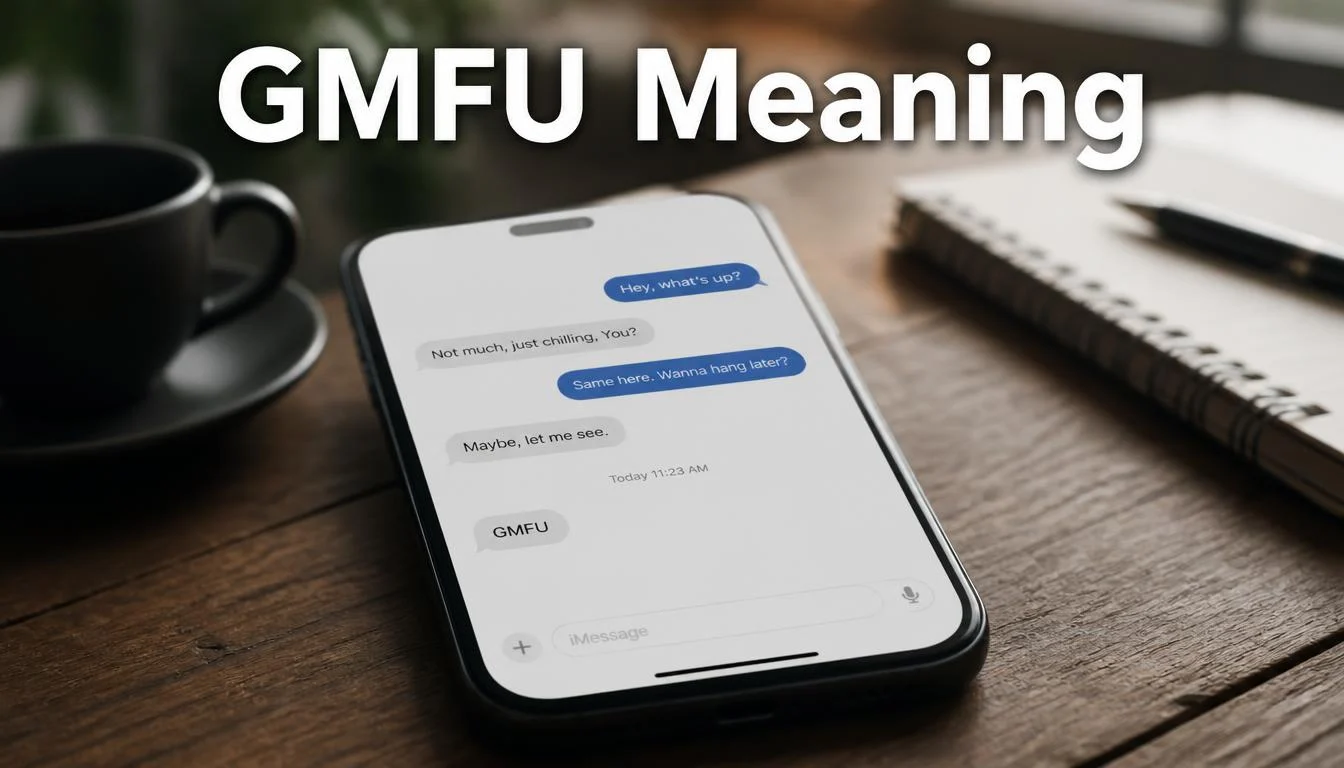
GMFU Meaning usually stands for “Got Me F***ed Up.” It expresses anger, disbelief, frustration or feeling disrespected by someone. People commonly use GMFU in text messages and on social media to react to something upsetting or unbelievable.
GMFU Meaning is commonly searched by people who come across this slang abbreviation in text messages, online conversations or social media posts. It is an informal expression used to show strong emotions, especially when someone feels upset, offended or surprised by another person’s actions.
Understanding GMFU Meaning can help you interpret the tone behind a message. Depending on the situation, it may express anger, disbelief or frustration. People often use it in casual conversations with friends or in comments when something feels unfair, disrespectful or completely unexpected.
What GMFU Stands For
At its core, GMFU is short for “got me f***ed up.” That phrase describes a moment when something catches a person off guard, whether that something is good, bad or just plain unexpected. Think of it as a digital version of throwing your hands up.
The letters themselves are simple, but the feeling behind them is not fixed. Someone might type GMFU after an insult, after a plot twist in a show or after a friend shows up wearing something unforgettable. The term flexes to fit the moment, which is exactly why it has stuck around in casual texting.
Where GMFU Came From
Like a lot of internet shorthand, GMFU grew out of American texting and online chat culture rather than any single platform or app. Slang databases such as NoSlang, which track and catalog informal abbreviations used in texting, list GMFU among terms that trace back to the broader wave of consonant heavy acronyms that picked up steam in the late 2000s and early 2010s, alongside relatives like SMH and WTF.
It gained fresh momentum on platforms built around quick reactions, particularly Instagram, TikTok and group chat apps, where short emotional tags spread fast because they say a lot in very little space. The acronym did not need a viral moment to take off. It spread the way most texting slang does, through repeated everyday use among friends and online communities until it became second nature.
How People Use GMFU
The phrase shows up in a few common situations.
Reacting to shock or disbelief. “She showed up with a new haircut and did not even tell me GMFU” captures surprise without needing a full sentence of explanation.
Expressing frustration. “We missed the deadline because the file never sent GMFU” leans closer to irritation than shock.
Calling out disrespect. When someone feels insulted or blindsided by a comment, GMFU signals that the remark crossed a line.
Reacting to content. On social media, a caption like “that ending GMFU” usually means a show, song or post hit harder than expected.
GMFU in Casual Chats
Among friends, GMFU often carries a playful edge. A text like “you ate all the cookies GMFU” reads more like teasing than genuine anger. Emojis do a lot of the work here, since a crying laughing face next to GMFU softens the message while an angry face sharpens it.
GMFU in Serious Moments
The same four letters can carry real weight too. “We missed the deadline GMFU” or a message sent after a genuine disagreement reads as sincere frustration rather than a joke. Context, punctuation and the relationship between the people texting all shape how the phrase lands.
GMFU on Social Media
On Instagram, TikTok and Snapchat, GMFU usually appears as a caption or comment reacting to content rather than a direct message between two people. “This song GMFU every time” or “that edit GMFU” tends to work as emphatic praise, closer to saying something moved you, rather than a complaint.
Common Variations of GMFU
People rarely drop GMFU on its own. It often travels with other slang to fine tune the tone.
- GMFU fr adds “for real” to emphasize sincerity
- GMFU smh pairs it with disappointment
- GMFU no cap signals the speaker is being completely honest
- GMFU rn means the reaction is happening right now
- GMF is a shortened version that drops “up” but keeps the same spirit
GMFU Versus Similar Slang
GMFU shares emotional territory with a handful of other common acronyms, but the overlap is not total. Each term carries its own shade of meaning.
| Term | Full Meaning | Typical Tone |
|---|---|---|
| GMFU | Got me f***ed up | Shock, frustration or being thrown off by something |
| WTF | What the f*** | Confusion or disbelief, often more blunt |
| SMH | Shaking my head | Disapproval without much emotional intensity |
| SNAFU | Situation normal all f***ed up | A messy or chaotic situation rather than a personal reaction |
The key difference is focus. GMFU centers on how the speaker feels inside after something happens, while WTF leans toward questioning the situation itself and SMH signals quiet disapproval without the same emotional charge.
An Alternate Reading of GMFU
Most references agree on “got me fed up,” but the phrase is not entirely locked in meaning. In some pockets of online slang, people have used GMFU to stand for “get money, f you,” a phrase meant to project confidence or success rather than shock. This version shows up less often and mostly in posts celebrating an achievement rather than in everyday texting, so it is worth knowing but should not be assumed as the default meaning.
When to Use GMFU and When to Skip It
GMFU fits casual spaces well: group chats, comments, captions and texts between friends. It carries real profanity underneath the acronym, so it does not belong in work emails, school assignments or messages to people who might not know the term.
It is also worth pausing before sending GMFU to someone unfamiliar with internet slang. Without context, the phrase can come across as more hostile than intended, since the recipient only sees four letters and has to guess the tone behind them.
Is GMFU Appropriate for Younger Users
Because the full phrase includes profanity, GMFU is not really suited for children, even though the acronym itself looks harmless on screen. Parents and guardians who track texting slang often flag it for the same reason they flag other disguised profanity: the letters hide language that would otherwise be filtered or discouraged. If you are a parent trying to keep up with the shorthand your kids use, it helps to know what sits behind an abbreviation before deciding how to respond to it.
FAQs
1. Is GMFU Offensive?
GMFU contains censored profanity, so it is considered informal and potentially offensive. However, people often use it casually among friends without intending to insult or offend anyone.
2. Does GMFU Always Mean Something Negative?
No, GMFU does not always have a negative meaning. While it often expresses irritation or frustration, people also use it to show excitement, humor or admiration, especially in social media posts and captions.
3. Can GMFU Be Used in Professional Settings?
GMFU is best avoided in professional or academic communication because of the profanity behind the abbreviation. Even though the letters may look neutral, its meaning makes it unsuitable for formal conversations.
4. What Is the Difference Between GMFU and GMF?
GMFU and GMF are similar abbreviations used in informal online conversations. GMF is a shorter variation that may carry a similar general meaning and tone, depending on the context in which it appears.
5. Did GMFU Originate on a Specific App?
No single social media platform is known to have created GMFU. The abbreviation developed through texting and internet slang before spreading more widely across platforms such as Instagram and TikTok.
6. How Do I Know If Someone Means GMFU Seriously or Jokingly?
Pay attention to the surrounding words, punctuation and emojis. Laughing emojis or playful phrasing may suggest that someone is joking, while blunt wording without playful cues may indicate genuine frustration. The overall conversation usually provides the clearest clue.
Conclusion
GMFU is one of those acronyms that packs a surprising amount of emotional range into four letters. It can mean genuine shock, light teasing or honest frustration depending entirely on who sends it and why. Once you know the phrase behind the letters, the rest comes down to reading tone the same way you would with any text. Keep it casual, keep it among people who already speak the slang and GMFU will do exactly what it is meant to do.









