Quick Answer
ASF Meaning is “as fuck,” an informal slang expression used to add emphasis to a word or feeling. People commonly use it in texts and on social media to mean “very” or “extremely.”
ASF Meaning is commonly searched by people who see this abbreviation in text messages, comments or social media posts. It is a popular internet slang term used to express strong feelings or emphasize something. Although it may look confusing at first, its meaning is simple once you understand the context. People often use ASF in casual conversations with friends.
In texting and online chats, ASF usually stands for “as fuck,” which means “very” or “extremely.” For example, someone might say “I’m tired ASF” to express that they are extremely tired. The abbreviation is informal and includes profanity, so it is best suited for casual conversations. Understanding ASF can help you interpret messages and social media posts more easily.
Definition and Everyday Usage
In scientific contexts, ASF refers to a hemorrhagic viral disease caused by the African swine fever virus, the only member of the family Asfarviridae. Farmers and journalists often shorten this to just ASF because the full name gets repeated constantly in outbreak coverage.
The term shows up in two slightly different ways. Veterinarians and researchers use it with precision, referring to a specific pathogen with a known genome and transmission pattern. In casual farming conversation, people sometimes use ASF loosely to describe any serious pig die off, even before lab confirmation. That looseness causes confusion during early outbreak reports, so officials usually wait for a laboratory test before using the term officially.
ASF Versus Classical Swine Fever
One of the most common mix ups in this space is confusing ASF with classical swine fever, sometimes called hog cholera. They produce similar symptoms but come from completely different viruses and require different responses.
| Feature | African Swine Fever (ASF) | Classical Swine Fever (CSF) |
|---|---|---|
| Virus family | Asfarviridae | Flaviviridae |
| Vaccine availability | Limited, newly approved in parts of Asia | Established vaccines widely available |
| Typical mortality | Up to 100 percent in acute cases | Variable, often lower |
| Natural wild host | Warthogs and bush pigs in Africa | No major wild reservoir |
| Tick involvement | Yes, soft ticks of the genus Ornithodoros | No |
Mixing these two up matters in practice because a region reporting classical swine fever usually has vaccination tools available, while ASF outbreaks typically trigger culling and movement bans instead.
A Short History of the Disease
ASF was first documented in Kenya in 1921, where researchers noticed that domestic pigs introduced near warthog populations began dying rapidly. For decades it stayed mostly confined to sub Saharan Africa, circulating quietly between warthogs, bush pigs and the soft ticks that feed on them.
The disease jumped continents in 1957 when it reached Portugal, likely through contaminated food waste fed to pigs near Lisbon. Europe spent decades fighting sporadic outbreaks before largely eliminating it, though Sardinia remained an exception with ongoing transmission for years.
The modern crisis began in 2007 when ASF reached Georgia and spread through the Caucasus into Russia. From there it moved steadily west and east. In August 2018, China confirmed its first case, and within about a year the country lost a significant share of its pig herd, since China was at the time home to roughly half the world’s domestic pigs. The outbreak then spread into Vietnam, Mongolia, South Korea and parts of the Philippines, reshaping global pork markets.
How the Virus Spreads
Transmission happens through several overlapping routes rather than just one, which is part of what makes ASF so hard to contain.
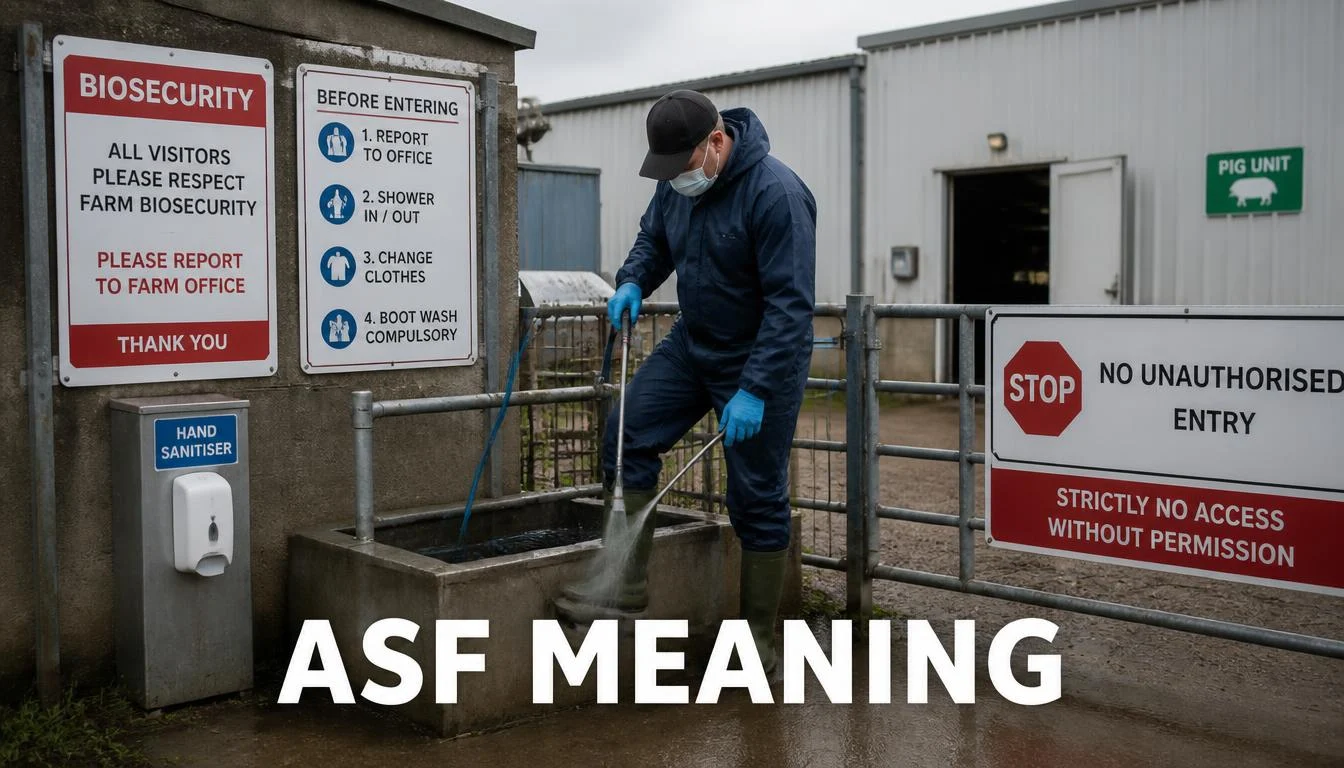
Direct contact between infected and healthy pigs is the most obvious route, especially in crowded farm settings. The virus is also strikingly durable in pork products, meaning contaminated meat, sausages or even kitchen scraps fed to pigs can introduce the disease to a farm that never had direct animal contact with an infected herd. Soft ticks of the Ornithodoros genus serve as a biological reservoir in parts of Africa and historically in Spain, feeding on infected warthogs and later transmitting the virus to domestic pigs. Contaminated vehicles, boots, clothing and equipment moving between farms round out the list, which is why many countries now require disinfection protocols at farm entrances.
Symptoms and What Farmers Look For
Early signs of ASF often resemble a generic fever, which delays detection in the first days of an outbreak. Affected pigs typically show high fever, loss of appetite and lethargy, followed by skin discoloration on the ears, abdomen and legs as the disease progresses.
In the acute form, death often follows within a week of the first symptoms, and mortality can approach total herd loss. A chronic form exists too, producing milder symptoms like weight loss and intermittent fever, which can actually be more dangerous for disease control since infected pigs may survive long enough to spread the virus further before anyone notices something is wrong.
Why This Disease Matters Economically
This is the section worth sitting with, because the ripple effects go well beyond individual farms. Pork is the most consumed meat worldwide, and China alone has historically raised close to half the planet’s pigs. When ASF tore through Chinese herds starting in 2018, pork prices spiked domestically and global soybean and corn markets shifted too, since those crops are major pig feed ingredients.
Smallholder farmers tend to absorb the heaviest losses relative to their income, since a single infected pig can wipe out a family’s entire herd and savings in one outbreak. Export dependent countries face a different kind of pain, since a confirmed ASF case can trigger immediate trade bans from importing nations, even in regions far from the actual infected farm. The World Organisation for Animal Health, commonly known by its historical acronym WOAH or OIE, tracks these outbreaks globally and helps coordinate reporting standards so trading partners know what is actually happening on the ground.
Recent Developments Worth Knowing
For years, no commercial vaccine existed anywhere, which made ASF unusually difficult to manage compared to many other livestock diseases. That changed somewhat in Vietnam, where authorities approved domestically developed ASF vaccines for use starting in 2022, marking one of the first real vaccine tools against the disease in a commercial pig farming context.
These vaccines are still being evaluated and expanded rather than treated as a universal fix, and most of the world still relies on culling, movement restrictions and strict farm biosecurity as the main defense. Researchers in multiple countries continue testing additional vaccine candidates, so this is genuinely an area where the situation on the ground keeps shifting year to year.
Related Terms People Often Confuse
A few adjacent terms are worth separating out clearly. Foot and mouth disease affects a much wider range of hooved animals including cattle and sheep and comes from an entirely different virus family than ASF. Porcine reproductive and respiratory syndrome, often shortened to PRRS, causes reproductive failure and respiratory illness in pigs but spreads and behaves quite differently from ASF. None of these should be treated as interchangeable with ASF even though news coverage sometimes blurs the lines between pig diseases in general.
FAQs
1. Can ASF Infect Humans?
No, African Swine Fever (ASF) does not infect humans. It affects domestic pigs and wild boar but poses no direct public health risk. Properly cooked pork is not a source of ASF infection in humans, although infected pork products can spread the virus to other pigs.
2. Is There a Cure Once a Pig Is Infected?
No approved cure or specific treatment is currently available for African Swine Fever. Prevention through strict biosecurity measures is essential because acute cases often have very high mortality rates, and supportive care generally cannot change the outcome.
3. How Long Can the ASF Virus Survive Outside a Host?
The ASF virus is highly resistant and can survive for extended periods in the environment and contaminated pork products. It may remain infectious in frozen or cured meat for months, making pork products an important source of potential transmission. This is why travelers must follow restrictions on carrying pork products across certain borders.
4. Does ASF Affect Other Farm Animals Like Cattle or Poultry?
No, African Swine Fever specifically affects domestic pigs and wild boar. Cattle, sheep, goats and poultry are not susceptible to ASF, although they may still carry contaminated material on their bodies or equipment and contribute to the spread of the virus indirectly.
5. Why Do ASF Outbreaks Lead to Mass Culling Instead of Treatment?
Mass culling is used because there is no reliable cure for ASF and acute infections can have extremely high mortality rates. Quickly removing infected and exposed pigs, alongside strict movement controls, cleaning and disinfection, helps limit transmission and protect nearby farms.
Conclusion
ASF is one of those terms that sounds simple until you see how far its consequences actually reach, touching everything from a single family farm in Southeast Asia to global grain markets. Understanding the real meaning behind the acronym helps explain why so much attention goes into biosecurity rules that might otherwise seem excessive. As vaccine research continues and surveillance improves, the hope is that future outbreaks will be caught and contained faster than the devastating spread the world saw after 2018.









