Quick Answer
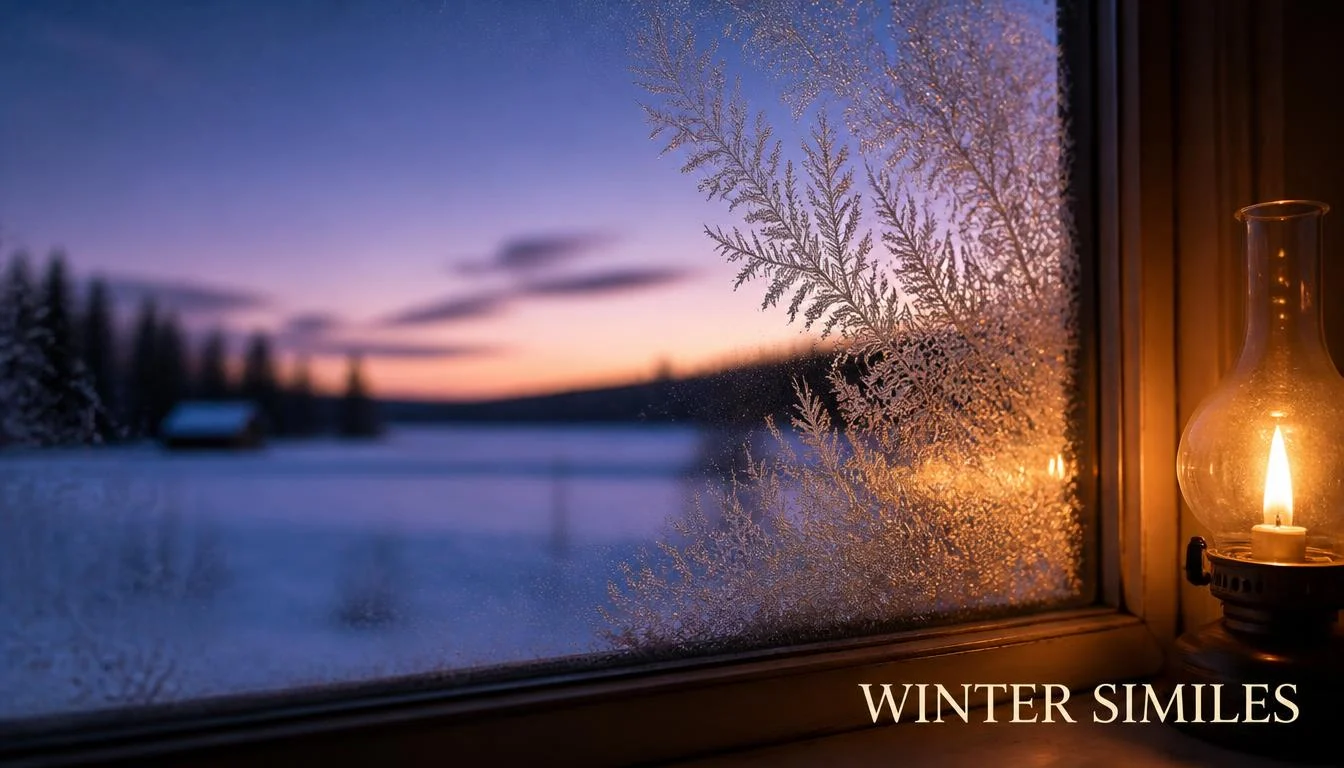
Winter similes compare winter weather, snow, and cold temperatures to familiar things using words such as “like” or “as.” Examples include “as cold as ice” and “snowflakes falling like feathers.”
Winter similes make descriptions of the coldest season more vivid, creative, and engaging. Whether you’re writing a poem, creating a winter story, or completing a school assignment, similes help readers imagine frosty mornings, snowy landscapes, and chilly winds.
From snow as soft as cotton to icy winds that bite like sharp teeth, these comparisons bring winter scenes to life. Learning different winter similes can strengthen your writing, expand your vocabulary, and help you express the beauty and harshness of winter in memorable ways.
THE MAIN SIMILE COLLECTION
The following winter similes are grouped by the specific feeling or scene they best capture, from the brutal shock of the cold to the hushed magic of a snowfall. Use them as inspiration, adapting and combining them to suit your own writing.
The Sharp Bite of Cold
This category focuses on the physical sensation of winter’s chill the shock, the pain, and the invasive nature of the cold.
1. As sharp as a splinter of glass
- What it conveys: A sudden, piercing cold that feels almost physical, like a tiny, sharp cut. It’s an active, aggressive cold that demands attention.
- Best fit: A descriptive essay or story where a character is caught unprepared in the cold.
- In context: He pulled his collar up, but the wind found a way in, sharp as a splinter of glass against his cheek.
2. Like the breath of a ghost on the back of your neck
- What it conveys: A cold that is not just low in temperature but feels spectral and unsettling. It’s a creeping, chilling sensation that feels personal and eerie.
- Best fit: A ghost story, a suspenseful scene, or poetry.
- In context: The old house was drafty, and a chill would settle in the hallway, like the breath of a ghost on the back of your neck.
3. Cold as the brass doorknob of an unheated church
- What it conveys: A biting, stinging cold that shocks the system upon contact. It’s a clean, hard, and slightly austere cold.
- Best fit: Storytelling, particularly for historical fiction or scenes emphasizing a character’s isolation.
- In context: She reached for the handle, her fingers recoiling from a surface cold as the brass doorknob of an unheated church.
4. Like stepping into a walk-in freezer
- What it conveys: A sudden, all-encompassing, and artificial-feeling cold. It’s a relatable, modern image that immediately communicates a drastic drop in temperature.
- Best fit: Contemporary fiction, blog posts, or casual conversation. Tone is informal and direct.
- In context: Walking out of the airport terminal was like stepping into a walk-in freezer; the humid heat of the tropics vanished in an instant.
Writer’s Note: Notice how the most effective similes in this group appeal to senses beyond just “cold.” They evoke touch (splinter of glass), feeling (breath of a ghost), and a relatable modern experience (walk-in freezer). Choose the image that best matches the mood of your scene.
The World Made Silent and Still
Winter often muffles the world, creating a unique atmosphere of quiet. These similes capture that profound stillness.
5. Like a world holding its breath
- What it conveys: A sense of anticipation and profound quiet. It’s not an empty silence, but a paused one, as if the landscape is waiting for something to happen.
- Best fit: Opening lines of a story, poetry, or a reflective personal essay.
- In context: After the blizzard, the town was silent, like a world holding its breath before the first person dared to step outside.
6. As quiet as a blanket of fresh snow
- What it conveys: A soft, muffling, and peaceful silence. It’s a comforting quiet that absorbs sound and creates a sense of serenity.
- Best fit: Descriptive writing, nature writing, or a scene where a character finds peace.
- In context: The forest was quiet as a blanket of fresh snow, the only sound the soft crunch of her own boots.
7. Like a photograph left out in the rain
- What it conveys: A sense of faded, bleached-out stillness. The world loses its definition and color, becoming a soft, muted, and slightly melancholic blur.
- Best fit: Poetry, literary fiction, or a descriptive passage about a bleak winter day.
- In context: The view from the train was like a photograph left out in the rain the colors of the fields and houses bled together into a soft, gray wash.
8. Like an orchestra waiting for the conductor
- What it conveys: A tense, expectant silence. All the elements are in place the snow, the trees, the sky but the performance has not yet begun.
- Best fit: Storytelling, creating a moment of suspense before an event.
- In context: The city square was empty at dawn, the snow-covered buildings standing like an orchestra waiting for the conductor.
The Stark Beauty of the Landscape
These comparisons help you describe the visual impact of winter the way it transforms the world with snow and ice.
9. As if the world has been dipped in icing sugar
- What it conveys: A delicate, beautiful, and almost magical dusting of snow. It turns an ordinary scene into something sweet and pristine.
- Best fit: Lighthearted descriptions, holiday-themed writing, or a child’s perspective.
- In context: We woke up to a world transformed, as if the entire neighborhood had been dipped in icing sugar overnight.
10. Like a landscape painted in shades of bone and slate
- What it conveys: A stark, minimalist, and almost grim beauty. It emphasizes the limited color palette of winter the whites, grays, and blacks.
- Best fit: Literary fiction, poetry, or a descriptive essay with a serious tone.
- In context: The moors stretched out before him, a desolate expanse painted in shades of bone and slate beneath the heavy sky.
11. The trees stand like skeletal hands reaching for the sky
- What it conveys: The eerie, barren beauty of leafless trees. It’s a haunting image that suggests a plea or a memory of life now gone.
- Best fit: Gothic fiction, horror, or poetry with a melancholy theme.
- In context: From the hilltop, the forest below looked like a collection of skeletal hands reaching for a sky that would never answer.
12. Like a frozen sea of whitecaps
- What it conveys: The rolling, undulating appearance of snowdrifts. It turns a flat field into a dynamic, frozen ocean.
- Best fit: Nature writing, storytelling, or a descriptive passage about a snowy journey.
- In context: They trudged across the field, which was covered in snowdrifts like a frozen sea of whitecaps.
The Warmth Within the Cold
These similes contrast the harshness of winter with the comfort of an inner world a home, a fire, a feeling.
13. Like a warm mug wrapped in a wool sweater
- What it conveys: A feeling of cozy, protected comfort. It’s a gentle warmth that feels safe, familiar, and cherished.
- Best fit: Cozy fiction, descriptive essays about home, or blog posts.
- In context: Being back in his childhood home felt like a warm mug wrapped in a wool sweater, a comfort he hadn’t known he was missing.
14. The fireplace glow was like a cat curled in a sunbeam
- What it conveys: A peaceful, contented warmth that radiates a feeling of security. It’s a living warmth, domestic and calm.
- Best fit: Stories about family, domestic scenes, or poetry.
- In context: The living room was quiet, save for the crackle of the fire and the soft glow that was like a cat curled in a sunbeam.
15. Like a secret you want to keep to yourself
- What it conveys: An intimate, private warmth. It’s a small pocket of comfort found in a world that is otherwise cold.
- Best fit: A character’s internal monologue or a scene of quiet romance.
- In context: Huddled in their tiny apartment, they felt a warmth that was like a secret they wanted to keep to themselves.
The Dark Side of the Season
Winter can also be a metaphor for hardship, loneliness, and despair. These similes explore the season’s more challenging aspects.
16. The cold seeps in like a slow-moving stain
- What it conveys: The insidious, unavoidable nature of the cold. It’s not a sudden shock but a creeping, pervasive chill that reaches you in places you didn’t think were vulnerable.
- Best fit: Literary fiction, stories about poverty or hardship, or descriptive passages in a somber tone.
- In context: The cold in the old apartment wasn’t a sudden shock; it seeped in like a slow-moving stain, finding the cracks in the walls and the cracks in their spirits.
17. Like a memory that refuses to fade
- What it conveys: The lingering, persistent nature of winter. Its darkness and chill seem to hold on, much like a painful or difficult memory.
- Best fit: Poetry, reflective essays, or a character study.
- In context: The gray sky hung over the town, a persistent gloom like a memory that refuses to fade.
18. As lonely as a park bench in January
- What it conveys: A sense of utter desolation and abandonment. It’s a relatable image of something meant for community that has been left empty and exposed.
- Best fit: Fiction, personal essays, or any writing that explores themes of isolation.
- In context: After the holidays, she felt a quiet emptiness, as lonely as a park bench in January, its purpose forgotten beneath a layer of frost.
19. The short days are like a fleeting, anxious heartbeat
- What it conveys: The feeling that winter’s daylight is precious and precarious. It’s a sudden, often stressful, race against the setting sun.
- Best fit: A story emphasizing the pressures of the season or a descriptive passage about seasonal affective disorder.
- In context: He rushed to finish his outdoor chores before dusk, the short days beating like a fleeting, anxious heartbeat.
Writer’s Note: Similes are not just for the five senses. They can also define a mood or a state of mind. When you want to describe a character’s internal state (like loneliness or a fading memory), try linking it to a physical object or scene from the winter world.
A QUICK WAY TO FIND THE RIGHT COMPARISON
This table offers a quick reference to some of the most versatile winter similes.
| Simile | What It Suggests | Best Context |
| As sharp as a splinter of glass | A sudden, piercing, and painful cold | Descriptive prose about harsh weather |
| Like a world holding its breath | Anticipation, profound stillness, and quiet | Opening a story or setting a scene |
| As if the world has been dipped in icing sugar | A delicate, beautiful, and magical snowfall | Lighter descriptions, fiction for children |
| Like a warm mug wrapped in a wool sweater | Cozy, protected, and familiar comfort | Scenes of homecoming or domestic peace |
| The cold seeps in like a slow-moving stain | An insidious, pervasive, and unavoidable chill | Literary fiction, themes of hardship |
| As quiet as a blanket of fresh snow | A peaceful, soft, and muffling silence | Nature writing, reflective scenes |
| The trees stand like skeletal hands… | Eerie barrenness, despair, and ghostly beauty | Gothic fiction, horror, or melancholy poetry |
| Like a frozen sea of whitecaps | The rolling, dramatic shape of snowdrifts | Nature writing, descriptions of a journey |
| The fireplace glow was like a cat curled in a sunbeam | Domestic warmth, security, and contentedness | Family stories, cozy settings |
| As lonely as a park bench in January | Abandonment, emptiness, and desolation | Exploring themes of isolation and loneliness |
| The short days are like a fleeting, anxious heartbeat | The rushed, stressful feeling of a winter day | Stories about pressure or anxiety |
| Like the breath of a ghost on the back of your neck | An eerie, creeping, and unsettling chill | Suspenseful scenes or ghost stories |
:TURN AN ORDINARY SENTENCE INTO A VIVID ONE
A well-chosen simile does more than just add description; it transforms a sentence by adding layers of meaning, mood, and sensory detail. Here’s how to elevate plain prose.
Example 1: Describing the Cold
Plain version: The winter wind was very cold.
Revised version: The winter wind was like a splash of ice water, stealing the breath from his lungs and leaving his skin stinging.
Why it works: Instead of just saying it was “very cold,” the revised sentence uses a familiar, visceral experience (ice water) to make the cold feel sudden, shocking, and physical.
Example 2: Describing a Snowy Landscape
Plain version : The fields were covered in snow.
Revised version: The fields were like a crisp, unmarked page, the snow erasing every hedge and hollow.
Why it works: This simile turns a simple visual into a powerful metaphor. The “unmarked page” suggests a new beginning, quiet potential, and a world stripped of its detail, giving the image poetic depth.
Example 3: Describing a Character’s Feelings
Plain version: She felt lonely and isolated during the long winter.
Revised version: She felt as lonely as a park bench in January, its purpose forgotten beneath a layer of frost.
Why it works: This replaces an abstract feeling (“lonely”) with a concrete image. It allows the reader to see the loneliness, making it a more powerful and memorable detail of the character’s experience.
FAQs
What are some good winter similes for poetry?
Poetry often benefits from more abstract and evocative similes. Consider comparisons like “quiet as a blanket of fresh snow” for peacefulness, “a landscape painted in shades of bone and slate” for starkness, or “the cold seeps in like a slow-moving stain” for a more ominous tone.
How can I use winter similes in an essay?
In an essay, winter similes can provide evidence for a point. If you’re writing about the feeling of isolation, you can use a simile like “as lonely as a park bench in January” to illustrate your argument. If you’re describing a scene, use one to make a description more vivid for the reader.
What is the difference between a winter simile and a metaphor?
A simile compares two things using “like” or “as” (e.g., The snow was like a white blanket.). A metaphor states that one thing is another (e.g., The snow was a white blanket.). Similes are often more direct and easier to spot, while metaphors can be more conceptual and profound.
How do I avoid clichés when writing about winter?
The key is to focus on specific, concrete details and avoid overused phrases. Instead of “white as snow,” try to find a more unique comparison. Think about the feeling or effect of the snow and compare it to something unusual. For instance, “the city was as if someone had used an eraser on it” is a fresh way to describe snow covering the landscape. Think about how winter feels in your bones, not just how it looks.
Concluaion
Winter is a season that asks to be described. Its cold bites, its silence deepens, and its landscapes redraw the world in white and gray. A well-chosen winter simile gives you the power to translate those sensations into language that stays with a reader whether you’re crafting a poem, setting a scene in a novel, or helping a student understand how figurative language works.
The comparisons in this collection are starting points, not final answers. The best simile is the one that fits your specific moment: the particular sting of the wind, the exact hush of a snow-covered street, or the private warmth of a room lit by firelight. Use these examples to spark your own thinking, then adjust, combine, and reinvent them until they sound like your voice and serve your story.









