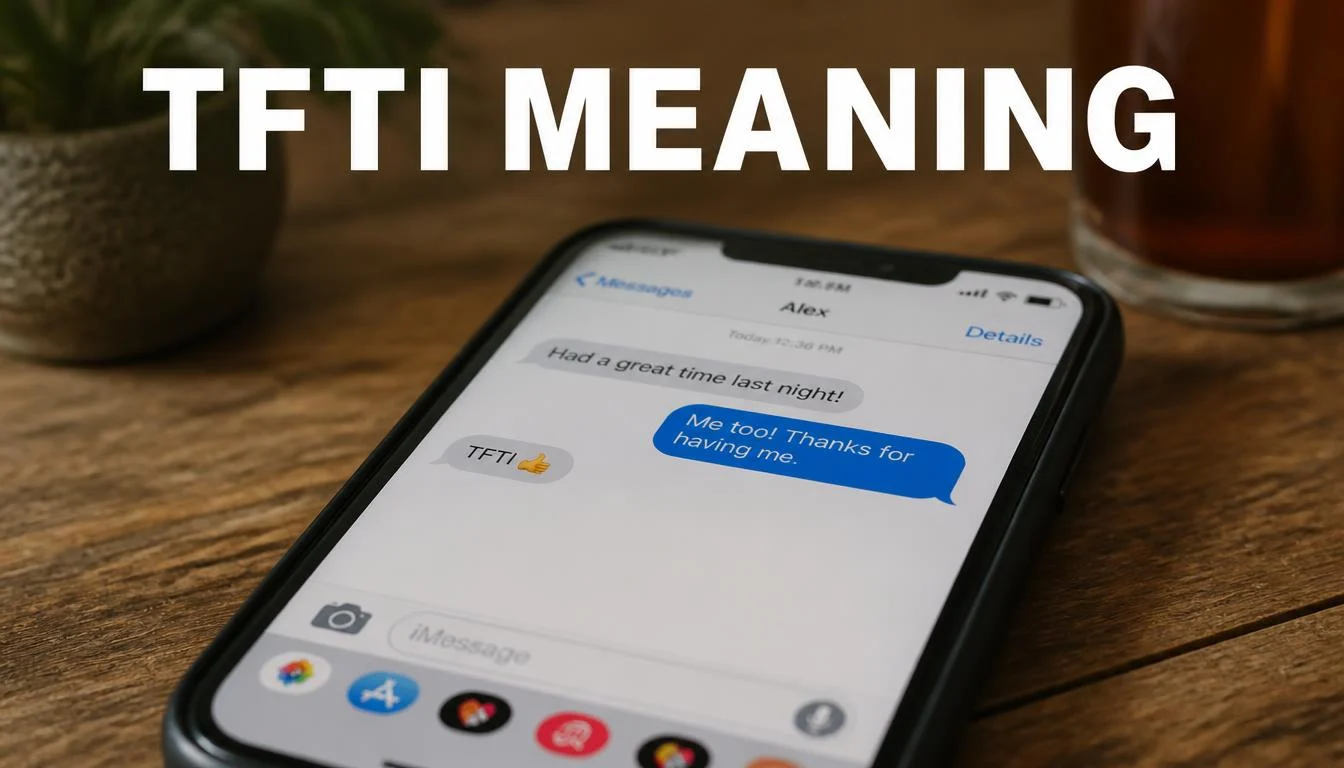
Quick Answer
TFTI stands for “Thanks For The Invite” . In most situations people use it sarcastically when they were left out of a social gathering . The phrase works as a playful callout among friends but can also signal genuine hurt . A second less common meaning is “Thanks For The Information” .
TFTI Meaning is a common texting abbreviation that stands for “Thanks for the Invite.” You may see it in casual chats, comments and social media posts. The phrase is often used when someone mentions an event or activity that you were not invited to. Depending on the situation, it can sound friendly, playful or sarcastic.
Understanding TFTI Meaning also requires looking at the tone behind the message. A person might use TFTI jokingly with close friends or use it to lightly call out someone for leaving them out. In some conversations, it can even express genuine appreciation for receiving an invitation.
What Does TFTI Stand For?
The four letters spell out a phrase that sounds polite on the surface. TFTI means “Thanks For The Invite” . That definition is straightforward enough.
But here is where things get interesting. People rarely use this acronym to actually express gratitude . Instead it functions as a soft accusation. The sender is pointing out that an invitation never arrived .
Think of it as the digital equivalent of standing outside a party and saying “Wow, thanks for inviting me” with heavy sarcasm . The words say one thing while the tone says something completely different.
A secondary definition exists too. TFTI can also mean “Thanks For The Information” . This usage appears in workplace messages or casual chats when someone shares a useful update. It is far less common than the invitation meaning but worth knowing because context changes everything .
How TFTI Actually Sounds in Real Conversations
Reading a definition only gets you so far. Seeing the acronym in action reveals how it really functions.
Scenario one: the Instagram callout. You scroll through your feed at midnight and see photos of your friend group at a concert. Everyone is there except you. You comment: “TFTI 🥺” . The message is clear. You noticed. You were not invited.
Scenario two: the group chat ambush. Four friends are making plans for Saturday. A fifth person has been watching the conversation unfold without being asked to join. They type: “tfti I guess I’ll just stay home” . The room gets awkward fast.
Scenario three: the genuine thank you. A friend invites you to a housewarming party. You cannot attend because of a work trip. You reply: “TFTI for thinking of me! Sorry I can’t make it” . Here the acronym carries no sarcasm at all.
Scenario four: the information meaning. A coworker sends a message about a deadline change. You respond: “TFTI, I would have missed that completely” . No social event involved. Just a quick acknowledgment.
The same four letters can land as playful, petty or perfectly sincere. Everything depends on who sent it and what happened before .
Why People Use TFTI Instead of Just Saying What They Feel
Direct communication is hard. Typing “Hey, it kind of hurts that you did not include me” feels heavy and vulnerable . Staying silent feels worse. TFTI offers a middle path.
The acronym lets someone acknowledge the exclusion without fully committing to a confrontation . It is a tap on the shoulder rather than a punch. The sender can always retreat into “just kidding” if the response feels cold .
There is also a generational comfort factor at work. People who grew up texting and posting on social media are used to compressing emotions into four letters and an emoji . The format matches the platform. A paragraph of hurt feelings in a comment section would feel out of place.
But this efficiency comes with a cost. Because TFTI is so often sarcastic it can be hard to use sincerely anymore. If someone really wants to thank a friend for an invitation they usually spell out the words or add extra warmth to make their meaning obvious .
TFTI vs. Other Social Exclusion Phrases
TFTI belongs to a small family of expressions that all point at the same feeling: being left out. But each one carries a slightly different weight.
FOMO describes the underlying feeling that makes TFTI possible . The fear of missing out is a broad anxiety about being excluded from rewarding experiences. TFTI is the specific response when that fear becomes reality. Someone actually did miss out. The acronym names the moment.
The relationship between sender and receiver matters enormously . From a close friend TFTI reads as affectionate teasing. From someone you barely know it can feel entitled or aggressive. The same words carry different weight depending on history.
The Real Problem With TFTI
Here is something most guides will not tell you. TFTI is passive aggressive by design . It masks a complaint inside a thank you. That structure lets the sender avoid owning their feelings while still making the other person feel guilty.
This is not necessarily malicious. Most people who use TFTI are not trying to start a fight . They want acknowledgment. They want to hear “oh no, we totally forgot you, come next time.” The acronym is a fishing line cast into the group chat hoping someone will bite with reassurance .
But the format makes genuine resolution difficult. If the recipient responds defensively the sender can retreat: “It was just a joke.” If the recipient apologizes the sender gets the validation they wanted without ever having to say “I felt left out.” The emotional labor shifts entirely to the other person.
Some relationship experts suggest that TFTI works best when everyone involved understands the game . Among tight friend groups it can function as a shared language for minor grievances. Outside that context it tends to create more distance than it resolves.
How to Respond When Someone Sends TFTI
The right response depends entirely on reading the room .
If it is clearly playful: Match the energy. A friend who comments “TFTI 😤” under your brunch photos is probably not actually angry. They want to be included next time. A reply like “You are coming next time, no excuses” acknowledges their message without treating it like a serious accusation .
If it seems genuinely hurt: Do not get defensive. Even if the exclusion was accidental the other person’s feelings are real. A simple “I am so sorry, that was not intentional” goes further than explanations or excuses . Then follow through. Invite them to the next thing.
If you are unsure: Look at what happens after the TFTI . Does the sender keep chatting normally? Probably playful. Do they go quiet or leave the conversation? They might actually be bothered. Timing matters too. A TFTI sent during an event hits differently than one sent days later.
If it is the information meaning: Just say “no problem” or “glad it helped” . No social drama involved.
The worst response is to ignore it completely. Silence confirms the sender’s fear that they do not matter enough to warrant a reply.
When You Should Not Use TFTI
TFTI has a time and a place. Using it in the wrong context can damage relationships or make you look petty .
At work, avoid it entirely . Commenting TFTI on a coworker’s LinkedIn post about a team lunch reads as unprofessional. If you are genuinely upset about being excluded from something work related talk to someone directly instead of leaving a passive aggressive comment.
With acquaintances, think twice. Sending TFTI to someone you barely know implies they owed you an invitation. They did not. The acronym assumes a level of closeness that may not exist .
With older relatives, spell it out. Your aunt will either think you are genuinely thanking her or sense the sarcasm and feel attacked. Neither outcome is good .
In public comments with large audiences, be careful. What feels like a joke between friends can look like drama to everyone else scrolling by. Save TFTI for DMs if you are unsure who is watching .
The general rule is simple. TFTI works when both people understand the game and care about each other enough to play it. Outside those conditions it usually makes things worse.
FAQs
Is TFTI ever used sincerely?
Yes but rarely. When someone genuinely wants to thank a host for an invitation they usually say the full phrase or add enough warmth to make their meaning clear . The acronym alone carries too much sarcastic baggage for most sincere uses.
What does TFTI mean on TikTok?
The same thing it means everywhere else: “Thanks For The Invite.” On TikTok the usage tends to be more performative because comments are public . People are not just calling out their friends. They are doing it for an audience.
Can TFTI mean something else entirely?
Yes. TFTI can also stand for “Thanks For The Information” . This usage appears in workplace messages or casual chats when someone shares a useful update. Context makes the meaning obvious.
Is TFTI rude?
It depends on the relationship and the situation. Among close friends it usually reads as playful teasing . From an acquaintance or in a professional setting it can come across as passive aggressive and entitled .
How do I respond to TFTI without making it awkward?
If you think it is a joke respond lightly and promise to include them next time. If you think they are genuinely hurt apologize sincerely and follow through with an actual invitation . Do not ignore it.
What if I actually did not want to invite them?
That is a harder situation. You do not owe anyone an invitation to every gathering. But you also do not have to engage with the TFTI. A brief “sorry you felt left out” acknowledges their message without promising anything you cannot deliver. If the relationship matters to you have a direct conversation instead of trading subtext through acronyms.
Conclusion
TFTI is a tiny piece of internet shorthand that carries a surprising amount of social weight. It means “Thanks For The Invite” but almost never actually means thanks . It is a wink a jab and occasionally a genuine expression of gratitude all wrapped in four letters.
The acronym exists because direct communication is hard and social media makes exclusion visible in real time . It gives people a way to say “I noticed” without saying “I am hurt.” That is both its charm and its limitation.
Used well TFTI can be a playful bond between friends who understand each other. Used poorly it becomes another tool for passive aggression in a world that already has plenty. The difference comes down to knowing the person on the other end and being honest about what you actually want them to hear.









