Quick Answer
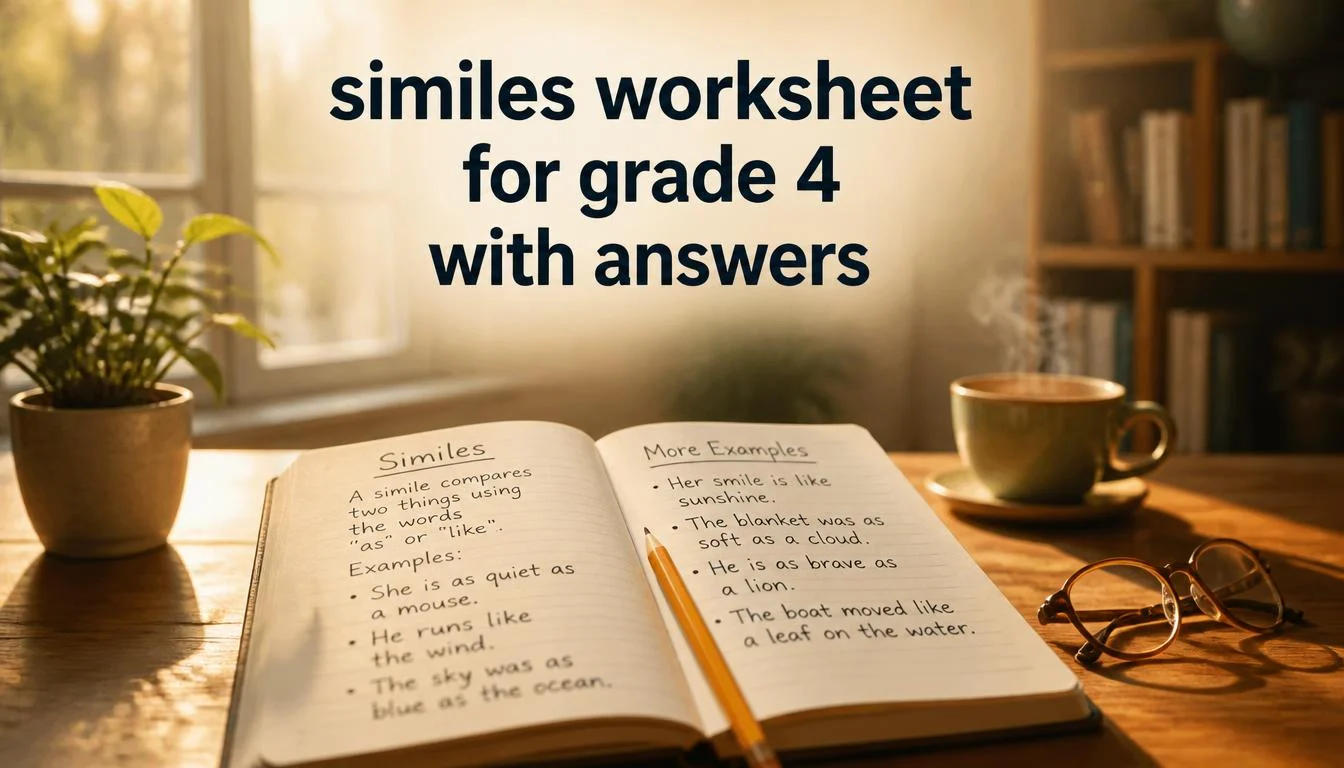
A similes worksheet for grade 4 with answers helps students learn how to compare two different things using “like” or “as.” It includes simple examples, fill-in-the-blanks, and practice questions with an answer key.
A similes worksheet for grade 4 with answers is a fun and effective way to help students understand figurative language. A simile compares two different things using the words “like” or “as” to make descriptions more vivid and interesting. For example, “The baby is as sweet as honey” compares the baby’s sweetness to honey.
These worksheets help fourth-grade students recognize similes, complete comparisons, and create their own sentences. With easy exercises and an answer key, children can practice independently, improve their reading and writing skills, and gain confidence in using creative language at school and at home.
Comparisons That Catch a Mood Before You Name It
1. As restless as a phone on silent mode
Meaning and why it works: This simile captures a specific kind of agitation not loud, not obvious, but buzzing underneath. The image is modern and instantly recognizable. The vibration you can’t hear becomes the feeling you can’t shake.
Best for: Creative nonfiction, dialogue, and blog openings that need a contemporary tone.
Swap-in: As jittery as a cursor blinking on an empty page.
See it in action:
Casual: The waiting room felt restless as a phone on silent mode everyone shifting, nobody speaking.
Formal: Her mind remained restless as a phone on silent mode throughout the lecture, vibrating with thoughts she could not voice.
2. Like a library after closing time
Meaning and why it works: Quiet here isn’t peaceful it’s loaded. The comparison suggests a space that usually holds noise and now holds its breath. You can almost smell the paper and old carpet. It works because it names a silence that feels temporary and slightly eerie.
Best for: Fiction and poetry, especially scenes that need tension without action.
Swap-in: Like a classroom the moment the final bell rings.
See it in action:
Creative: The house was like a library after closing time still, but not empty.
Casual: After the kids went to bed, the living room went like a library after closing time.
3. As heavy as a wet wool coat
Meaning and why it works: This simile gives weight a texture. Wet wool is specific it drags, it smells faintly of damp, it clings. The comparison works best for emotional heaviness that feels physical, the kind of sadness or exhaustion you carry in your shoulders.
Best for: Memoir, fiction, and poetry where sensory detail matters.
Swap-in: As heavy as a backpack full of textbooks on the last day of school.
See it in action:
Formal: Grief settled over him as heavy as a wet wool coat, impossible to shrug off.
Creative: Her apology came out as heavy as a wet wool coat slow, damp, and difficult to hold.
4. Like a song you can’t stop humming
Meaning and why it works: Some feelings repeat without permission. This simile compares an intrusive thought or a persistent joy to a melody stuck on loop. It’s light on its surface but captures obsession, nostalgia, or delight.
Best for: Captions, dialogue, and personal essays.
Swap-in: Like a word you just learned and suddenly see everywhere.
See it in action:
Casual: His name stayed with me like a song I couldn’t stop humming.
Creative: The memory returned like a song you can’t stop humming uninvited, persistent, almost pleasant.
Writer’s Note: Similes about modern objects phones, screens, notifications work best when the emotion is also modern: distraction, low-grade anxiety, the strange comfort of being reachable. Pair them with older imagery for contrast.
When Words Need Warmth: Comparisons That Soften the Room
5. As warm as a mug held with both hands
Meaning and why it works: This simile doesn’t just describe temperature it describes posture. Holding a mug with both hands is a gesture of comfort, of slowing down. The comparison transfers that gesture onto a person, a voice, or a moment.
Best for: Fiction, speeches, and blog posts that want to feel intimate.
Swap-in: As warm as a sweater pulled fresh from the dryer.
See it in action:
Formal: Her welcome was as warm as a mug held with both hands.
Casual: The whole room felt warm as a mug held with both hands.
6. Like sunlight through a kitchen window at breakfast
Meaning and why it works: This simile captures ordinary goodness. It isn’t dramatic. It’s the light that hits the table while someone butters toast. The comparison works for happiness that feels steady rather than spectacular.
Best for: Personal essays, poetry, and descriptive fiction.
Swap-in: Like the first warm day after a long winter.
See it in action:
Creative: Their laughter spilled through the house like sunlight through a kitchen window at breakfast.
Formal: The routine brought a calm like sunlight through a kitchen window at breakfast unremarkable and essential.
7. As gentle as a hand on a feverish forehead
Meaning and why it works: Touch is the sensory anchor here. The image is intimate and specific. It suggests care that doesn’t announce itself. Use it when a character or voice needs to feel safe without saying “safe.”
Best for: Fiction, memoir, and dialogue that needs tenderness without sentimentality.
Swap-in: As gentle as rain on a tin roof at night.
See it in action:
Casual: Her voice was gentle as a hand on a feverish forehead.
Creative: He spoke as gentle as a hand on a feverish forehead no rush, no edge.
8. Like a dog waiting by the door
Meaning and why it works: Loyalty and anticipation live in this image. The dog doesn’t check the clock. It waits. The simile works for devotion, hope, or even the ache of being left behind.
Best for: Fiction, poetry, and speeches about commitment.
Swap-in: Like a porch light left on for someone late.
See it in action:
Formal: His patience was like a dog waiting by the door.
Casual: She stayed loyal like a dog waiting by the door.
9. As soft as a worn paperback cover
Meaning and why it works: This simile is tactile and nostalgic. A worn paperback has been held, carried, and reread. The comparison suggests familiarity and affection the comfort of something that has been loved into softness.
Best for: Poetry, book reviews, and reflective essays.
Swap-in: As soft as a favorite T-shirt washed a hundred times.
See it in action:
Creative: The old blanket felt soft as a worn paperback cover.
Formal: The memory had grown soft as a worn paperback cover, edges rounded by return visits.
For the Ache of Distance and Loss
10. Like a text left on read
Meaning and why it works: This simile names a very specific modern hurt. The message is there. The reply isn’t. The comparison works because it’s small, ordinary, and quietly devastating.
Best for: Contemporary fiction, personal essays, and captions.
Swap-in: Like a voicemail you never return.
See it in action:
Casual: The silence between them felt like a text left on read.
Creative: His absence sat like a text left on read small, visible, unanswered.
11. As empty as a parking lot at midnight
Meaning and why it works: Emptiness here has a shape and a light. Fluorescent lamps, painted lines, no cars. The simile works for loneliness that is public rather than private grief that happens in open spaces.
Best for: Fiction, poetry, and mood-driven essays.
Swap-in: As empty as a playground after the last bell.
See it in action:
Formal: The house felt as empty as a parking lot at midnight.
Creative: Her side of the bed was as empty as a parking lot at midnight.
12. Like a photograph with someone cut out
Meaning and why it works: This simile captures absence through presence. The image implies that someone was there, and now they’re not. It’s about the shape of a missing person, not just the missing person.
Best for: Memoir, fiction, and poems about loss.
Swap-in: Like a song with the vocals removed.
See it in action:
Creative: The family dinner felt like a photograph with someone cut out.
Formal: The gathering carried a quiet like a photograph with someone cut out present and incomplete.
13. As far away as a memory of summer
Meaning and why it works: Distance here is temporal, not physical. The simile compares emotional distance to a season you can’t touch anymore. It’s warm and sad at once, which makes it useful for nostalgia.
Best for: Poetry, personal essays, and reflective dialogue.
Swap-in: As far away as the sound of your own childhood voice.
See it in action:
Casual: She felt as far away as a memory of summer.
Creative: His voice on the phone was as far away as a memory of summer.
14. Like a candle burning in another room
Meaning and why it works: This simile suggests presence you can sense but not see. The light is there. The warmth is there. You just can’t reach it. Use it for longing that is gentle rather than desperate.
Best for: Poetry, fiction, and spiritual writing.
Swap-in: Like a radio playing in a neighbor’s apartment.
See it in action:
Formal: Her influence remained like a candle burning in another room.
Creative: The hope was there, like a candle burning in another room unseen, but lighting the hallway.
Writer’s Note: Similes about loss work best when the image is ordinary. A cut photograph, an unanswered text, a cold mug. Grand imagery can make grief feel performed. Small imagery makes it feel lived.
Comparisons with Bite: Tension, Humor, and Surprise
15. As awkward as a wave that goes unanswered
Meaning and why it works: This simile captures a cringe you can feel in your arm. The wave is offered. The reply doesn’t come. The comparison works for social embarrassment and moments of misplaced confidence.
Best for: Humor writing, dialogue, and first-person fiction.
Swap-in: As awkward as saying “you too” when the waiter says “enjoy your meal.”
See it in action:
Casual: The greeting hung there, awkward as a wave that goes unanswered.
Creative: He stood in the doorway, awkward as a wave that goes unanswered.
16. Like a joke explained too slowly
Meaning and why it works: This simile is about timing, which makes it perfect for describing a moment that dies. The humor drains out as the words keep coming. Use it for comedy that collapses or tension that curdles.
Best for: Dialogue, screenwriting, and humorous essays.
Swap-in: Like a punchline delivered by someone who forgot the setup.
See it in action:
Formal: The proposal landed like a joke explained too slowly.
Creative: His excuse unraveled like a joke explained too slowly word by word, smile by smile.
17. As sharp as a paper cut you didn’t notice
Meaning and why it works: This simile is about delayed pain. Paper cuts are small, clean, and surprisingly persistent. The comparison works for insults or realizations that sting after the moment has passed.
Best for: Fiction, poetry, and dialogue with edge.
Swap-in: As sharp as a splinter you find days later.
See it in action:
Creative: The comment was as sharp as a paper cut you didn’t notice until later.
Formal: The criticism stung as sharp as a paper cut you didn’t notice.
18. Like a chair pulled out before you sit
Meaning and why it works: Betrayal, surprise, and the split-second loss of balance live in this image. It’s physical, funny, and cruel at once. Use it when trust disappears faster than expected.
Best for: Fiction, memoir, and dramatic monologue.
Swap-in: Like a step that isn’t there in the dark.
See it in action:
Casual: The news hit like a chair pulled out before you sit.
Creative: His exit felt like a chair pulled out before you sit sudden, personal, almost funny.
19. As stubborn as a sticker that won’t peel
Meaning and why it works: This simile gives stubbornness a texture the annoying, adhesive kind. It works for people, problems, and emotions that refuse to budge. The image is small and familiar, which keeps the comparison grounded.
Best for: Dialogue, humorous fiction, and opinion writing.
Swap-in: As stubborn as a song stuck in your head at 3 a.m.
See it in action:
Formal: The problem remained as stubborn as a sticker that won’t peel.
Casual: He was stubborn as a sticker that won’t peel.
Small, Strange, and Unforgettable
20. Like a key that only works on one door
Meaning and why it works: This simile suggests specificity, fate, or a narrow kind of fit. It works for love, calling, or any connection that feels particular rather than universal. The image is small and mechanical, which makes it feel true.
Best for: Poetry, romance, and speeches about purpose.
Swap-in: Like a password that only one person knows.
See it in action:
Creative: Their friendship was like a key that only works on one door.
Formal: Her talent operated like a key that only works on one door narrow, precise, irreplaceable.
21. As quiet as a house plant in a loud room
Meaning and why it works: Quiet here is not absence; it’s presence without demand. The plant is alive, visible, and completely still. The simile works for people who absorb a room’s energy without adding to it.
Best for: Fiction, character sketches, and poetry.
Swap-in: As quiet as a bookmark in a closed book.
See it in action:
Casual: She sat there, quiet as a house plant in a loud room.
Creative: He was quiet as a house plant in a loud room breathing, listening, staying.
22. Like a recipe with one secret ingredient
Meaning and why it works: This simile is about hidden value. The dish looks ordinary until you taste it. The comparison works for people, ideas, or experiences that carry something extra beneath the surface.
Best for: Blogging, personal essays, and motivational writing.
Swap-in: Like a playlist with one song you can’t skip.
See it in action:
Formal: Her teaching was like a recipe with one secret ingredient.
Casual: That town is like a recipe with one secret ingredient.
Writer’s Note: The best similes often come from objects you touched today. A sticker, a key, a chair. If you can hold it in your hand, you can probably hold it in a sentence.
Quick-Reference Table: 10 Similes at a Glance
| Simile | Best Tone | Best Used In |
| As restless as a phone on silent mode | Anxious, modern | Creative nonfiction, captions |
| Like a library after closing time | Tense, quiet | Fiction, poetry |
| As warm as a mug held with both hands | Intimate, calm | Personal essays, dialogue |
| Like a dog waiting by the door | Loyal, tender | Fiction, speeches |
| Like a text left on read | Hurt, modern | Contemporary fiction, captions |
| As empty as a parking lot at midnight | Lonely, stark | Poetry, mood essays |
| As awkward as a wave that goes unanswered | Funny, cringe | Humor writing, dialogue |
| Like a joke explained too slowly | Awkward, comedic | Screenwriting, dialogue |
| As stubborn as a sticker that won’t peel | Frustrated, light | Opinion writing, dialogue |
| Like a key that only works on one door | Romantic, precise | Poetry, speeches |
Practical Writing Guide: Make Every Comparison Count
Why So Many Similes Fall Flat
Cliché overload. “As busy as a bee” arrives dead on the page. Readers have seen it so many times it no longer creates an image.
Weak: Her day was as busy as a bee.
Fixed: Her day was as busy as a group chat during a power outage everyone talking, nothing getting done.
Mixed imagery. When two comparisons collide, the reader loses the picture.
Weak: His anger burned like a fire, and then he froze like a statue, and his words cut like a knife.
Fixed: His anger arrived like a fire alarm in a quiet building sudden, loud, and impossible to ignore.
Overexplaining. A simile should land and move on. If you explain it, you flatten it.
Weak: She was as nervous as a long-tailed cat in a room full of rocking chairs, which means she was very anxious and couldn’t relax.
Fixed: She was as nervous as a long-tailed cat in a room full of rocking chairs.
Mismatched tone. A playful simile in a funeral scene pulls the reader out.
Weak (in a grief scene): Her tears fell like confetti at a surprise party.
Fixed (in a grief scene): Her tears fell like rain on a window nobody was watching.
Simile vs. Metaphor: The Plain Version
A simile says one thing is like another. A metaphor says one thing is another.
| Simile | Metaphor |
| Her voice was like warm honey. | Her voice was warm honey. |
| The city slept like a tired dog. | The city was a tired dog. |
Use a simile when you want the comparison to stay visible and deliberate. Use a metaphor when you want the comparison to feel absolute.
A 4-Step Method for Original Similes
Step 1: Pick the feeling. Don’t start with an object. Start with what you want the reader to feel restless, comforted, betrayed.
Step 2: Find a concrete image. What object, place, or moment carries that feeling? A sticker, a parking lot, a wave.
Step 3: Test the fit. Say it out loud. Does the image create the feeling without explanation?
Step 4: Trim the excess. Remove any words that soften the comparison. “Like a text left on read” beats “like a text message that someone read but did not reply to.”
Worked example:
Feeling: disappointment that doesn’t surprise you anymore.
Concrete image: a vending machine that takes your dollar and gives nothing back.
Test: The meeting felt like a vending machine that takes your dollar and gives nothing back.
Trim: The meeting felt like a vending machine that took my dollar.
Quick Tips for Different Genres
Dialogue: Keep similes short and spoken. Characters rarely pause to construct perfect comparisons. “He’s about as useful as a screen door on a submarine” sounds like a person. “His utility resembles that of a screen door on a submarine” sounds like a textbook.
Poetry: Let the simile breathe. A line break before or after the comparison can add weight.
Blogging: Use similes in headlines, subheadings, and opening lines. They make skimmable content memorable.
Essays: Use similes to bridge abstract ideas and concrete experience. One good comparison can replace a paragraph of explanation.
FAQs
What is a simile?
A simile is a figure of speech that compares two unlike things using “like” or “as.” It creates a vivid picture by linking something familiar to something new. For example, “as quiet as a library after closing time” compares silence to a specific place.
What is a similes worksheet for grade 4 with answers?
A similes worksheet for grade 4 with answers is a practice sheet that asks students to identify, complete, or write similes. The answer key helps teachers and parents check understanding. Most worksheets include fill-in-the-blank exercises, matching activities, and sentence-writing prompts.
How is a simile different from a metaphor?
A simile uses “like” or “as” to make the comparison explicit. A metaphor states that one thing is another. “Her smile was like sunshine” is a simile. “Her smile was sunshine” is a metaphor. The simile keeps the two things separate; the metaphor merges them.
How do I write a good simile?
Start with the feeling you want to create. Then choose a concrete image that carries that feeling. Test the comparison by reading it aloud. If it needs explaining, replace it. Finally, trim any unnecessary words. The best similes feel found, not forced.
What are some good simile examples for grade 4?
Good similes for grade 4 use familiar images and clear comparisons. Examples include “as restless as a phone on silent mode,” “like a library after closing time,” and “as warm as a mug held with both hands.” These work because the images are specific and the feelings are easy to picture.
How many similes should I use in a piece of writing?
There is no fixed number. Too many similes can overwhelm a reader; too few can leave writing flat. A good rule is one strong simile per paragraph or scene, placed where it adds clarity or emotion. In a similes worksheet for grade 4 with answers, students often practice two to five at a time.
How can I avoid clichés when writing similes?
Avoid comparisons you have heard many times before “busy as a bee,” “light as a feather,” “cold as ice.” Instead, look at the object or feeling and ask what it actually reminds you of. A phone on silent mode, a sticker that won’t peel, a parking lot at midnight. Fresh images come from specific observation.
Can similes be used in poetry and storytelling?
Yes. Similes are common in both poetry and storytelling. In poetry, they can create rhythm and surprise. In stories, they help readers see a character, setting, or emotion quickly. A well-placed simile can do more work than a paragraph of description.
What is the difference between a simile and an idiom?
A simile makes a comparison using “like” or “as.” An idiom is a fixed expression whose meaning isn’t literal, like “break a leg” or “spill the beans.” Some idioms are also similes, such as “like a fish out of water,” but not all idioms are similes.
Where can I find a similes worksheet for grade 4 with answers?
Many educational websites offer free or printable similes worksheets for grade 4 with answer keys. Look for worksheets aligned with Common Core standard L.4.5.a, which covers figurative language. Super Teacher Worksheets, Twinkl, and KiwiBee are common sources.
Conclusion
The world doesn’t need another “busy as a bee.” It needs the comparison only you would make the parking lot at midnight, the sticker that won’t peel, the key that works on one door. A similes worksheet for grade 4 with answers gives young writers the map, but the territory is yours to explore. Pick a feeling. Find an image. Test it out loud. Then trim it until it lands. Your next sentence could be the one someone remembers. What will you compare today?









